
Every country always distinguishes itself with something specific. As for Asian people, they are extremely hard workers, and this is why they were able to build their countries in very few years after they nearly lost everything in the Second World War. Let us have a quick look at Asia in the 1910s and in the 2000s, and what a difference! In less than a century, things turned upside down. Japan turned from zero to the top of Asian tigers and our new models that top our own list, Malaysia and Singapore, are another story. Following the steps of Japan, they were able to double their GDP per capita 4 times in 50 years.
The kind of economic development that is only because of the Asians’ hard work has entirely changed the shape of the Asian countries. Clean streets, beautiful homes and new schools were built. In addition to that, what was once an American source of pride, namely, having the biggest, widest, and highest bridges; shifted to be Asia’s. Let us see where these highest bridges lie specifically in this large continent.
Exploring Asia’s Highest Bridges
Asia’s landscape is characterized by its dramatic mountainous regions, deep river gorges, and extensive valleys, making it a prime location for the development of high bridges. These engineering marvels are not just a testament to human ingenuity but also crucial infrastructure that significantly reduces travel time and improves connectivity across vast and often difficult terrain. We will embark on a journey to discover the most impressive examples of bridge construction that stand as testaments to civil engineering excellence.
How We Ranked the Highest Bridges in Asia
Our ranking of the highest bridges in Asia primarily focuses on the “deck height,” which is the vertical distance from the bridge deck to the valley floor or the water surface directly beneath the main span. This metric provides a clear and consistent way to compare how high these structures truly stand above the natural terrain. While other factors like structural height and main span length are impressive, the deck height most accurately reflects the bridge’s elevation over the deep gorges and rivers it traverses.
Deck Height vs. Structural Height: What’s the Difference?
Understanding the distinction between deck height and structural height is crucial when discussing the highest bridges. For instance, a suspension bridge might have a massive structural height due to its towering piers, but its deck height could be considerably less if the gorge it spans is not exceptionally deep. Our ranking prioritizes the stunning visual and engineering achievement of a high deck above a deep canyon or river.
| Measurement Type | Definition |
|---|---|
| Deck Height | Measures the vertical clearance from the bridge’s roadway to the ground or water below. |
| Structural Height | Refers to the total height of the bridge’s supporting structure from its lowest foundation point to the top of its highest tower or pier. |
Top 10 Highest Bridges in Asia
1. Duge Bridge (China) – The World’s Highest Bridge Above the Beipan River
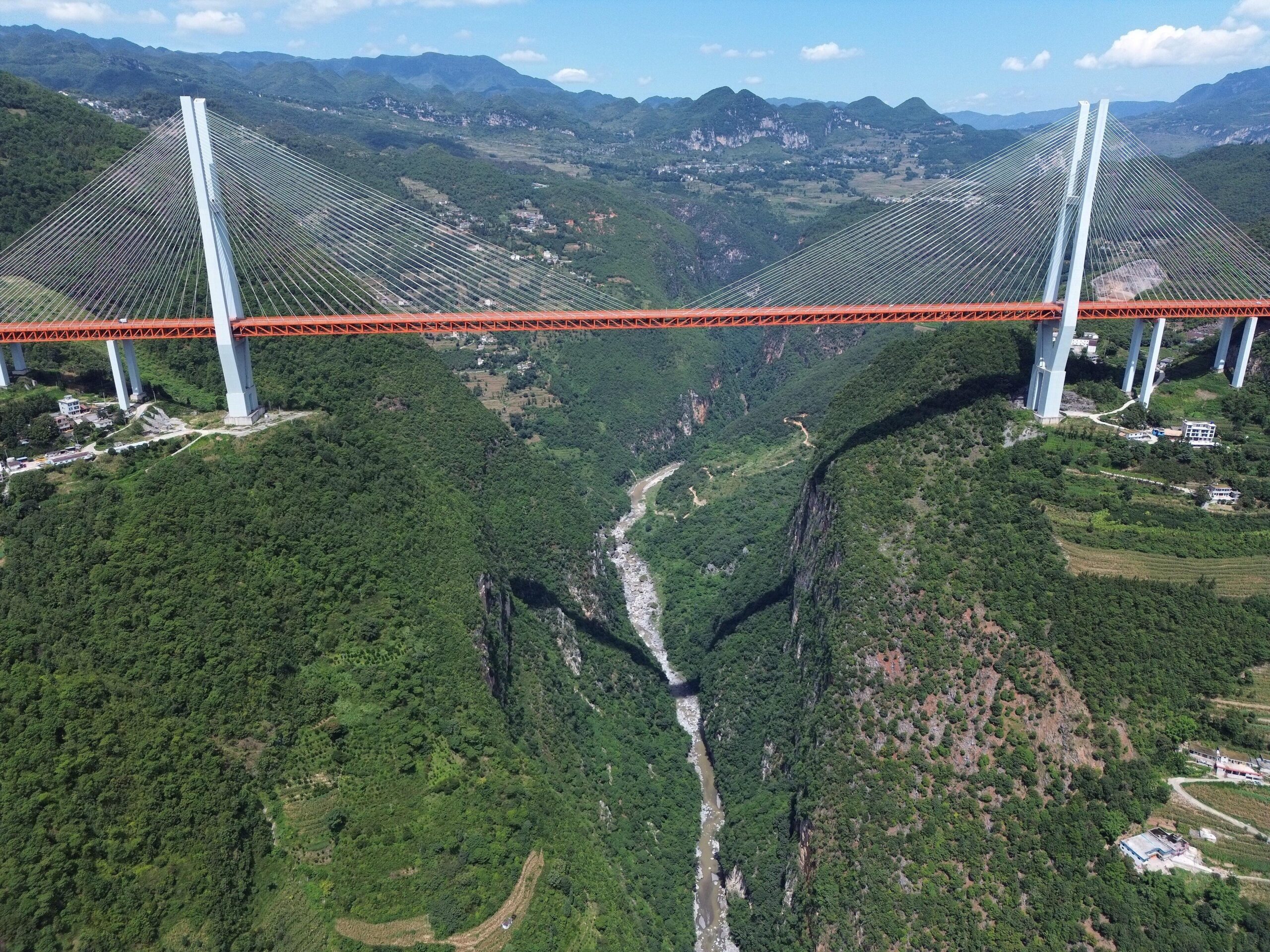
The Duge Bridge holds the prestigious title as the world’s highest bridge, soaring an astonishing 565 meters above the Beipan River. This incredible cable-stayed bridge connects Yunnan and Guizhou provinces in China, drastically reducing travel time between Xuanwei and Liupanshui. Its immense height over the deep gorge solidifies its position as a paramount achievement in bridge engineering and a true mega bridge.
2. Sidu River Bridge (China) – A Suspension Bridge Across a Stunning Gorge
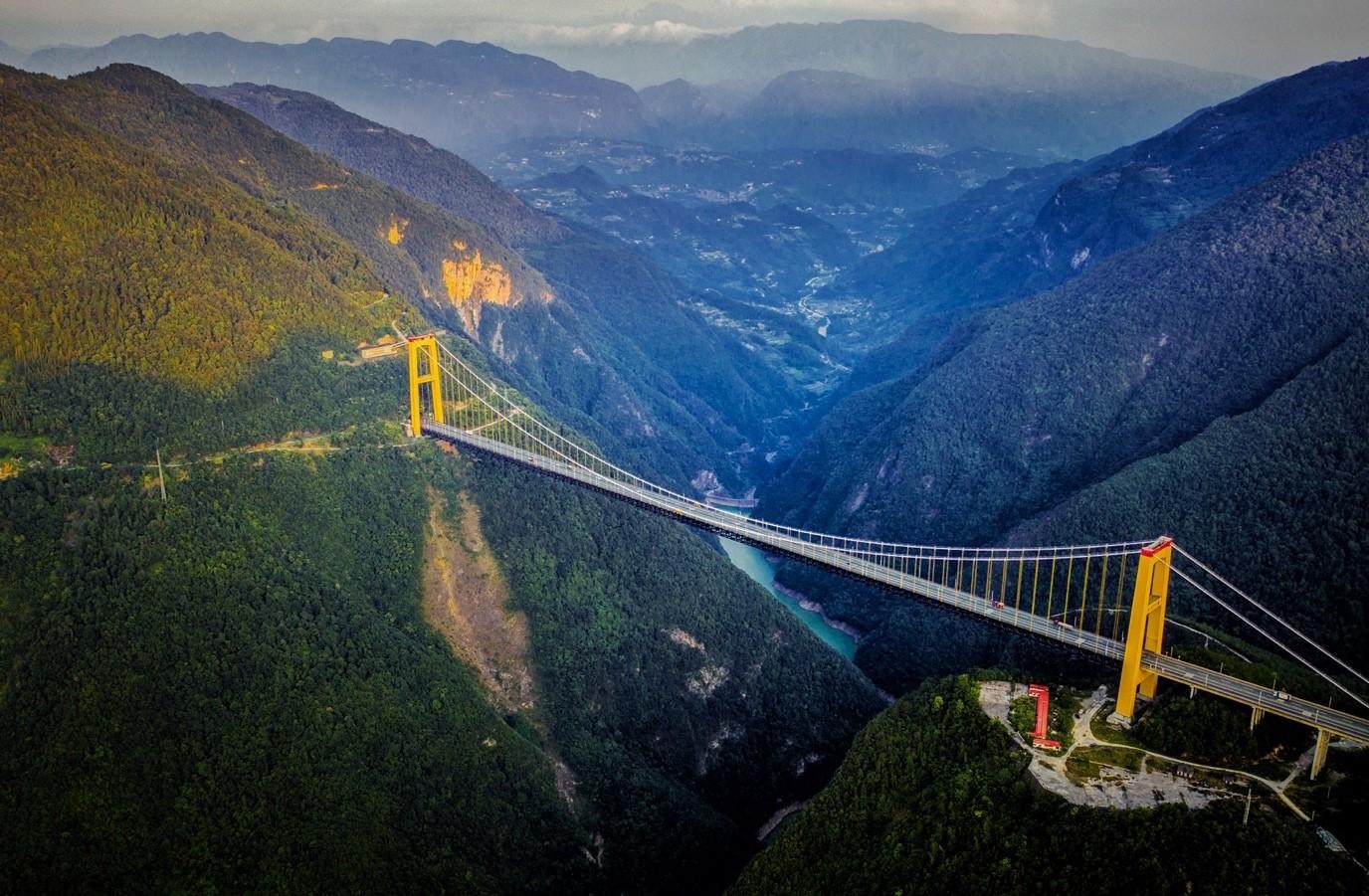
Once the highest bridge in the world, the Sidu River Bridge is a magnificent suspension bridge crossing the Sidu River Valley in China’s Hubei province. With a deck height of approximately 496 meters, this engineering marvel showcases an impressive main span and was a groundbreaking project for high bridges. Its construction involved innovative techniques to span the deep gorge.
3. Puli Bridge (China) – One of the World’s Tallest Suspension Bridges
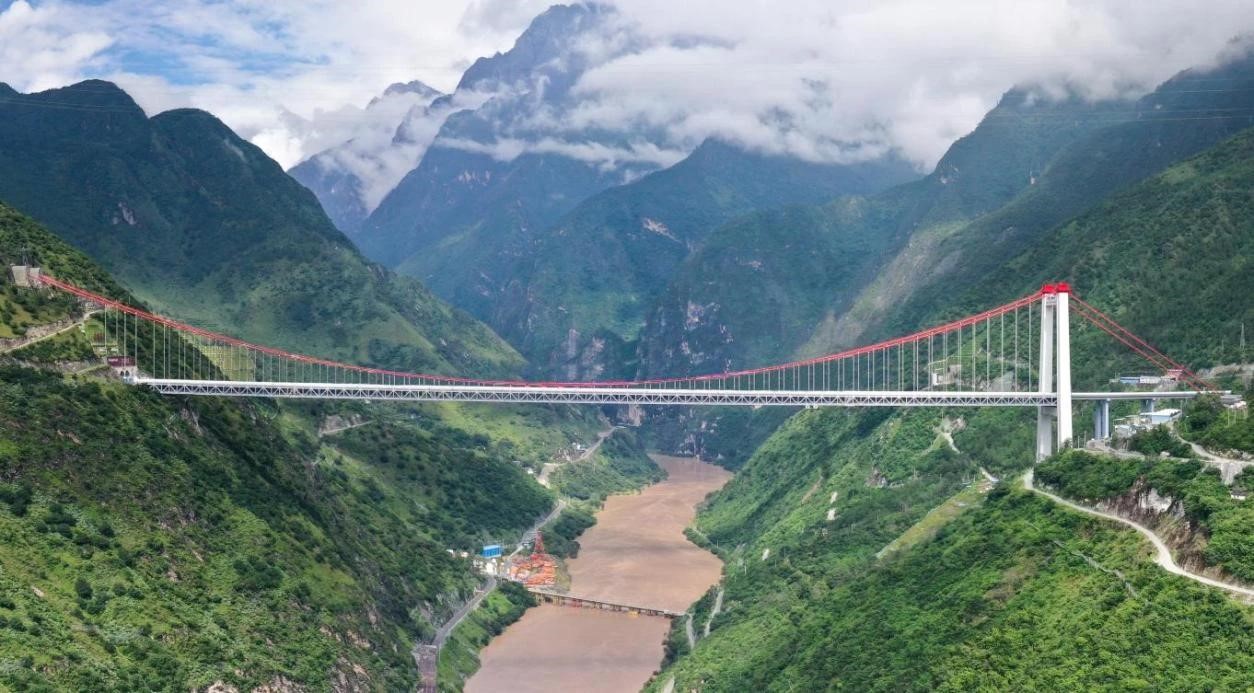
The Puli Bridge, located in Yunnan province, China, is another incredible suspension bridge that ranks among the world’s tallest. Boasting a deck height of 485 meters above a deep valley, it significantly improves transportation along the G56 Hangzhou–Ruili Expressway. This gorge bridge is a testament to advanced civil engineering capabilities in challenging mountainous terrain.
4. Jin’an Bridge (China) – A Spectacular Crossing Over the Jinsha River

The Jin’an Bridge, often referred to as Jinshajiang Bridge, is a spectacular suspension bridge with a deck height of 461 meters above the Jinsha River, a major tributary of the Yangtze. Located in Yunnan province, this vital link on the G4216 expressway facilitates improved transportation across previously isolated deep gorges, showcasing remarkable bridge construction.
5. Yachi River Bridge (China) – A Landmark of Modern Chinese Engineering
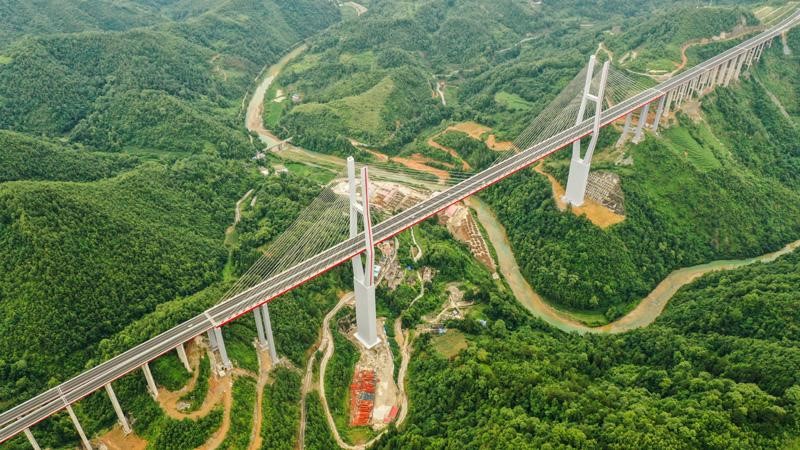
The Yachi River Bridge, a colossal cable-stayed bridge in Guizhou province, China, reaches a dizzying deck height of 434 meters. Spanning the Yachi River, this high bridge is a crucial component of the Guiyang-Qianxi Expressway. Its innovative design and impressive stature make it a landmark of modern Chinese engineering, significantly enhancing connectivity.
6. Liuguanghe Xiqian Expressway Bridge (China) – Towering Above the Liuguang River Valley
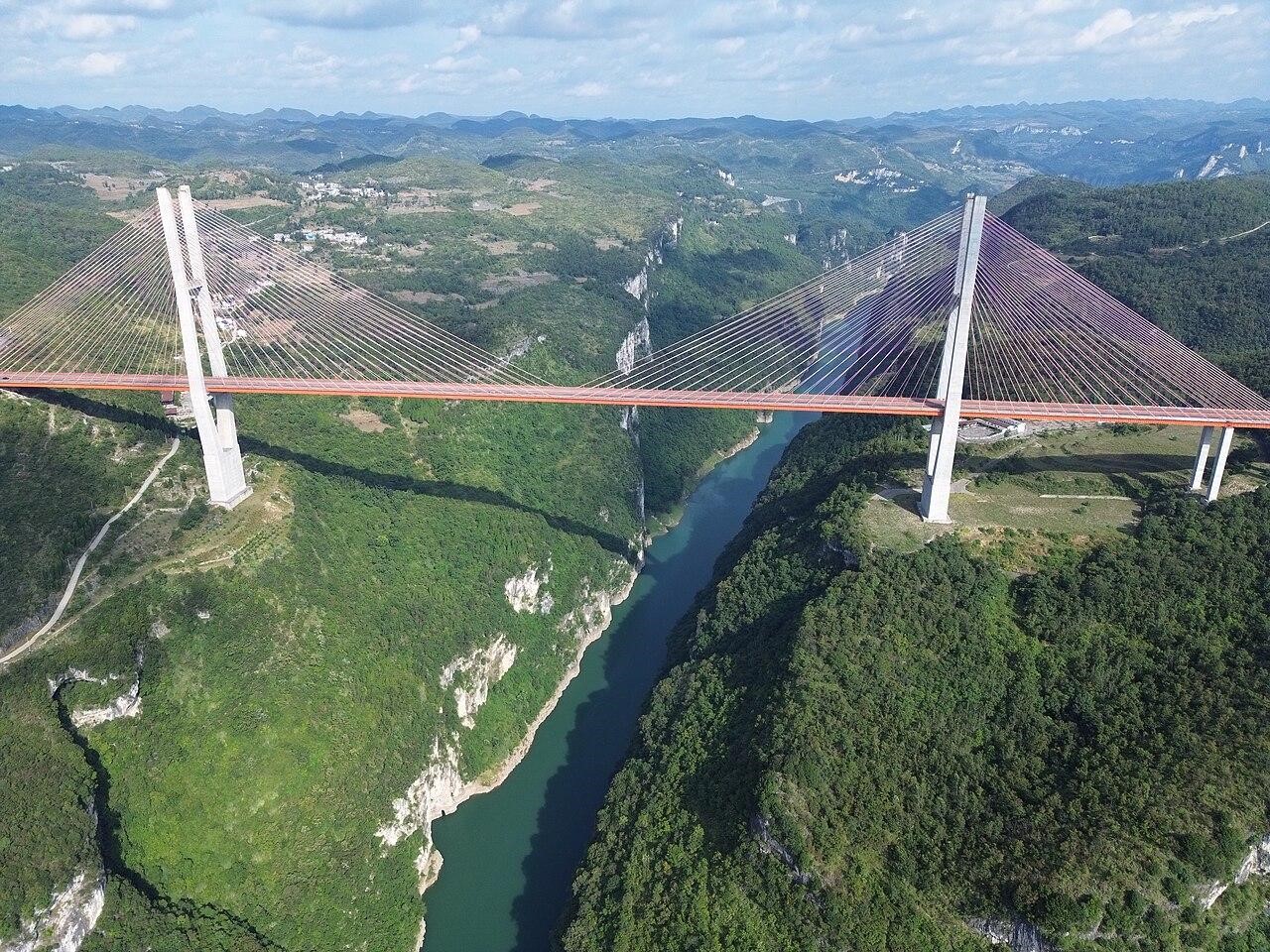
The Liuguanghe Xiqian Expressway Bridge, a stunning suspension bridge, towers 375 meters above the Liuguang River valley in Guizhou province, China. This impressive structure is an integral part of the Xiqian Expressway, facilitating efficient transportation through previously difficult terrain. It stands as an early example of China’s ambition in building high bridges across deep gorges.
7. Baling River Bridge (China) – A Record-Breaking Suspension Bridge
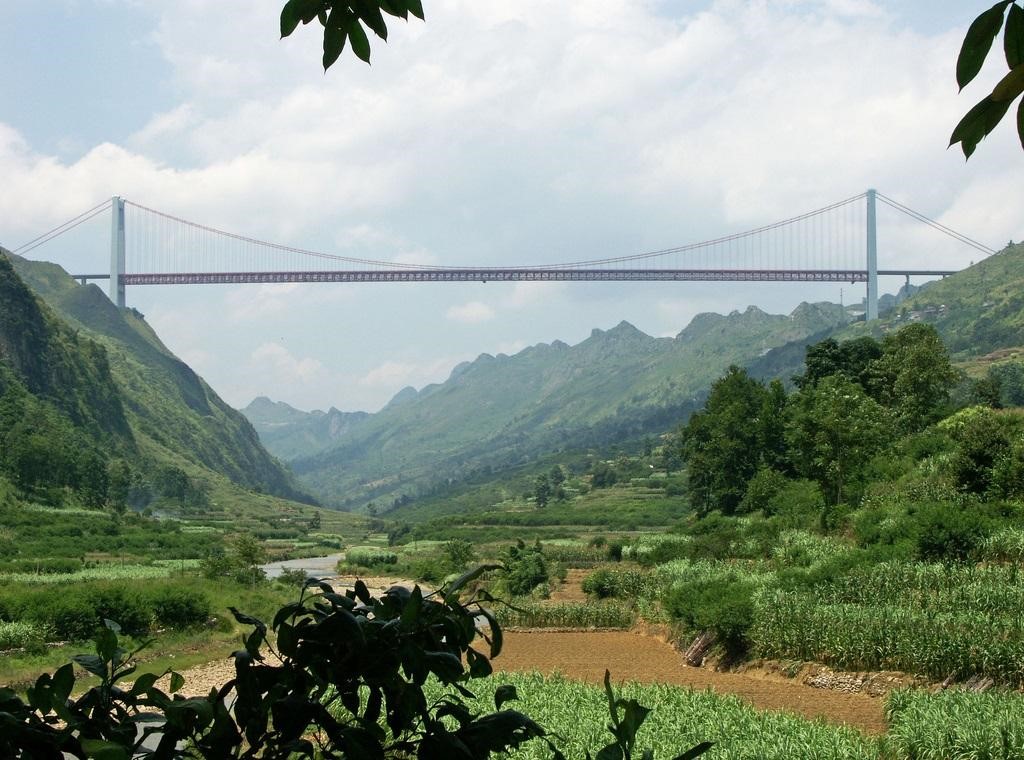
The Baling River Bridge in Guizhou province, China, is a magnificent suspension bridge known for its impressive deck height of 370 meters above the Baling River canyon. This bridge was a record-breaker for its span when completed, significantly improving the G60 Shanghai-Kunming Expressway. Its majestic presence contributes greatly to regional transportation and tourism.
8. Beipanjiang Bridge (Guanxing Expressway, China) – An Early High-Bridge Pioneer
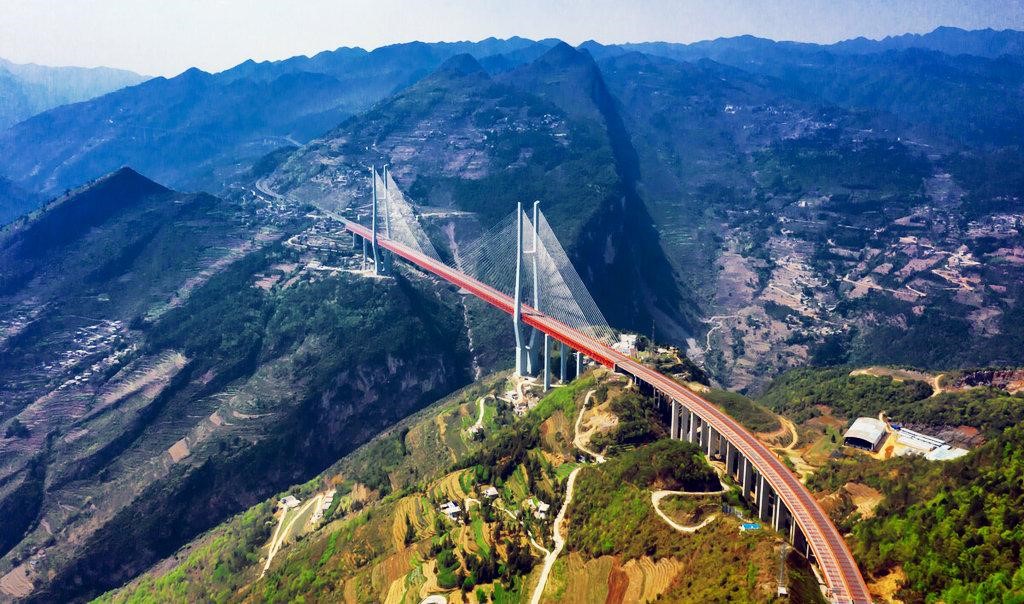
The Beipanjiang Bridge on the Guanxing Expressway, predating the Duge Bridge by over a decade, was an early pioneer in high bridge construction, soaring 366 meters above the Beipan River. This suspension bridge in Guizhou province demonstrated the potential for building monumental structures across deep gorges, setting a precedent for future mega bridge projects.
9. Chenab Rail Bridge (India) – The World’s Highest Railway Arch Bridge
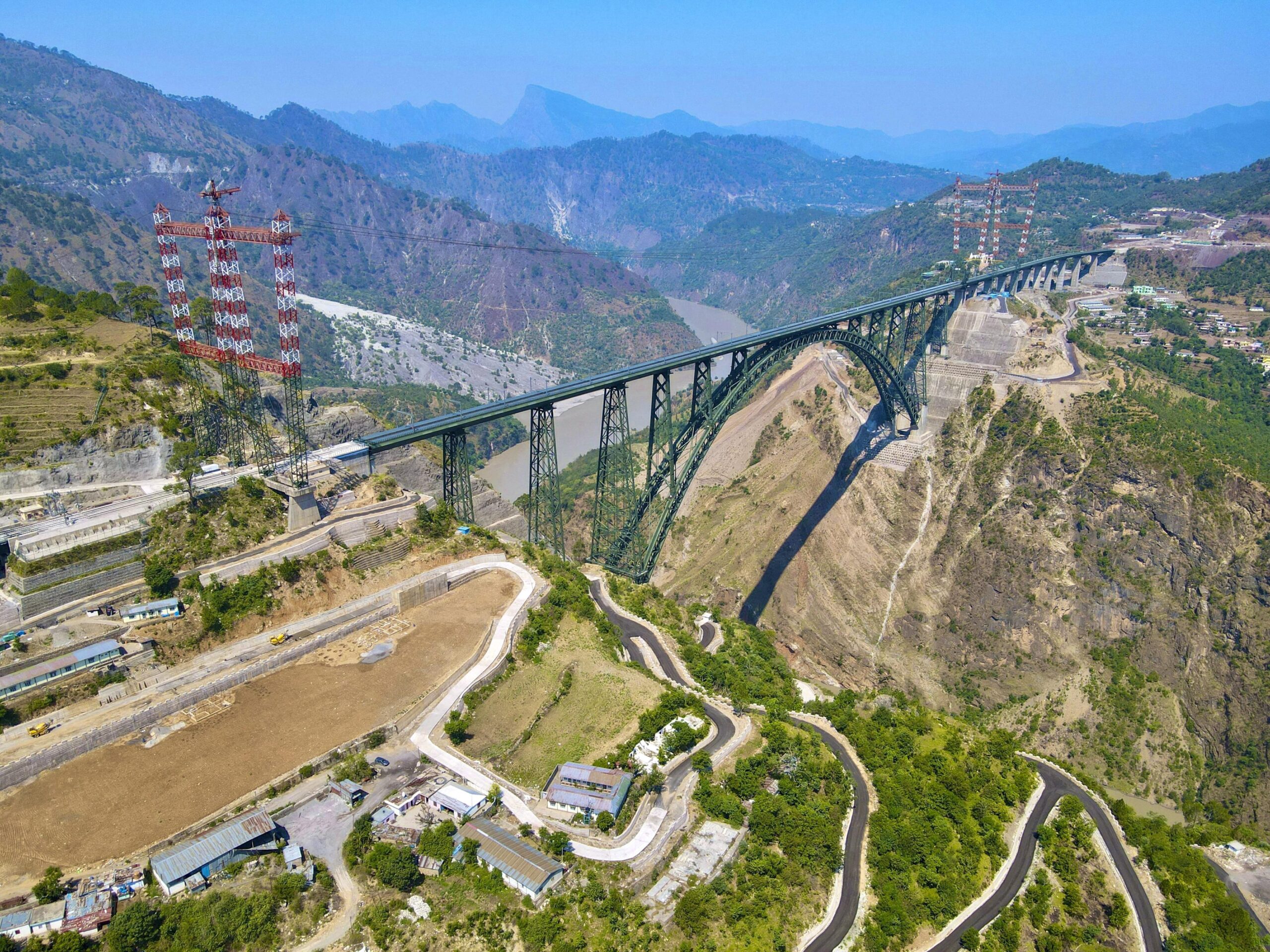
The Chenab Rail Bridge in Jammu and Kashmir, India, is a monumental arch bridge that holds the distinction of being the world’s highest railway bridge. Standing approximately 359 meters above the Chenab River, this incredible engineering feat is crucial for the Udhampur-Srinagar-Baramulla Rail Link project. Its robust design is vital for high-speed railway transportation across challenging terrain.
10. Aizhai Bridge (China) – An Iconic Bridge Suspended Above a Mountain Canyon
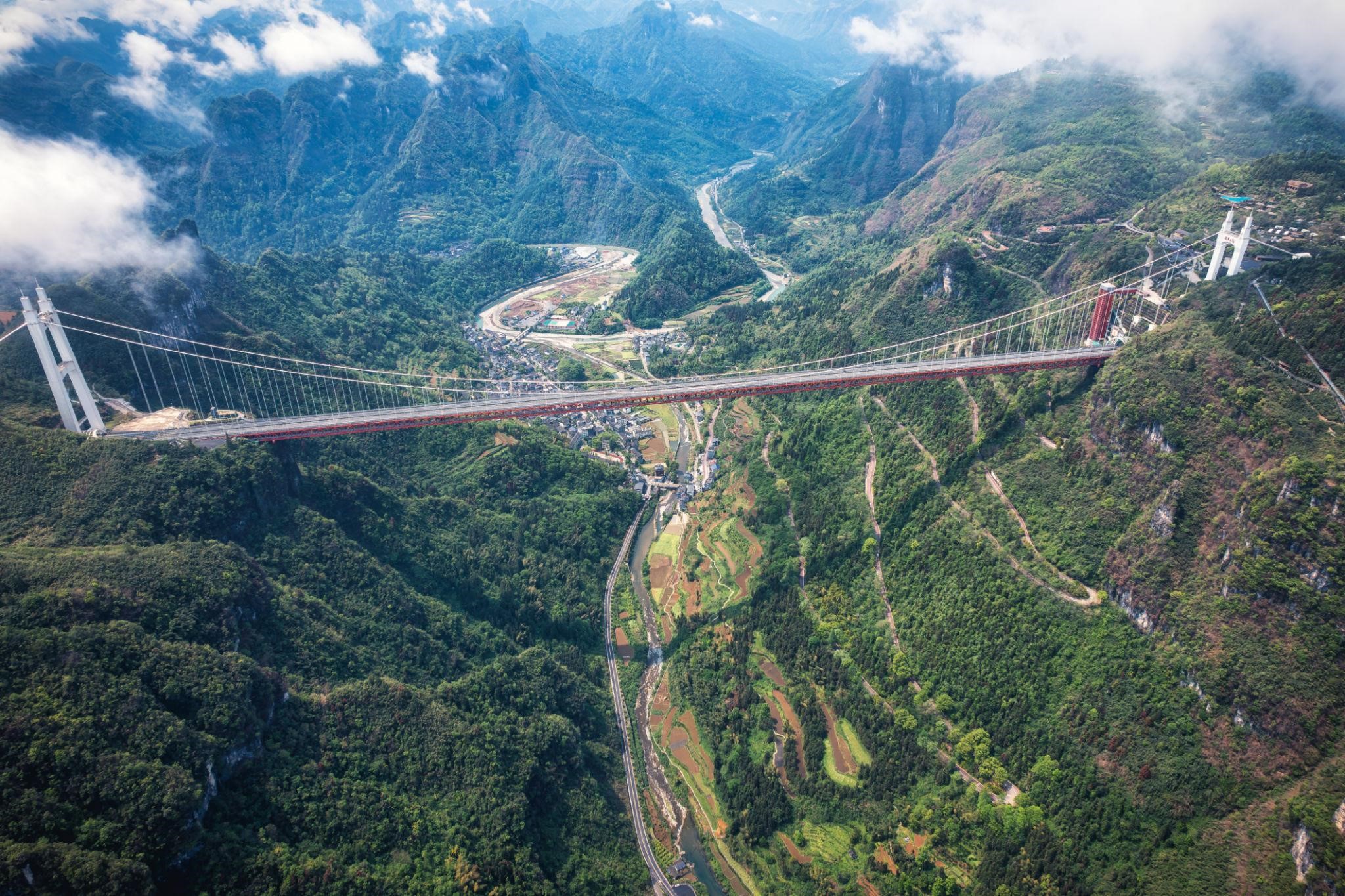
The Aizhai Bridge, located in Hunan province, China, is an iconic suspension bridge with a deck height of 336 meters above a deep mountain canyon. Part of the G65 Baotou–Maoming Expressway, this impressive structure significantly reduces travel time through incredibly challenging terrain. It is a stunning example of bridge engineering that attracts considerable tourism.
Why Asia Is Home to the World’s Highest Bridges
Mountainous Landscapes and Deep River Gorges
Asia’s geography is uniquely suited for the construction of the world’s highest bridges due to its expansive mountainous landscapes and numerous deep river gorges. Regions like the Himalayas, the Hengduan Mountains, and the diverse terrains of Guizhou and Yunnan provinces in China present immense natural barriers. These geological features necessitate grand engineering solutions to improve transportation, leading to the development of impressive canyon bridges and gorge bridges that span incredible depths. The sheer scale of these natural formations often dictates the need for exceptionally high bridges, setting world records in bridge engineering.
Advances in Bridge Engineering and Construction
The remarkable concentration of high bridges in Asia is also a direct result of significant advancements in bridge engineering and construction techniques. Innovations in materials, design methodologies, and construction processes, particularly for suspension bridge, arch bridge, and cable-stayed bridge designs, have made it possible to overcome previously insurmountable challenges. Countries like China have heavily invested in civil engineering research and development, enabling them to construct mega bridges with immense main spans across deep gorges, thereby continually pushing the boundaries of what is achievable in bridge construction.
Improving Transportation Across Challenging Terrain
A primary driver for the proliferation of high bridges in Asia is the pressing need to improve transportation and reduce travel time across challenging terrain. Many remote and mountainous regions were historically isolated, hindering economic development and connectivity. The construction of expressways and highways featuring these high bridges, such as those found in Guizhou and Yunnan provinces, has drastically transformed these areas. They facilitate efficient freight and passenger transportation, connecting major cities like Chengdu and Beijing, and boosting local economies through increased tourism and accessibility, often crossing deep river valleys and canyons.
The Engineering Behind These Record-Breaking Bridges
Suspension, Arch, and Cable-Stayed Bridge Designs
Asia’s record-breaking bridges predominantly feature three sophisticated designs. Each design is chosen based on specific terrain and span requirements.
| Design Type | Key Characteristics & Examples |
|---|---|
| Suspension Bridges | Ideal for long main spans over deep gorges, utilizing massive cables to support the bridge deck (e.g., Siduhe Bridge). |
| Arch Bridges | Excel in stability and are often used for railway lines (e.g., Chenab Rail Bridge). |
| Cable-Stayed Bridges | Offer a balance of aesthetic appeal and structural efficiency for high bridges over varied terrains, often with towering piers (e.g., Duge Bridge). |
Earthquake Resistance and Wind Engineering
Given that many of these highest bridge structures are located in seismically active zones and exposed to strong winds, earthquake resistance and advanced wind engineering are critical components of their design. Engineers employ sophisticated modeling and simulation techniques to ensure these mega bridges can withstand extreme forces. This involves incorporating flexible expansion joints, damping systems, and aerodynamic deck profiles to minimize wind-induced vibrations. Such meticulous planning is essential for the safety and longevity of these monumental structures, particularly in areas prone to natural disasters and extreme weather conditions.
Construction Challenges at Extreme Heights
Building high bridges at extreme heights presents unparalleled construction challenges. Accessing remote locations, transporting heavy materials, and working at dizzying altitudes are just a few of the obstacles faced by engineers and construction crews. The sheer scale of these projects often requires innovative solutions, such as the use of rocket-launched pilot cables for the Siduhe Bridge or specialized climbing formwork for tall piers. Constructing a canyon bridge or a deep gorge bridge demands meticulous planning, advanced technology, and unwavering dedication to overcome the severe logistical and environmental difficulties.
Final Thoughts: Asia’s Incredible Bridge Engineering Achievements
The highest bridges in Asia stand as monumental testaments to human ingenuity and the relentless pursuit of engineering excellence. These structures are not merely crossings but symbols of progress, connecting communities, fostering economic growth, and inspiring awe through their sheer scale and breathtaking designs. From the dizzying heights of the Duge Bridge in Guizhou province to the iconic Chenab Rail Bridge, each bridge tells a story of overcoming immense natural barriers through cutting-edge civil engineering. They exemplify how strategic investment in infrastructure can transform landscapes and improve lives, solidifying Asia’s position as a global leader in bridge construction and a hub for incredible transportation marvels that continue to set world records.