


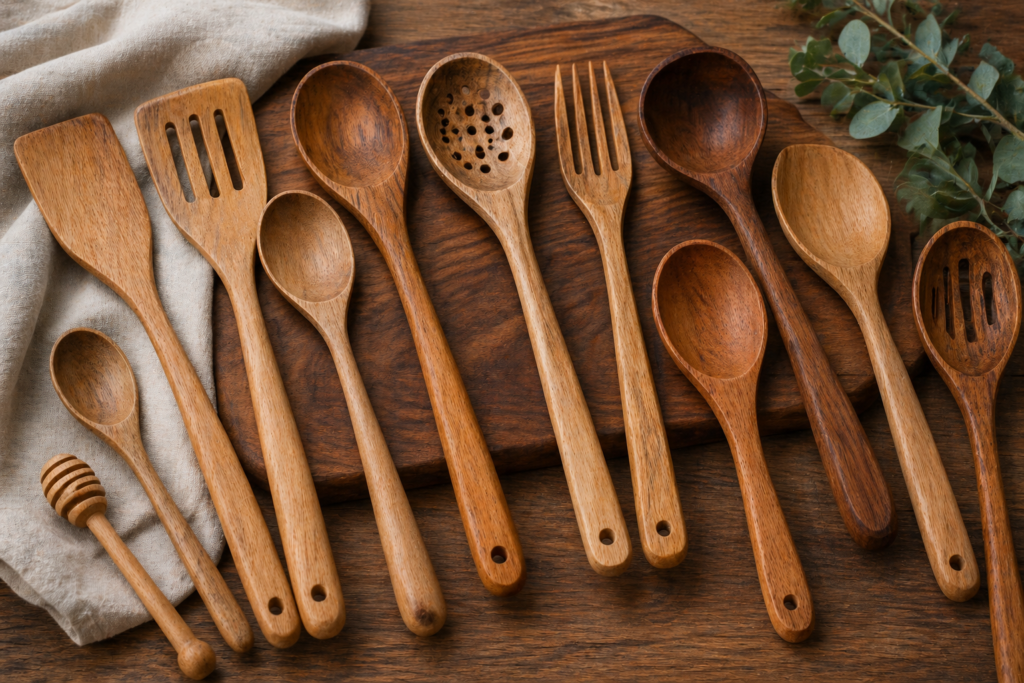
If you’ve ever scraped a melted spatula off a pan or winced at the sound of metal hitting your favorite nonstick skillet, you already know the problem. Most kitchen tools don’t last. They either warp, scratch, or quietly make cooking harder than it should be. That’s why many home cooks are switching to simple upgrades like a wooden flat spatula, especially from WoodenHouse collections.
It’s a small change, but it solves multiple issues at once. Let’s break it down.

The Everyday Kitchen Problems Most People Ignore
These issues seem minor—until they stack up:
- Plastic utensils melt at high heat
- Metal tools scratch nonstick coatings
- Cheap utensils crack or bend within months
- Handles get too hot to hold
- Some materials leave unwanted odors or residue
Each one affects how you cook. And over time, they cost you money.
Why These Problems Matter More Than You Think
This isn’t just about convenience. It’s about safety and long-term value.
- Scratched pans lose their nonstick performance
- Melted plastic may release unwanted substances into food
- Frequent replacements increase waste and expenses
Here’s the bigger picture:
- The world produces over 400 million tons of plastic waste every year
- Only 9% of plastic waste is recycled
That means most kitchen plastics eventually end up in landfills or oceans.
A Simple Upgrade That Changes Everything
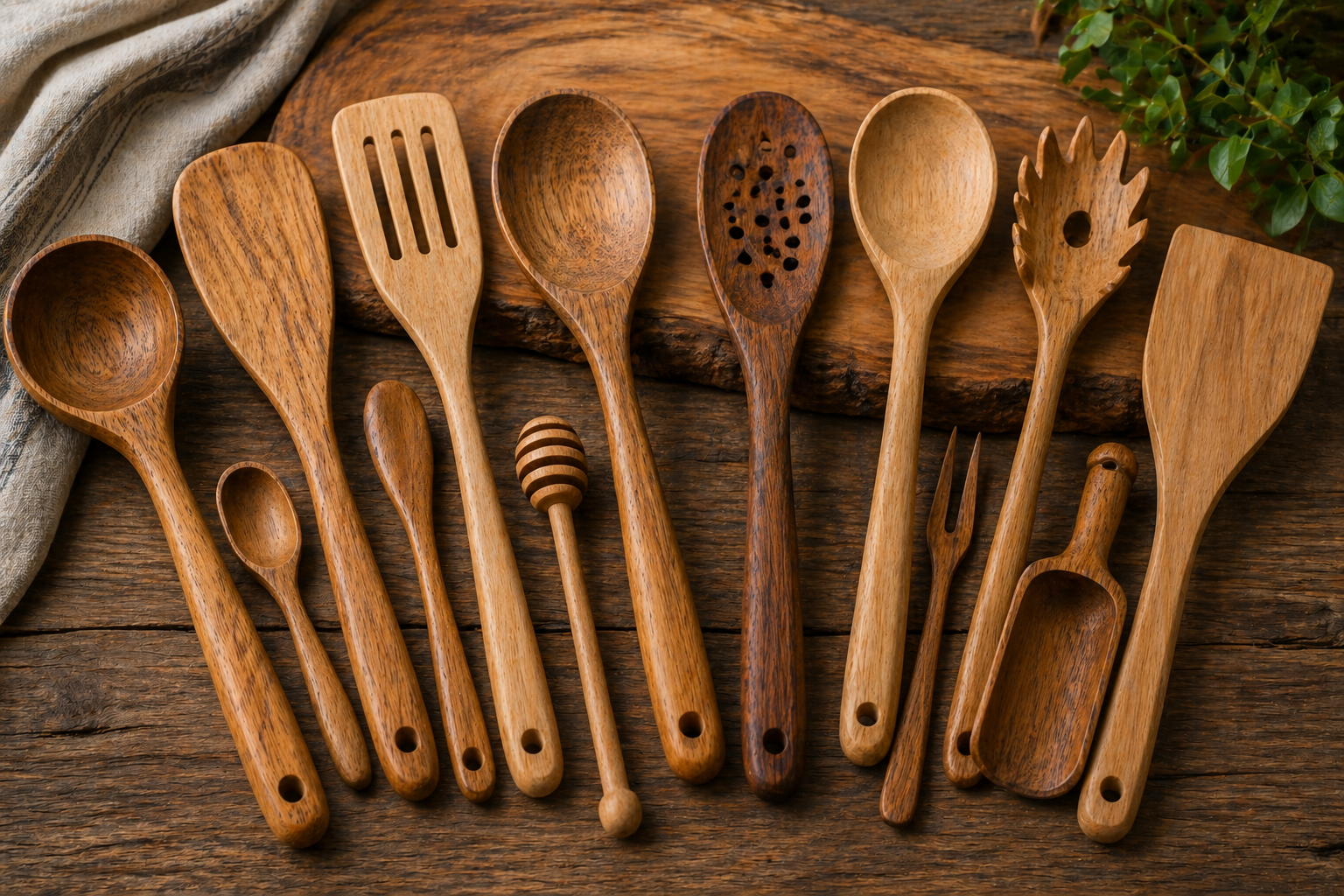
Wooden kitchen utensils address these issues directly:
- They don’t melt
- They don’t scratch cookware
- They last longer when cared for properly
- They feel comfortable in hand
It’s not a dramatic change. It’s a practical one.
What Makes Wooden Kitchen Utensils Different From Plastic and Metal
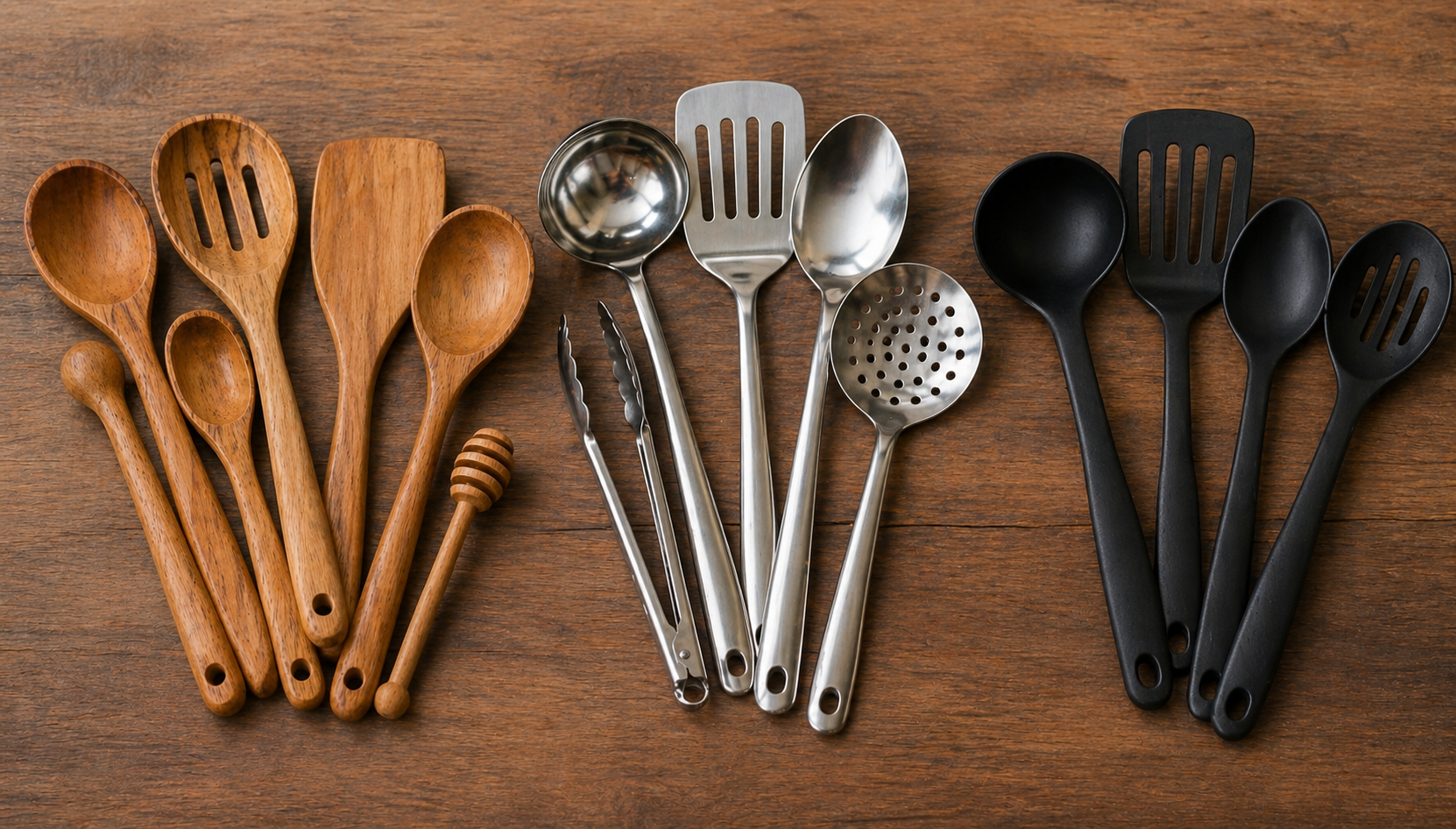
Choosing utensils often comes down to habit. But when you compare materials side by side, the differences become clear.

Wooden vs Plastic Utensils
Plastic tools are common because they’re cheap. But they come with trade-offs.
| Feature | Plastic | Wood |
|---|---|---|
| Heat resistance | Low | High |
| Durability | Medium | High |
| Safety | Questionable at high heat | Stable |
| Environmental impact | High | Low |
Plastic can soften or deform under heat. Wooden utensils hold their shape.
Wooden vs Metal Utensils
Metal tools are strong. But they’re not always practical.
| Feature | Metal | Wood |
|---|---|---|
| Scratch risk | High | None |
| Weight | Heavy | Light |
| Noise | Loud | Quiet |
| Comfort | Low | High |
If you’ve ever heard metal scraping a pan, you know the difference.
Why Teak Wood Stands Out
Not all wood is the same.
Teak wood, often used in high-quality utensils, offers:
- Natural resistance to moisture
- Long lifespan
- Smooth surface that doesn’t splinter easily
It’s one of the reasons premium brands rely on it.
Health and Safety Benefits You Shouldn’t Overlook
Kitchen tools come into direct contact with food. That makes material choice more important than most people think.

The Hidden Risks of Plastic Utensils
Plastic may seem harmless. But under heat, it can behave differently.
- It can soften or warp
- It may release particles into food
- It contributes to long-term environmental issues
Scientists have already found microplastics in human blood and organs. That raises valid concerns.
Why Wooden Utensils Are a Safer Alternative
Wood offers a simpler approach.
- No synthetic coatings
- No melting under normal cooking conditions
- Stable structure under heat
This makes it a practical choice for daily use.
Chemical-Free Cooking Tools Matter
Many people focus on ingredients but overlook tools.
Think about it:
- You avoid processed food
- You choose fresh ingredients
- But your utensils may still introduce unwanted materials
Switching to wooden tools aligns your kitchen with your intentions.
Why Wooden Utensils Work Better for Everyday Cooking
This is where theory meets reality.
Perfect for Nonstick Cookware
Nonstick pans are popular for a reason. They make cooking easier.
- They require less oil
- They’re easy to clean
But they’re sensitive.
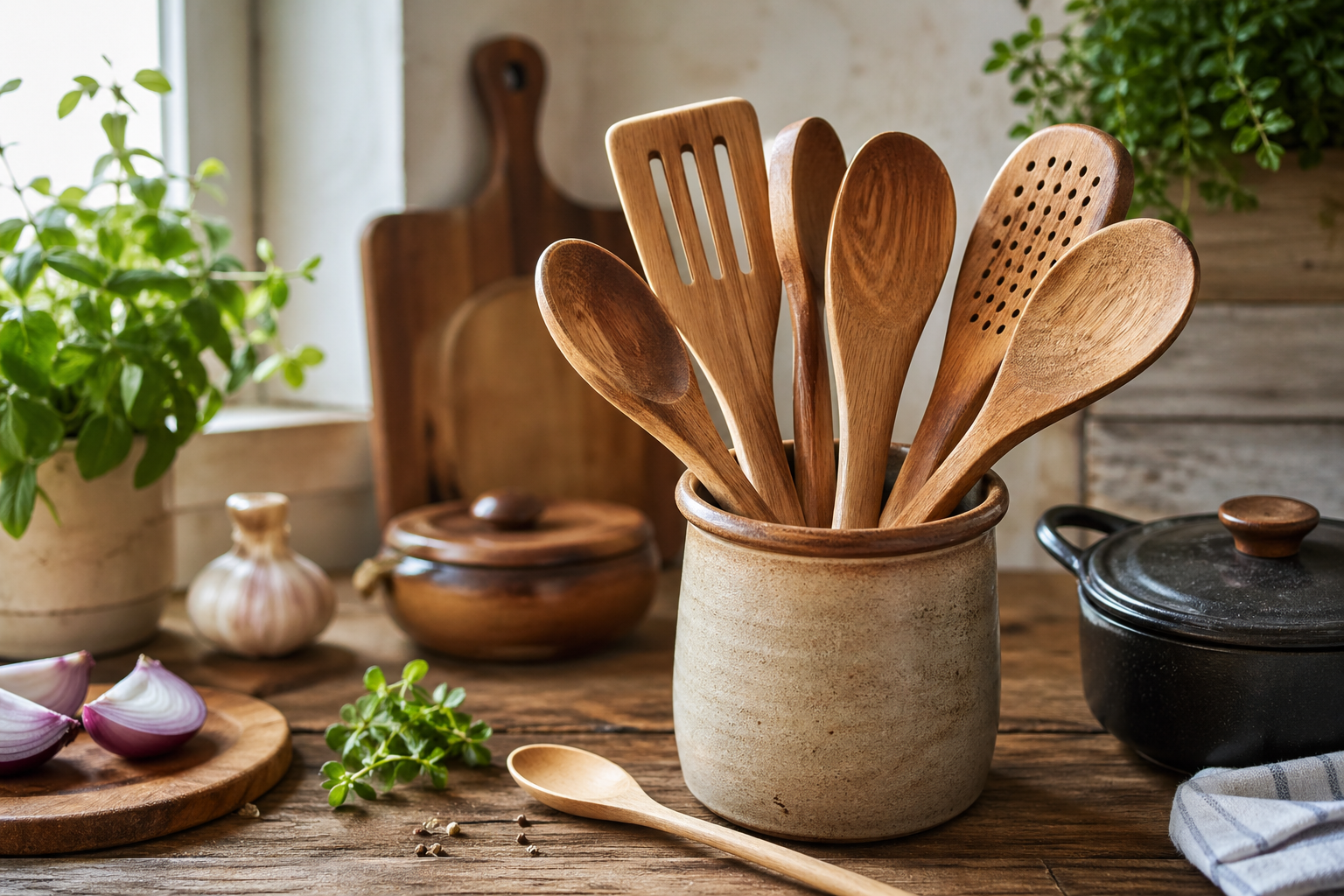
Wooden utensils protect them by:
- Preventing scratches
- Maintaining coating integrity
The nonstick cookware market continues to grow, driven by convenience and health trends, according to Grand View Research.
Comfortable and Easy to Use
Comfort matters during cooking.
Wooden utensils are:
- Lightweight
- Easy to grip
- Balanced
They don’t slip easily, even with wet hands.
Heat Resistance That Makes Cooking Easier
Plastic melts. Metal heats up.
Wood sits in the middle:
- It doesn’t absorb heat quickly
- It stays comfortable to hold
- It doesn’t warp under normal cooking temperatures
That means fewer interruptions while cooking.
Key Types of Wooden Kitchen Utensils Every Kitchen Needs
Not all utensils serve the same purpose. Having the right set makes cooking smoother.
Wooden Spatulas
These are everyday essentials.
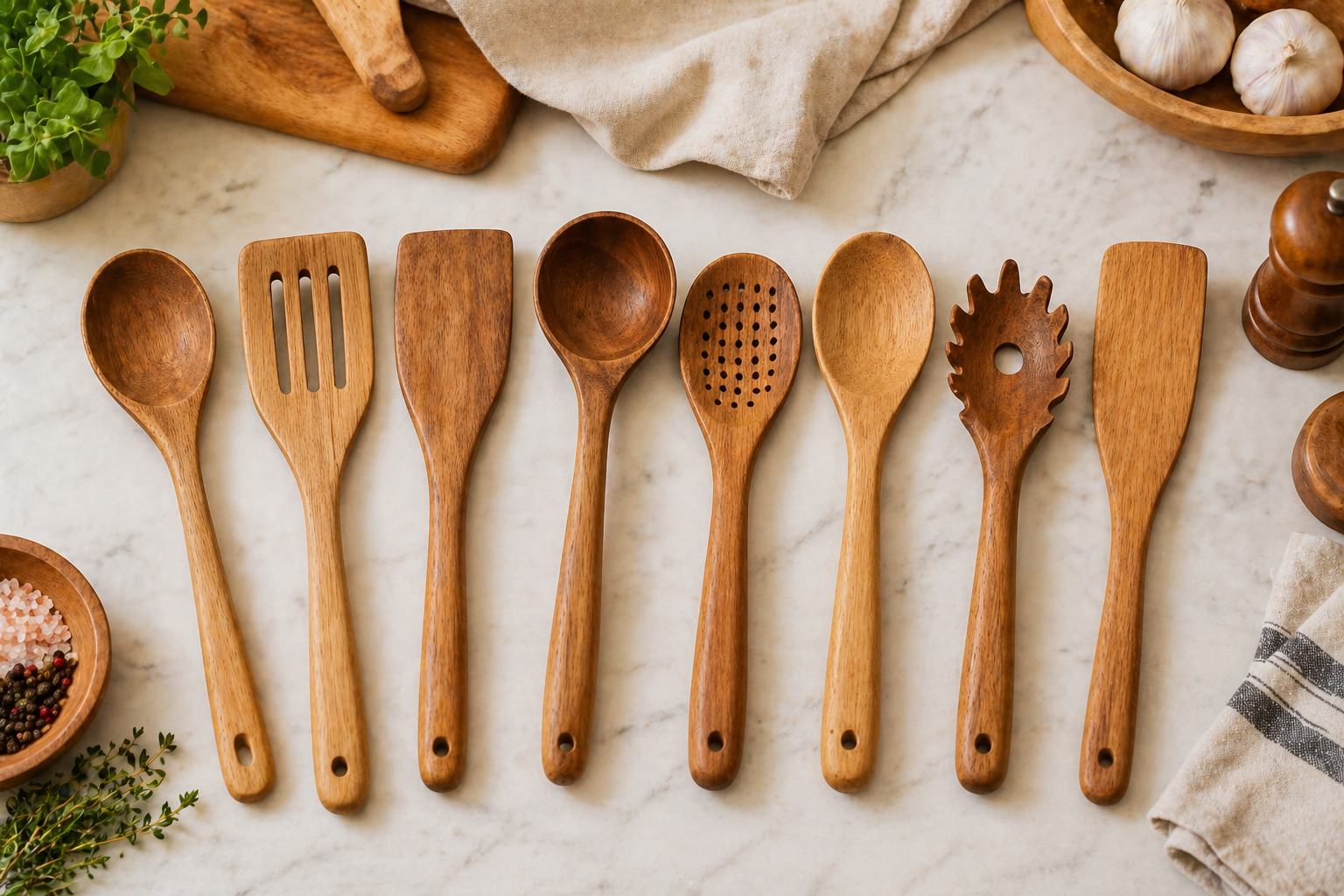
- Flat spatula for flipping eggs, pancakes, or vegetables
- Slotted spatula for draining oil
A good wooden flat spatula becomes a go-to tool quickly.
Wooden Ladles
Perfect for:
- Soups
- Sauces
- Stews
They handle liquids without scratching pots.
Wooden Spoon Sets
Versatile tools for:
- Stirring
- Mixing
- Serving
Many kitchens rely on them daily.
Choosing the Right Tool for Each Task
Think of utensils like tools in a workshop.
| Task | Best Tool |
|---|---|
| Frying | Flat spatula |
| Stirring | Spoon |
| Serving soup | Ladle |
Using the right tool saves effort and improves results.
How to Choose High-Quality Wooden Kitchen Utensils
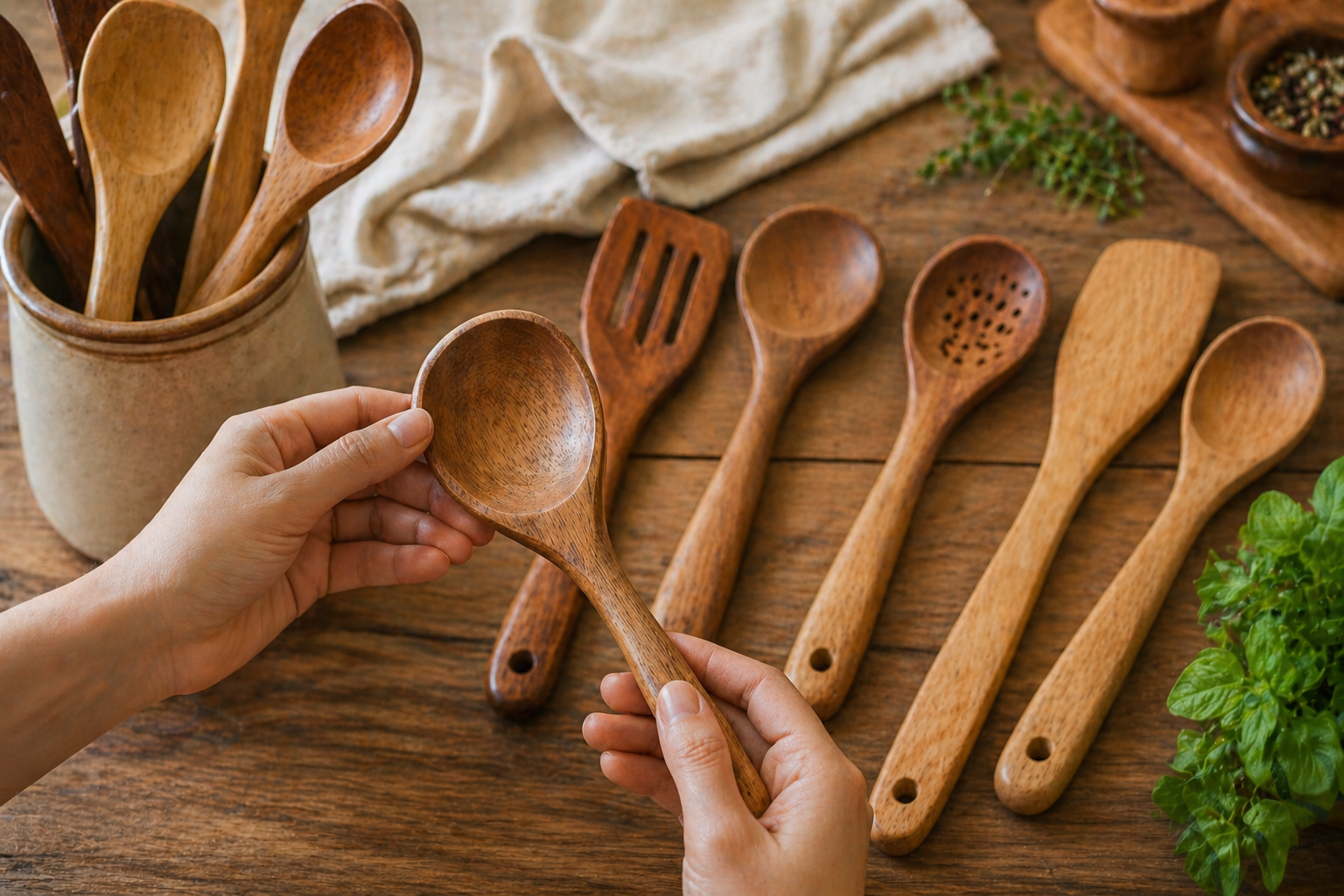
Not all wooden utensils are equal.
What to Look for Before Buying
| Feature | Why It Matters |
|---|---|
| Wood type | Affects durability |
| Surface finish | Prevents splinters |
| Handle design | Improves grip |
| Weight | Affects comfort |
Common Mistakes to Avoid
- Buying unfinished wood
- Ignoring cracks or rough edges
- Choosing overly thin designs
These lead to faster wear.
Why Premium Brands Make a Difference
Brands like Woodenhouse focus on:
- Material quality
- Smooth finishing
- Functional design
That results in tools that last longer and perform better.
Eco-Friendly Kitchens Start With Small Changes
Sustainability often feels like a big commitment. It doesn’t have to be.
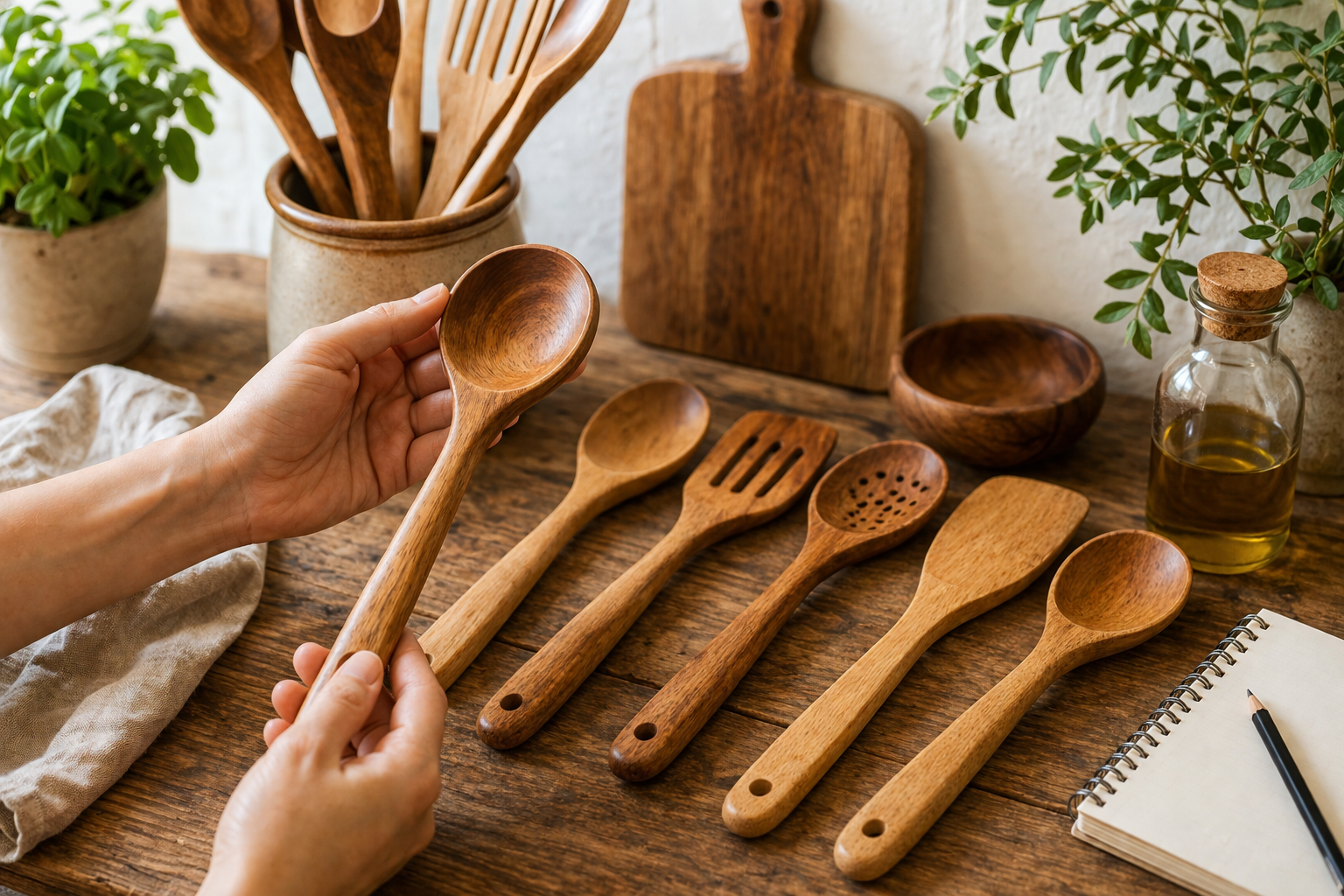
The Environmental Impact of Plastic Tools
Plastic waste is a global issue.
- Over 400 million tons produced annually
- Only a fraction recycled
These numbers highlight the need for change.
Why Wooden Utensils Support Sustainable Living
Wooden utensils offer:
- Biodegradability
- Renewable sourcing
- Lower environmental impact
According to Nielsen, 73% of consumers are willing to change habits to reduce environmental impact.
That includes kitchen choices.
How Switching Utensils Reduces Waste
Small changes add up.
- Fewer replacements
- Less plastic waste
- Longer product lifespan
It’s a practical step toward a cleaner kitchen.
Cost vs Value: Are Wooden Utensils Worth It?
Let’s talk numbers.
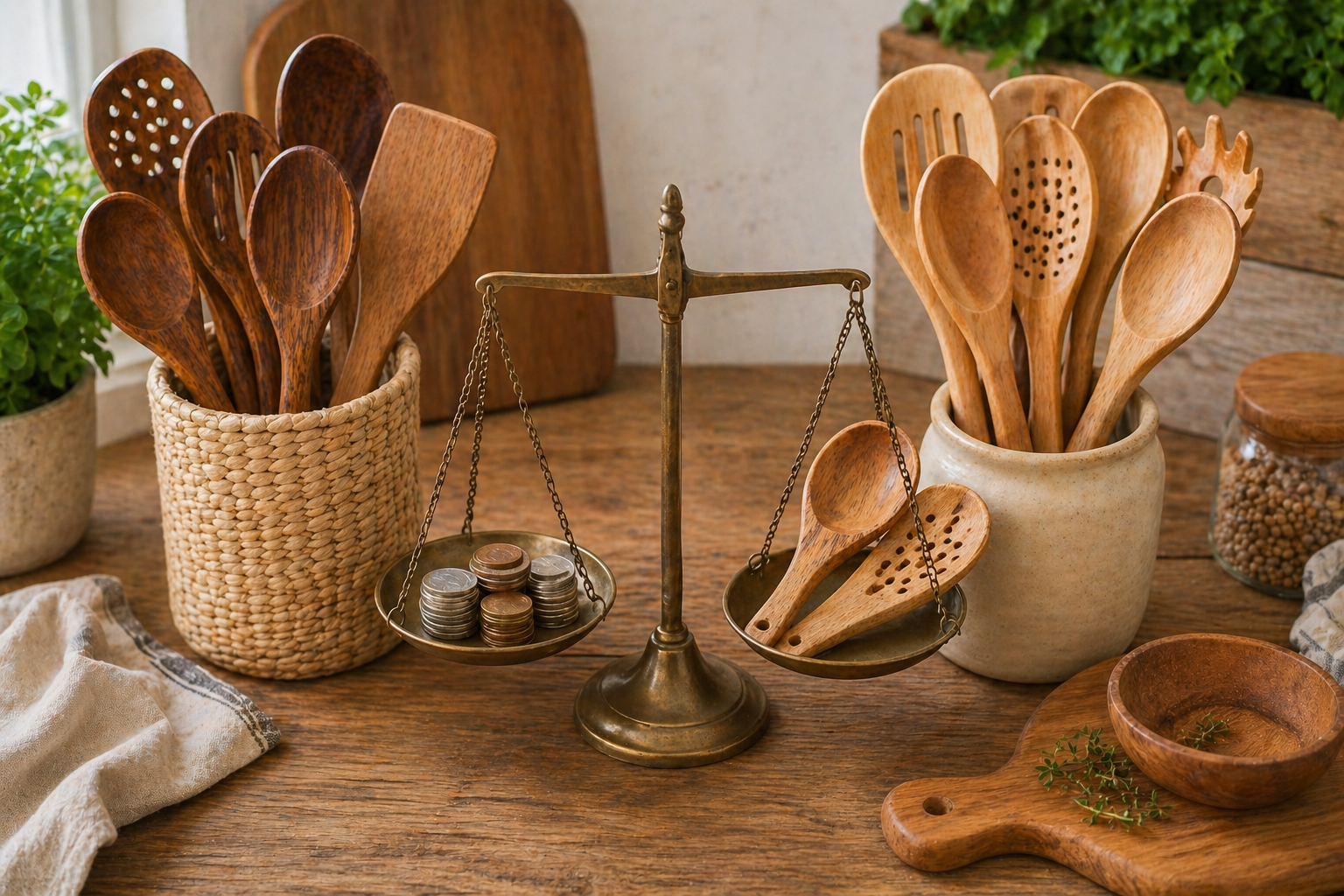
Comparing Costs Over Time
| Type | Lifespan | Replacement Frequency |
|---|---|---|
| Plastic | Short | High |
| Metal | Medium | Medium |
| Wood | Long | Low |
Long-Term Savings Explained
Wooden utensils often cost more upfront. But they last longer.
That reduces:
- Replacement costs
- Cookware damage
Practical Value Beyond Price
Value isn’t just about money.
It includes:
- Better cooking experience
- Safer materials
- Less frustration
Over time, these benefits matter more than price.
Expert Tips to Maintain Wooden Kitchen Utensils
Maintenance is simple. But it matters.
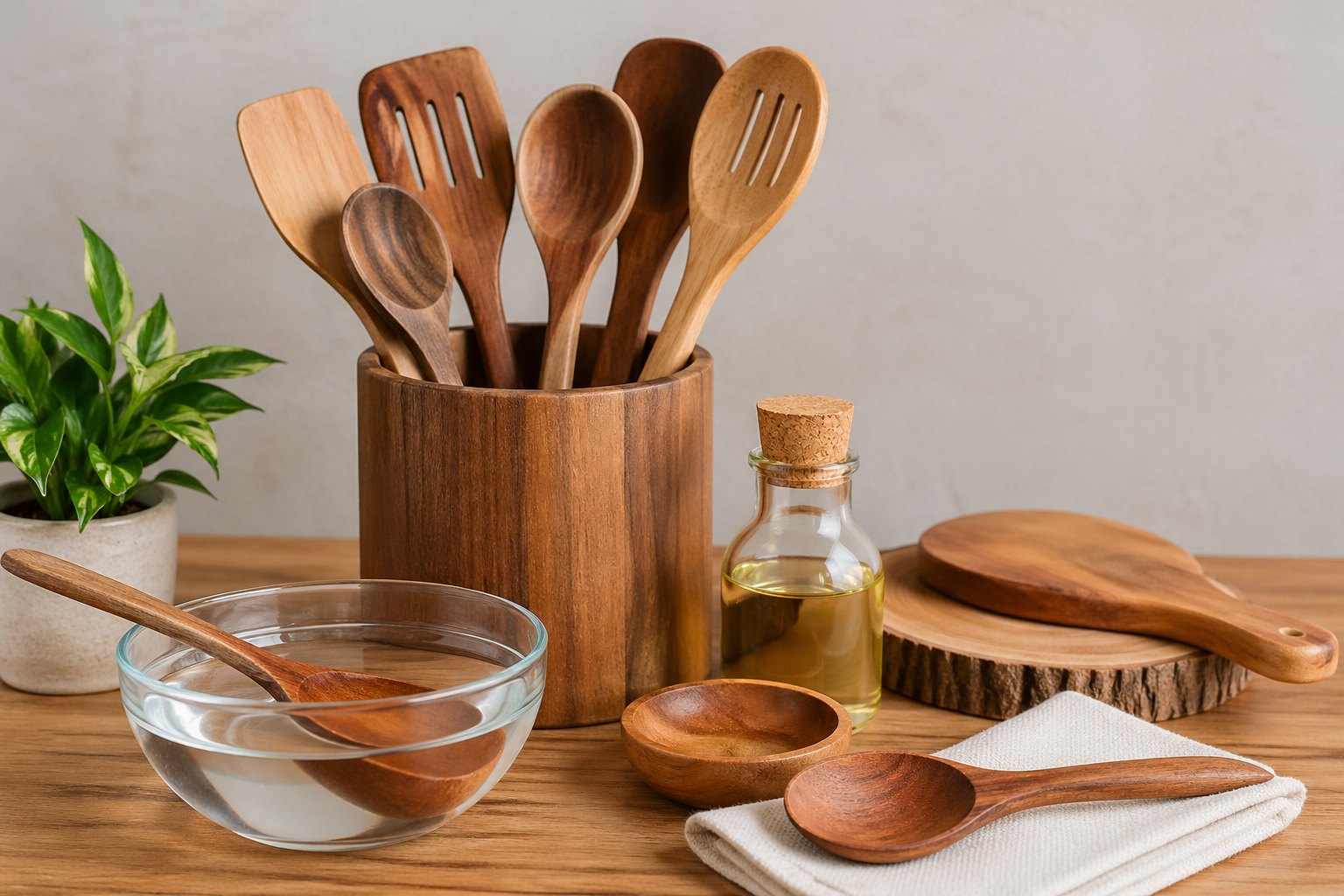
Cleaning and Care Basics
- Wash by hand
- Avoid soaking
- Dry immediately
How to Extend Lifespan
- Apply food-safe oil occasionally
- Store in a dry place
Signs It’s Time to Replace Your Utensils
- Deep cracks
- Persistent odors
- Rough surfaces
Most well-made wooden utensils last years.
Why More Home Cooks Are Switching to Wooden Utensils
This shift isn’t random.
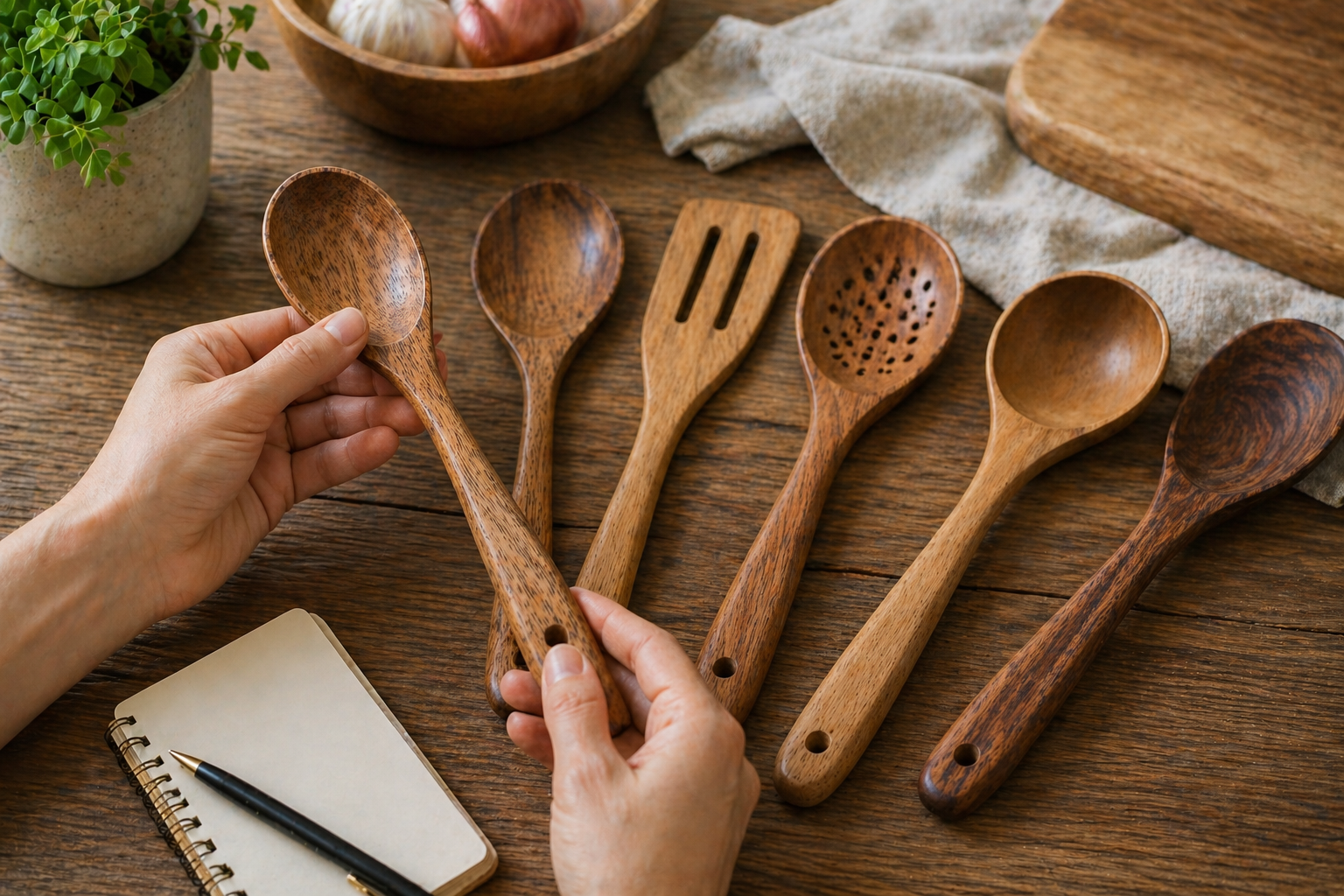
Growing Trend in Modern Kitchens
Consumers are paying more attention to:
- Materials
- Sustainability
- Health
The kitchenware market is gradually shifting toward eco-friendly options, according to Mordor Intelligence.
Real-Life Benefits People Notice
- Less damage to cookware
- More comfortable cooking
- Longer-lasting tools
These are practical improvements.
Final Thoughts: A Simple Upgrade With Big Impact
Kitchen tools don’t need to be complicated.
Wooden utensils offer:
- Reliability
- Comfort
- Safety
They solve common problems without adding new ones.
If you’re tired of replacing cheap tools or worrying about your cookware, switching to wooden kitchen utensils is a logical next step.
It’s not a trend. It’s a better way to cook.