


Clean Air Isn’t Optional — It’s an Industrial Imperative
Industrial air quality is one of those topics that often hides behind closed factory doors—quite literally. Yet, it directly affects worker safety, operational efficiency, and environmental compliance. As emission standards tighten and sustainability takes center stage, industries are turning to smarter, cleaner ways to control pollutants.
Modern air purification systems, especially industrial odor control technologies, are emerging as indispensable allies in that effort. These systems do far more than filter; they neutralize volatile compounds and capture fine particles that could otherwise slip into the atmosphere, protecting both people and the planet.

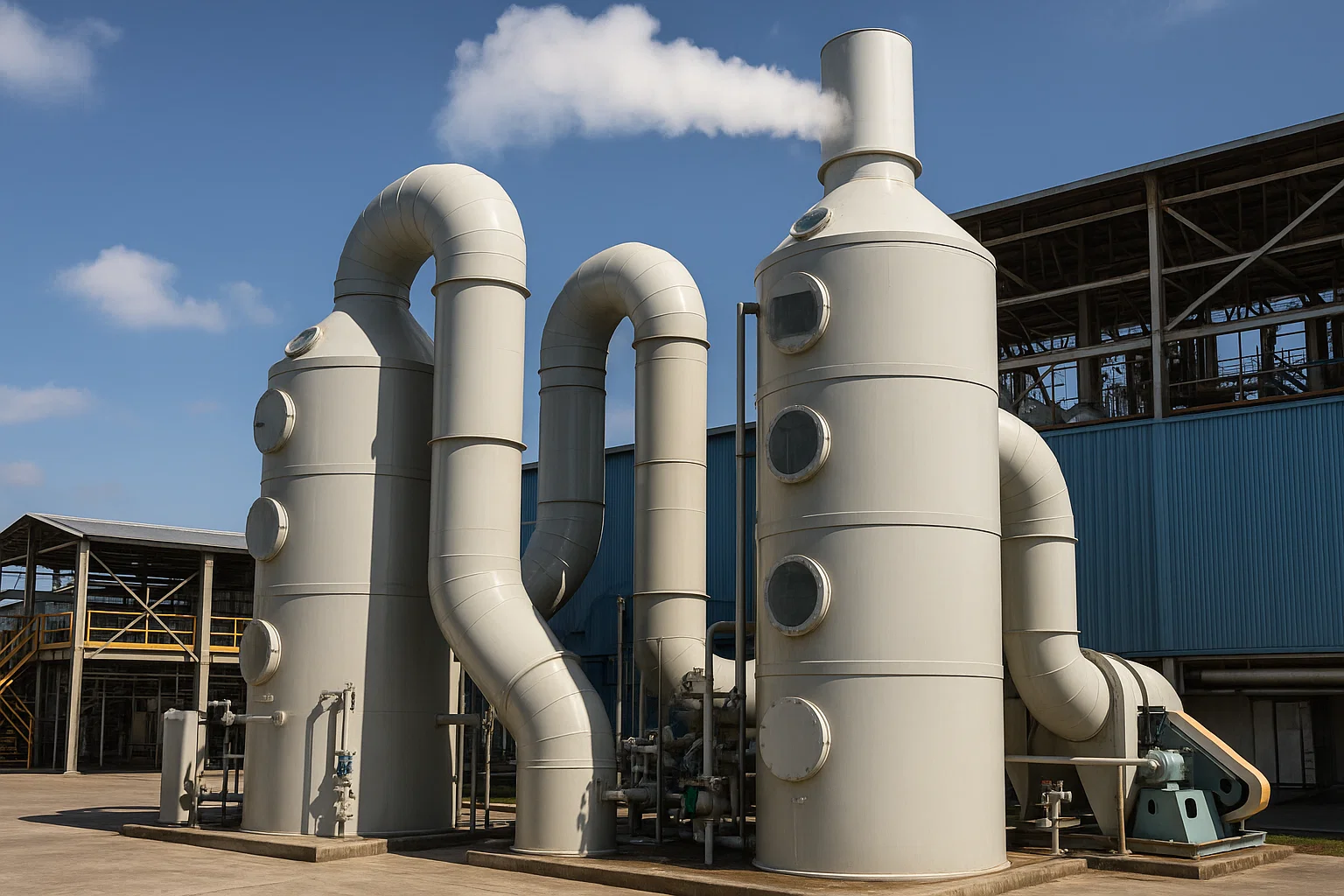
Among these solutions, wet scrubbers have become the quiet heroes of air purification. Their innovative use of fluid dynamics and gas absorption allows them to capture contaminants that traditional dry filters can’t handle. What was once seen as a costly maintenance burden has evolved into a strategic edge for forward-thinking manufacturers—improving efficiency, reducing emissions, and strengthening their environmental reputation.
Before diving deep, let’s start with a reality check. The World Health Organization (WHO) reports that air pollution contributes to 7 million premature deaths each year worldwide. Industries are a major contributor to that number. Yet, the EPA estimates that advanced air scrubber technologies can remove up to 99% of certain airborne pollutants. That kind of efficiency can turn a compliance headache into a sustainability advantage.
Why Industrial Air Purification Demands More Than Filters
The Invisible Challenge: Beyond Dust and Smoke
Most people imagine industrial pollution as visible smoke — but what you can’t see often matters more. Industrial exhaust often carries:
- Volatile organic compounds (VOCs) from paints and coatings
- Acid gases like hydrogen chloride (HCl), sulfur dioxide (SO₂), and ammonia
- Fine particulate matter (PM2.5), which can stay airborne for days
- Odorous compounds from food processing, rendering, or wastewater treatment
These aren’t the kind of contaminants you can trap with a simple fabric filter. When gas streams are humid, hot, or corrosive, dry filtration systems struggle. HEPA or cartridge filters clog, burn out, or degrade. Wet scrubbers, on the other hand, thrive in harsh environments.
A 2023 industrial emission study published by Springer Nature found that wet scrubbers achieved 96.81% total dust removal efficiency in coal preparation plants. The secret? Liquid contact. Instead of relying on passive filtration, wet scrubbers actively wash the air — turning harmful particles into manageable liquid waste.
The Compliance and Cost Equation
Let’s be blunt: industrial emissions don’t just harm the environment — they hurt the bottom line. Every region now enforces air-quality standards, from the EPA’s Clean Air Act in the U.S. to the EU Industrial Emissions Directive. Violations mean steep fines, suspended permits, or even shutdowns.
Modern wet scrubbers offer a smarter path. By simultaneously managing particulates, gases, and odors, they minimize both risk and operational cost. Companies that once needed multiple filtration systems now consolidate them into one. The result? Simplified maintenance, fewer parts, and predictable performance.
For operations managers and plant engineers, that translates to measurable value — not abstract green talk. Cleaner air equals fewer compliance audits, improved workplace safety, and smoother community relations.
Understanding Wet Scrubbers: The Industrial “Shower” for Polluted Air
What Exactly Is a Wet Scrubber?
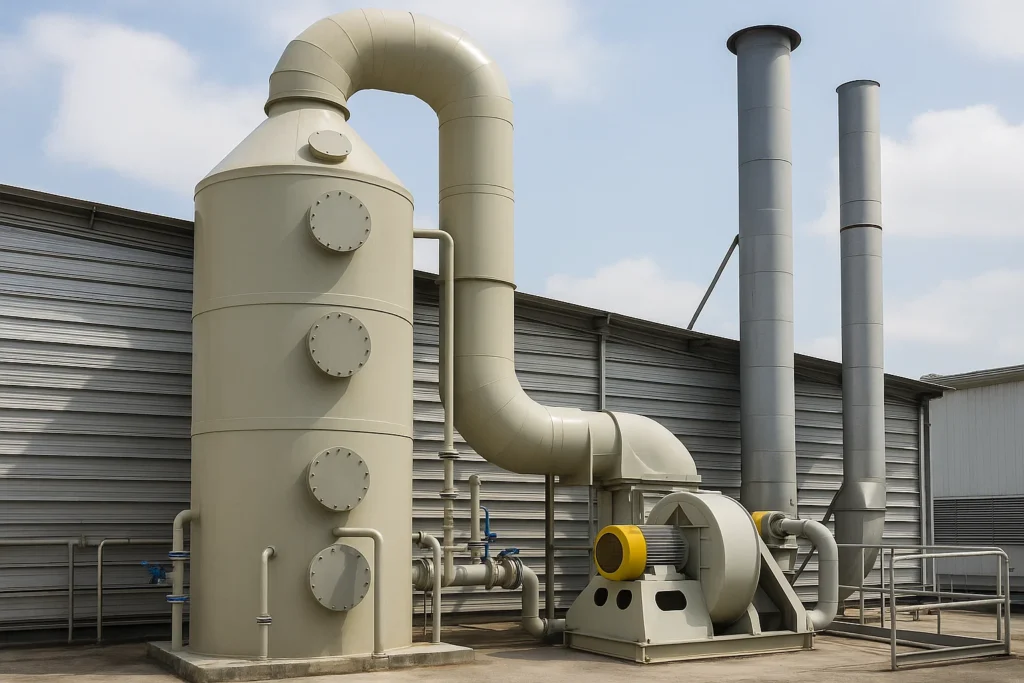
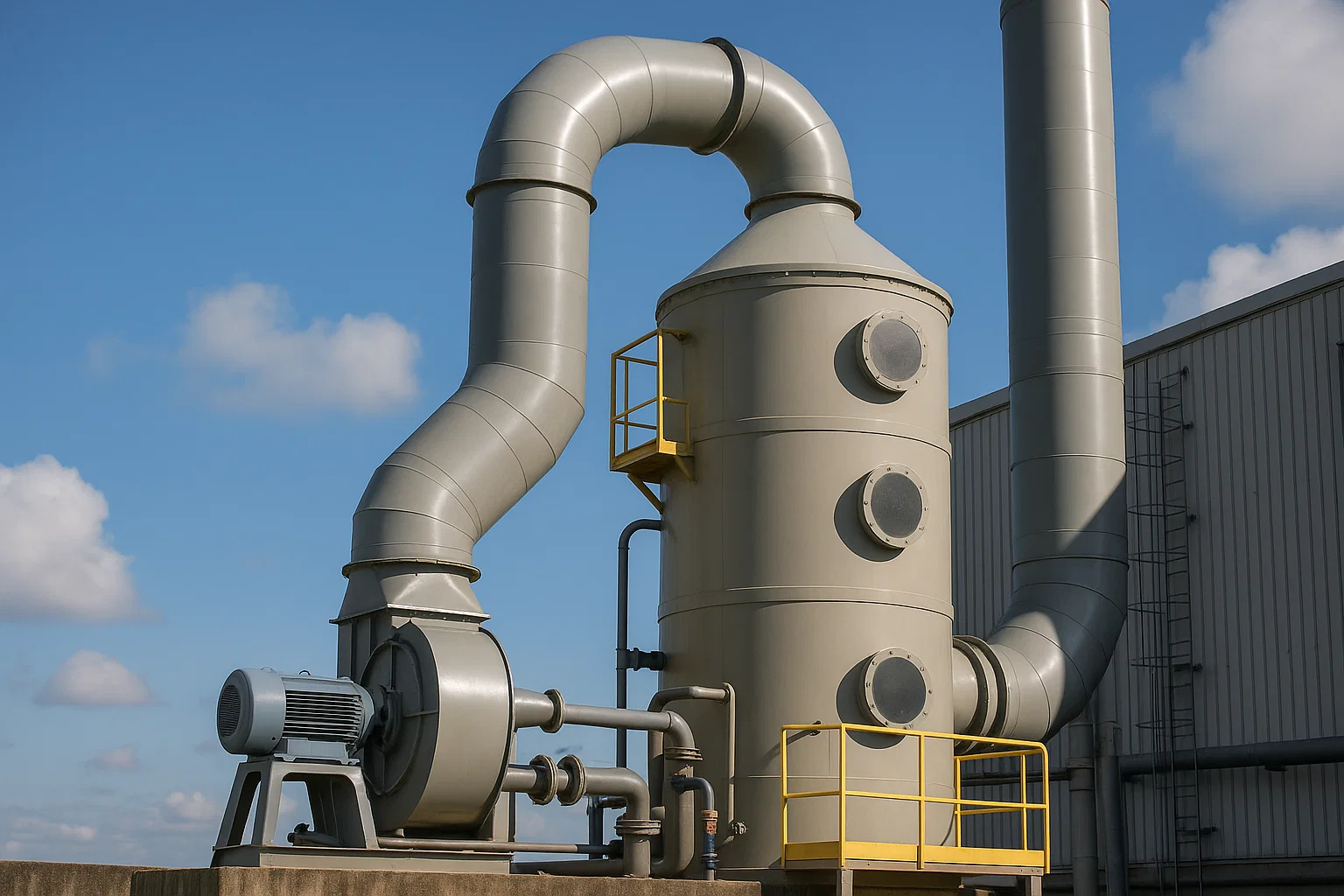
At its core, a wet scrubber is an air-cleaning tower where polluted gas meets a scrubbing liquid — typically water or a chemical solution. The gas enters from below, while the liquid is sprayed from above. When they mix, contaminants dissolve or stick to droplets. What exits the top is clean air; what drains at the bottom is treated liquid.
A basic system includes:
- Inlet duct – carries the polluted air
- Spray nozzles – disperse the scrubbing liquid
- Contact chamber or packed bed – maximizes gas-liquid interaction
- Demister – removes residual droplets before the air exits
- Recirculation pump and sump – collect and reuse liquid
The process is elegantly simple yet deeply efficient. Imagine an industrial “shower” that literally washes the air.
The Physics Behind Purification
Every pollutant molecule has one goal — escape. A wet scrubber’s job is to intercept it mid-flight. This happens through three main mechanisms:
- Inertial Impaction – Larger particles slam into droplets and stick.
- Diffusion – Tiny particles wander into droplets by Brownian motion.
- Absorption – Soluble gases dissolve into the liquid.
Different scrubber designs specialize in different tasks:
| Type | Best For | Efficiency Range | Typical Use |
|---|---|---|---|
| Venturi Scrubber | Fine dust, aerosols | 95–99% | Metal processing, chemical plants |
| Packed-Bed Scrubber | Gaseous pollutants | 90–98% | Acid gas control |
| Spray Tower | Large particulates | 70–90% | Foundries, cement plants |
| Cyclonic Wet Scrubber | Combined dust/gas | 85–95% | Mining and aggregate |
| Orifice Plate Scrubber | High-load gases | 90–97% | Fertilizer, food industry |
Modern systems often combine two or more types for multi-stage purification — removing particulates first, then neutralizing gases.
According to the EPA Air Pollution Control Technology Fact Sheet, well-designed wet scrubbers can capture up to 99% of acid gases and over 95% of particulates.
Efficiency That Speaks Volumes: The Data Behind Modern Wet Scrubbers
When engineers talk about efficiency, they don’t exaggerate. Wet scrubbers consistently outperform many alternatives. For example:
- EPA data shows 99% sulfur dioxide (SO₂) removal in optimized packed-bed systems.
- A Springer study demonstrated 96.81% total dust removal in coal processing environments.
- WetAirScrubber.com reports 97% acid gas removal efficiency, especially for HCl and ammonia-rich streams.
That’s not marketing bravado — it’s measurable science.
What Drives This Efficiency
A wet scrubber’s performance hinges on three engineering variables:
- Contact surface area – The more the gas interacts with liquid, the higher the capture rate.
- Pressure drop – Balances energy use and pollutant removal.
- Liquid-to-gas (L/G) ratio – Too little liquid, and pollutants escape; too much, and energy costs soar.
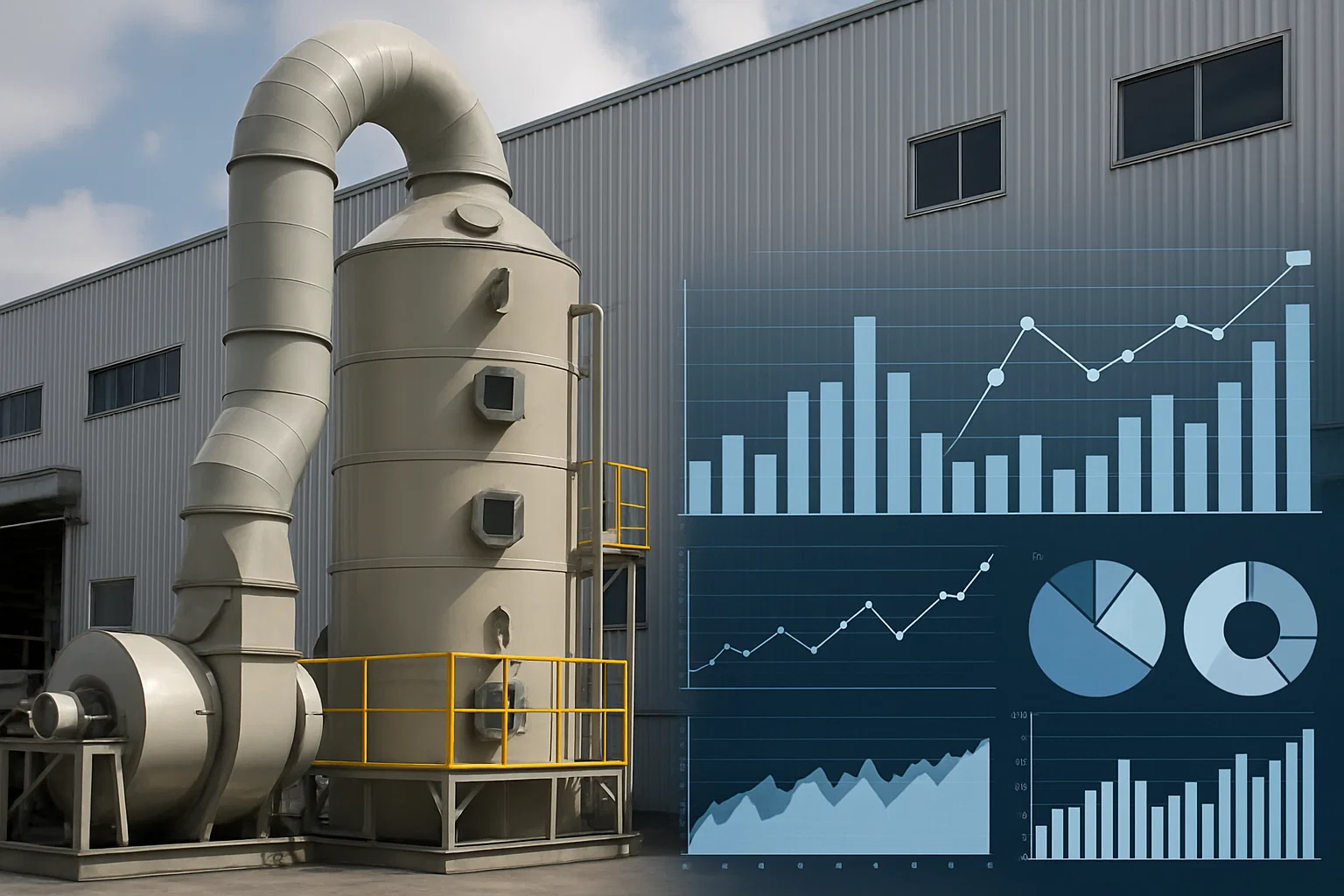
Today’s systems use advanced computational fluid dynamics (CFD) to optimize these parameters. Engineers simulate airflow and droplet paths before fabrication, reducing waste and trial time.
Innovations That Changed the Game
Modern scrubbers aren’t stuck in the 1980s. A wave of innovation has swept the field:
- New absorbent media with high chemical reactivity enhance VOC capture.
- Modular scrubber units allow quick scaling — perfect for growing facilities.
- Smart monitoring systems now adjust liquid flow and pH automatically, keeping performance steady despite load variations.
- Composite materials resist corrosion, extending lifespan in aggressive gas environments.
Imagine a scrubber that “thinks” — continuously optimizing flow rates, chemical dosing, and water recycling without human intervention. That’s not science fiction. It’s happening across refineries, fertilizer plants, and food manufacturing facilities worldwide.
And the cost implications? Massive. These advancements can cut operational energy by up to 25% compared to older systems, according to industry benchmarking reports from Environmental Science & Engineering Magazine.
From Basic to Breakthrough: The Design Evolution
Old vs. New
Traditional wet scrubbers were largely mechanical — fixed nozzles, manual pumps, and single-pass water loops. Maintenance was tedious, and efficiency fluctuated with humidity or temperature.
Today’s systems are digital. Flow meters, sensors, and automated pH controllers make real-time adjustments. It’s like upgrading from a flip phone to a smartphone.
New-age engineering enhancements include:
- Variable-speed pumps reducing energy consumption.
- Structured packing media with higher contact efficiency and lower pressure drops.
- Anti-fouling coatings minimizing scaling or clogging.
- Modular design for fast cleaning and media replacement.
These upgrades have elevated scrubbers from simple compliance tools to critical efficiency drivers in industrial operations.
Customized for Every Industry
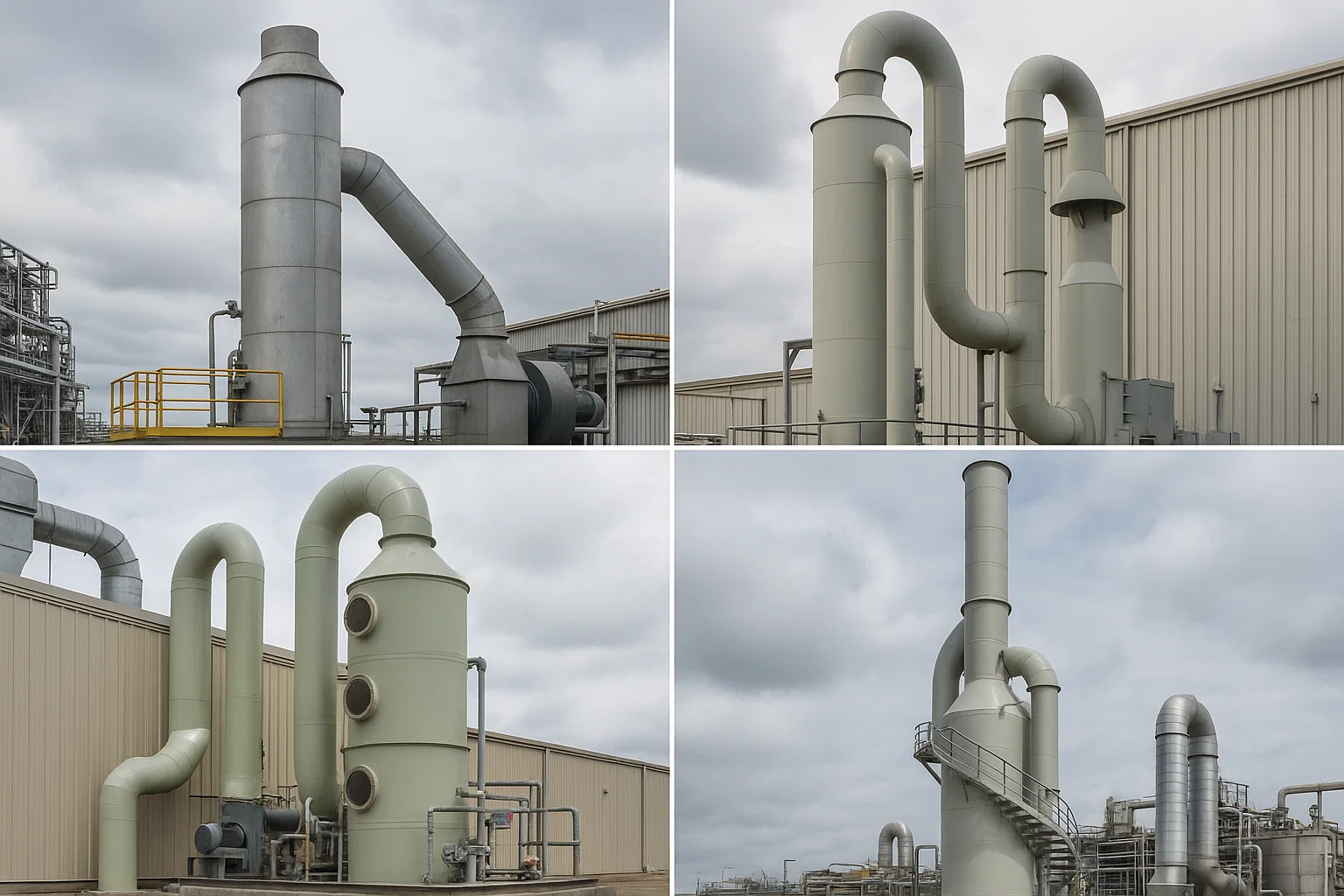
No two industries breathe the same air. Each has its own pollution profile. Let’s look at how wet scrubbers adapt:
| Industry | Key Pollutants | Recommended Scrubber Type |
|---|---|---|
| Chemical Processing | HCl, SO₂, Cl₂ | Packed-Bed Scrubber |
| Cement Manufacturing | Dust, alkaline gases | Venturi + Spray Tower |
| Metal Finishing | Acid mist, chromium compounds | Orifice Plate Scrubber |
| Food & Beverage | Odors, organic vapors | Wet Cyclonic |
| Wastewater Treatment | Ammonia, hydrogen sulfide | Packed-Bed with caustic solution |
The modularity also allows plants to retrofit existing ducts or systems without major redesigns — saving both time and capital.
Wet Scrubbers vs. Other Industrial Air Purification Systems
Here’s where things get interesting. Engineers often debate which system delivers the best ROI. The truth? It depends on the pollutant type and operating conditions.
Quick Comparison
| Technology | Ideal Pollutant Type | Efficiency | Maintenance | Cost | Notes |
|---|---|---|---|---|---|
| Wet Scrubber | Gases, particulates, odours | 95–99% | Medium | Moderate | Handles corrosive/humid gases |
| Electrostatic Precipitator (ESP) | Fine dust | 90–98% | High | High | Poor with sticky particles |
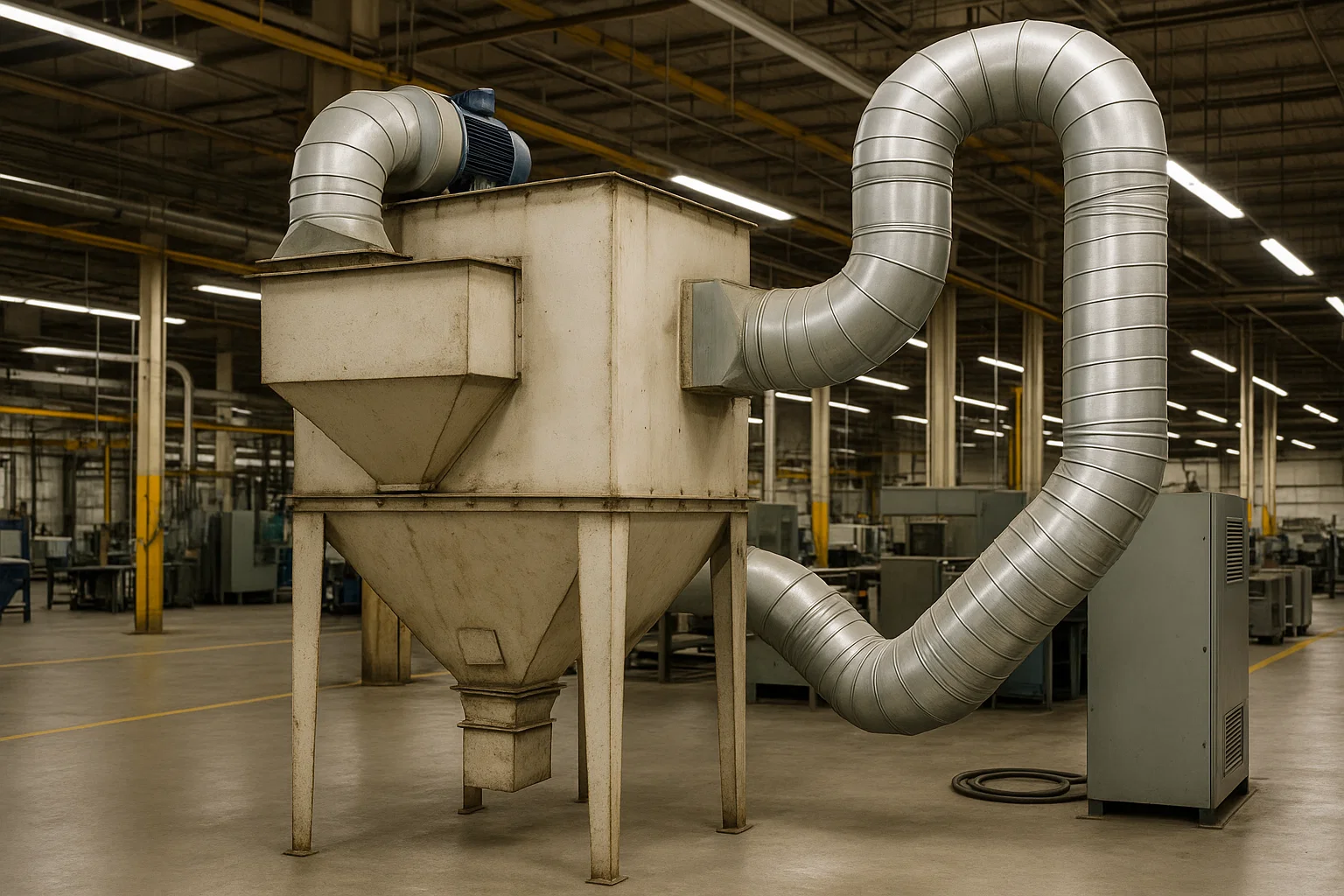
| Fabric Filter (Baghouse) | Dry dust | 99% | High | Moderate | Not suitable for moist air |
| Activated Carbon Filter | VOCs, odours | 70–90% | Medium | High | Short lifespan in humid conditions |
What gives wet scrubbers the edge is versatility. They’re the only system capable of tackling both gaseous and particulate pollutants simultaneously. They also operate safely in environments where fire or explosion risks make dry filters unsuitable.
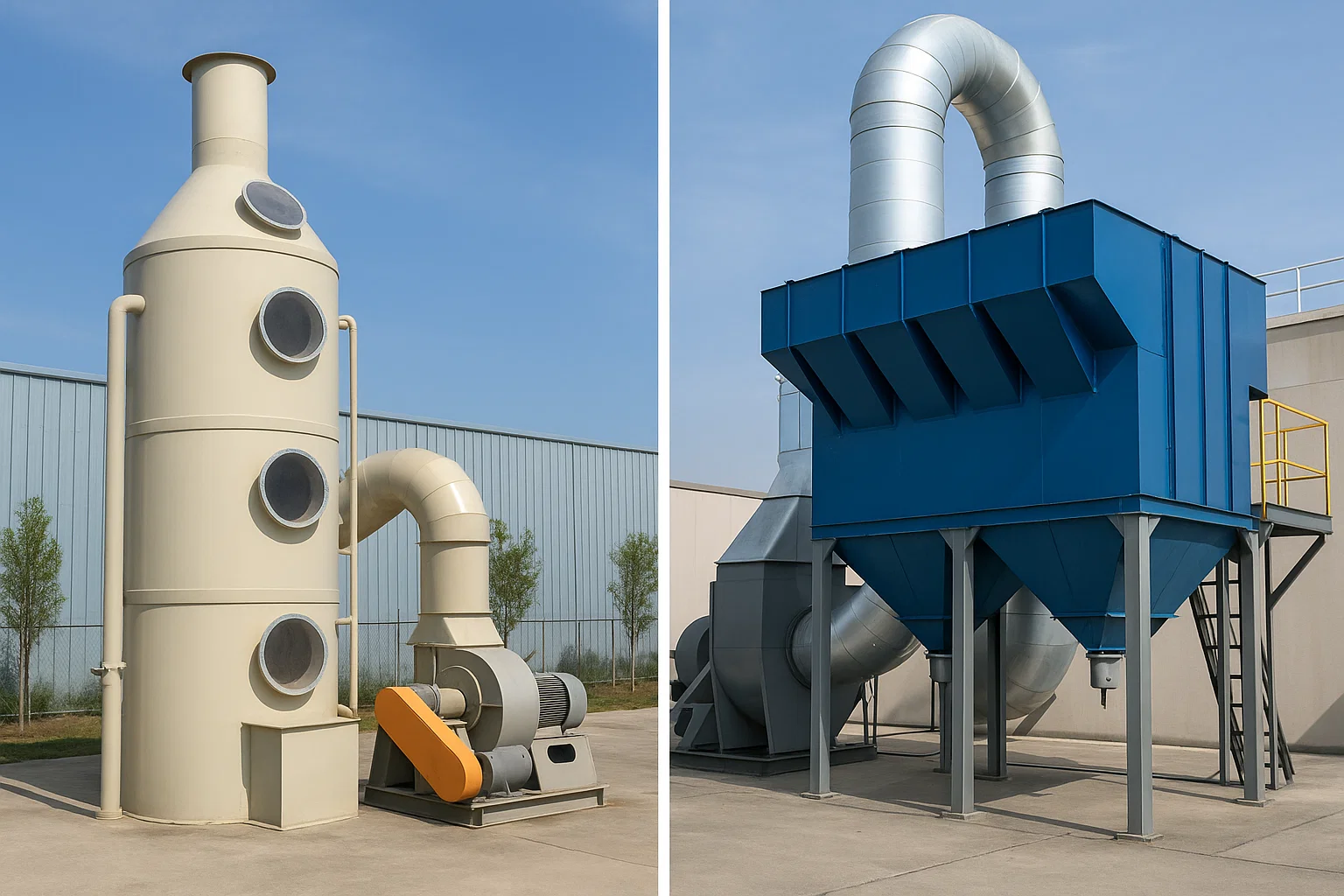
Unlike baghouses, they don’t release secondary dust plumes during cleaning. And unlike ESPs, they maintain performance in variable flow or humidity.
In industries dealing with sticky, corrosive, or odor-heavy emissions — think fertilizer plants or pulp mills — wet scrubbers aren’t optional. They’re indispensable.
Engineering for Efficiency: How Design Shapes Performance
The Fluid Dynamics Advantage
At first glance, a wet scrubber looks deceptively simple. But beneath the metal casing lies a sophisticated dance between airflow, droplet size, and chemistry. Engineers call it “mass transfer” — the art of maximizing contact between polluted gas and the scrubbing liquid.
The key lies in droplet control. Too large, and they miss fine particles. Too small, and they escape as mist. Modern systems use Venturi throats and high-pressure nozzles that atomize liquid into optimal droplet sizes — typically between 10 and 50 micrometers.
According to Industrial & Engineering Chemistry Research Journal, optimizing droplet size alone can boost particulate removal by 20% while lowering water usage. That’s serious efficiency gained through smart physics.
Then there’s liquid-to-gas ratio optimization (L/G). By adjusting the amount of scrubbing liquid relative to gas volume, systems fine-tune pollutant capture without overusing energy or water. Advanced control panels monitor this ratio continuously, adapting to fluctuations in flow or contaminant concentration.
Material Matters
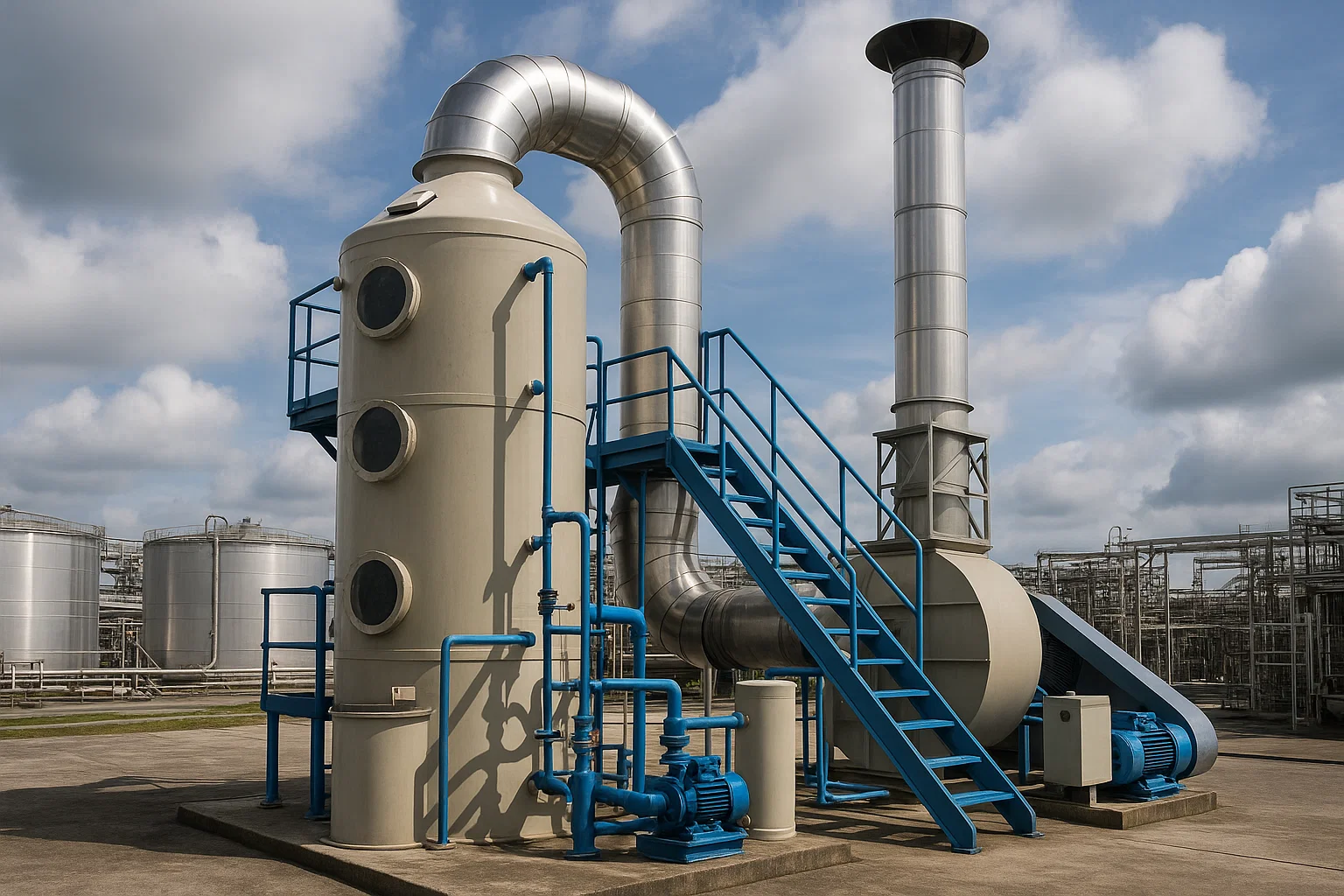
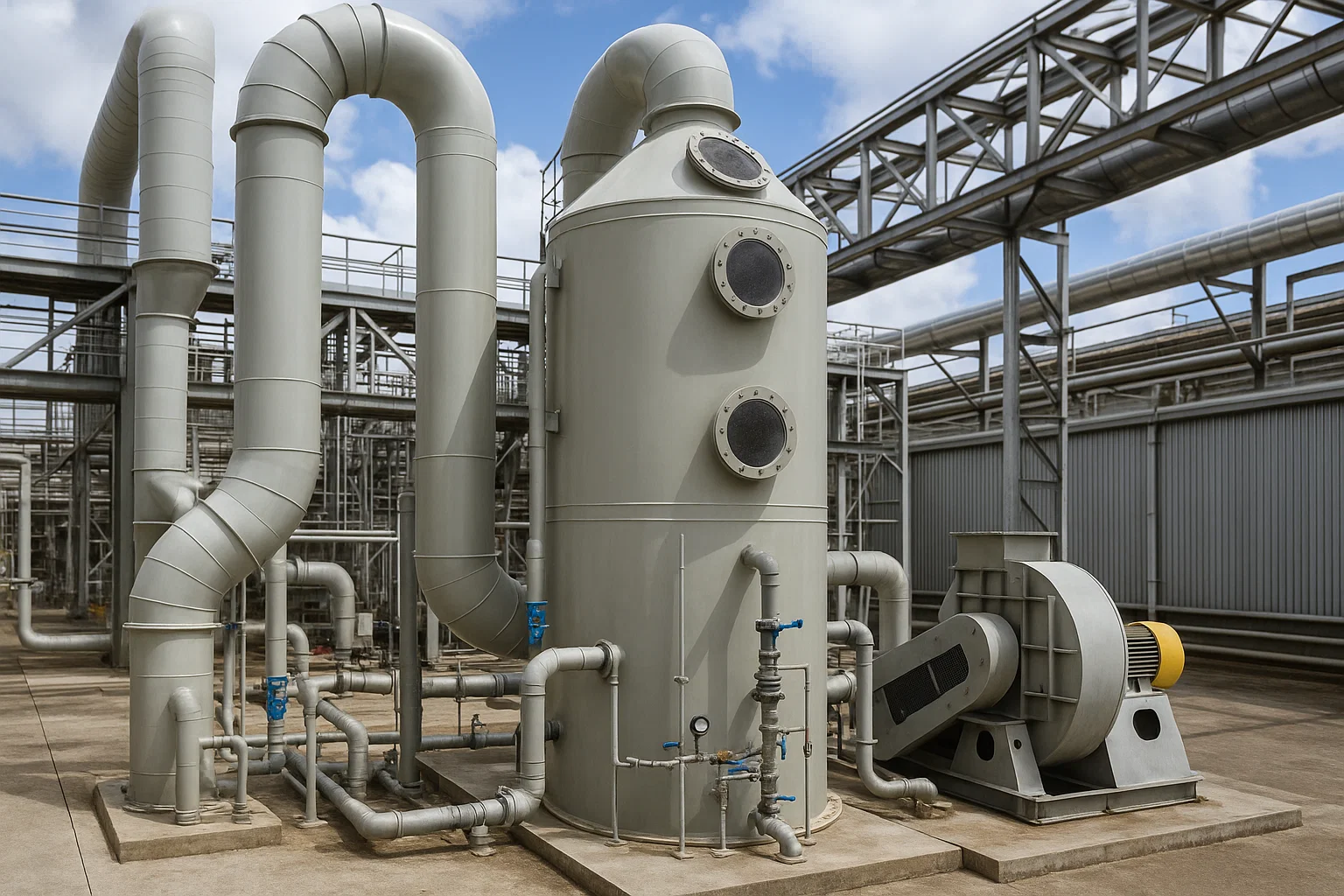
Efficiency doesn’t mean much if your system corrodes halfway through the year. Traditional carbon steel units corrode quickly in acidic environments. That’s why newer wet scrubbers use FRP (fiberglass-reinforced plastic), polypropylene, or PVC-lined steel.
According to Plant Engineering Magazine, FRP scrubbers have a service life up to 15 years longer than mild-steel models in acid-heavy environments.
And materials don’t just affect lifespan — they influence thermal stability and internal flow dynamics. A smoother interior surface means fewer dead zones where pollutants can linger.
Smarter Control Systems
Today’s wet scrubbers are part of the “smart plant” ecosystem. Sensors measure pH, temperature, pressure drop, and liquid conductivity, feeding that data to a control system that self-adjusts in real time.
For example:
- If gas acidity spikes, the system automatically increases alkaline reagent feed.
- If pressure drop rises, spray nozzles are cleaned via back-flush or sonic pulses.
- If liquid levels drop, pumps activate automatically to prevent cavitation.
This automation doesn’t just boost performance — it reduces operator workload and maintenance costs.
It’s no exaggeration to say that AI-assisted scrubber control is redefining what “efficiency” means in industrial air purification.
The Environmental and Economic Upside
Cleaner Air, Better Business
It’s easy to treat emission control as an expense. But modern facilities are learning that it’s an investment with tangible payoffs.
For instance, the U.S. Department of Energy found that facilities adopting advanced pollution control systems like wet scrubbers experience a 15–25% drop in energy losses associated with air handling inefficiencies.
Cleaner emissions also open the door to new certifications and market advantages:
- ISO 14001 compliance improves sustainability ratings.
- Corporate ESG reporting now includes air-quality metrics.
- Cleaner operations enhance local community trust and brand reputation.
In other words, pollution control has evolved from a regulatory checkbox to a competitive advantage.
Waste Stream Benefits
A lesser-known perk: many wet scrubber systems generate treatable liquid byproducts instead of hazardous solids. For example, SO₂ absorbed into alkaline scrubbing liquid forms gypsum (CaSO₄·2H₂O) — a reusable material in construction.
That circular benefit means industries can turn waste into usable products instead of landfill-bound sludge. Some chemical plants even sell recovered compounds as secondary raw materials.
Water Recycling Systems
Modern designs minimize environmental impact by recycling water in closed-loop systems. Instead of constantly flushing out contaminated liquid, advanced systems:
- Separate solids via hydrocyclones or filters
- Adjust pH using automated chemical dosing
- Reuse water for up to 95% of the scrubbing cycle
That drastically reduces both freshwater demand and wastewater treatment costs.
As reported by Water Environment Federation Journal, closed-loop wet scrubbers can cut water consumption by 70–90% compared to older open systems.
Cost Analysis Snapshot
| Benefit Category | Traditional System | Modern Wet Scrubber | ROI Impact |
|---|---|---|---|
| Pollutant Removal | 80–90% | 95–99% | Better compliance |
| Energy Consumption | High | Moderate | -20–25% |
| Maintenance Frequency | Weekly | Monthly/Quarterly | -40% labor |
| Lifespan | 5–8 years | 15–20 years | +150% asset life |
| Water Use | Continuous | Recycled loop | -70% consumption |
When you line up the numbers, the payback period for a new wet scrubber system can be as short as 18–24 months, depending on the plant’s scale and pollutant load.
Case Example: How Industries Are Adopting Wet Scrubber Technology
1. Metal Finishing Facilities
Electroplating and metal finishing plants emit hazardous acid mists and hexavalent chromium compounds. These pollutants are toxic and highly regulated. By installing high-efficiency packed-bed wet scrubbers, some plants have reduced emissions by over 98%, as noted in Environmental Progress & Sustainable Energy Journal.
The result: cleaner air, safer working conditions, and full compliance with OSHA exposure limits.
2. Fertilizer Manufacturing
Ammonia and hydrogen sulfide odors are typical pain points in fertilizer plants. Wet scrubbers equipped with caustic or hypochlorite solutions effectively neutralize these compounds. Operators report a 90% reduction in odor complaints within the first months of operation.
3. Food Processing and Rendering
Food plants can’t afford to let smells define their brand. Modern cyclonic wet scrubbers use liquid sprays and centrifugal force to eliminate organic vapors and fat aerosols. These systems meet strict air quality requirements without contaminating food zones or requiring combustible filters.
4. Wastewater Treatment Plants
Hydrogen sulfide (H₂S) is both foul-smelling and corrosive. Packed-bed scrubbers with sodium hydroxide solutions can remove over 99% of H₂S from exhaust air, based on data from Environmental Science & Technology Letters.
Each of these examples proves a simple truth: industries that adopt wet scrubbers early gain not only compliance but credibility — with regulators, communities, and investors alike.
Common Misconceptions About Wet Scrubbers
Despite their success, wet scrubbers often face a few persistent myths. Let’s clear the air:
Myth #1: They’re Too Expensive to Maintain
Modern wet scrubbers use automated cleaning, corrosion-resistant materials, and predictive maintenance alerts. Over time, they reduce operating costs, not increase them.
Myth #2: They Waste Water
Wrong again. Most advanced systems are closed-loop and reuse liquid for multiple cycles. Actual discharge volumes are minimal.
Myth #3: They’re Only for Chemical Plants
Wet scrubbers are used in cement, fertilizer, food, and even metal fabrication industries. Any process with hot, humid, or acidic gases benefits from this technology.
Myth #4: Dry Filters Are Always More Efficient
That may hold for dry dust, but once gases or mists enter the picture, dry filters falter. Wet scrubbers excel in mixed or corrosive pollutant streams.
Clearing up these misunderstandings helps decision-makers see wet scrubbers for what they are — one of the most versatile and future-proof solutions in air purification.
Sustainability and the Future of Industrial Air Purification
The manufacturing world is changing fast. Clean technologies aren’t fringe experiments anymore — they’re the new baseline.
Wet scrubbers play a central role in this sustainability push by:
- Enabling circular material recovery (e.g., gypsum or neutral salts).
- Reducing emissions below regulatory thresholds.
- Lowering energy and water use simultaneously.
- Supporting net-zero commitments through operational efficiency.
According to Statista, the industrial air pollution control systems market is projected to surpass $123 billion by 2032, growing steadily at 6.3% CAGR. Much of that demand will come from emerging economies modernizing their infrastructure and production facilities.
Integration with Carbon Capture
Here’s where the future gets exciting: hybrid wet scrubbers are being developed to absorb CO₂ alongside traditional gases. By combining chemical scrubbing agents like amines or carbonates, plants can capture part of their carbon footprint directly at the source.
This innovation could turn wet scrubbers into dual-purpose systems — managing both pollutants and greenhouse gases.
Why Torch-Air Leads the Charge
At this point, one thing is clear: not all wet scrubbers are created equal. The difference lies in engineering precision, materials, and adaptability.
Torch-Air, a leader in industrial air purification, has built its reputation on high-performance wet scrubber design and odor control solutions. The company’s technology combines field-tested chemical absorption methods with modern automation — making industrial air treatment both efficient and sustainable.
What Sets Torch-Air Apart
- Custom-engineered systems for specific emission profiles — from fertilizer plants to metal finishing.
- Advanced material construction using FRP and PVC-lined steel for corrosion resistance.
- Integrated monitoring for pH, flow, and temperature control.
- Water-efficient operation with built-in recycling circuits.
- Modular configurations that simplify installation and scaling.
By pairing industrial insight with practical innovation, Torch-Air isn’t just keeping pace with global air standards — it’s helping redefine them.
If your facility deals with corrosive, humid, or high-load emissions, a Torch-Air wet scrubber isn’t an optional upgrade — it’s a strategic investment in long-term compliance, sustainability, and operational excellence.
Conclusion: The Quiet Revolution in Industrial Air Purification
Industrial air purification doesn’t always make headlines — but it should. Wet scrubbers represent one of the most effective, adaptable, and sustainable technologies available today. They’re the silent guardians of clean production, keeping industries compliant, efficient, and responsible.
In a world where regulations tighten and sustainability isn’t a choice but an expectation, companies like Torch-Air are paving the way forward — transforming clean air from a regulatory burden into a measurable asset.
Because at the end of the day, every cubic meter of clean air that exits a plant isn’t just compliance — it’s a promise kept. A promise to workers, communities, and the planet.