


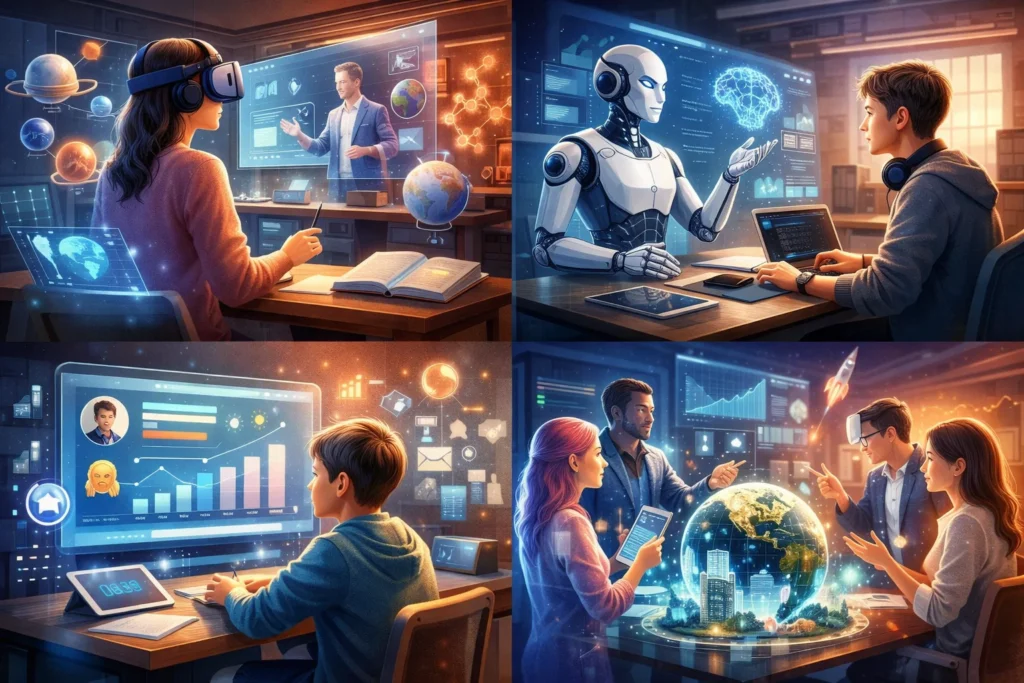
The future of education is rapidly evolving, and by 2026, the landscape of learning will be dramatically different. Online learning and digital learning, fueled by technological advancements, are set to redefine how individuals acquire knowledge and skills. This article explores the top trends shaping the future of education.
Why Online Learning Is Entering a New Era in 2026
The year 2026 marks a significant turning point for online education, driven by technological advancements and evolving learner expectations. Factors like increasing accessibility and the integration of AI are leading this transformation. This era is all about personalization in learning experiences.

How Technology Is Reshaping Global Education Systems
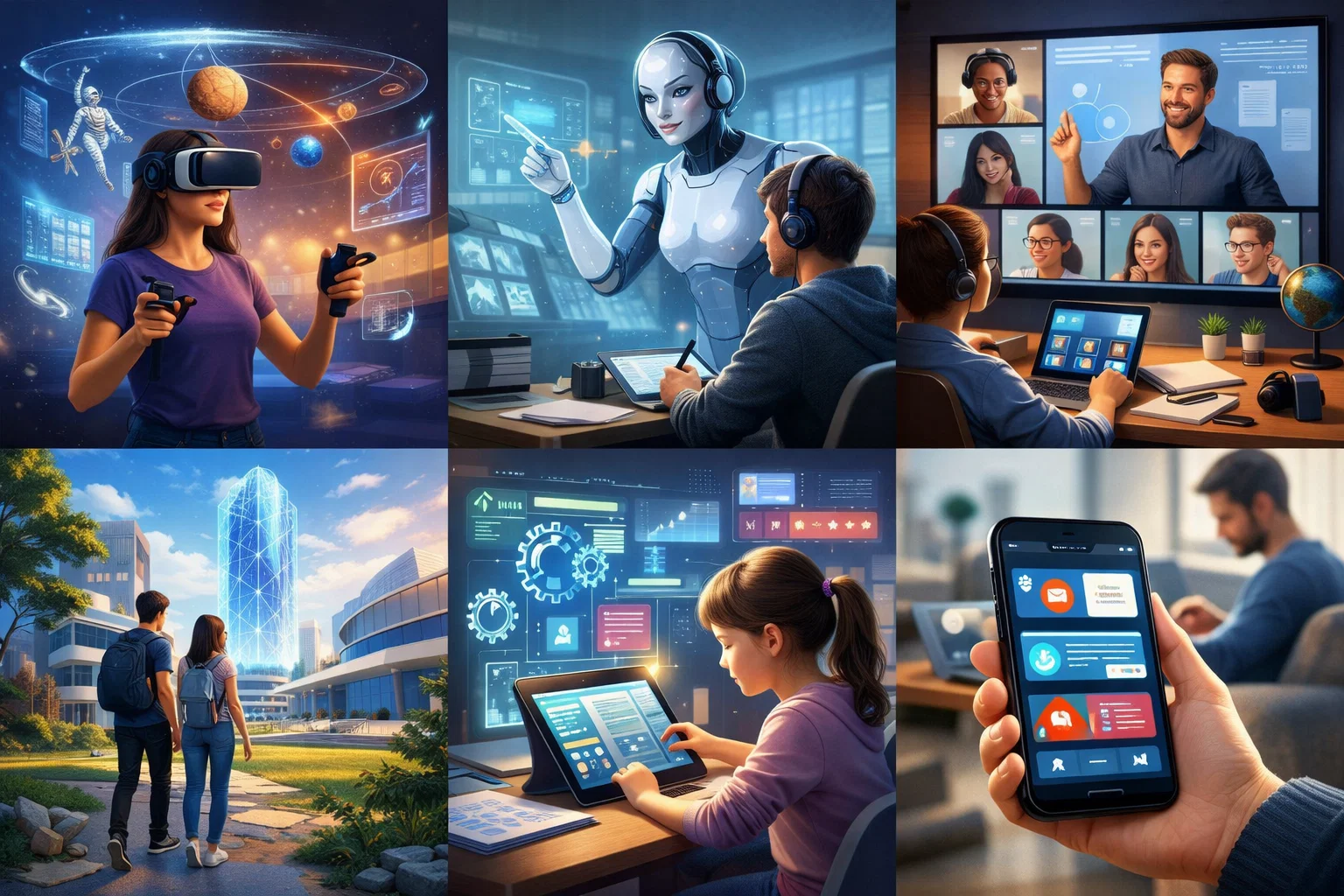
Technology is revolutionizing education systems worldwide, as education institutions adopt digital learning tools to enhance accessibility and effectiveness. The use of analytics and adaptive learning approaches is also reshaping how educational content is delivered to diverse learners.
The Shift from Traditional Learning to Digital Ecosystems
The shift from traditional classrooms to digital ecosystems is accelerating, with elearning platforms offering immersive and flexible learning experiences. This transition is transforming how learners engage with content, making learning more accessible and convenient. These are the elearning trends of 2026.
What Makes 2026 a Turning Point for Online Education
Several factors make 2026 a pivotal year for online education. These include key developments in the field, such as:
- Advancements in AI.
- The rise of personalized learning.
- The growing demand for flexible learning opportunities.
As a result, the convergence of these elements will reshape the entire education landscape.
AI-Powered Learning: The Biggest Revolution in Education
Artificial intelligence (AI) is poised to revolutionize education, offering unprecedented personalization and efficiency. AI-powered tools are transforming how learning content is created, delivered, and assessed, enhancing the overall educational experience. This is among the largest education trends.
How AI Creates Personalized Learning Paths
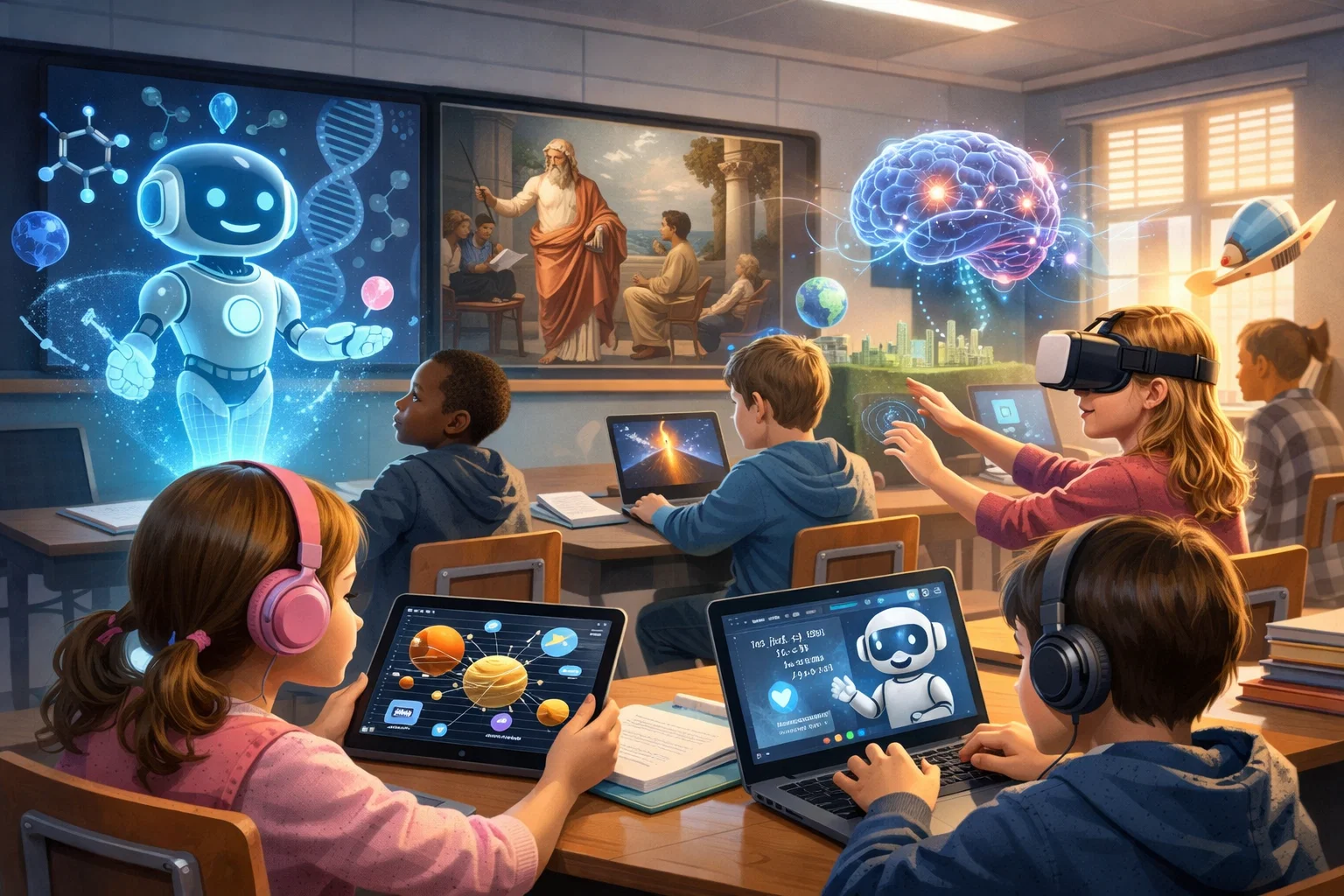
AI algorithms analyze learner data to create personalized learning paths, adapting to individual needs and learning styles. This tailored approach ensures that each learner receives the right content at the right time, maximizing their comprehension and knowledge retention.
AI Tutors and Real-Time Academic Support Systems
AI tutors provide real-time academic support, offering immediate assistance and guidance to learners. These AI tools can answer questions, provide feedback, and offer personalized recommendations, enhancing the learning experience and student outcomes in the online learning environment.
Predictive Learning: Identifying Weaknesses Before Failure
Predictive learning uses AI to identify potential weaknesses and learning gaps before they lead to failure. By analyzing learner data, AI can flag areas where students may struggle, allowing educators to intervene and provide targeted support and guidance, improving success rates.
The Role of Generative AI in Course Creation
Generative AI is transforming course creation by automating content generation and customization. These tools can rapidly produce high-quality learning content, allowing educators to focus on more strategic aspects of course design and delivery to each individual learner.
Hyper-Personalized & Adaptive Learning Systems
Hyper-personalized and adaptive learning systems are revolutionizing online education by tailoring content to individual student needs. Adaptive learning ensures that each learner receives a customized education experience. The technology also helps provide each student with their own learning paths.
Learning That Adjusts to Each Student’s Speed and Style
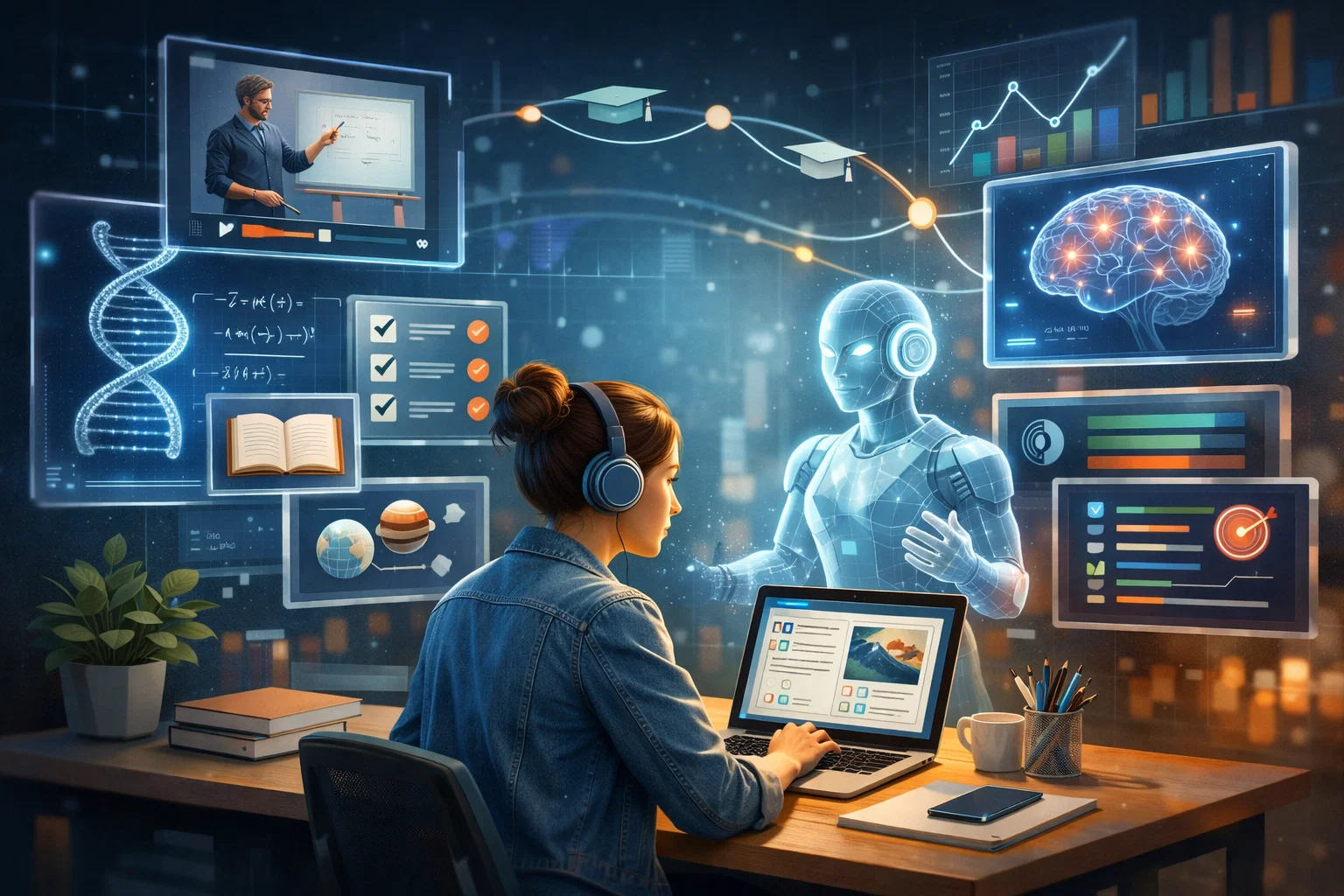
Adaptive learning adjusts to each student’s pace and learning style, providing a personalized learning experience. By assessing a learner’s progress, the system modifies the difficulty and content to optimize their learning outcomes, ensuring maximum comprehension and retention.
Data-Driven Education and Student Performance Tracking
Data-driven education leverages analytics to track student performance and identify areas for improvement. By analyzing data on learner progress, educators can make informed decisions about instructional strategies and interventions, resulting in more effective teaching and learning to each learner.
Benefits of Adaptive Learning for Long-Term Retention
Adaptive learning significantly enhances long-term retention by providing personalized learning experiences that cater to individual needs. By adjusting to a learner’s pace and style, adaptive learning ensures that knowledge is reinforced and retained over time, as well as in the real world.
Microlearning and Short-Form Education Dominance
Microlearning is becoming increasingly dominant as attention spans shift and the demand for focused learning grows. This trend emphasizes bite-sized learning modules and on-the-go education, catering to modern learners’ busy lifestyles and preferences for efficiency. It’s among the elearning trends in 2026.

Why Attention Spans Are Reshaping Education Design
Decreasing attention spans are driving a redesign of education, leading to the adoption of microlearning and short-form content. Educators are now tailoring learning experiences to fit within shorter timeframes, ensuring that information is delivered concisely and engagingly to each learner.
Bite-Sized Learning Modules for Faster Skill Building
Bite-sized learning modules enable faster skill building by delivering focused content in manageable chunks. This approach allows learners to quickly grasp essential concepts and apply them effectively, leading to more efficient and effective knowledge acquisition in different areas.
Mobile-First Learning and On-the-Go Education
Mobile-first learning and on-the-go education provide convenient access to learning content via smartphones and tablets. Learners can engage with educational materials anytime, anywhere, making learning more flexible and accessible, increasing the learning opportunities for many individuals.
Gamification and Interactive Learning Experiences
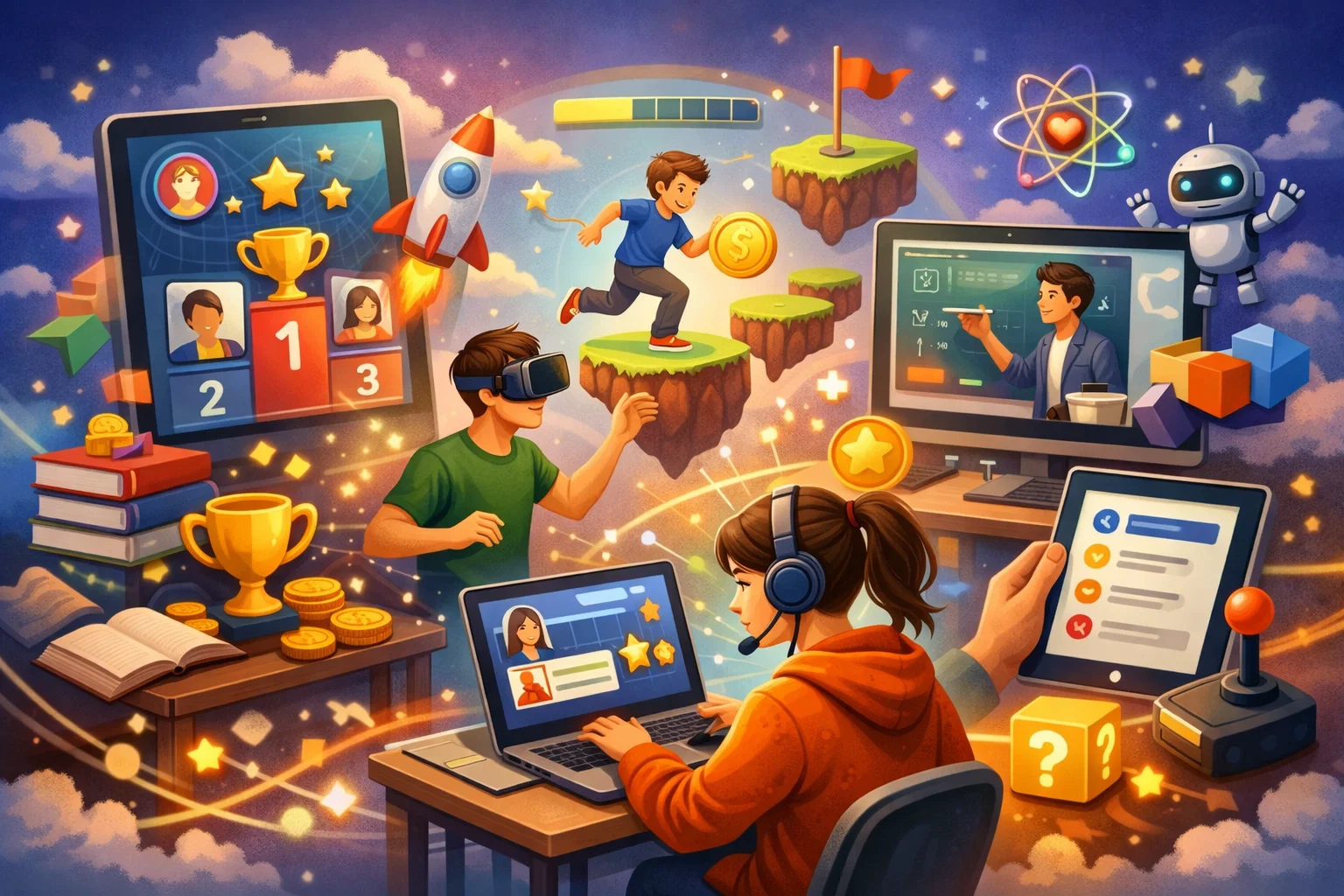
Gamification is transforming online learning by integrating game mechanics to boost student motivation. By incorporating elements such as points, leaderboards, and challenges, education institutions are creating engaging learning experiences that encourage active participation. These are some of the biggest learning trends for 2026.
How Game Mechanics Increase Student Motivation
Game mechanics significantly increase student motivation by making learning fun and interactive. Integrating elements like challenges, rewards, and competition transforms traditional learning into an engaging experience. Students are more likely to stay focused and retain information, improving success.
Badges, Rewards, and Progress Tracking Systems
Badges, rewards, and progress tracking systems are integral to gamified learning environments. These elements provide learners with tangible recognition of their achievements, encouraging them to stay motivated and engaged. Progress tracking helps learners visualize their accomplishments and strive for improvement.
Simulation-Based Learning for Real-World Skills
Simulation-based learning provides immersive, real-world experiences that enhance skill development. By engaging in realistic scenarios, learners can apply theoretical knowledge in practical contexts. Simulations help bridge the gap between classroom learning and the demands of professional settings.
Immersive Learning with AR, VR, and the Metaverse
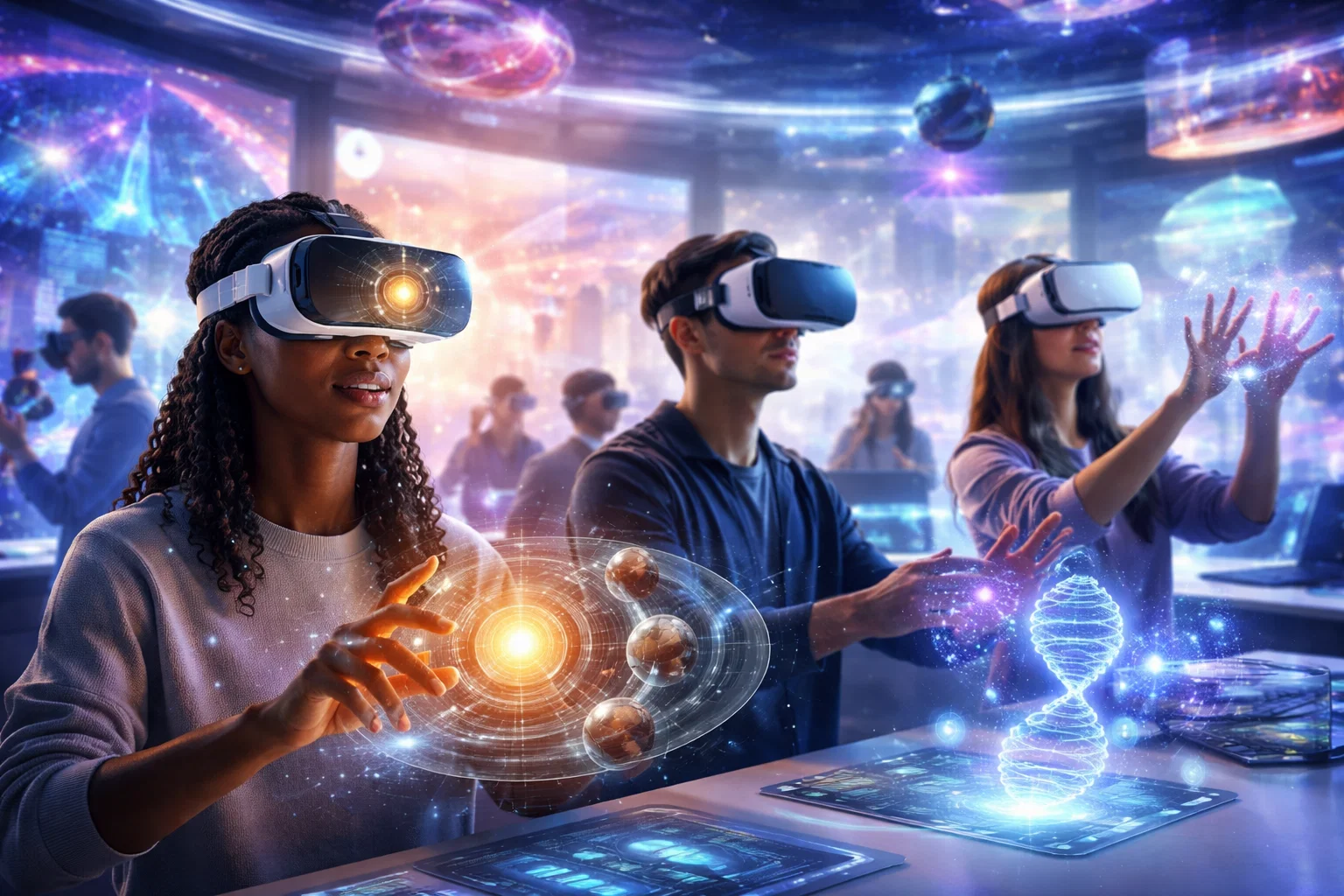
Immersive learning experiences using Augmented Reality (AR), Virtual Reality (VR), and the metaverse are revolutionizing education. These technologies create realistic and interactive environments that enhance engagement and knowledge retention in learners, representing top education trends in 2026.
Virtual Classrooms and Digital Learning Environments
Virtual classrooms and digital learning environments are transforming online education by providing immersive and interactive learning experiences. These platforms enable students to engage with content and interact with instructors in a realistic virtual setting, enhancing their overall learning outcomes.
AR/VR Labs for Science, Medicine, and Engineering
AR/VR labs provide hands-on learning experiences for science, medicine, and engineering students. By using these technologies, learners can conduct virtual experiments, explore complex systems, and practice real-world skills in a safe and controlled environment. This is a major shift in education.
How Immersion Improves Knowledge Retention
Immersion significantly improves knowledge retention by engaging multiple senses and creating memorable learning experiences. When learners are fully immersed in a virtual environment, they are more likely to retain information and apply it effectively, enhancing their understanding and comprehension.
Rise of Micro-Credentials and Skill-Based Education
The rise of micro-credentials and skill-based education reflects a growing demand for focused learning and practical skills. These credentials offer learners a flexible way to acquire specific competencies and prove their abilities to potential employers, marking a shift in educational priorities for 2026.

Why Employers Prefer Skills Over Traditional Degrees
Employers increasingly prefer skills over traditional degrees because they seek candidates with specific, demonstrable abilities. Micro-credentials and skill-based training programs provide targeted learning that aligns directly with industry needs, making graduates more job-ready and valuable in the workforce.
Digital Certifications and Online Badges Explained
Digital certifications and online badges are credentials that validate specific skills and competencies acquired through digital learning platforms. These certifications offer learners a portable and verifiable way to showcase their expertise and demonstrate commitment to ongoing professional development in elearning.
Stackable Credentials and Career Flexibility
Stackable credentials provide learners with a flexible pathway to build their skills and advance their careers. By accumulating a series of micro-credentials, learners can gradually build expertise in a specific area, adapt to changing job market demands, and increase their career opportunities.
Mobile-First and Anytime Learning Revolution
The mobile-first and anytime learning revolution is transforming how individuals access education, offering unprecedented flexibility and convenience. Learners can now engage with digital learning content on their smartphones, tablets, and other mobile devices, fitting education into their busy lifestyles.

Learning Anytime, Anywhere on Smartphones
Learning anytime, anywhere on smartphones is transforming education by providing learners with constant access to educational resources. Mobile learning offers the flexibility to study during commutes, breaks, or any other convenient time, making education more accessible and integrated into daily life.
Offline Learning and Low-Connectivity Solutions
Offline learning and low-connectivity solutions ensure that learners can access educational content even without a reliable internet connection. These solutions enable learners in remote areas or with limited access to engage with learning materials, promoting digital inclusion and equity in online education.
How Mobile Apps Are Leading Education Growth
Mobile apps are driving significant growth in education by providing user-friendly interfaces and personalized learning experiences. These apps offer a wide range of features, including interactive lessons, progress tracking, and social learning tools, enhancing engagement and knowledge retention in the process.
Community-Driven and Social Learning Models
Community-driven and social learning models are gaining prominence in online learning, fostering peer interaction and knowledge sharing. These models emphasize collaboration and communication, enhancing the learning experiences for all participants. Social learning can make learning opportunities more accessible.

Peer-to-Peer Learning and Study Communities
Peer-to-peer learning and study communities enhance online learning by enabling students to collaborate and learn from one another. These communities foster a supportive environment where learners can share insights, ask questions, and build a deeper understanding of the learning content.
Live Discussion-Based Learning Platforms
Live discussion-based learning platforms facilitate real-time interaction and knowledge exchange among learners. These platforms enable students to engage in dynamic discussions, share perspectives, and collaborate on projects, creating a more interactive and engaging online learning experience.
Collaboration Tools in Online Education Platforms
Collaboration tools integrated into online education platforms enhance teamwork and knowledge sharing among learners. These tools, such as shared documents, discussion forums, and group project spaces, facilitate effective communication and collaboration, promoting a sense of community.
AI Integration in Schools, Universities, and Institutions
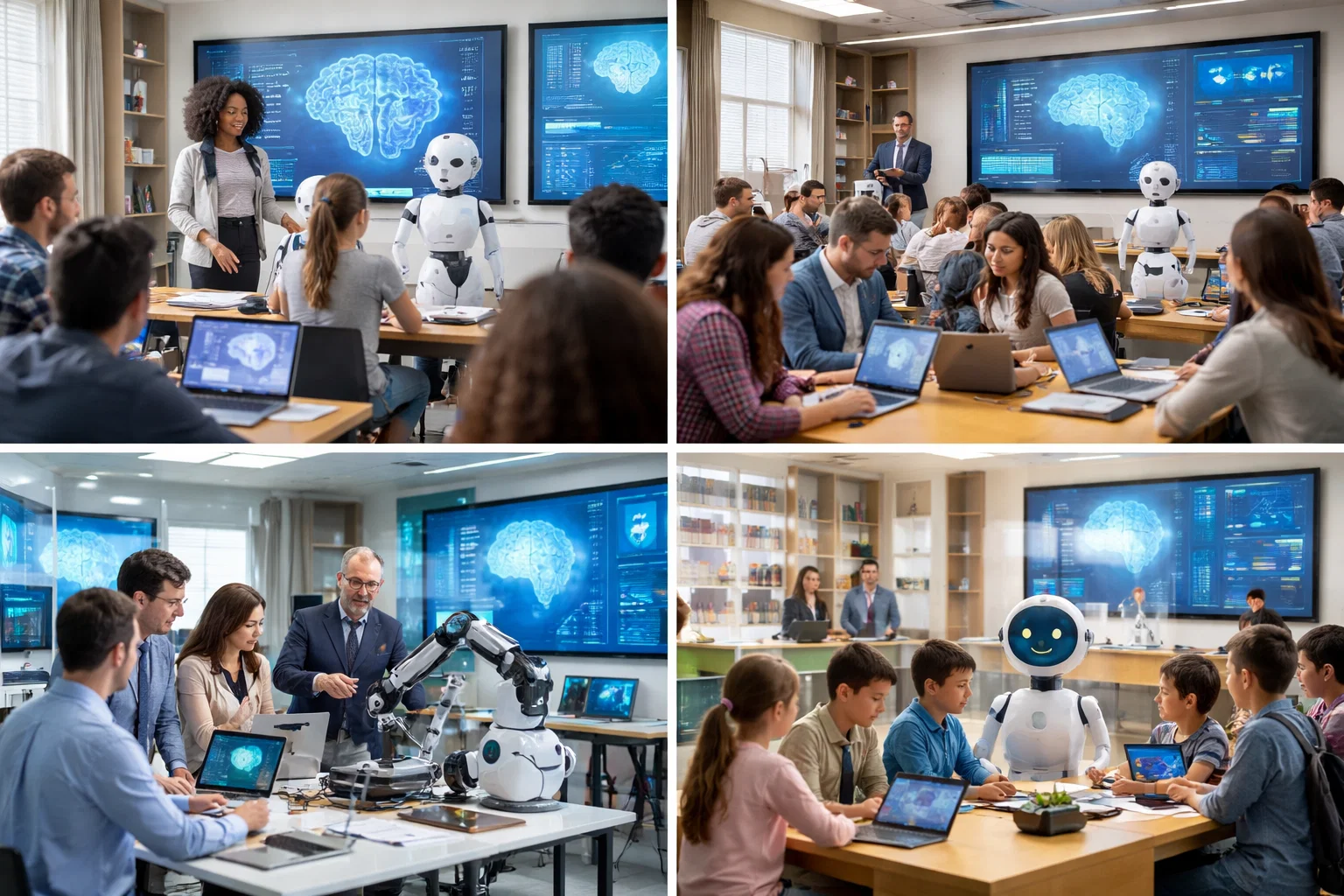
AI integration in schools, universities, and education institutions is transforming administrative processes and learning environments. AI-powered tools are being used to automate tasks, personalize learning experiences, and improve overall efficiency of online learning in 2026.
AI in Grading, Assessment, and Administration
AI is revolutionizing grading, assessment, and administration in education by automating routine tasks and providing data-driven insights. AI tools can efficiently grade assignments, provide feedback, and streamline administrative processes, allowing educators to focus on personalized teaching.
Smart Classrooms and Hybrid Learning Systems
Smart classrooms and hybrid learning systems are integrating technology to enhance the learning experience in both physical and virtual environments. These systems utilize interactive displays, AI-powered tools, and online learning platforms to create a flexible and engaging learning environment.
Governments and Global Education Policy Changes
Governments and global education policy changes are influencing the adoption of digital learning and online education initiatives worldwide. These policy changes often focus on promoting digital inclusion, ensuring equitable access to quality learning opportunities and supporting the integration of technology.
Emerging Challenges in Online Learning
Emerging challenges in online learning require proactive strategies to ensure effective and equitable learning experiences for all learners involved. These challenges include:
- Digital fatigue, which can impact engagement.
- Data privacy concerns, needing careful consideration.
- Accessibility gaps that must be addressed to reach all learners.
Digital Fatigue and Overload of Information
Digital fatigue and information overload are significant challenges in online learning, leading to decreased engagement and reduced learner well-being. Strategies to combat these challenges include promoting balanced screen time, curating relevant content, and providing resources for stress management.
Data Privacy and Ethical Concerns in AI Education
Data privacy and ethical concerns are critical issues in AI education, requiring careful consideration of how learner data is collected, used, and protected. Education institutions must implement robust privacy policies, ensure transparency in data practices, and address ethical considerations related to AI use.
Accessibility Gaps Between Regions and Socioeconomic Groups
Accessibility gaps between regions and socioeconomic groups pose a significant challenge to equitable online learning. Addressing these gaps requires targeted interventions to ensure all learners have access to the necessary technology, resources, and support to participate effectively.
Future Outlook: What Online Learning Will Look Like Beyond 2026
The future of online learning beyond 2026 envisions a shift towards lifelong learning ecosystems, increased human-AI collaboration, and a reevaluation of traditional degrees. These changes reflect the evolving needs of learners in a rapidly changing world, accelerated by the elearning trends.
The Shift Toward Lifelong Learning Ecosystems
The shift toward lifelong learning ecosystems emphasizes continuous professional development and personal growth throughout one’s career. These ecosystems provide learners with access to a wide range of learning opportunities, resources, and support, enabling them to adapt and thrive in evolving environments.
Human-AI Collaboration in Education
Human-AI collaboration in education is set to transform learning by combining the strengths of both humans and machines. AI can automate tasks, provide personalized support, and deliver data-driven insights, while educators can focus on fostering critical thinking, creativity, and social-emotional learning.
The End of Traditional One-Time Degrees?
The traditional concept of one-time degrees may evolve as learners increasingly pursue micro-credentials and continuous skill development. This shift reflects the need for flexible and adaptive learning pathways that align with the demands of the modern workforce in 2026, enhanced by the use of AI.