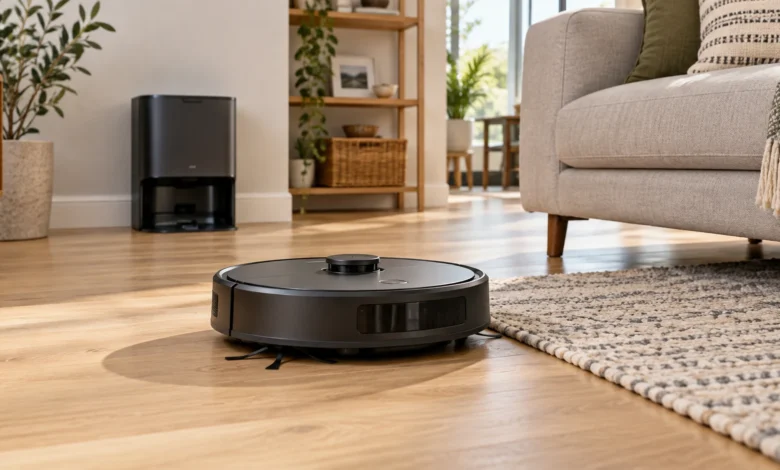
A robot vacuum should make your cleaning routine easier. Choosing one means looking beyond the longest feature list and asking how it will work in your home.
Furniture height, floor types, loose cables and even the space beside a power socket can affect which model makes sense. Before you buy, work through these ten checks to identify the features you will use—and the compromises you can live with.
1 Start With Your Home’s Cleaning Needs
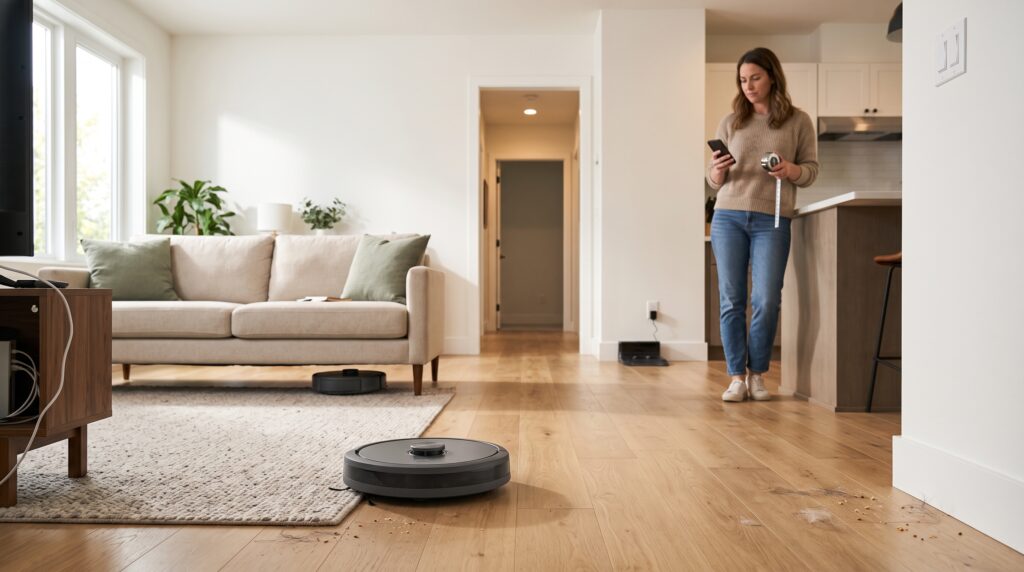
Write down what you expect the robot to clean. Is your home mostly hard flooring, carpet or a mixture? Are you dealing with everyday dust, crumbs around the dining table or pet hair across several rooms?
Then identify your biggest frustration. Someone who wants help maintaining a kitchen floor has different priorities from someone trying to keep bedroom carpets tidy.
Use those needs to build a shortlist. BetterBuyBase’s robot vacuum comparison tool lets you explore models and compare their listed features. Focus on the specifications that address your home’s needs before considering extras.
2 Measure the Space Beneath Your Furniture
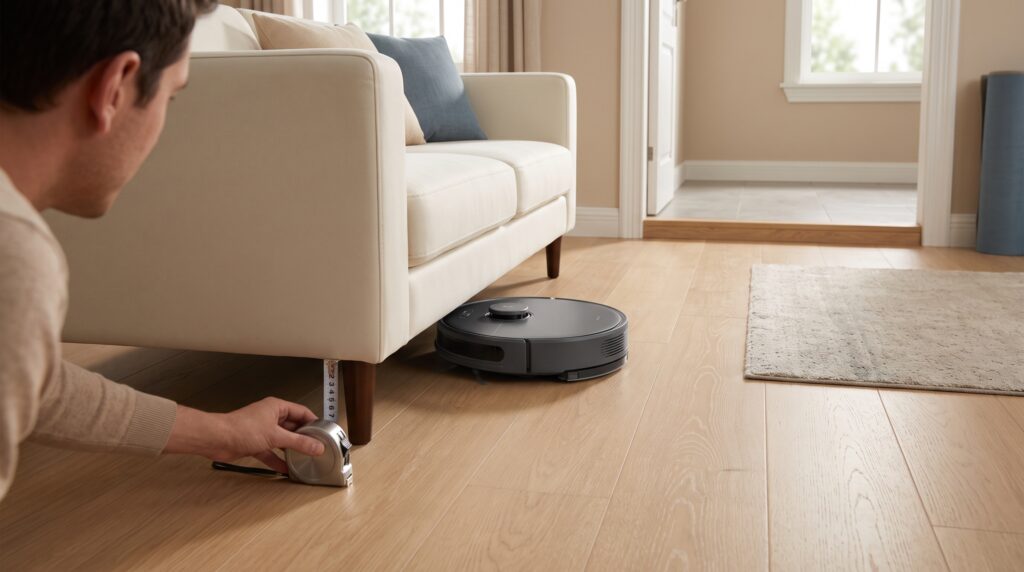
A robot cannot clean beneath a sofa if it cannot fit underneath it.
Measure the lowest clearance under the beds, cabinets and sofas you want it to reach. Check several points: a support bar or sagging fabric beneath a sofa may sit lower than its outer frame.
Compare your measurements with the robot’s stated overall height, including any raised sensor housing. Leave room for comfortable movement rather than assuming an almost exact fit will work.
This simple check can prevent an expensive disappointment.
3 Check Doorway Thresholds and Floor Transitions
Look at the routes between rooms. Raised doorway strips, thick rug edges and changes in floor level may affect where the robot can travel.
Measure the obstacles that matter and check the manufacturer’s climbing specifications, including any conditions attached to them. A quoted maximum does not mean every threshold of that height will be manageable: its shape and the approach can also matter.
For a shortlisted pair, use this comparison of the Roborock Saros 10R and MOVA P50 Pro Ultra to identify differences worth investigating, then confirm critical dimensions and clearance claims in the manufacturers’ documentation.
4 Look Beyond the Suction Number
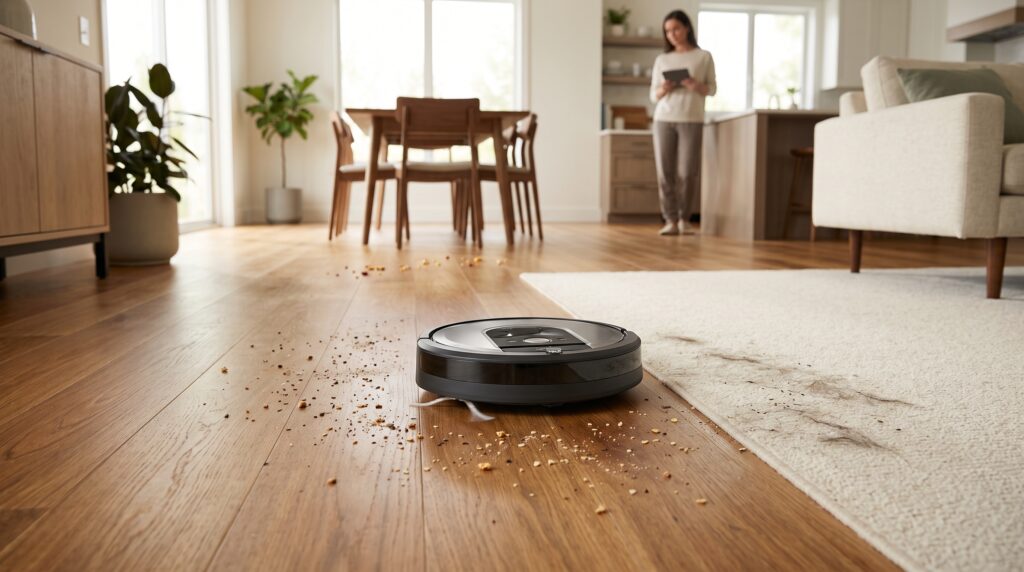
An advertised suction figure is only part of the buying decision. It does not tell you everything about how a robot picks up debris, handles hair or cleans along edges.
Look for independent demonstrations or tests involving floors and messes similar to yours. Check whether the reviewer explains the cleaning mode, surface and testing method.
For homes with rugs or carpets, pay particular attention to pickup on those surfaces. For mostly hard floors, examine how the robot handles scattered crumbs, corners and everyday dust.
5 Understand the Obstacle-Avoidance Limits
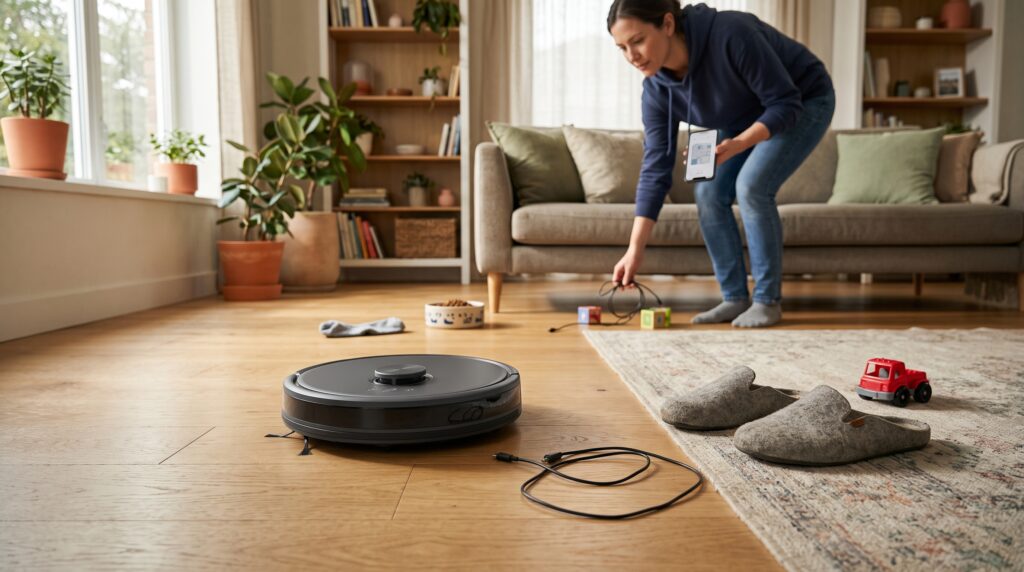
Think about what normally ends up on your floor: charging cables, socks, toys, slippers or pet bowls.
Check which obstacles the manufacturer says the robot can detect. Mapping a room and recognising small objects are different capabilities, so do not assume one guarantees the other.
Look for demonstrations that show ordinary household clutter, including unsuccessful attempts. You should still expect some preparation before cleaning, particularly around cables and objects that could become tangled.
The useful question is how much tidying the robot will require in your home.
6 Match the Mopping Features to Your Floors
If you want a vacuum-and-mop model, decide what you expect its mopping function to accomplish. Maintaining a lightly dusty floor is different from tackling dried spills.
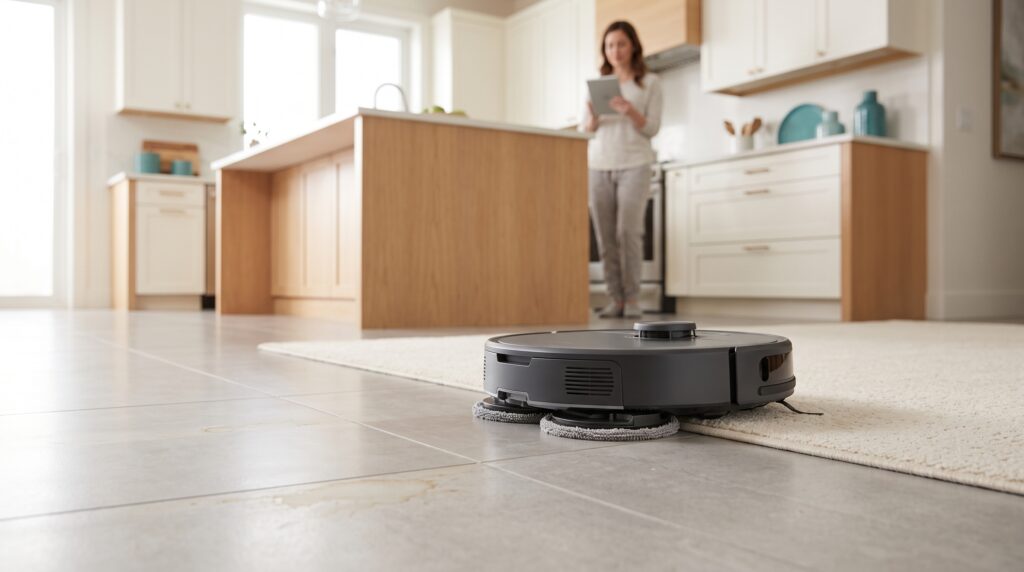
Check how the mop operates, how its pads are cleaned and what happens when the robot reaches a rug. If a model lifts its mop, compare the stated lift with your carpet and rug requirements rather than assuming every textile surface will stay dry.
Also consult your flooring manufacturer’s cleaning guidance. Confirm that the proposed water use and cleaning solution are suitable for the surface.
7 Plan Where the Dock Will Go
Measure the docking station’s intended location before ordering. Account for the clearances specified by the manufacturer, access to a power socket and the space needed to open lids or remove tanks.
Consider daily use, too. Can you carry water tanks to a sink comfortably? Will the dock block a cupboard, narrow a walkway or sit where someone might trip over it?
A convenient dock location makes maintenance easier. A dock squeezed into an awkward corner can turn a useful feature into a regular annoyance.
8 Find Out What Maintenance Remains
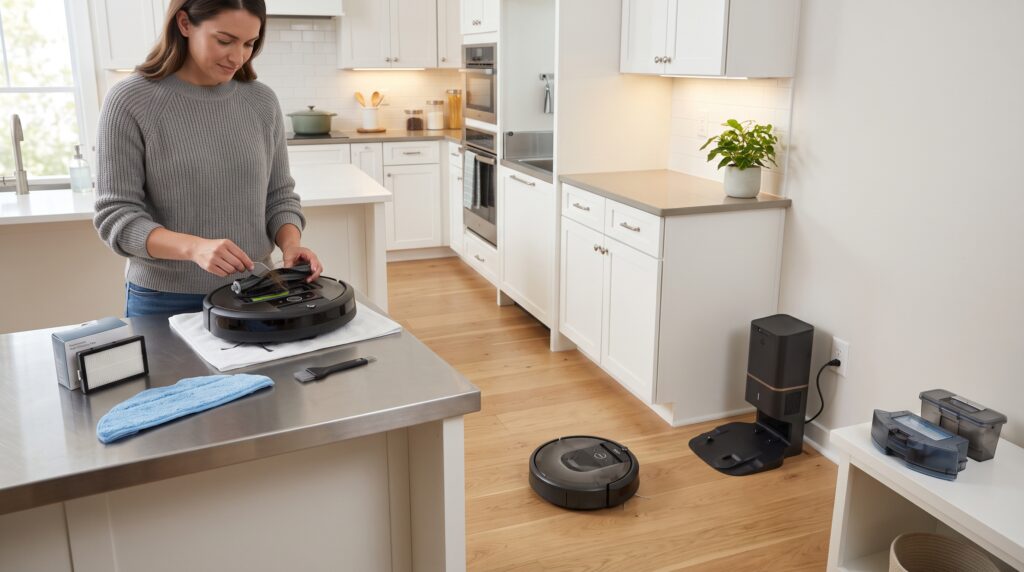
Automatic emptying and mop washing can reduce chores, but check what you will still need to do yourself.
Read the maintenance section of the manual before buying. Look for instructions on cleaning brushes, removing tangled hair, washing dock trays, wiping sensors and replacing filters or bags.
For pet owners, brush access deserves particular attention. Check how easily the roller comes out and whether replacement parts are available.
Choose a maintenance routine you are willing to follow consistently.
9 Consider Noise and App Controls
Think about when the robot will run. Cleaning while everyone is out creates different requirements from cleaning beside a home office or during an evening at home.
Check noise information for both the robot and its dock. Review how scheduling works and whether you can control automatic emptying times.
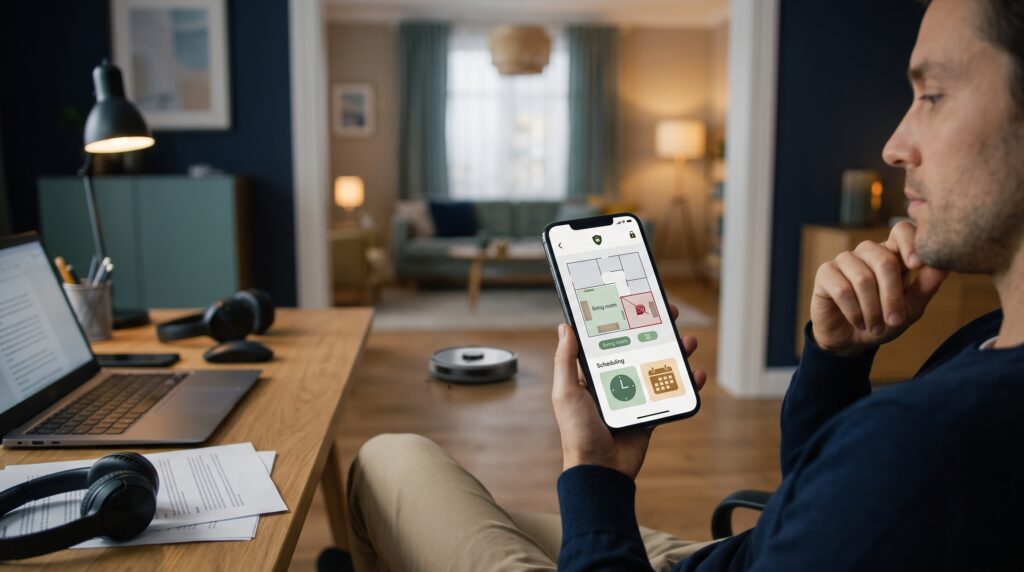
For app features, prioritise functions you will actually use: room selection, restricted areas and straightforward schedules. Check account requirements, internet dependence and privacy settings, especially if the model includes a camera.
10 Calculate the Cost Beyond Checkout
Compare the purchase price with the ongoing cost of bags, filters, brushes, mop pads and approved cleaning solutions.
Check whether those supplies are readily available in your country. Read the warranty, repair arrangements and return conditions, including whether the seller allows returns after a home trial.
Before ordering, make a short checklist:
- Will it reach the areas I want cleaned?
- Can it move between the relevant rooms?
- Does the dock fit somewhere convenient?
- Can I obtain replacement supplies easily?
- Am I comfortable with the maintenance and running costs?
The best choice is the model that meets your practical requirements at a cost you can justify. Start with your home’s measurements and cleaning needs, then use the features to narrow the options.