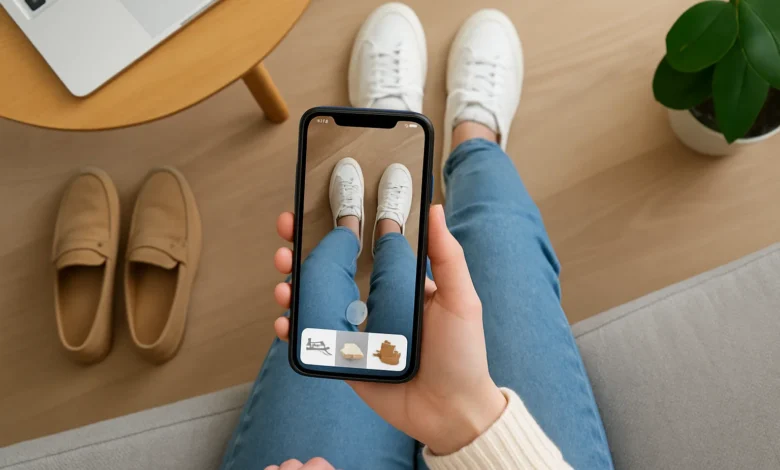
Welcome to the cutting edge of retail! Augmented reality (AR) is revolutionizing how we shop, blurring the lines between the digital and physical worlds. Prepare to discover how “try-before-you-buy” AR experiences are transforming the customer journey and reshaping the future of shopping.
The Shopping Revolution Is Already Here
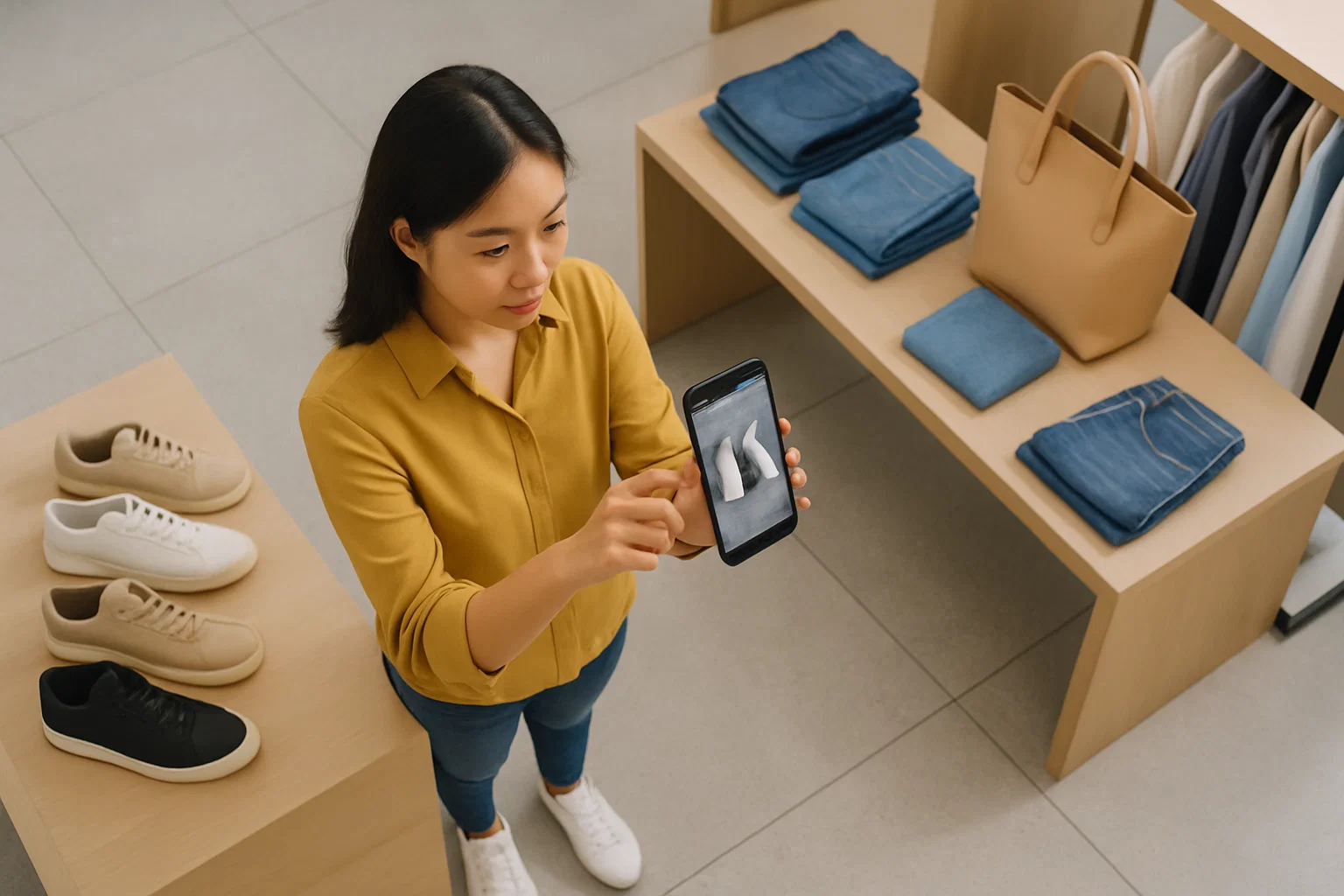
How shopping transformed from in-store to screen to augmented reality
The retail landscape has dramatically shifted, transitioning from traditional in-store shopping to the convenience of online shopping. Now, augmented reality (AR) is taking center stage, providing AR experiences that bridge the gap. AR enhances the digital shopping experience through immersive and interactive features, revolutionizing retail.
The new standard: interactive, immersive, and personalized experiences
The future of shopping is defined by personalized and immersive shopping experiences. Customers now expect interactive and augmented reality (AR) experiences that cater to their unique preferences. Augmented reality (AR) provides this by allowing virtual try-ons and detailed product visualizations, dramatically enhancing customer engagement.
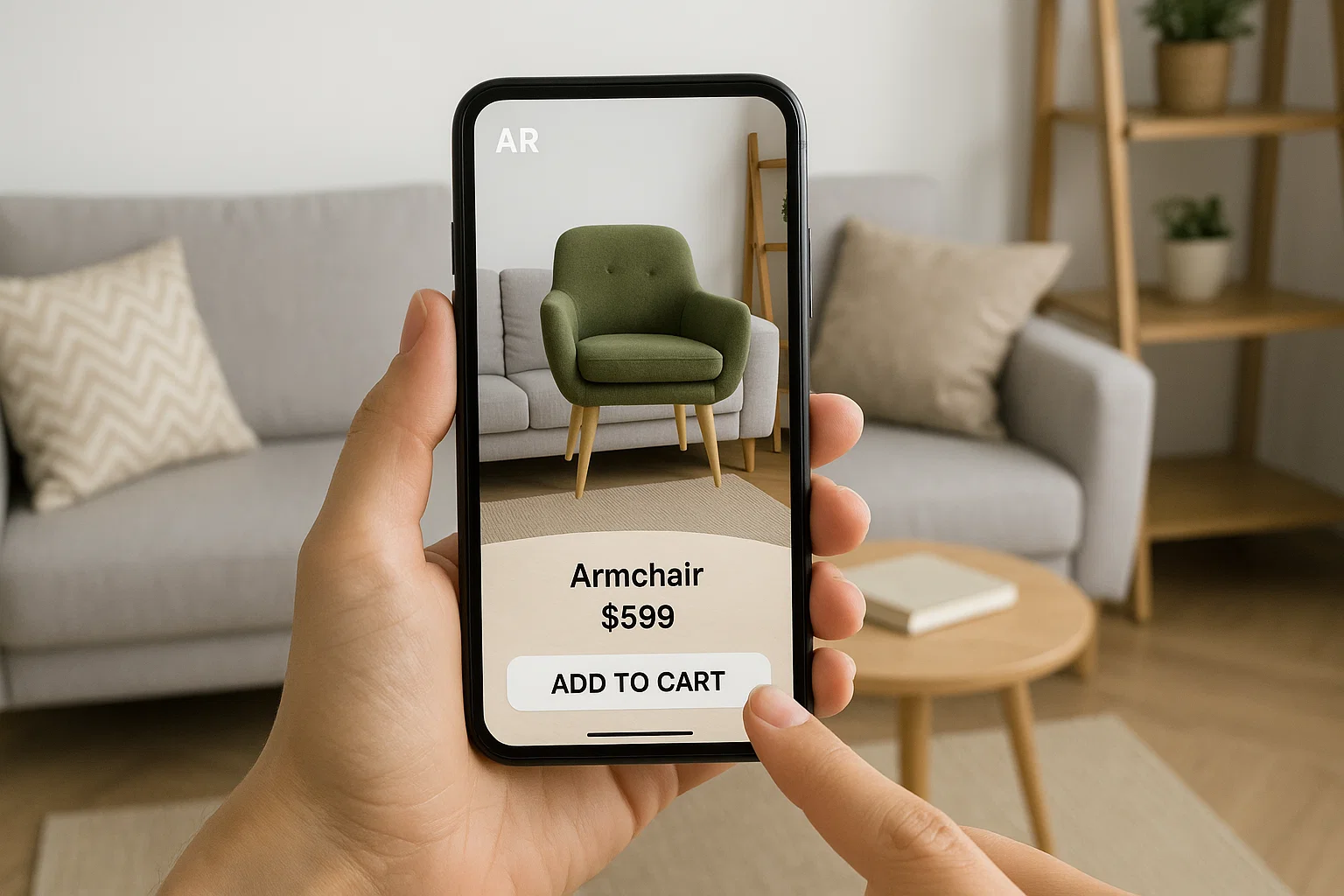
Why “try-before-you-buy” AR is changing consumer trust forever
Augmented reality (AR) is reshaping consumer trust by offering “try-before-you-buy” AR features that enable customers to virtually test products. This immersive shopping experience builds confidence and dramatically reduces the uncertainty associated with online shopping. AR helps customers make informed decisions, fostering long-term loyalty.
What Is AR Shopping? A Simple Breakdown
Understanding Augmented Reality (AR) and how it enhances real-world shopping
Augmented reality (AR) is a technology that overlays digital information onto the real world. AR enhances real-world shopping by providing AR displays of products. This allows customers to virtually interact with items before purchase, creating a more engaging shopping experience.

The difference between AR and VR in retail
While both augmented reality (AR) and virtual reality (VR) offer immersive experiences, they differ significantly in retail. Augmented reality (AR) enhances the existing world.
| Technology | Description |
|---|---|
| Augmented Reality (AR) | Overlays digital elements onto the real world. |
| Virtual Reality (VR) | Creates a completely simulated environment. |
How AR bridges the gap between online convenience and in-store confidence
Augmented reality (AR) effectively bridges the gap between online convenience and in-store confidence. It brings the advantages of physical retail, such as the ability to try on clothes, to the digital shopping realm. Augmented reality (AR) provides virtual try-ons and detailed product visualizations, making online shopping more reliable.
How AR “Try Before You Buy” Works
Step-by-step: from scanning your space to previewing products in real time
The “try-before-you-buy” augmented reality (AR) process offers several benefits, starting with a straightforward user experience. This process typically involves the following steps:
- Scanning your space using a smartphone or tablet.
- The AR app then overlays a 3D model of the product onto your real-time view.
This provides an instant preview of how the item would look in your environment, enhancing customer satisfaction.
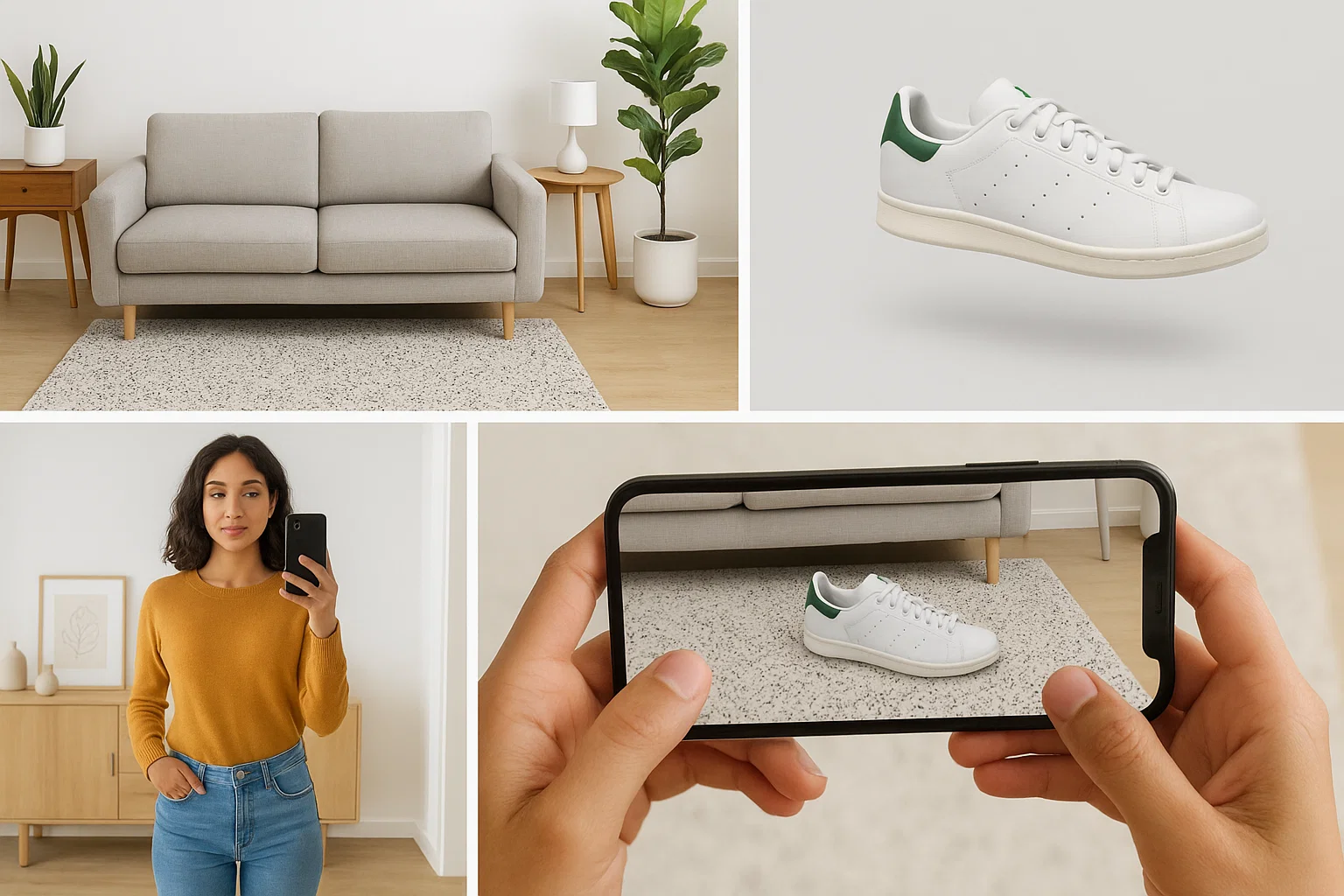
How 3D modeling, AI, and smartphone cameras make AR possible
Augmented reality (AR) achieves its immersive experiences through a combination of technologies. Specifically, it relies on a few key components, including:
- 3D modeling, which creates realistic virtual representations of products.
- Artificial intelligence (AI), enabling the AR app to understand and interact with the user’s environment.
In addition to these, advanced smartphone cameras are also essential for capturing the necessary visual data.
Real examples: AR mirrors, virtual fitting rooms, and home visualization tools
Several real-world examples illustrate the power of augmented reality (AR). AR mirrors allow customers to virtually try on clothes. Virtual fitting rooms provide immersive shopping experiences. Home visualization tools enable shoppers to see how furniture would look in their homes, fostering customer engagement.
Why Shoppers Love AR: The Human Side of Tech
Boosting confidence — no more guessing if it fits or looks right
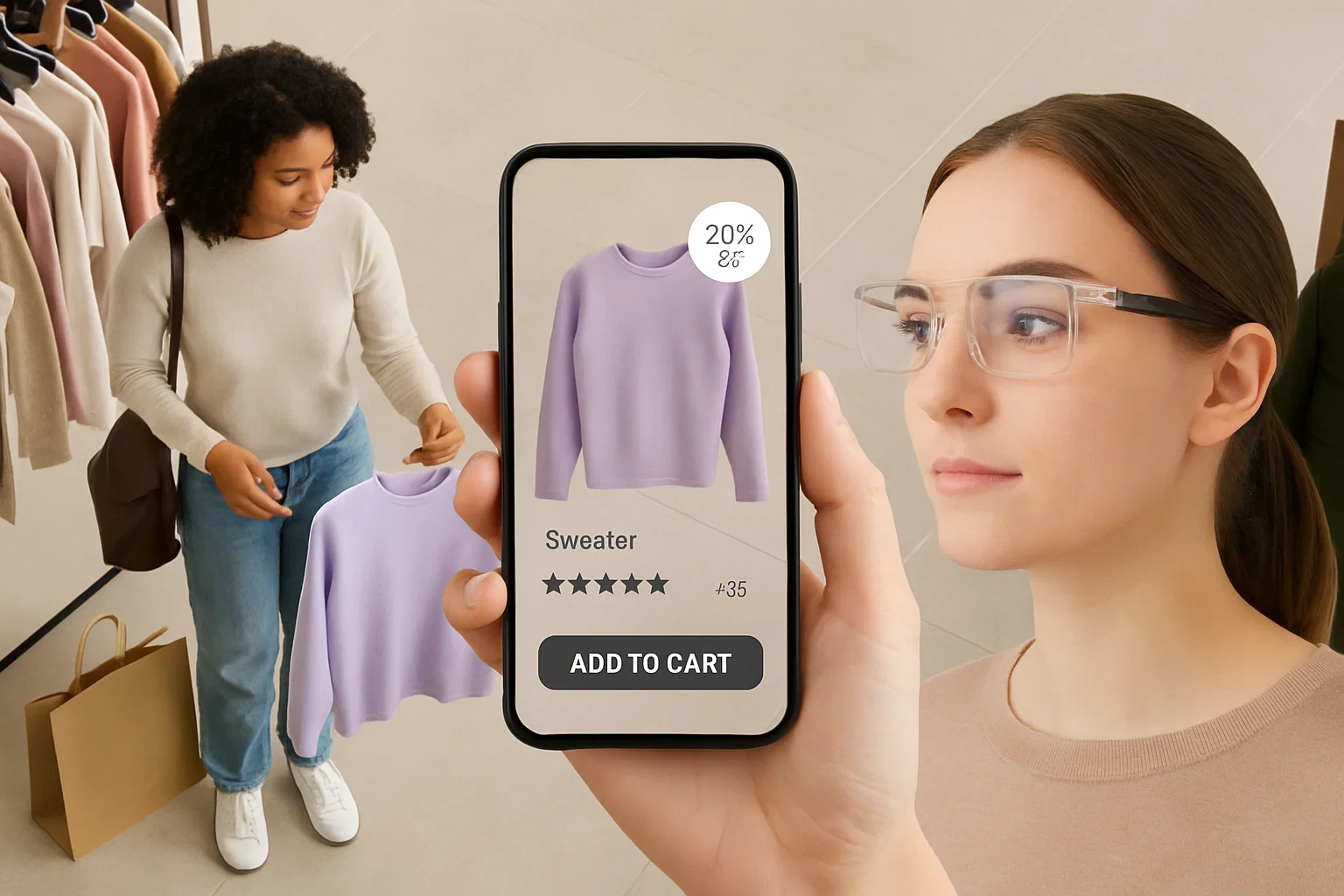
Augmented reality (AR) enhances the shopping journey. It boosts customer confidence by removing the guesswork from online shopping. Virtual try-ons and 3D visualizations allow customers to see exactly how products look, creating a satisfying shopping experience. This addresses a major pain point, making it easier to shop.
Saving time and avoiding returns
One of the key benefits of AR is saving time by streamlining the online shopping experience. By allowing virtual try-ons, augmented reality (AR) helps customers make informed decisions, resulting in fewer returns. This not only saves the customer’s time but also lowers costs.
Making online shopping fun, personal, and experiential
Augmented reality (AR) transforms the online shopping experience. AR makes it fun, personal, and experiential. Virtual try-ons turn mundane tasks into interactive adventures, driving customer engagement. This interactive shopping feature makes online shopping more engaging and memorable than traditional online shopping.
Why Brands Are Investing in AR Shopping
Higher engagement and longer browsing times
Brands are investing in AR because augmented reality (AR) drives higher customer engagement and increases browsing times. Augmented reality (AR) provides immersive shopping experiences. This encourages customers to spend more time exploring products; therefore, brands leveraging AR report significant improvements in customer interaction.

Fewer returns and higher customer satisfaction
Another compelling reason for investing in augmented reality (AR) is that it leads to fewer returns and higher customer satisfaction. By enabling customers to virtually try products, AR ensures the product fits their needs. This reduces the likelihood of returns and enhances the overall shopping experience.
Data-driven personalization: learning user preferences through AR interactions
Augmented reality (AR) provides valuable data-driven personalization opportunities. As customers use AR features, the AR app collects data about their preferences and behaviors. This data helps brands tailor future shopping experiences; therefore, brands can use the AR data to offer more relevant recommendations.
Real-World Examples of AR Shopping Done Right
IKEA Place: visualizing furniture in your home
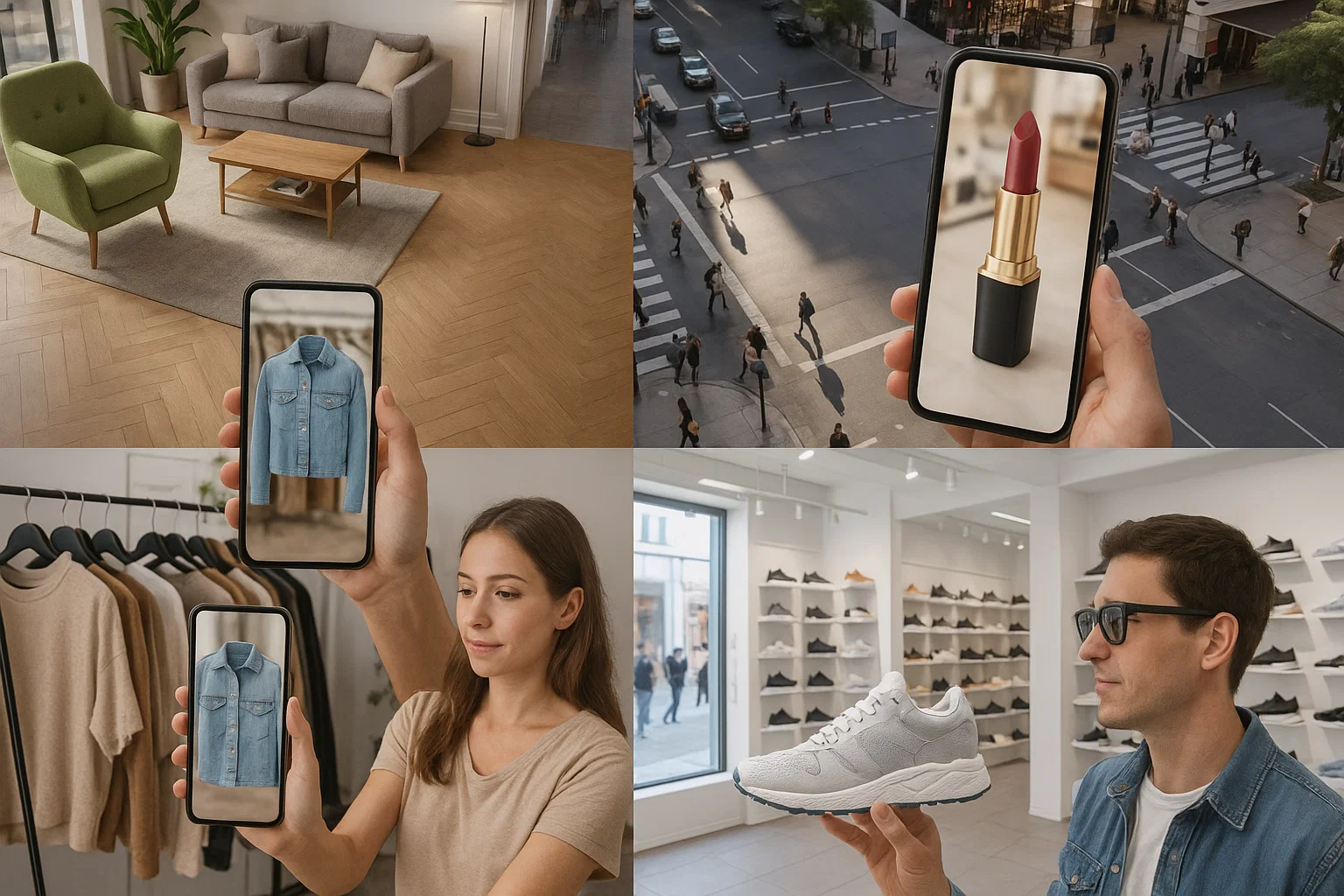
IKEA Place is a prime example of augmented reality (AR) in retail. The AR app lets customers visualize furniture in their homes before making a purchase. By using AR, customers can ensure that the furniture fits, enhancing the customer experience while boosting buying confidence.
Sephora Virtual Artist: trying on makeup instantly
Sephora Virtual Artist is a pioneering use of augmented reality (AR). It allows customers to virtually try on makeup instantly, enhancing the shopping experience. The AR app uses advanced facial recognition technology. Augmented reality (AR) helps customers experiment with different looks, increasing customer engagement.

Nike Fit: scanning feet for perfect shoe sizing
Nike Fit revolutionizes shoe shopping with its innovative augmented reality (AR) application. Nike Fit scans customers’ feet for perfect shoe sizing. The AR app uses the scan data to recommend the ideal size, ensuring a comfortable fit. This helps reduce returns and enhances customer satisfaction.
Warby Parker: virtual eyewear try-ons
Warby Parker excels in using augmented reality (AR). The AR app lets customers virtually try on eyewear from the comfort of their homes. Customers can find the perfect frames that complement their features. This augmented reality (AR) helps customers make informed decisions and improves their overall online shopping experience.
Amazon and Gucci: pushing the boundaries of AR retail
Amazon and Gucci are at the forefront of pushing the boundaries of augmented reality (AR) in retail. These brands are leveraging augmented reality (AR) in innovative ways to provide immersive shopping experiences. From virtual try-ons to interactive product displays, Amazon and Gucci are setting new standards.
The Technology Behind AR Shopping
AI + AR: intelligent personalization for each user
The combination of artificial intelligence (AI) and augmented reality (AR) unlocks intelligent personalization. AI algorithms analyze user data, providing personalized shopping experiences. This AI + AR synergy creates a unique shopping journey that caters to individual preferences.

The role of 5G in seamless real-time experiences
5G technology plays a pivotal role in delivering seamless, real-time augmented reality (AR) experiences. The high bandwidth and low latency of 5G ensure AR applications run smoothly, enhancing the shopping experience. The 5G capabilities allow for more responsive and immersive shopping interactions.
Camera-based mapping and spatial recognition advancements
Advancements in camera-based mapping and spatial recognition are crucial for augmented reality (AR) shopping. These technologies enable AR apps to accurately map and understand the user’s environment. This spatial awareness allows virtual elements to interact realistically with the physical world, creating an engaging retail experience.
The Benefits of AR Shopping for Consumers and Retailers
For consumers: convenience, confidence, and creativity
For consumers, augmented reality (AR) shopping offers unparalleled convenience, confidence, and creativity. Virtual try-ons and 3D visualizations provide a unique and enhanced online shopping experience. By using AR, consumers can confidently make informed purchasing decisions that suit their individual needs.
For retailers: better engagement, fewer returns, and brand innovation
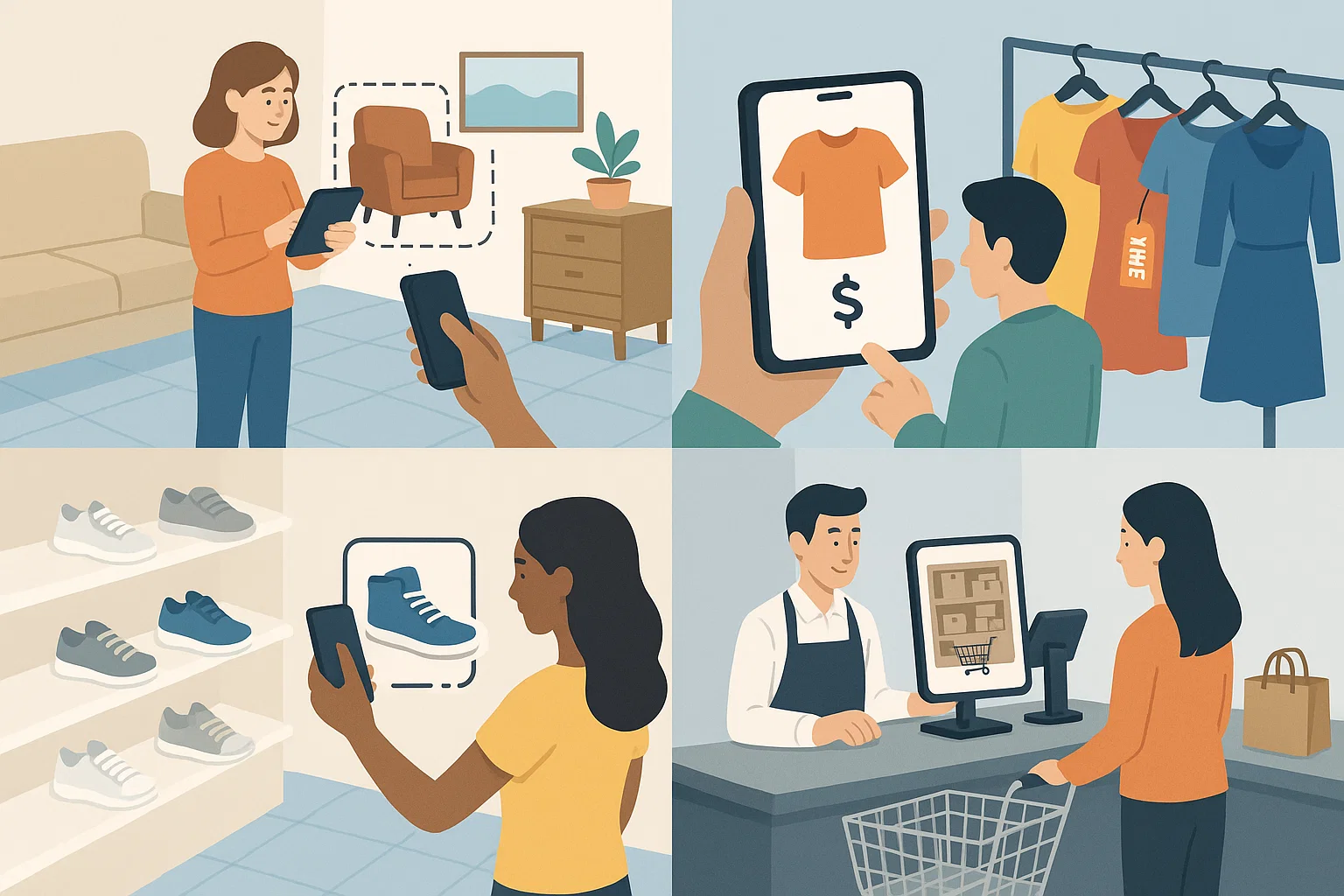
Retailers benefit immensely from adopting augmented reality (AR). Augmented reality (AR) drives better customer engagement, reduces returns, and fosters brand innovation. By investing in AR technology, retailers can enhance the online shopping experience and distinguish themselves in a competitive AR market to boost sales.
For the planet: sustainability through reduced waste and shipping
Augmented reality (AR) also contributes to sustainability. AR helps reduce waste and shipping by enabling more informed purchasing decisions. Virtual try-ons reduce the likelihood of returns and enhance online shopping experiences. AR can help the planet by promoting more environmentally friendly shopping habits.
Challenges and Limitations in AR Shopping Today
Tech adoption barriers and user accessibility
Despite its potential, augmented reality (AR) shopping faces several challenges including tech adoption barriers and user accessibility. Not all consumers have access to the necessary technology or are comfortable using AR applications. Addressing these barriers is crucial for ensuring that AR shopping can be broadly adopted.
Accuracy challenges in sizing, lighting, and texture simulation
Accuracy challenges in sizing, lighting, and texture simulation pose significant limitations for augmented reality (AR) shopping. Virtual try-ons may not always perfectly replicate the real-world appearance due to lighting and other factors. Overcoming these challenges is essential for enhancing customer satisfaction.
Balancing personalization with data privacy concerns
Balancing personalization with data privacy concerns is a critical challenge for augmented reality (AR) shopping. Augmented reality (AR) applications collect user data to provide personalized experiences. Businesses must be transparent about data usage and implement robust security measures to protect consumer privacy and comply with data protection regulations.
The Future of AR Shopping: What’s Coming Next
The future of augmented reality (AR) shopping is rapidly evolving, promising even more immersive and convenient experiences. We can anticipate the rise of augmented reality (AR) glasses, offering hands-free shopping interactions. These will further blur the lines between the digital and physical worlds, revolutionizing the augmented reality (AR) shopping experience.
AR glasses and hands-free shopping experiences
Augmented reality (AR) glasses are poised to transform the future of augmented reality (AR) shopping. These AR glasses will enable hands-free shopping experiences. Imagine browsing virtual store shelves while keeping your hands free to interact with the physical world. This innovation promises unparalleled convenience and immersion when you make augmented reality (AR) purchases.
AI-driven personal stylists and virtual shopping assistants
Artificial intelligence (AI) will play a pivotal role in shaping the future of augmented reality (AR) shopping. AI-driven personal stylists and virtual shopping assistants will provide personalized recommendations. This AI + AR integration will help you discover products that perfectly match your style and preferences, enhancing customer experience.
Virtual stores and the rise of “metaverse retail”
The concept of “metaverse retail” is gaining momentum, with virtual stores becoming increasingly prevalent. Augmented reality (AR) will play a key role in creating these immersive shopping environments. The AR + VR combination makes it possible for customers to browse virtual stores from the comfort of their own homes, revolutionizing the traditional retail landscape.
Cross-platform AR integration — from mobile to smart mirrors
Seamless cross-platform integration is essential for the future of augmented reality (AR) shopping. Consumers will expect to access AR experiences across various devices. This includes mobile phones, smart mirrors, and in-store kiosks. This seamless integration will enhance the online shopping experience, providing a consistent shopping journey.
How Small Businesses Can Join the AR Movement
Small businesses can absolutely participate in the augmented reality (AR) revolution without breaking the bank. The integration of AR can elevate smaller companies by allowing them to differentiate themselves from competitors. These AR solutions can promote business growth and visibility in a saturated market.
Affordable AR tools and platforms for e-commerce brands
Affordable augmented reality (AR) tools and platforms are becoming increasingly accessible for e-commerce brands. These tools enable small businesses to create AR experiences without requiring extensive technical expertise or significant investments, making it easier for small businesses to leverage AR.
Partnering with AR developers or using Shopify/Meta integrations
Small businesses can partner with augmented reality (AR) developers to create custom AR experiences, or use AR integrations available through platforms. These AR features can create immersive experiences. These integrations simplify the process of integrating AR into their online stores and attract new customers.
Creative AR marketing ideas to stand out online
Creative augmented reality (AR) marketing ideas can help small businesses stand out in the crowded online marketplace. From virtual product demos to interactive AR ads, there are numerous ways to engage customers and drive sales. By leveraging AR for marketing, small businesses can create memorable shopping journeys.
Consumer Tips: How to Get the Most from AR Shopping
To fully enjoy the benefits of augmented reality (AR) shopping, consumers should keep a few tips in mind. You can maximize your AR experience by ensuring a well-lit area and a compatible device. Using AR thoughtfully will enhance the shopping experience.
Use well-lit spaces and updated apps for better accuracy
To ensure the best possible augmented reality (AR) experience, use well-lit spaces and make sure your AR app is up to date. Outdated versions can cause the app to malfunction or give poor AR experiences.
Compare styles and sizes using AR previews
Take advantage of augmented reality (AR) previews to compare different styles and sizes before making a purchase. This feature allows you to virtually try on clothes, providing a comprehensive and engaging shopping experience to boost your buying confidence. Comparing AR try-ons can prevent size mismatches.
Check reviews of AR tools before buying
Before investing in augmented reality (AR) tools, take the time to read reviews and ratings from other users. This research can provide valuable insights into the tool’s performance and reliability. Ensure your investment in AR enhances online shopping for your customers, creating memorable customer engagement.
AR Shopping and Sustainability: A Greener Way to Shop
Augmented reality (AR) shopping contributes to a more sustainable retail ecosystem. By reducing the need for physical returns and minimizing transportation, augmented reality (AR) reduces the environmental impact of online shopping. This is a more conscious method of shopping; thus, AR helps create a greener retail landscape.
Conclusion: The Future of Shopping Is Already in Your Hands
The future of shopping is here, and it’s in your hands. Augmented reality (AR) is revolutionizing the way we shop. The ability to virtually try before you buy not only enhances convenience but also drives customer satisfaction. Embrace augmented reality (AR) and step into a new era of retail.