In an era dominated by screens and digital interactions, the pursuit of happiness has taken a new, complex turn. This article explores how social media platforms are reshaping our understanding and experience of happiness, delving into both the benefits and drawbacks of this digital transformation.
The Evolution of Happiness in a Connected World

From Offline Joy to Online Validation: A New Paradigm
The ways we find joy have changed drastically; once rooted in tangible experiences, happiness is now often sought through online validation. The rise of social networking sites means that we increasingly measure our worth and happiness through likes, shares, and comments, marking a significant shift in our perception.
Why Understanding Social Media’s Impact Matters for Well-Being
Understanding the impact of social media on our mental health and well-being is crucial. With the pervasive use of social media in our daily lives, it’s essential to examine how these platforms affect our life satisfaction and happiness, enabling us to navigate the digital landscape more mindfully.
The Science Behind Happiness and Social Media
How the Brain Reacts to Likes, Shares, and Comments
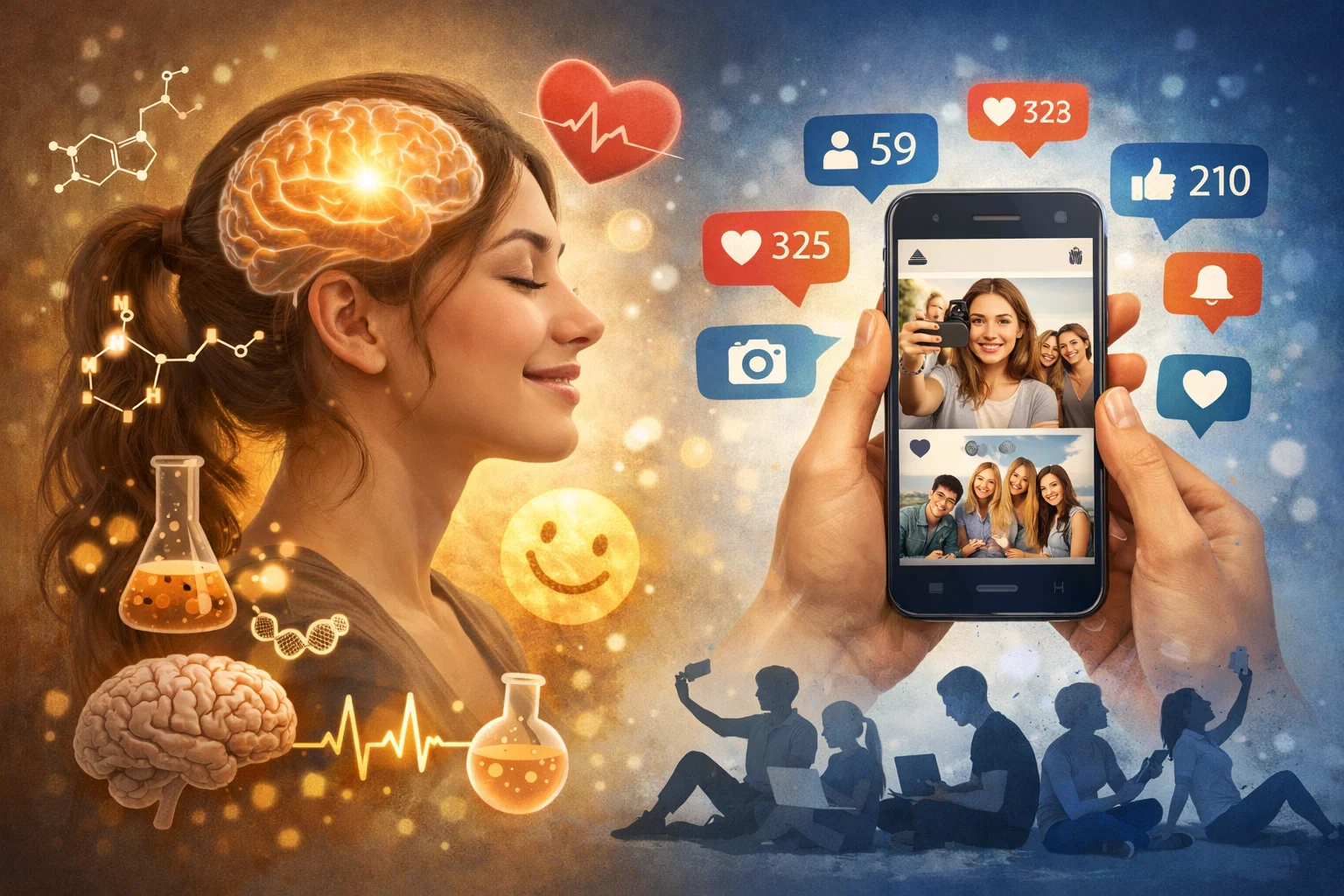
Our brains are wired to respond to positive social interactions, and this extends to social media. Likes, shares, and comments trigger the release of dopamine, a neurotransmitter associated with pleasure and reward, thus reinforcing our social media use and the desire for further validation.
Dopamine Loops and Instant Gratification in the Digital Age
The digital age has introduced us to dopamine loops, fueled by instant gratification. Social media offers immediate feedback, creating a cycle where users constantly seek validation through online interactions, impacting their mental well-being and potentially leading to unhealthy social media use.
Neuropsychology of Comparison: Why We Measure Happiness Against Others
The neuropsychology of comparison reveals that we are naturally inclined to measure our achievements and happiness against others. Social media amplifies this tendency, often leading to social comparison where individuals assess their worth based on curated online personas, affecting their life satisfaction and happiness.
Connection, Community, and the Positive Side of Social Media
Fostering Belonging Through Online Communities
One of the positive effects of social media is its ability to foster belonging through virtual communities. These online spaces provide opportunities for peer support, shared interests, and social connections, enhancing social capital and promoting positive mental health among participants.
Celebrating Achievements and Sharing Life Moments Virtually
Social media platforms provide avenues for celebrating achievements and sharing life moments virtually. This ability to connect with others and receive social support can lead to positive relationships, fostering a sense of community and contributing to overall social well-being and life satisfaction.
Social Media as a Tool for Motivation and Personal Growth
When used consciously, social media can serve as a tool for motivation and personal growth. By following inspiring accounts and engaging in positive interactions, individuals can enhance their social media experience and use social media to foster a positive impact on their mental health and well-being.
The Dark Side: Comparison, Envy, and the Happiness Paradox

The Highlight Reel Effect: Seeing Only the Best of Others
One of the most significant negative impacts of social media is the “highlight reel effect,” where users primarily share only the best aspects of their lives. This curated portrayal of perfection can lead to social comparison, causing others to feel inadequate and diminishing their own life satisfaction and happiness.
Social Pressure and the Fear of Missing Out (FOMO)
Social media platforms often create social pressure, particularly through the phenomenon known as the Fear of Missing Out (FOMO). The constant stream of updates on social networking sites about others’ experiences can trigger feelings of social isolation and anxiety, significantly impacting mental health and well-being.
Mental Health Risks: Anxiety, Depression, and Reduced Life Satisfaction
Extensive social media use is associated with several mental health risks, including increased anxiety, depression, and reduced life satisfaction. The constant exposure to curated content and the pressure to maintain a perfect online persona can lead to negative health outcomes, impacting overall mental well-being and self-esteem.
Social Media and the Redefinition of Happiness Metrics
Likes, Followers, and Engagement as Social Currency
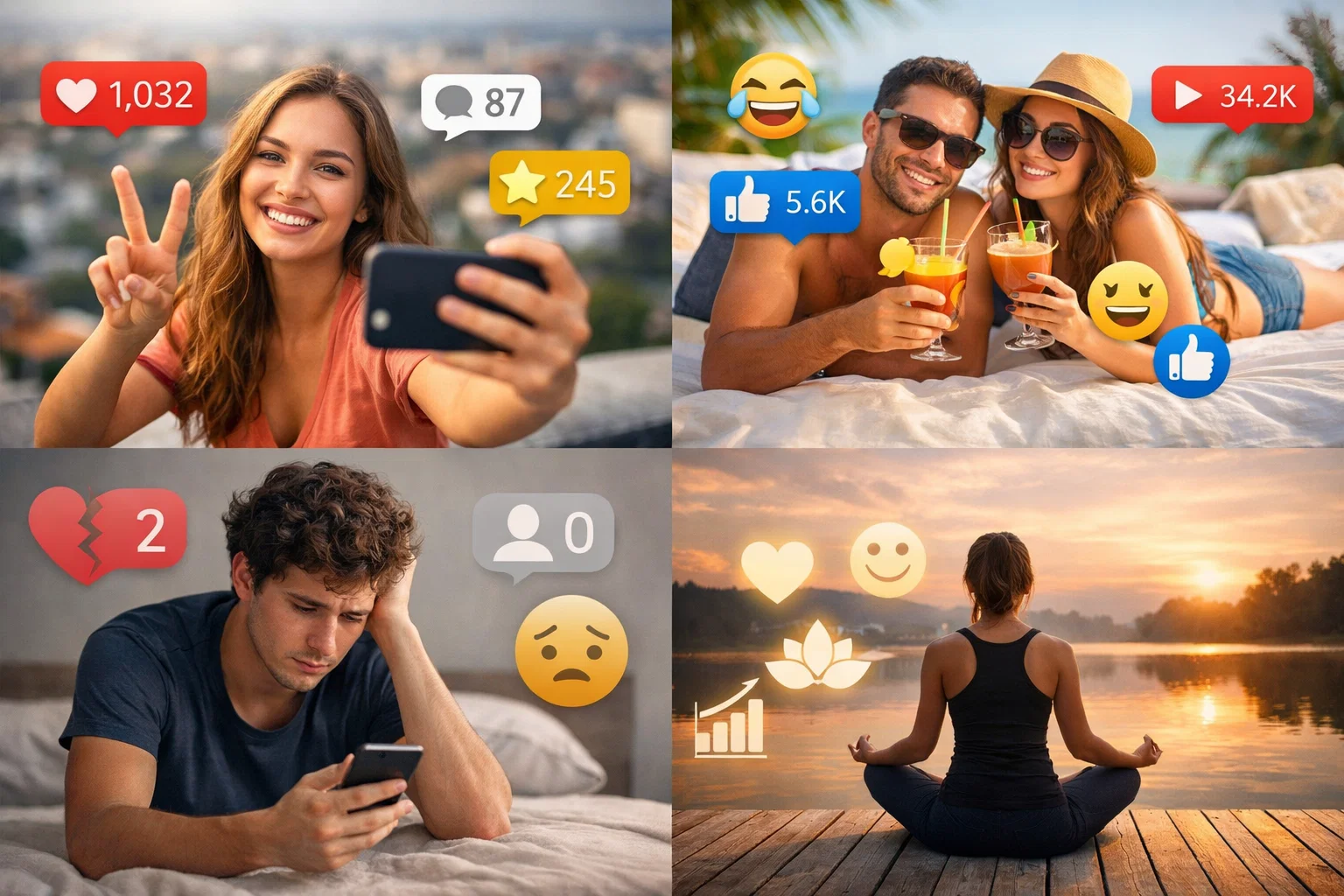
In the digital age, likes, followers, and engagement have become a form of social currency. This shift redefines how individuals measure their worth and happiness, often leading to a focus on external validation rather than internal fulfillment, thus affecting mental health and well-being.
External Validation vs. Internal Fulfillment
The relationship between social media and happiness is complex, as many users seek external validation through social media rather than cultivating internal fulfillment. This dependence on social media for affirmation can lead to a fragile sense of self-worth, diminishing overall life satisfaction and happiness.
How Digital Metrics Shift Our Perception of Success and Joy
Digital metrics like likes and followers can significantly shift our perception of success and joy. This alteration occurs as individuals start equating their self-worth with online engagement, potentially leading to social comparison and a constant need for validation to maintain positive mental health.
Balancing Online and Offline Happiness
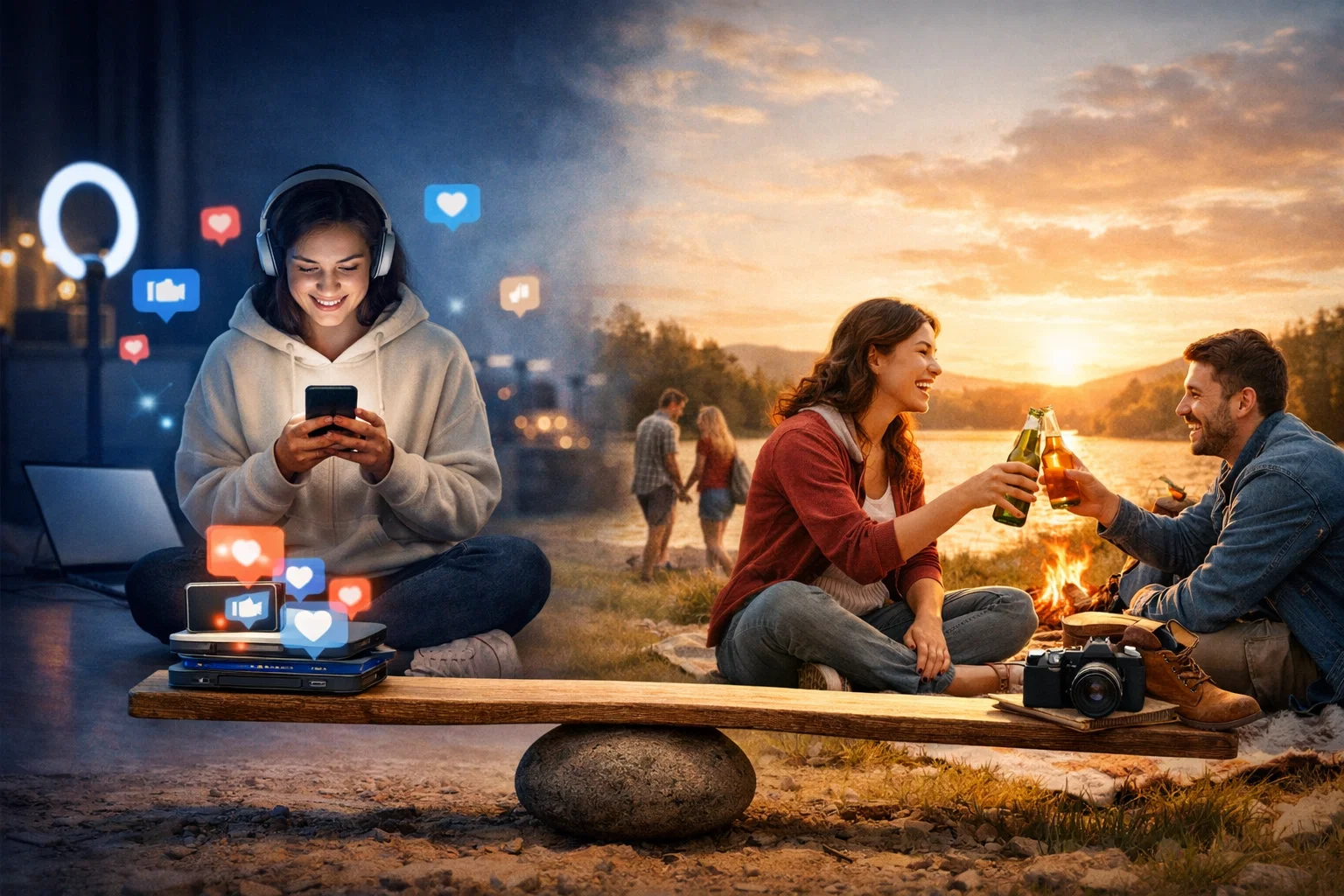
Mindful Social Media Use for Emotional Well-Being
Mindful social media use is essential for maintaining emotional well-being in the digital age. By being conscious of how social media affects our mood and self-perception, we can mitigate negative impacts and cultivate a healthier relationship with social media platforms and its use.
Digital Detoxes and Intentional Disconnecting
Digital detoxes and intentional disconnecting are crucial strategies for balancing online and offline happiness. Taking breaks from social media use can reduce the negative impact of social comparison and promote mental well-being by fostering a sense of presence and engagement in real-life experiences.
Combining Online Inspiration With Real-Life Experiences
To achieve true happiness, it’s important to combine online inspiration with real-life experiences. By integrating the positive effects of social media, such as inspiration and peer support, with tangible interactions and personal growth, we can enhance our overall life satisfaction and mental health and well-being.
Practical Strategies to Use Social Media for True Happiness

Curating Content That Supports Your Values and Goals
To genuinely benefit from the positive effects of social media, it’s crucial to curate content that aligns with your values and goals. Be selective about the accounts you follow on social media sites, opting for those that promote positive mental health and well-being, rather than triggering social comparison. This mindful approach can improve your overall social media experience.
Engaging Positively: Building Supportive and Uplifting Networks
To create a truly supportive online environment, focus on engaging positively within your network. Participate actively in virtual communities that offer social support and uplift your spirits. By fostering positive relationships and connections, you can use social media to enhance your social well-being, reducing the negative impact of social comparison and enhancing life satisfaction and happiness.
Setting Boundaries to Avoid Negative Comparison Loops
Establishing clear boundaries is crucial to prevent unhealthy social media use and avoid negative comparison loops. Limit the time spent on social media platforms to protect your mental well-being. Be mindful of how social media affects your mood and self-perception, ensuring it enhances rather than diminishes your mental health and well-being and promotes positive relationships.
Conclusion: Redefining Happiness in a Digital World
In conclusion, social media has undeniably reshaped our understanding of happiness. While platforms on social media sites offer avenues for social support, virtual communities, and positive connections, they also present risks such as social comparison and unhealthy social media use. The key lies in mindful engagement, setting boundaries, and prioritizing authentic experiences to achieve true life satisfaction and happiness in the digital age.