



In a world that often emphasizes what we lack, it’s easy to overlook the simple yet profound power of gratitude. This article explores the transformative effects of gratitude on our happiness and overall well-being.
Discover how cultivating gratitude can lead to a more fulfilling and joyful life.
Why Gratitude Is the Foundation of Lasting Happiness


The Modern Happiness Problem: Why People Feel Less Fulfilled Today
In today’s fast-paced and materialistic society, many individuals find themselves feeling less fulfilled despite having more possessions and opportunities than ever before. The constant pursuit of external validation and the relentless comparison on social media contribute to a pervasive sense of dissatisfaction. People are longing for true, lasting happiness, which often seems elusive in the modern world.
How Gratitude Offers a Simple but Powerful Solution
Gratitude helps combat this pervasive sense of dissatisfaction by shifting our focus from what we lack to what we already have. By intentionally recognizing and appreciating the good things in our lives, we can experience a significant boost in happiness and cultivate a more positive outlook. The simple act of expressing gratitude can be a powerful antidote to the modern happiness problem.
What Is Gratitude? A Deep but Simple Explanation

Defining Gratitude in Psychology and Everyday Life
In psychology, gratitude is defined as a positive emotional response to receiving a benefit, whether tangible or intangible. In everyday life, gratitude involves acknowledging and appreciating the good things, big and small, that we experience. It’s a deep sense of thankfulness and appreciation for the people, experiences, and opportunities that enrich our lives.
Gratitude vs Positive Thinking: Key Differences
While both gratitude and positive thinking are beneficial, they differ in their focus. Positive thinking involves focusing on the positive aspects of a situation, while gratitude specifically involves acknowledging and appreciating what we have received from others or from the world around us. Gratitude involves a sense of humility and recognition of external sources of goodness, making it distinct from simply maintaining a positive attitude.
Why Gratitude Is More Than Just Saying “Thank You”
Saying “thank you” is a polite social gesture, but gratitude goes much deeper. It’s a heartfelt emotion and a conscious practice of recognizing and valuing the good things in our lives. True gratitude involves feeling a genuine sense of appreciation and expressing it through our thoughts, words, and actions. It’s about cultivating a mindset of thankfulness that permeates our daily lives, enriching our well-being and relationships.
The Science Behind Gratitude and Happiness
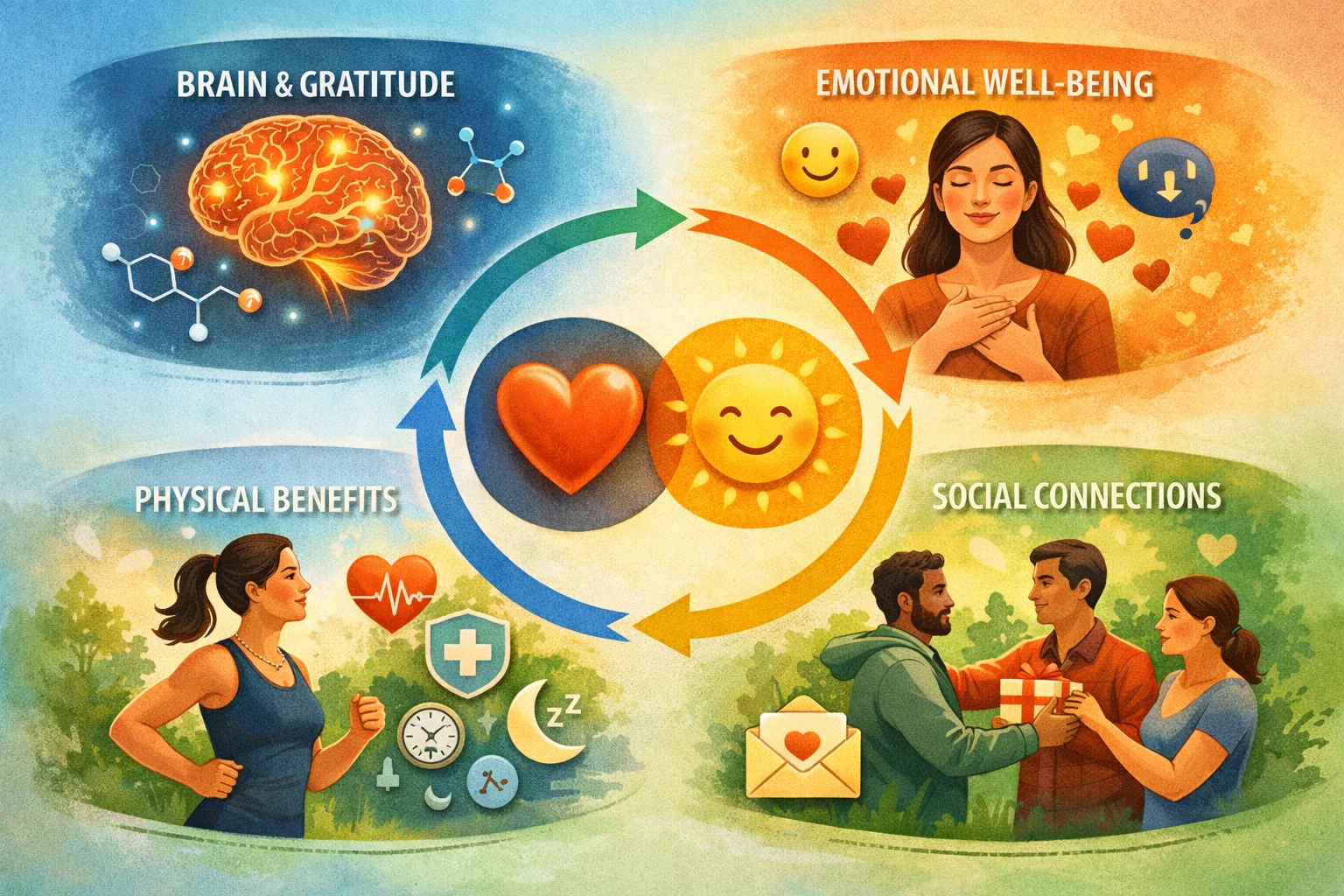
How Gratitude Affects Brain Chemistry (Dopamine & Serotonin)
Research shows that practicing gratitude can have a significant impact on brain chemistry. When we express gratitude, it triggers the release of dopamine and serotonin, two neurotransmitters associated with feelings of pleasure and happiness. This natural boost in brain chemicals can enhance our mood, reduce stress, and contribute to an overall sense of well-being.
Psychological Studies Linking Gratitude to Well-Being
Numerous psychological studies have demonstrated a strong association between gratitude and happiness. These studies consistently show that grateful people tend to experience higher levels of life satisfaction, positive emotions, and overall well-being. Gratitude interventions have been shown to be effective in reducing symptoms of depression and anxiety, and improving overall mental health.
The Neuroplasticity Effect: How Gratitude Rewires the Brain
The neuroplasticity effect highlights how gratitude rewires the brain. Regular gratitude practice can strengthen neural pathways associated with positive emotions and weaken those associated with negative emotions. By consistently focusing on gratitude, we can train our brains to become more attuned to the positive aspects of our lives, making it easier to experience happiness and resilience in the face of challenges.
How Gratitude Directly Improves Happiness

Shifting Focus From Lack to Abundance
One of the key ways that gratitude directly improves happiness is by shifting our focus from lack to abundance. Instead of dwelling on what we don’t have, we train ourselves to appreciate what we do have.
This simple shift in perspective can dramatically alter our sense of well-being and increase happiness. By cultivating gratitude for the good things in our lives, we create a mindset of abundance, recognizing the richness and fullness that already exists. This also boosts resilience.
Reducing Stress, Anxiety, and Negative Thinking
Another significant way that gratitude helps is by reducing stress, anxiety, and negative thinking. When we express gratitude, we activate neural pathways associated with positive emotions. This, in turn, counteracts the effects of stress hormones and negative thought patterns.
By regularly engaging in a gratitude practice, such as gratitude journaling, we can train our minds to focus on the positive, reducing the impact of stress and anxiety in our lives. The science of gratitude truly illustrates its beneficial effects.
Boosting Overall Life Satisfaction
The benefits of gratitude extend to boosting overall life satisfaction. Research shows that people who practice gratitude consistently report higher levels of happiness and contentment. By appreciating the simple things in life and acknowledging the positive aspects of our experiences, we create a sense of fulfillment that permeates all areas of our lives. Incorporating gratitude into our daily routine can lead to a profound sense of satisfaction and joy.
The Role of Gratitude in Mental and Emotional Health

Gratitude as a Natural Stress-Reduction Tool
Gratitude serves as a natural stress-reduction tool by helping us reframe challenging situations. When faced with adversity, expressing gratitude for the things we still have can provide a sense of perspective and resilience.
By focusing on what we’re thankful for, we can mitigate the negative impact of stress and cultivate a more positive and balanced emotional state. Keeping a gratitude journal is a great way to use gratitude as a stress-reduction tool.
Building a Positive Mindset During Difficult Times
During difficult times, gratitude can be a powerful tool for building a positive mindset. By intentionally focusing on the good things in our lives, we can counteract negative thought patterns and cultivate a sense of hope and resilience.
Even in the face of adversity, there are always things to be grateful for, and by acknowledging these blessings, we can maintain a more optimistic outlook and navigate challenges with greater strength and grace. Emmons has demonstrated the power of gratitude in difficult times.
Gratitude and Relationships: Strengthening Human Connections

How Appreciation Improves Friendships and Family Bonds
Gratitude and relationships are intertwined. Expressing appreciation is fundamental to maintaining and strengthening friendships and family bonds. When we show gratitude to those we care about, we foster a sense of connection and mutual respect.
Acknowledging their contributions and expressing our thankfulness reinforces positive relationships and creates a supportive and loving environment. This, in turn, significantly boosts happiness and overall well-being. Also, grateful people often demonstrate more satisfying interpersonal interactions.
The Role of Gratitude in Romantic Relationships
The role of gratitude in romantic relationships is crucial for long-term happiness and fulfillment. Expressing gratitude to our partners for their love, support, and companionship strengthens the bond and creates a deeper sense of intimacy.
Couples who regularly acknowledge and appreciate each other tend to experience higher levels of relationship satisfaction and are better equipped to navigate challenges together. Cultivate gratitude for a healthier, happier romantic relationship.
Gratitude in Daily Life: Real-World Applications

Simple Daily Gratitude Habits (Morning, Night, Journaling)
Here’s how simple daily gratitude habits can significantly boost happiness. Consider incorporating these practices into your daily routine:
- Start the day by listing things you feel grateful for.
- Before bed, reflect on positive moments.
- Keep a gratitude journal.
These practices reinforce positive emotions and contribute to overall life satisfaction, ultimately transforming your outlook.
How Gratitude Influences Decision-Making and Behavior
Research shows that gratitude influences decision-making and behavior by promoting prosocial actions. When we feel grateful, we are more likely to act kindly and generously towards others. This can lead to stronger relationships and a more supportive community. The power of gratitude extends beyond personal well-being, fostering a culture of empathy and cooperation. Also, a sense of gratitude impacts decision-making and positive behaviors.
Common Barriers to Practicing Gratitude

Stress and Negative Thinking Bias
Stress and negative thinking bias can act as significant barriers to practicing gratitude. When overwhelmed by stress, it’s easy to focus on problems rather than blessings. Negative thought patterns can also make it challenging to recognize and appreciate the good things in life. Overcoming these barriers requires a conscious effort to shift focus and cultivate gratitude, even in difficult times. This is where daily practice comes in.
Materialism and Social Comparison
Materialism and social comparison often hinder our ability to feel grateful. The constant pursuit of possessions and the tendency to compare ourselves to others can lead to dissatisfaction and a sense of lack. To cultivate gratitude, it’s essential to recognize the value of experiences and relationships over material wealth. Shifting focus from external validation to internal appreciation helps boost happiness and satisfaction.
How to Build a Strong Gratitude Practice
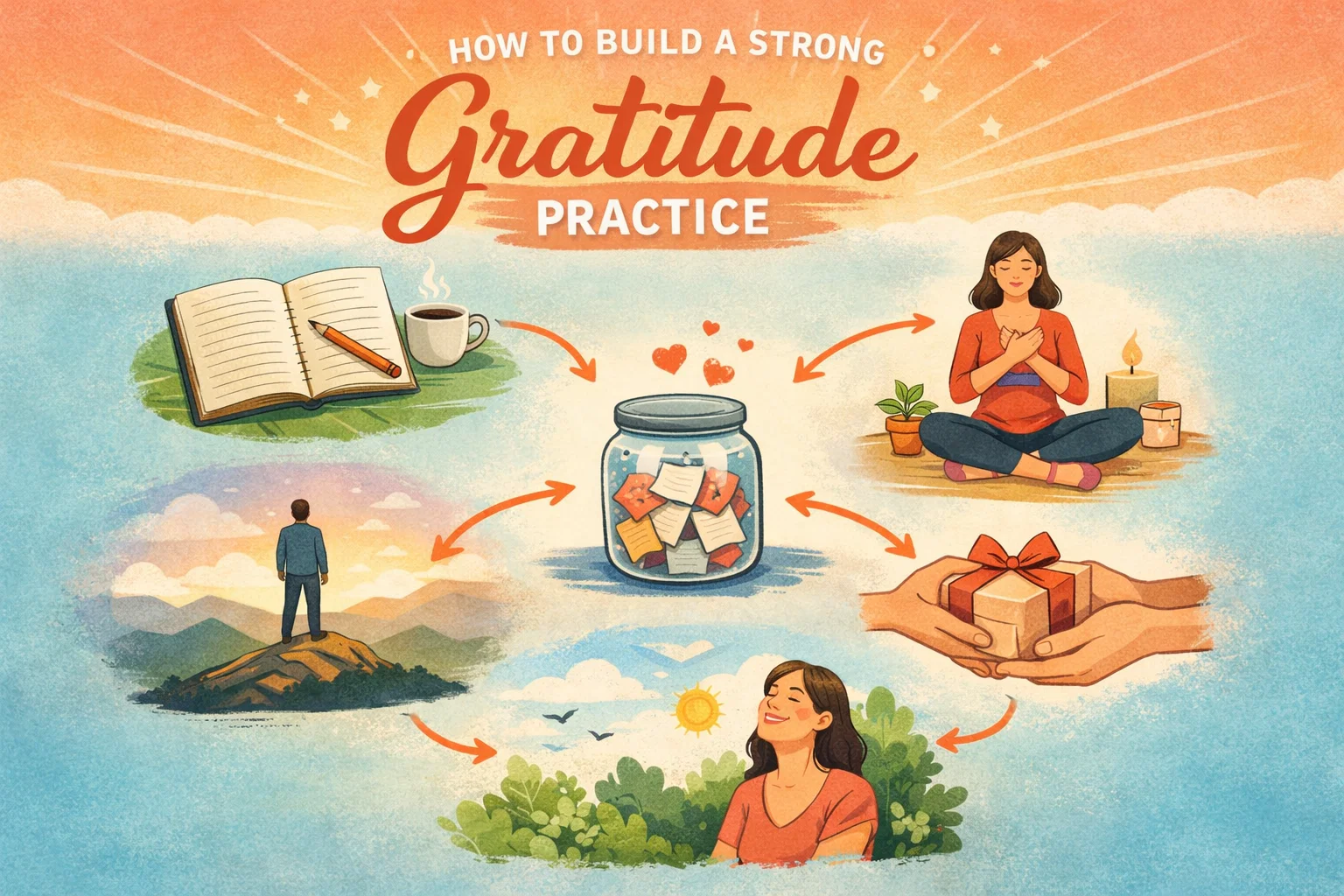
The 3-Minute Daily Gratitude Exercise
A simple yet effective way to build a strong gratitude practice is the 3-minute daily gratitude exercise. Take a few moments each day to list three to five things you are grateful for. This daily practice can train your mind to focus on the positive and increase your overall sense of well-being. Research on gratitude indicates that even small, consistent efforts can yield significant benefits.
Journaling Techniques That Actually Work
Journaling techniques that actually work involve more than just listing things you’re grateful for. Focus on specific details and emotions associated with each item. Describe how these things make you feel and why you appreciate them. This deepens your sense of gratitude and reinforces positive emotions. Keeping a gratitude journal regularly is an effective way to cultivate gratitude and boost happiness.
Common Myths About Gratitude and Happiness
“Gratitude Means Ignoring Problems”
A common misconception is that gratitude means ignoring problems. In reality, practicing gratitude doesn’t require us to deny or disregard challenges. Instead, it encourages us to acknowledge the good alongside the bad, creating a more balanced perspective. Gratitude helps us to approach problems with a more positive and resourceful mindset, fostering resilience and problem-solving skills. Cultivating happiness is about balance, not ignoring reality.
“You Must Feel Happy First to Be Grateful”
Another myth is that you must feel happy first to be grateful. Actually, gratitude can be a catalyst for happiness, even when you’re feeling down. By intentionally focusing on things you appreciate, you can shift your emotional state and experience a boost in happiness. Even in the present moment, find something to feel grateful for and observe how your mood improves. Research shows that gratitude can ignite positive emotions, leading to a more joyful life.
Long-Term Impact of Gratitude on Life Quality
Increased Resilience and Emotional Strength
The long-term effects of gratitude include increased resilience and emotional strength. Regularly engaging in a gratitude practice helps build a buffer against stress and adversity. When challenges arise, grateful people are better equipped to cope and bounce back from setbacks. By cultivating gratitude, we develop a mindset of resilience, allowing us to navigate life’s ups and downs with greater ease and emotional stability. The association between gratitude and resilience is well-documented.
Sustained Happiness Over Time
The benefits of gratitude extend to sustained happiness over time. Research shows that individuals who consistently practice gratitude tend to experience higher levels of well-being and life satisfaction throughout their lives. Gratitude helps us to appreciate the present moment, fostering a sense of contentment and joy that endures. Incorporating gratitude into our daily routine can transform our outlook and create a more fulfilling and meaningful life. The effects of gratitude are long-lasting and life-changing.
Conclusion: Why Gratitude Is a Life-Changing Habit
In conclusion, the science of gratitude underscores its profound impact on our well-being. By incorporating gratitude into a daily practice, we can boost happiness, strengthen relationships, and cultivate resilience. Whether through journaling, expressing appreciation, or simply taking a moment to acknowledge the good things in our lives, gratitude is a simple yet powerful habit that can transform our lives for the better. Making gratitude a daily habit can help make you happier.