
The world of work is undergoing a monumental shift, and by 2026, the concept of remote work will have fundamentally redefined how businesses operate.
As we journey towards the future of work, the hybrid work model and office attendance are being challenged by the rise of fully remote and remote-first approaches.
The Shift Towards Remote-First Work

How traditional work models are evolving in 2026
Traditional in-office models are rapidly evolving. The push for mandatory in-office days, such as office three days a week or office four days a week, is diminishing as companies recognize the benefits of flexible work. The future of remote is about empowering employees to work where they are most productive.
Why remote-first is becoming the new standard
Remote-first is becoming the new standard because it offers unparalleled advantages. It allows companies to hire remote and gain access to global talent, reduce overhead costs, and increase employee satisfaction. This model embraces the future of work, prioritizing outcomes over physical presence, enabling a more agile and resilient workforce for 2026.
The impact of technology, talent expectations, and global connectivity
Technology, evolving talent expectations, and enhanced global connectivity are the driving forces behind the shift to remote work in 2026. AI and automation streamline workflows, while readily available communication tools keep distributed teams connected. Talent seeks flexibility, and global connectivity makes access to global talent a reality.
What Are Remote-First Businesses?

Definition and core principles
A remote-first business is structured with remote work as its primary operating mode, not an exception. Core principles include prioritizing digital communication, ensuring equitable opportunities for all employees regardless of location, and fostering a culture of trust and autonomy. This redefines how teams collaborate in 2026.
Differences between remote-first, hybrid, and office-first models
Here’s a breakdown of the key differences between work models:
| Work Model | Description |
|---|---|
| Office-first | Prioritizes in-office presence. |
| Hybrid work | Offers a blend of remote and in-office work; some work in the office, others work from home. |
| Remote-first | Designs all processes and policies around remote workers. |
Industries where remote-first is most effective
Remote-first is proving highly effective in sectors like technology, software development, digital marketing, and customer support. These industries often require less physical infrastructure and can leverage remote talent to build diverse and innovative teams. The advantages of remote work are clearly seen in tech companies.
Benefits of Remote-First Work for Businesses
Accessing a global talent pool without geographic limits
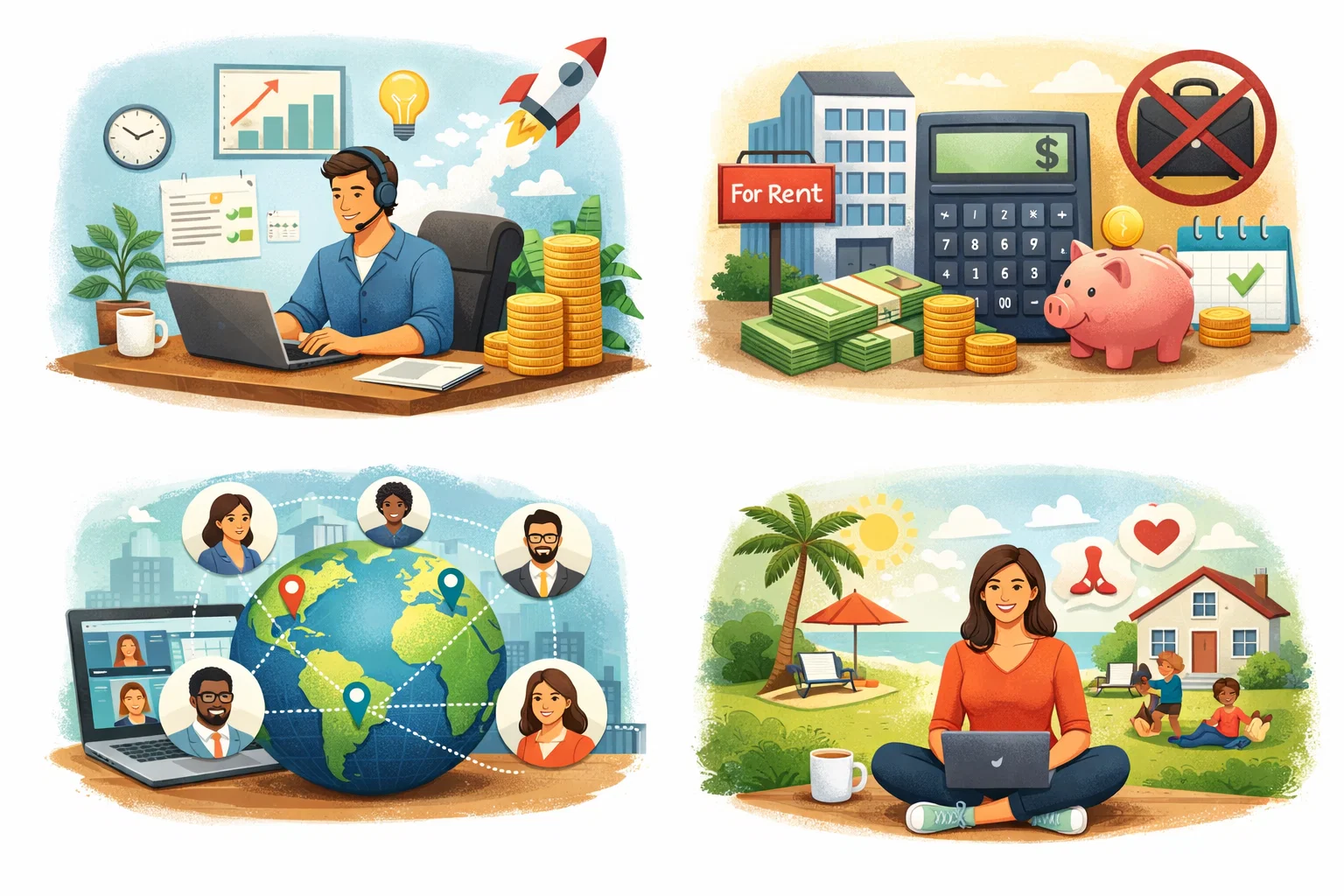
Remote-first breaks down geographical barriers, granting businesses access to global talent. They can now hire remote experts from anywhere, tapping into diverse skill sets and perspectives. This access fuels innovation, improves problem-solving, and enables companies to build world-class teams without relocation constraints for employees to work.
Cost savings on office space, utilities, and relocation
One of the most tangible benefits is cost savings. Companies can significantly reduce expenses on office space, utilities, and relocation packages. These savings can be reinvested in employee development, technology, or other strategic initiatives, enhancing competitiveness in 2026 and allowing employees to work from anywhere.
Productivity gains through results-driven metrics
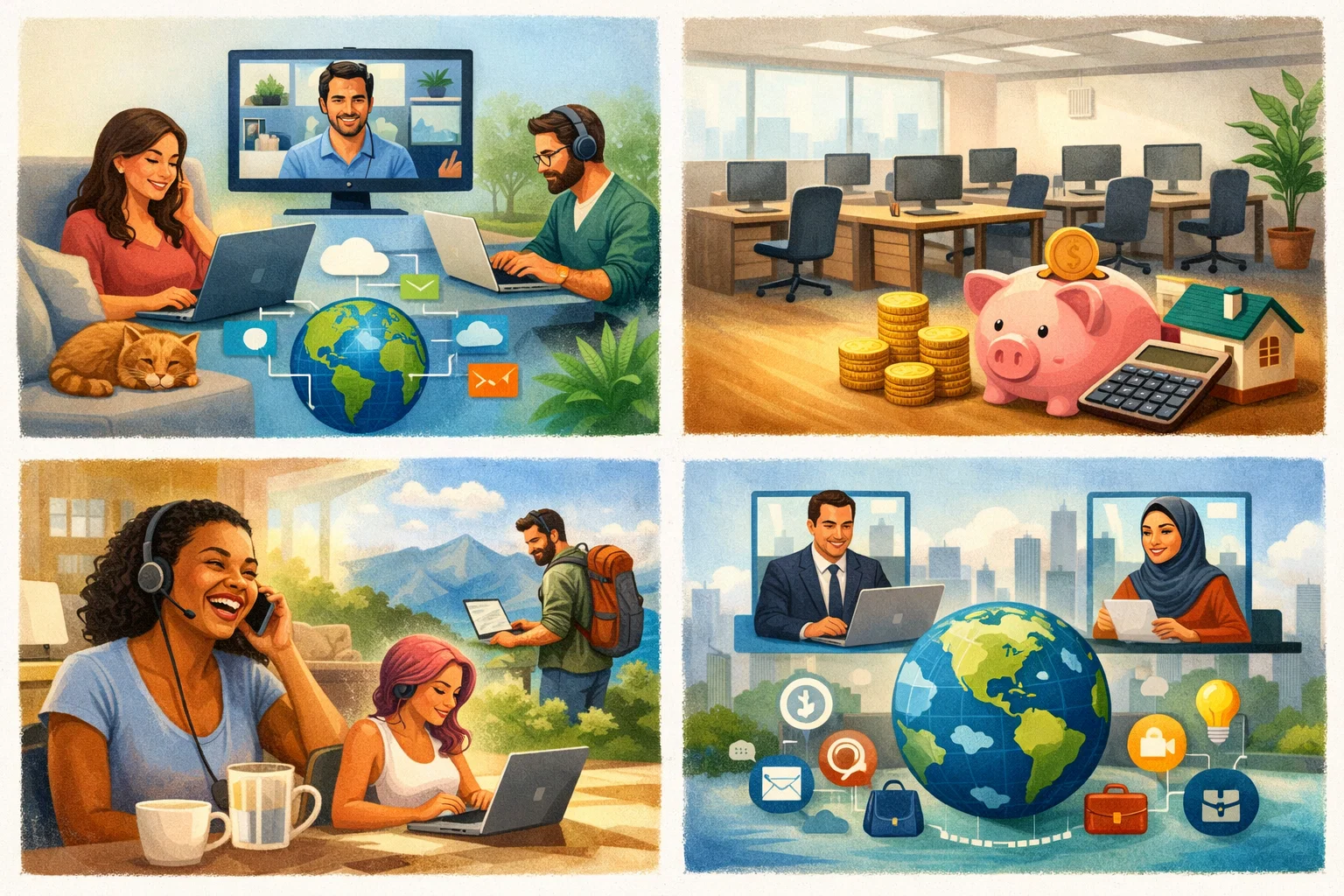
Remote-first fosters a culture of accountability and results-driven performance. By focusing on outcomes rather than hours spent in an office, companies often see increased productivity. This approach requires clear goals, effective communication, and robust analytics to track progress and ensure alignment within the remote team.
Environmental and social impact: reducing carbon footprint and increasing inclusivity
Remote-first contributes to a smaller carbon footprint by reducing commuting and office space energy consumption. It also promotes inclusivity by providing opportunities for individuals who may face barriers to traditional employment, such as those with disabilities or caregiving responsibilities. This reflects a socially responsible approach to the future of work.
Benefits of Remote-First Work for Employees

Remote work offers unparalleled flexibility and improved work-life balance for employees. In 2026, the ability to work remotely means individuals can better manage personal responsibilities, reduce commute times, and design their work arrangements around their lives. This leads to reduced stress and increased overall satisfaction as employees work.
Opportunities for career growth and global collaboration
Remote-first environments provide unique opportunities for career growth through access to global talent and collaboration. Employees can engage with diverse teams across different regions, broadening their skill sets and expanding their professional networks. These experiences are invaluable for career advancement and personal development as more employees work.
Focus on wellbeing, mental health, and autonomy
A significant advantage of remote work in 2026 is the emphasis on employee wellbeing, mental health, and autonomy. Flexible work schedules, reduced commuting stress, and the ability to create a comfortable workspace contribute to improved mental and physical health. Employees feel more empowered and in control of their work lives.
Key Features of Remote-First Businesses

Digital-first culture: all communication and workflows online
A defining feature of remote-first businesses is a digital-first culture where all communication and workflows are conducted online. This requires a shift in mindset, prioritizing digital tools and platforms for seamless collaboration and information sharing. AI can further assist in managing these digital workflows, increasing efficiency.
Asynchronous communication for productivity across time zones
Asynchronous communication is crucial for maintaining productivity across different time zones in a distributed team. Tools and strategies that facilitate communication without requiring immediate responses are essential. This approach allows employees to manage their time effectively and contribute meaningfully, regardless of their location in 2026.

Cloud-based collaboration and project management tools
Cloud-based collaboration and project management tools are indispensable for remote-first businesses. These tools enable teams to seamlessly collaborate on projects, share documents, and track progress in real-time, no matter where they are located. Effective use of these tools enhances productivity and ensures everyone is aligned.
Employee support programs for wellbeing and engagement
Remote-first companies prioritize employee support programs to promote wellbeing and engagement. These programs may include mental health resources, virtual social events, professional development opportunities, and stipends for home office equipment. Investing in employee wellbeing is crucial for retaining talent and fostering a positive work environment.
Global payroll, compliance, and HR management systems
Managing a distributed team requires robust global payroll, compliance, and HR management systems. These systems must handle various legal and regulatory requirements across different countries. Ensuring compliance and providing efficient HR support are essential for maintaining a fair and equitable workplace in the future of work.
Technologies Driving Remote-First Work

AI and automation for workflow optimization and KPI tracking
In 2026, AI and automation will play a pivotal role in remote work. These technologies streamline workflows, automate repetitive tasks, and provide real-time analytics for KPI tracking. Businesses can optimize performance and gain insights into productivity trends, ensuring distributed teams operate efficiently, and allowing employees to work in sync with company goals.
VR and AR for immersive virtual meetings and offices
VR and AR technologies are set to transform virtual meetings and office space in 2026. These immersive tools create realistic virtual environments, enhancing collaboration and engagement for remote teams. Through virtual offices, employees work together, fostering a sense of presence and connection that replicates the in-office experience, no matter where they are.

Collaboration tools: Slack, Asana, Notion, Monday.com
Collaboration tools like Slack, Asana, Notion, and Monday.com are essential for enabling seamless communication and project management within remote teams. These platforms facilitate real-time messaging, task tracking, and document sharing, ensuring that employees work together cohesively. These tools enable access to global talent and improve overall productivity in 2026.
Cybersecurity solutions for distributed teams
With the rise of remote work in 2026, robust cybersecurity solutions are crucial for protecting sensitive data and ensuring compliance. These solutions safeguard against cyber threats, secure remote access, and enforce data protection policies across distributed environments. Prioritizing cybersecurity is essential for maintaining trust and mitigating risks associated with remote work.
Challenges of Remote-First Work
Maintaining company culture and team engagement
Maintaining company culture and team engagement presents a significant challenge in remote-first environments. Without regular in-office interactions, fostering a sense of community and shared identity requires deliberate efforts. Companies need innovative strategies, such as virtual social events and collaborative projects, to ensure employees work together.
Managing time zones and asynchronous communication effectively
Effectively managing time zones and asynchronous communication is crucial for global remote teams. Strategies include setting clear expectations for response times, using project management tools for task tracking, and establishing communication protocols that accommodate different schedules. AI and automation can further assist in coordinating these processes.
Data security and compliance across borders
Data security and compliance become more complex in remote-first models. Companies must navigate diverse data protection regulations and ensure that remote workers adhere to security best practices. Implementing robust cybersecurity measures and providing ongoing training are essential for mitigating risks and maintaining compliance. With hybrid work, this becomes a bigger challenge.
Preventing employee burnout and blurred work-life boundaries
Preventing employee burnout and blurred work-life boundaries is a critical challenge in remote work. Flexible work arrangements can sometimes lead to overwork if not managed properly. Companies need to encourage flexible work hours, promote wellbeing resources, and establish clear guidelines for disconnecting to support employee health and productivity in 2026.
Best Practices for Implementing Remote-First Strategies
Building a results-driven performance culture
Establishing a results-driven performance culture is paramount in remote-first setups. This involves setting clear KPIs, regularly tracking progress with analytics, and providing feedback based on outcomes rather than mere hours worked. Leveraging AI and automation tools can help streamline performance evaluations and ensure employees work effectively towards company goals in 2026.
Selecting the right collaboration and communication tools
Choosing the appropriate collaboration and communication tools is essential for seamless remote work. Platforms like Slack, Asana, Notion, and Monday.com facilitate real-time communication, project management, and document sharing. The selection should align with the distributed team’s specific needs, enhancing productivity and ensuring employees work together in sync in 2026.
Establishing clear policies, expectations, and workflows
Clear policies, expectations, and workflows are vital for a successful remote-first model. This includes outlining guidelines for communication, setting response time expectations, and establishing protocols for data security and compliance. Documenting these practices ensures everyone understands their roles and responsibilities, thus streamlining operations and fostering a cohesive remote team that works in 2026.
Prioritizing employee wellbeing and professional development
Prioritizing employee wellbeing and professional development is crucial for retaining access to global talent. Companies should invest in mental health resources, offer flexible work hours, and provide opportunities for continuous learning. Supporting employee wellbeing not only boosts morale but also enhances productivity and innovation in remote work for the future of work in 2026.
Future Outlook: Remote-First Trends in 2026 and Beyond
Predicted growth of fully distributed teams across industries
The predicted growth of fully remote distributed teams across various industries suggests a significant shift towards remote work. As technology advances and companies realize the benefits of access to global talent, more businesses will adopt remote-first models. This trend will redefine how organizations operate and compete in the global market in 2026.
AI and digital tools shaping the next generation of remote work
AI and digital tools are poised to shape the next generation of remote work. Automation, virtual reality, and advanced analytics will enhance collaboration, streamline workflows, and improve employee engagement. Companies that embrace these technologies will gain a competitive edge by optimizing their remote work strategies and ensuring employees work efficiently by 2026.
How remote-first companies will influence talent attraction and business innovation
Remote-first companies will significantly influence talent attraction and business innovation. By offering flexible work arrangements and access to global talent, these companies will attract top-tier professionals seeking work-life balance and career growth. The diverse perspectives and skills within remote teams will drive innovation and enable companies to adapt quickly to changing market dynamics in 2026.
Conclusion: Embracing Remote-First as the Future of Work
Embracing remote-first is no longer a trend but a strategic imperative for businesses aiming to thrive in the future of work. As we journey into 2026, the flexibility, cost savings, and access to global talent that remote work offers will redefine how companies operate. By prioritizing employee wellbeing, leveraging technology, and fostering a culture of trust, organizations can unlock the full potential of remote-first and achieve sustainable success.