



The world of work is undergoing a monumental shift, with remote entrepreneurship at its forefront. In this article, we’ll delve into how traditional jobs are fading as digital independence and remote work success rise.
The Global Shift From Traditional Jobs to Digital Independence


What Remote Entrepreneurship Really Means in Today’s Economy
Remote entrepreneurship signifies a profound change in the world of work, as individuals start a business and embrace digital tools to become remote entrepreneurs, redefining productivity and success beyond the traditional work environment.
Why This Shift Is One of the Biggest Work Revolutions in History
The rise of remote entrepreneurship is transforming career possibilities, marking one of the most significant work revolutions as individuals gain autonomy. This transition to remote work is nothing short of revolutionary.
The Evolution of Work: From Offices to Online Businesses

The Industrial Age vs. the Digital Economy
The contrast between the Industrial Age and the digital economy highlights a paradigm shift from centralized factories to decentralized, remote business models, with remote workers enjoying unparalleled flexibility and autonomy.
How Internet Access Changed Career Possibilities Forever
Internet access has transformed career possibilities, empowering individuals to start a business, become remote entrepreneurs, and challenge traditional work structures. This has led to the rise of remote work as a viable path.
The Collapse of Geographic Barriers in Business
The collapse of geographic barriers in business has fueled the rise of remote entrepreneurship, enabling remote teams to collaborate globally, challenging the limitations of physical workspaces, and expanding market reach.
Key Drivers Behind the Rise of Remote Entrepreneurship

The Impact of Global Digitalization
Global digitalization is a driving force behind the rise of remote entrepreneurship, enabling remote business operations, facilitating remote work, and fostering global collaboration, changing the landscape of entrepreneurship.
Remote Work Normalization After Global Disruptions
Global disruptions, such as the recent pandemic, accelerated remote work normalization, prompting business owners to embrace remote business models, and prompting remote employees to prove that remote business can be productive.
Rise of Freelance and Gig Economy Platforms
The rise of freelance and gig economy platforms has democratized entrepreneurial opportunities, providing remote professionals with avenues to start a business, monetize their skills, and thrive as remote entrepreneurs.
Advancements in AI and Automation Tools
Advancements in AI and automation tools streamline processes and drive efficiency for remote businesses, empowering remote entrepreneurs to optimize workflows, enhance productivity, and achieve remote work success more quickly.
Lower Startup Costs and Barrier-Free Entry
Lower startup costs and barrier-free entry have democratized entrepreneurship, allowing aspiring remote entrepreneurs to start a business with minimal investment, leveraging digital tools to scale their ventures.
How Technology Is Powering Remote Entrepreneurs
Cloud Computing and Scalable Infrastructure
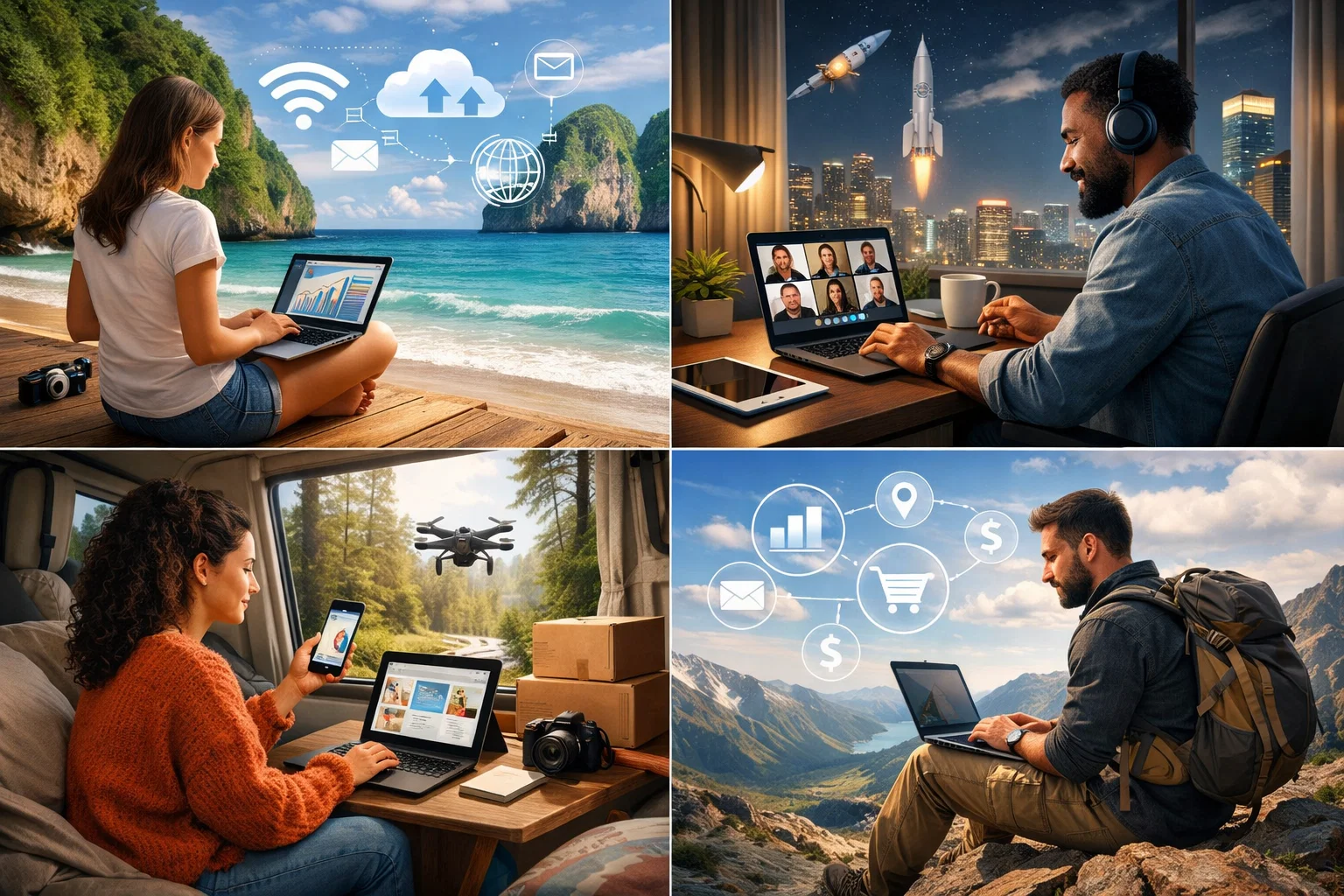
Cloud computing and scalable infrastructure provide remote entrepreneurs with cost-effective solutions, allowing them to manage data, access tools, and scale their businesses without the constraints of physical hardware.
Collaboration Tools Enabling Global Teams
Collaboration tools are vital in enabling global remote teams to communicate, collaborate, and coordinate projects seamlessly, irrespective of geographic location, streamlining workflows, and boosting productivity. Zoom helps to do that.
E-commerce Platforms and Digital Marketplaces
E-commerce platforms and digital marketplaces have revolutionized retail, allowing remote entrepreneurs to establish online stores, reach global customers, and sell products without the overhead of traditional brick-and-mortar establishments.
Payment Systems and Borderless Transactions
Efficient payment systems and borderless transactions facilitate seamless financial interactions for remote entrepreneurs, enabling them to accept payments from customers worldwide, manage finances, and grow their businesses globally.
Popular Remote Entrepreneurship Business Models

E-commerce and Dropshipping Businesses
E-commerce and dropshipping businesses are very popular in the entrepreneurial landscape, allowing individuals to start a business with minimal upfront investment and manage their operations remotely. The rise of remote work helps a lot.
Digital Products and Online Courses
Creating and selling digital products and online courses presents a flexible avenue for remote entrepreneurship, enabling remote entrepreneurs to monetize their expertise and generate passive income in the ever-changing world of work.
Freelancing and Service-Based Businesses
Freelancing and service-based businesses offer immediate income opportunities for those transitioning to remote work, enabling professionals to leverage their skills and expertise to provide services for clients worldwide, increasing productivity.
Content Creation and Influencer Marketing
Content creation and influencer marketing have become lucrative remote entrepreneurship ventures, as individuals leverage their creativity and online presence to build audiences and monetize content through various channels, increasing productivity.
SaaS and Subscription-Based Models
Software as a Service (SaaS) and subscription-based models provide recurring revenue streams for remote entrepreneurs, offering scalable solutions to clients globally and enabling them to build sustainable businesses, streamlining many of the business processes.
Advantages of Remote Entrepreneurship Over Traditional Work

Freedom of Location and Time
One of the primary advantages of remote entrepreneurship is the freedom of location and time, allowing remote professionals to work from anywhere in the world and design their schedules according to their preferences.
Unlimited Income Potential
Remote entrepreneurship offers unlimited income potential, as individuals can scale their businesses, reach global markets, and generate revenue without the constraints of traditional employment models, increasing productivity.
Access to Global Markets and Clients
Remote entrepreneurship provides access to global markets and clients, enabling remote professionals to tap into diverse customer bases, expand their business reach, and increase revenue streams exponentially, changing the landscape of entrepreneurship.
Reduced Operational Costs
Reduced operational costs are a significant advantage of remote entrepreneurship, as individuals eliminate expenses associated with office space, commute, and other overheads, maximizing profit margins and enhancing financial flexibility.
Lifestyle Flexibility and Work-Life Balance
Lifestyle flexibility and work-life balance are key attractions of remote entrepreneurship, allowing remote employees to integrate personal commitments with professional pursuits, leading to greater job satisfaction and overall well-being after the pandemic.
Challenges and Hidden Risks of Remote Entrepreneurship

Isolation and Lack of Structure
Isolation and lack of structure can pose challenges for remote entrepreneurs, requiring proactive efforts to maintain social connections, establish routines, and cultivate a supportive work environment, streamlining personal and professional life.
High Competition in Digital Markets
High competition in digital markets necessitates differentiation and strategic marketing efforts for remote entrepreneurs to stand out from the crowd, attract target audiences, and build a sustainable business in the rise of remote.
Income Instability in Early Stages
Income instability in the early stages of remote entrepreneurship requires financial planning, diversification of income streams, and resilience to navigate periods of uncertainty while building a stable and profitable business. Business owners should be careful.
Dependence on Platforms and Algorithms
Dependence on platforms and algorithms can be a risk for remote entrepreneurs, necessitating diversification of marketing channels, building direct relationships with customers, and adapting to algorithm changes to maintain online visibility, especially when adopting remote.
Time Management and Discipline Issues
Effective time management and discipline are crucial for success in remote entrepreneurship, requiring individuals to prioritize tasks, manage distractions, and maintain focus to achieve productivity and meet deadlines in the world of work.
Skills Needed to Succeed in Remote Entrepreneurship

Digital Marketing and Personal Branding
Proficiency in digital marketing and personal branding is essential for remote entrepreneurs to establish a strong online presence, attract target audiences, and build credibility in competitive digital markets, especially with the rise of remote work.
Sales, Copywriting, and Persuasion Skills
Strong sales, copywriting, and persuasion skills are vital for remote entrepreneurs to effectively communicate value propositions, convert leads into customers, and drive revenue growth in the online business environment. Business owners should focus on it.
Tech Literacy and Tool Mastery
Tech literacy and tool mastery enable remote entrepreneurs to leverage digital tools and platforms effectively, streamline workflows, automate tasks, and optimize business operations for greater efficiency and productivity. There are many challenges of remote.
Financial Management and Scaling Skills
Solid financial management and scaling skills are essential for remote entrepreneurs to manage cash flow, make informed investment decisions, and scale their businesses sustainably for long-term growth and profitability, especially when adopting remote.
Adaptability in a Fast-Changing Digital Economy
Adaptability in a fast-changing digital economy is crucial for remote entrepreneurs to stay ahead of trends, embrace new technologies, and adjust strategies to remain competitive and relevant in dynamic markets after the pandemic.
The Role of AI in Shaping Remote Entrepreneurship

AI-Powered Content Creation and Automation
The landscape of entrepreneurship, especially the rise of remote work, is being reshaped by AI-powered content creation and automation tools, streamlining processes, boosting productivity, and offering remote professionals opportunities to focus on strategic initiatives. These AI tools help with the biggest challenges of content creation.
Smarter Business Decision-Making Tools
AI provides remote entrepreneurs with smarter business decision-making tools that can analyze market trends, customer behavior, and financial data. These tools offer actionable insights, enhancing remote work success by optimizing strategies and enabling data-driven choices in the world of work.
How AI Reduces Startup Costs for Beginners
The advent of AI significantly reduces startup costs for beginners venturing into remote entrepreneurship by automating tasks, optimizing marketing, and improving operational efficiency. This levels the playing field and lowers the barrier to entry for aspiring remote workers in 2025.
Future Trends of Remote Entrepreneurship (2026 and Beyond)

Rise of Fully Decentralized Companies
The rise of remote work and fully decentralized companies, operating without central leadership, signifies a shift towards greater autonomy and transparency. Blockchain and decentralized autonomous organizations (DAOs) are at the forefront of this trend, altering traditional business models in the world of work.
Increasing Role of AI Entrepreneurs and Solopreneurs
AI is empowering entrepreneurs and solopreneurs to automate tasks, scale operations, and make data-driven decisions, leveling the playing field for smaller businesses. This shift is allowing individuals to achieve greater success independently, changing the landscape of entrepreneurship and promoting remote work success.
Growth of Digital-Only Economies
The growth of digital-only economies, fueled by remote and hybrid work models, is fostering innovation and creating new opportunities for entrepreneurs to thrive in the work environment. These digital economies are increasingly borderless, allowing remote professionals to participate in global markets.
The Decline of Traditional 9–5 Structures
The traditional 9–5 work structure is declining as more people embrace flexible hours, project-based work, and remote employment. This shift reflects a broader trend towards prioritizing work-life balance, autonomy, and individual fulfillment as remote employees become more common.
How to Start Your Own Remote Entrepreneurship Journey
Choosing the Right Online Business Model
Choosing the right online business model is a crucial first step for anyone embarking on a remote entrepreneurship journey, requiring careful consideration of skills, interests, and market demand. Understanding the challenges of remote work and choosing the appropriate model helps streamline the startup process.
Setting Up Digital Tools and Systems
Setting up the right digital tools and systems is essential for efficient remote operations, encompassing project management software, communication platforms, and cybersecurity measures. Remote entrepreneurs should invest time in learning and mastering these tools to ensure productivity and data security.
Building Your First Online Income Stream
Building an initial online income stream validates your business model and provides crucial financial support for growing the venture, whether it is creating digital products, offering freelance services, or engaging in affiliate marketing. Remote work normalization helps a lot with generating money.
Common Mistakes Beginners Should Avoid
Beginners often stumble due to several common errors. These include:
- Neglecting market research
- Underestimating startup costs
- Failing to establish a strong online presence
Avoiding these pitfalls, staying adaptable, and continuously learning are key to achieving remote work success.
Conclusion: The Future Belongs to Digital Entrepreneurs
The future of work increasingly belongs to digital entrepreneurs, as the rise of remote entrepreneurship reshapes industries and empowers individuals to pursue their passions from anywhere in the world. Embracing technology, adaptability, and a global mindset are essential for thriving in this evolving landscape in 2025 and beyond.