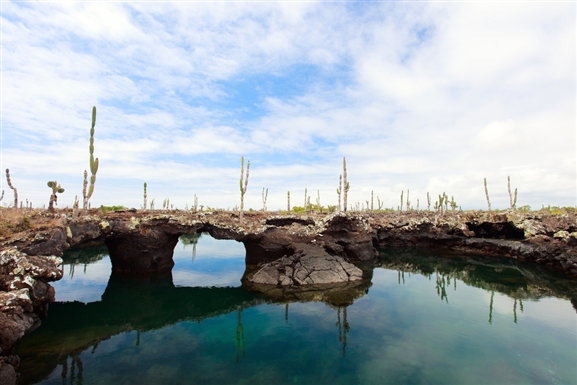
Embarking on a road trip can be one of the most exhilarating ways to explore the world around you. Whether you’re planning a solo road trip or a family adventure, the freedom of the open road offers endless opportunities for discovery.
In this article, we’ll delve into essential tips and tricks to help you plan your next road trip, ensuring it’s an unforgettable journey filled with adventure, fun, and relaxation.
Why Road Trips Are the Best Way to Travel
The Freedom of the Open Road
One of the most compelling reasons to hit the road is the unparalleled freedom it provides. When you plan a road trip, you’re not confined to the constraints of public transport schedules or flight itineraries.
Instead, you set the pace and direction, allowing for spontaneous detours and the chance to explore hidden attractions along the way. This flexibility means you can stop at national parks, roadside diners, and unique landmarks that might not be accessible by other means of travel, making your journey truly one of a kind.
The open road is a canvas for adventure, where every mile can lead to unexpected experiences. You can choose to travel alone or with friends and family, creating lasting memories together. Additionally, the scenic views along highways and byways offer a refreshing change from the usual routine.
Whether you’re driving along the picturesque Pacific Coast Highway or cruising down Route 66, the journey itself becomes just as important as the destination.
Budget-Friendly and Flexible Travel Style
Road trips are often seen as a budget-friendly alternative to traditional travel. With the ability to pack your own food and choose affordable accommodations, such as campgrounds or budget hotels, you can significantly cut down on expenses.
Plus, the ability to plan your itinerary allows for cost-effective choices, from selecting the best routes to avoiding tolls. This flexibility means you can tailor your trip to fit your budget without compromising on experiences.
By using apps like Google Maps and Roadtrippers, you can plan your route effectively, ensuring you make the most of your time and resources. You can even save on fuel costs by taking scenic backroads instead of expensive interstates.
This way, you not only stick to your budget but also discover charming small towns and attractions that you might otherwise miss, enhancing your journey without breaking the bank.
The Joy of Spontaneous Exploration
One of the most delightful aspects of a road trip is the joy of spontaneous exploration. Unlike other forms of travel, where every moment is meticulously planned, the road allows for unexpected adventures.
You might come across a quirky roadside attraction, a breathtaking viewpoint, or a local festival that piques your interest. This spontaneity is what transforms a good road trip into an epic road trip, filled with stories and experiences that you’ll cherish for years to come.
Engaging with locals, sampling regional cuisine, and discovering hidden gems along the way enrich your travel experience. These moments of unplanned discovery can lead to the most memorable stories and connections.
Embracing the unexpected is key to making your road trip truly unique and enjoyable. So, as you plan your next road trip, leave room in your itinerary for detours and adventure, because sometimes the best memories are the ones you never saw coming.
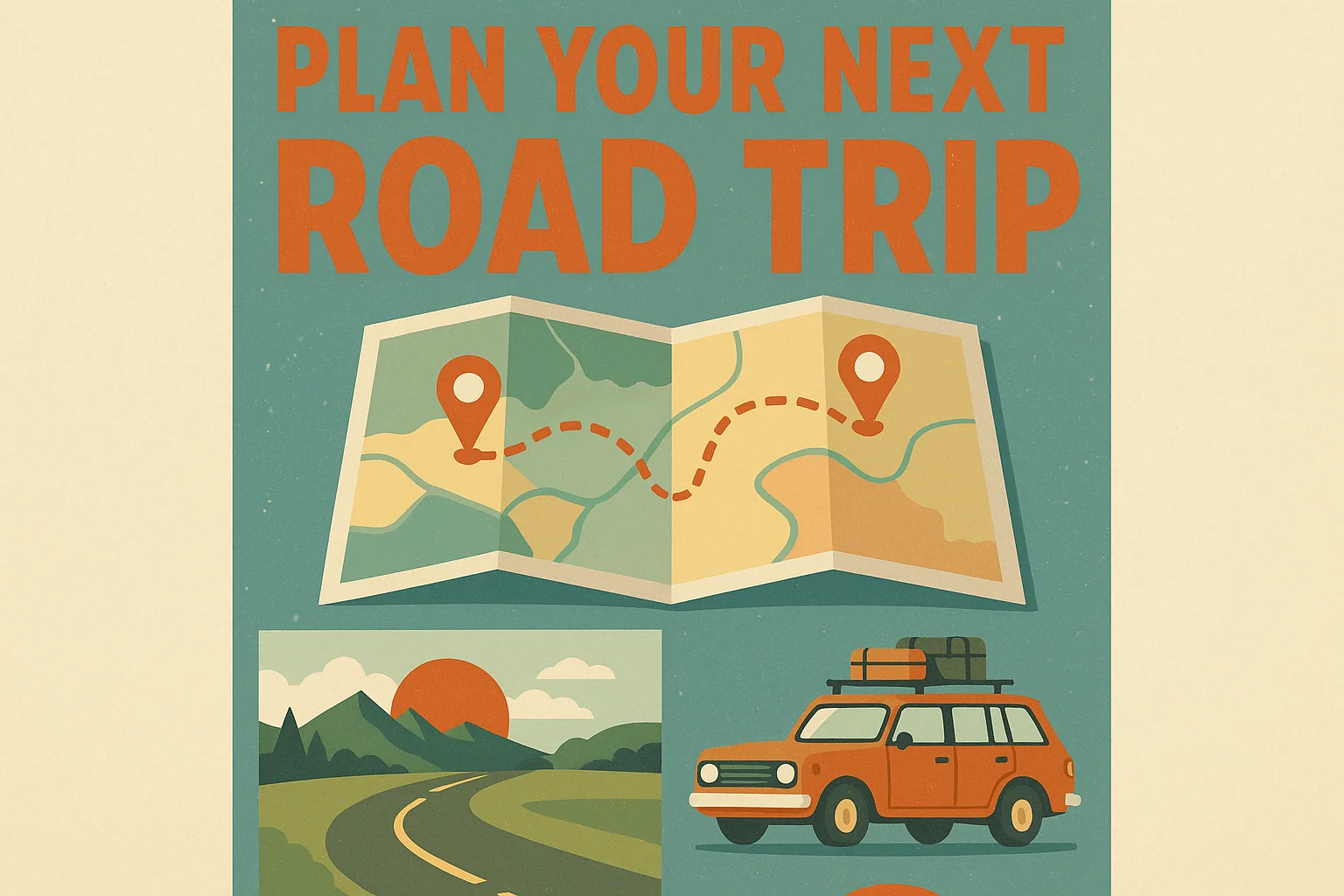
Step-by-Step Guide to Planning the Perfect Road Trip
Define Your Trip Goals and Theme
Before you embark on your journey, it’s essential to define your trip goals and the overall theme of your adventure. Are you looking to explore national parks, visit historical landmarks, or simply enjoy the scenic beauty of the countryside?
By clarifying your objectives, you can better plan your itinerary and choose the best routes that align with your interests. This step is crucial in ensuring that your road trip is not only enjoyable but also meaningful.
Incorporating a theme into your road trip can add an exciting layer to your journey. For instance, if you’re a fan of the great American road trip, you might focus on visiting iconic highways like Route 66 or the Blue Ridge Parkway.
Alternatively, themes such as culinary exploration, historical sites, or outdoor adventures can guide your planning process, helping you create a cohesive experience that resonates with your interests and passions.
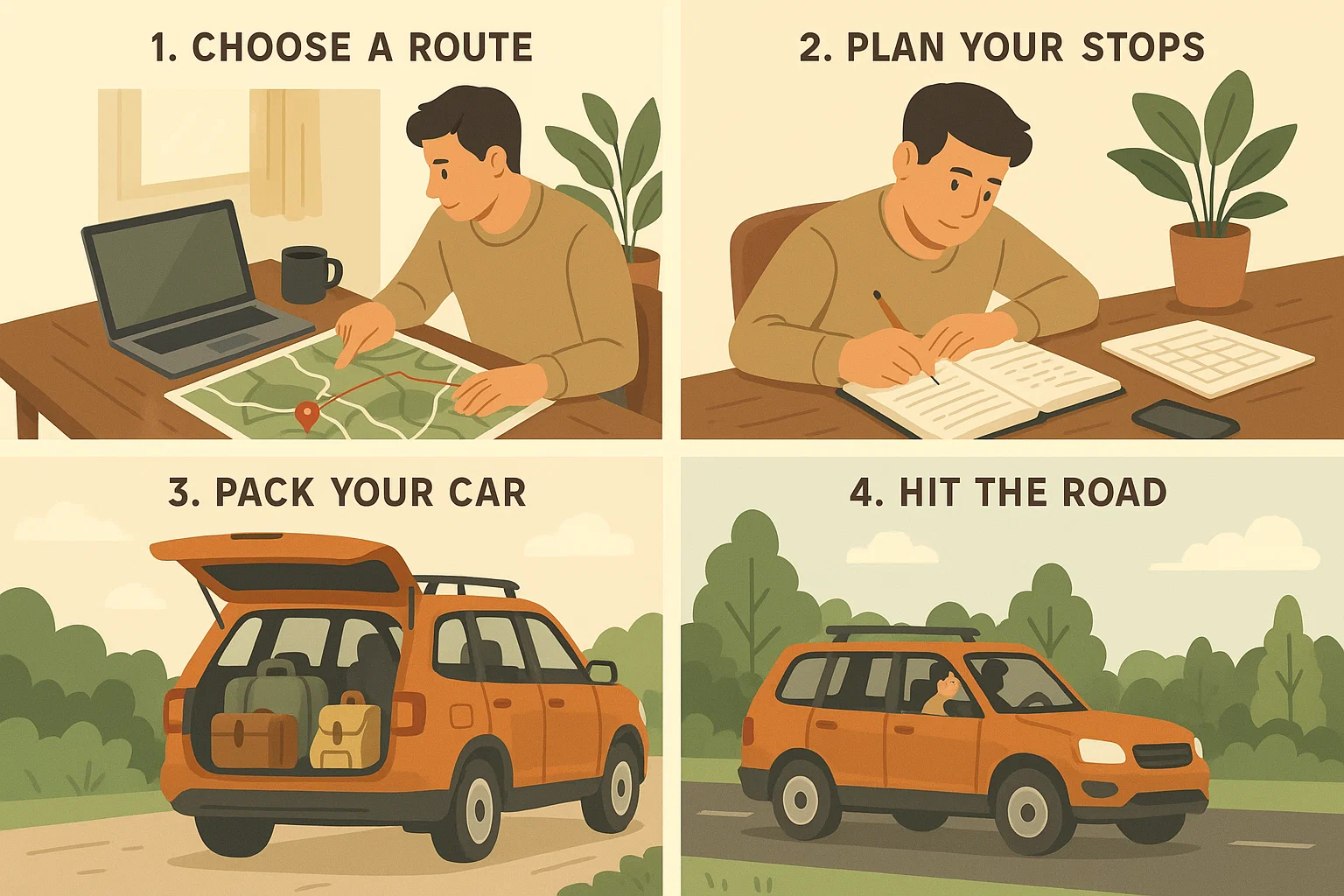
Choose Your Route and Destination
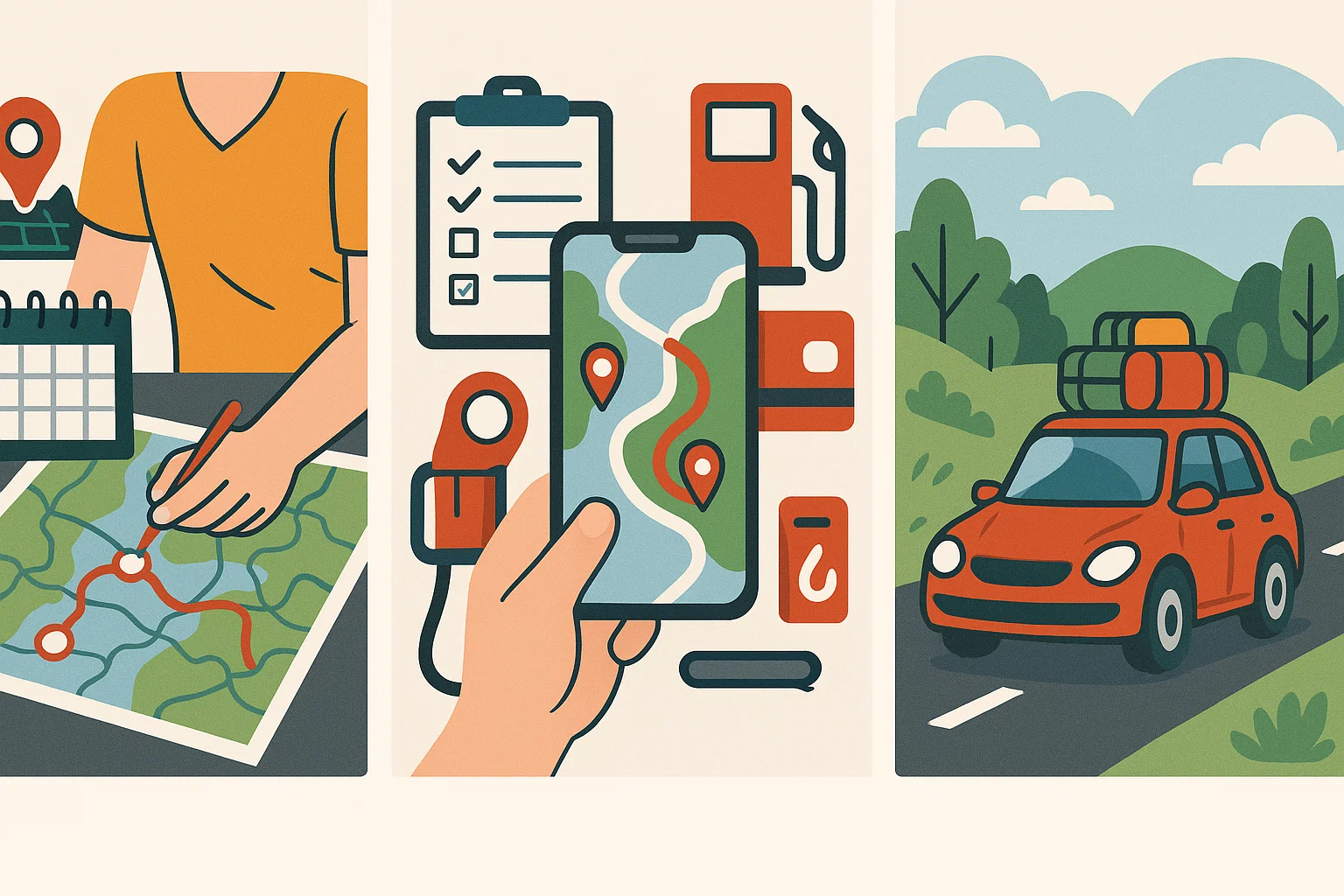
Once you’ve established your trip goals, it’s time to choose your route and destination. Utilizing a road trip planner can help you map out the best routes to take, considering factors such as driving time, scenic views, and notable attractions along the way.
Popular options include using Google Maps for turn-by-turn directions or specialized apps like Roadtrippers that can suggest interesting stops based on your preferences.
When selecting your destinations, consider a mix of popular attractions and lesser-known spots to create a balanced itinerary. For example, you might want to visit renowned national parks like Yellowstone while also taking the time to explore roadside attractions that capture the local culture.
This hybrid approach ensures that your journey is both enriching and diverse, allowing you to experience the full spectrum of what your chosen route has to offer.
Calculate Your Timeline and Distance
Accurate calculations of your timeline and distance are vital for a successful road trip. Knowing how long each leg of your journey will take allows you to plan your stops effectively and avoid feeling rushed.
Be sure to consider factors like traffic patterns and the time of day when estimating driving times. A good rule of thumb is to limit your daily driving time to ensure you have ample opportunity for exploration and relaxation.
In addition to driving distances, factor in breaks for meals, fuel, and rest. Planning for stops not only helps with fatigue management but also enhances your overall experience by allowing time for spontaneous exploration.
By calculating your timeline carefully, you can ensure a smooth road trip that offers both adventure and leisure, creating a well-rounded experience that you will remember long after your journey has ended.
Road Trip Planning Tools and Apps You Need
Best Route Planning Apps (Google Maps, Roadtrippers, Waze)
When planning your next road trip, utilizing the best route planning apps is essential for a smooth journey. Google Maps is a staple for many travelers, providing turn-by-turn directions and real-time traffic updates, ensuring you always stay on track.
Additionally, apps like Roadtrippers allow you to plan your route while discovering attractions, scenic byways, and interesting stops along the way, making your journey more enjoyable.
Another great option is Waze, which not only offers navigation but also incorporates user-generated data to help you avoid traffic jams and road closures.
Using these apps can significantly enhance your road trip experience, providing you with the flexibility to adjust your route as needed and discover new places on the fly. With the right tools, you can ensure that your road trip is not only well-planned but also full of unexpected delights and adventures.
Accommodation Finders (Airbnb, Booking.com, iOverlander)
Finding suitable accommodations is a crucial aspect of road trip planning, and using online platforms like Airbnb, Booking.com, and iOverlander can simplify this process.
Airbnb offers unique lodging options, from cozy cabins to urban apartments, providing you with a chance to experience local culture in a more intimate way. Booking.com is another reliable resource, allowing you to compare prices and read reviews for hotels, ensuring you find the best fit for your needs.
For those looking to connect with fellow road trippers or seek out campgrounds, iOverlander is an invaluable tool. This app provides information on campgrounds, rest areas, and other helpful resources, making it easier to find budget-friendly options along your route.
By leveraging these accommodation finders, you can make informed decisions that enhance your road trip experience, ensuring that you have comfortable and enjoyable places to rest after a day of exploration.
Weather and Safety Apps
Keeping an eye on weather conditions is vital for any road trip, and utilizing weather apps can help you stay informed. Apps like Weather Underground provide up-to-date forecasts, alerts, and radar imagery, allowing you to plan your driving schedule around adverse conditions. This can be especially important if you’re traveling through mountainous areas or regions prone to sudden weather changes.
In addition to weather apps, consider downloading safety apps that can assist you in case of emergencies. AAA’s mobile app is a great resource for roadside assistance and travel planning, ensuring that help is always at hand.
By prioritizing safety and staying informed about weather conditions, you can drive with peace of mind, allowing you to focus on enjoying your adventure on the open road.
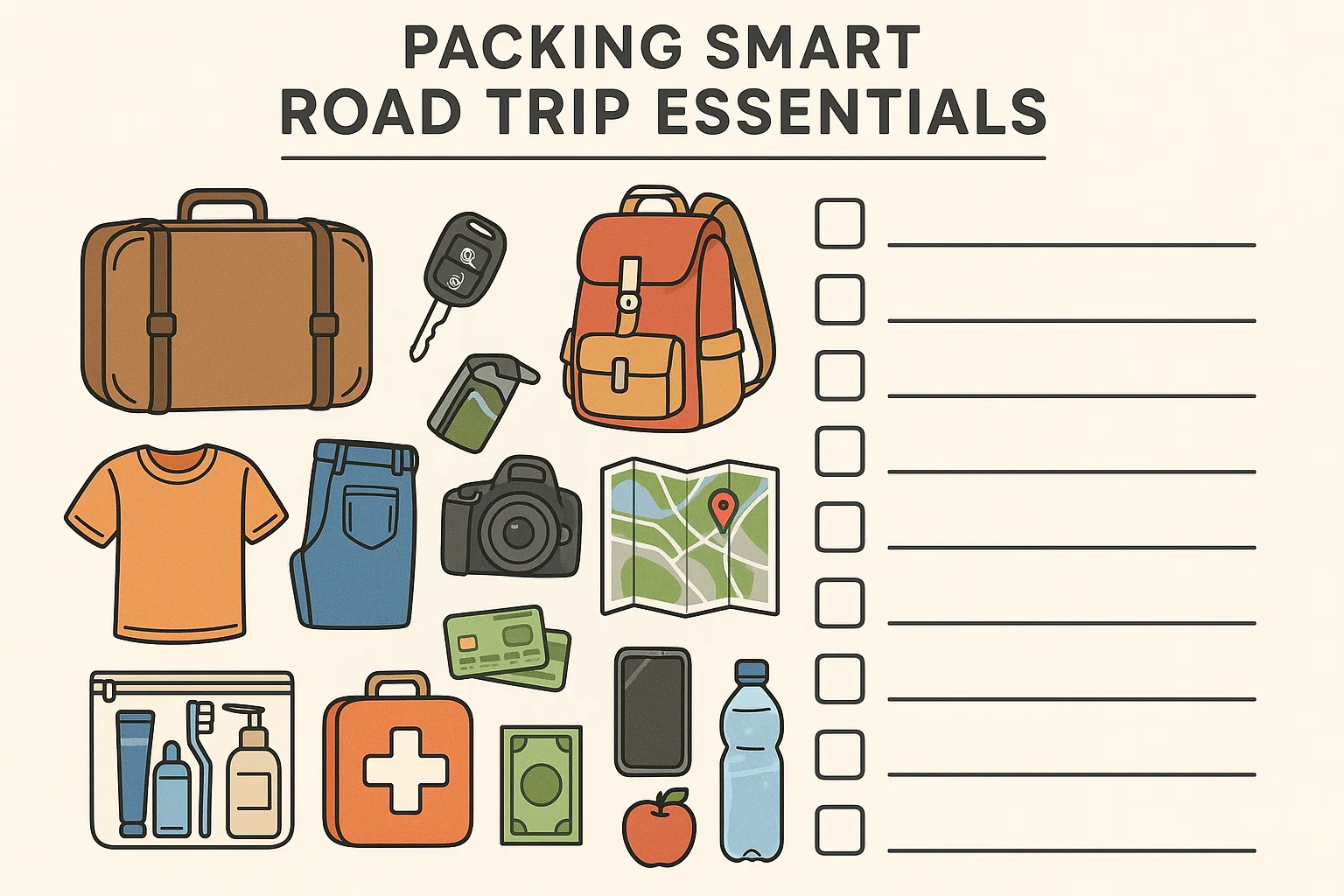
Packing Smart: Road Trip Essentials Checklist
Must-Have Travel Gear and Car Tools
When preparing for a road trip, packing the right gear and car tools is essential for a smooth journey. Begin by creating a checklist of must-have items, including a first-aid kit, flashlight, jumper cables, and tire inflator. Having these tools on hand can help you address minor issues before they become major problems, ensuring your trip remains enjoyable.
Additionally, consider packing travel gear such as portable chargers, navigation tools, and comfortable seating accessories to enhance your experience. Don’t forget to bring along a cooler for snacks and drinks, along with reusable bags for easy storage. By ensuring you have all the necessary travel gear, you can minimize stress and maximize enjoyment on your next road trip.
Food, Snacks, and Drink Storage
Food and drink storage is another critical aspect of road trip preparation. Having a variety of snacks on hand not only keeps your energy levels up during long drives but also helps save money on meals. Packing items like trail mix, granola bars, and fresh fruits can make for easy and nutritious options while on the road.
Investing in a good cooler will allow you to store perishable items and refreshing drinks, making your journey more pleasant. Remember to bring reusable containers and utensils to minimize waste and make clean-up easier. By planning your food and drink storage ahead of time, you can enjoy a more comfortable and satisfying road trip experience, filled with delicious treats and hydration.
Entertainment for the Drive (Music, Podcasts, Games)
Long drives can sometimes feel monotonous, which is why it’s essential to plan for entertainment during your road trip. Curate playlists filled with your favorite songs or explore new music to keep the energy high. Additionally, podcasts covering a range of topics can provide engaging content to keep your mind occupied as you travel, making the driving time pass more quickly.
Don’t forget traditional road trip games that can involve everyone in the car. Games like “I Spy” or “20 Questions” can spark fun conversations and create lasting memories. By preparing a mix of entertainment options, you’ll ensure that the journey is just as enjoyable as the destination, making your road trip an unforgettable adventure.
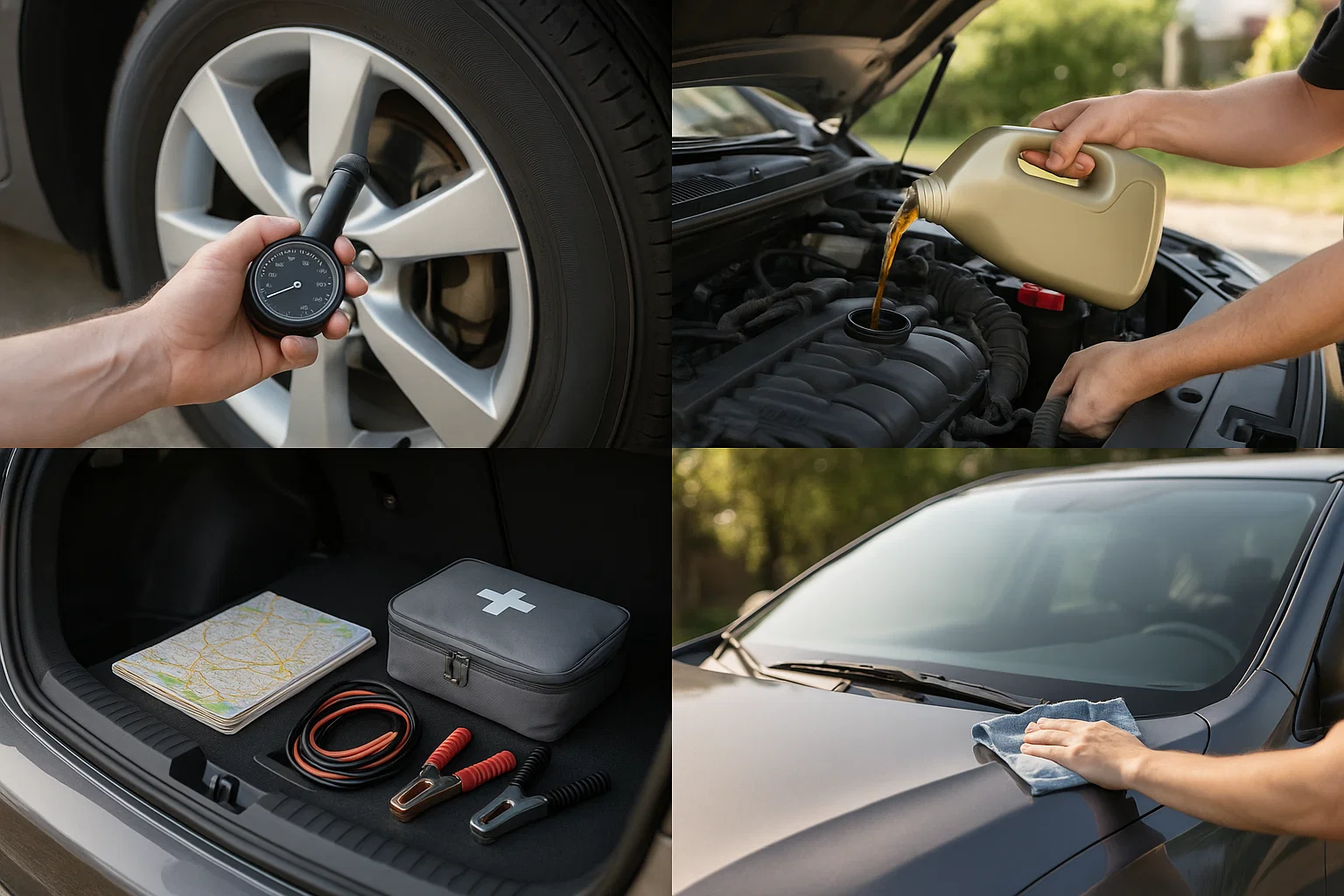
How to Prepare Your Car for a Long Trip
Pre-Road Trip Vehicle Inspection Checklist
Before setting off on your road trip, conducting a vehicle inspection is crucial to ensure safety and performance. Begin by checking the oil, coolant, and tire pressure, as well as the condition of your brakes and lights. A thorough inspection can help prevent breakdowns and costly repairs down the road, allowing you to focus on enjoying your adventure.
Additionally, make sure to clean your windshield and replace wiper blades if necessary to enhance visibility during your journey. Don’t forget to check your spare tire and emergency equipment, ensuring you’re fully prepared for any unforeseen circumstances. Taking the time to prepare your car properly will contribute significantly to a smooth and enjoyable road trip experience.
Emergency Kit: What to Include
Having an emergency kit on hand is essential for any road trip. Your kit should include basic first-aid supplies, a flashlight, batteries, and a multi-tool to address any minor issues that may arise. Additionally, consider packing non-perishable food and water, as well as a blanket for warmth in case of unexpected delays.
It’s also wise to include a portable phone charger and a map in case of technology failures. By being prepared with a comprehensive emergency kit, you can ensure that you and your companions are safe and comfortable, even in challenging situations. This preparedness will allow you to focus on enjoying your journey without the worry of unforeseen circumstances derailing your adventure.
Fuel Efficiency and Maintenance Tips
To maximize your road trip experience, it’s important to consider fuel efficiency and maintenance tips. Begin by ensuring your tires are properly inflated, as this can significantly impact gas mileage. Additionally, maintaining a steady speed and using cruise control on highways can help you conserve fuel during your journey.
Regularly cleaning your car and keeping it well-maintained will also enhance performance. Consider removing unnecessary weight from your vehicle, as excess cargo can decrease fuel efficiency. By implementing these tips, you’ll not only save money on gas but also contribute to a more eco-friendly road trip experience.
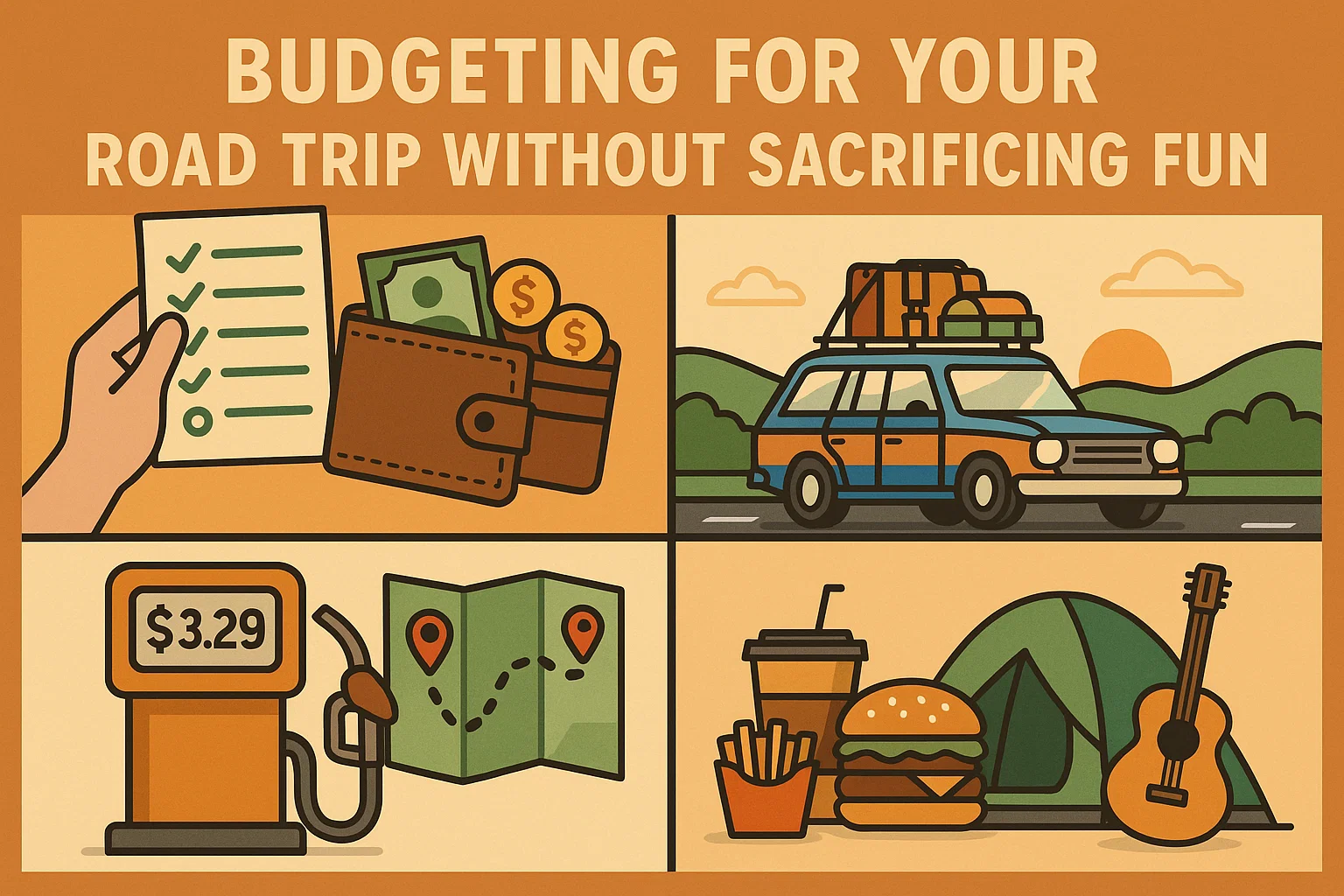
Budgeting for Your Road Trip Without Sacrificing Fun
Fuel and Toll Estimations
Budgeting for fuel and tolls is essential when planning your road trip. Start by estimating the distance you plan to travel and calculating your vehicle’s fuel efficiency to determine how much gas you’ll need. Utilizing apps like GasBuddy can help you find the best fuel prices along your route and assist in budgeting for this expense.
Additionally, be sure to factor in toll costs, especially if you’re traveling on interstate highways. Many navigation apps can provide toll estimates, allowing you to budget accordingly. By accurately estimating fuel and toll expenses, you can better manage your overall road trip budget, ensuring you have ample funds left for attractions and experiences along the way.
Accommodation on a Budget (Camping vs Hotels)
When it comes to budgeting for accommodations, weighing the pros and cons of camping versus hotels can help you save money. Camping offers a more affordable option and allows you to immerse yourself in nature, especially near national parks. Many campgrounds provide amenities such as fire pits and restrooms, making it a comfortable experience for families and solo travelers alike.
On the other hand, hotels can provide more convenience and comfort, especially after long driving days. Look for budget-friendly hotel options or consider booking through discount sites to secure the best rates. By evaluating your accommodation choices based on your budget and preferences, you can enjoy your road trip without sacrificing comfort or fun.
Hidden Costs You Should Plan For
When budgeting for your road trip, it’s important to consider hidden costs that may arise during your journey. Unexpected expenses such as vehicle maintenance, roadside assistance, or emergency repairs can quickly add up. Additionally, consider costs for attractions, meals, and souvenirs, which can sometimes be overlooked in initial budgeting.
Planning for these hidden costs by setting aside a contingency fund can help alleviate stress and ensure that you enjoy your road trip without financial surprises. By preparing for the unexpected, you can focus on the adventure and create lasting memories without the worry of overspending or financial constraints.
Best Tips for Enjoying the Journey — Not Just the Destination
Planning Scenic Stops and Hidden Gems
One of the best ways to enhance your road trip experience is by planning scenic stops and discovering hidden gems along the way. Researching attractions and viewpoints can help you create a route filled with breathtaking sights and unique experiences. Websites and apps dedicated to travel can provide recommendations for lesser-known locations that will enrich your journey.
Don’t be afraid to venture off the beaten path and explore local treasures that may not be in mainstream travel guides. These unplanned detours can lead to memorable encounters, scenic vistas, and a deeper appreciation for the regions you pass through. By prioritizing scenic stops and hidden gems, you’ll create a road trip that celebrates the beauty of the journey just as much as the destination.
Engaging with Locals and Cultural Experiences
Engaging with locals and immersing yourself in cultural experiences can transform your road trip into a more enriching adventure. Take the time to stop in small towns, chat with residents, and participate in community events or local festivals. This not only connects you with the culture but also offers insights that you won’t find in guidebooks.
Consider trying regional cuisine at local diners or markets to experience the flavors of the area firsthand. By embracing local culture and building connections, you’ll create a road trip filled with authentic experiences and stories that enrich your journey. This aspect of travel can lead to lifelong friendships and unforgettable memories that go beyond typical tourist attractions.
Creating a Travel Journal or Video Diary
Documenting your road trip through a travel journal or video diary is a fantastic way to capture memories and reflections along the way. Writing about your experiences, the people you meet, and the attractions you visit can help you remember the journey long after it ends. Additionally, creating videos or vlogs can serve as a visual keepsake, allowing you to relive the adventure and share it with friends and family.
Consider including sketches, ticket stubs, or other memorabilia in your journal to make it a more personal reflection of your experience. By taking the time to document your road trip, you not only preserve memories but also create a project that you can revisit and cherish for years to come.

Staying Safe and Healthy on the Road
Driving Tips for Long Distances
To ensure a safe and enjoyable road trip, it’s essential to follow driving tips for long distances. Regularly take breaks to stretch, hydrate, and refresh, as this can significantly reduce fatigue and increase alertness during long drives. Aim to switch drivers if traveling with companions, allowing everyone to share the driving responsibilities and maintain energy levels.
Additionally, be mindful of speed limits and weather conditions, adjusting your driving style accordingly. Implementing these tips will help you stay safe and focused on the road, allowing you to fully enjoy the journey ahead. Remember, the key to a successful road trip is balance—between driving, resting, and enjoying the experiences along the way.
Hygiene and Cleanliness Tips for Travelers
Every road trip requires good hygiene and cleanliness practices, especially during a long road trip across the us road trip. As you explore things to see like the New River Gorge, be sure to take breaks every two hours to stretch and refresh. Keep tools to help you clean handy, ensuring a comfortable trip.
When driving on the interstate, plan accordingly for meals and rest stops. With 100 miles between destinations, prioritize cleanliness behind the wheel and aim for hours of sleep when possible. This trip west can include miles of driving but offers something for everyone in terms of adventure.
Utilize packing tips to bring sanitizers and wipes for your journey. Whether you’re heading to your favorite national park or exploring routes along the way, remember that good hygiene can help drive the best experience on every trip, even outside of the united states.
Travel Insurance and Emergency Contacts
Travel insurance<!– is essential for every long road trip, especially for the ultimate road trip across the US. As you plan your trip, consider using an ultimate road trip planner to help with driving directions and map your route to historic sites like Mount Rushmore in the Black Hills.
Remember to pack emergency contacts and insurance information in your travel trailer. On a cross-country trip, you may drive for hours per day, so it’s crucial to have tips for planning rest stops at gas stations and points of interest along the northern route, such as the beauty of the Pacific Coast or River Road when heading east.
Sustainable Road Tripping: Travel Green
Sustainable road tripping is an exciting way to explore the great outdoors while minimizing your environmental impact. By choosing to travel green, you can reduce your carbon footprint and embrace eco-friendly practices on the road.
Opt for a fuel-efficient vehicle or consider carpooling with friends, making the journey more enjoyable and sustainable. Additionally, plan your route to include eco-conscious accommodations and support local businesses that prioritize sustainability. By making mindful choices, you can create unforgettable memories while protecting our planet for future generations.
Family and Pet-Friendly Road Trip Advice
Family road trips can be a delightful adventure, especially when you include your furry companions. To ensure everyone enjoys the journey, it’s essential to plan frequent stops for bathroom breaks and exercise. Pack plenty of snacks and water to keep everyone hydrated and energized. Create a fun playlist that includes songs for both kids and pets, making the ride more enjoyable. Always have a first aid kit handy in case of any minor mishaps.
When it comes to pet-friendly accommodations, research hotels or campsites in advance that welcome animals. Bring along their favorite toys and blankets to make them feel at home. Ensure that your pet is secured in a comfortable crate or with a harness during car rides for safety. Lastly, remember to keep your pet’s veterinary records accessible in case of emergencies.
Top Road Trip Mistakes to Avoid
One of the top road trip mistakes to avoid is failing to plan your route effectively. Without a clear itinerary, you may find yourself lost or spending unnecessary time on detours. Additionally, neglecting to check your vehicle’s condition can lead to unexpected breakdowns, turning an exciting adventure into a frustrating experience.
It’s also crucial to pack wisely; overpacking can limit space and make it uncomfortable for everyone. Lastly, don’t forget to budget for fuel and food; running out of cash in a remote area is a common road trip mistake that can dampen your journey.
Final Thoughts: Create Unforgettable Memories on the Road
As your journey comes to a close, remember that the essence of travel lies in creating unforgettable experiences. Whether you’re navigating winding roads or exploring hidden gems, each moment is an opportunity to aaa a story worth telling. Embrace spontaneity, as some of the best memories arise from unplanned adventures.
Share laughter with friends, indulge in local cuisines, and immerse yourself in the culture around you. Document your experiences, capturing the beauty of each destination, so you can look back and relive the magic of your travels. Ultimately, it’s the connections you make and the moments you cherish that will linger long after the trip has ended, leaving you with a heart full of joy and a spirit enriched by aaa exploration.