Growth rarely fails because demand disappears. It fails when operations cannot scale profitably. Sales teams add customers faster than delivery teams can serve them efficiently, and margins erode under overtime, fuel costs, and missed service windows.
Territory planning is the missing link between sales growth and delivery efficiency. When territories are designed intentionally, routes become denser, capacity stabilizes, and revenue per route increases. This guide explains how to design delivery territories that support profitable growth—and how execution tools make those designs operational.
What Territory Planning Means (In Business Terms)

Territory Planning vs “Just Sending Drivers Out”
Territory planning is the discipline of defining where, when, and how delivery capacity is deployed. Unlike ad-hoc routing, territories impose structure on operations. They control cost, consistency, and scalability by creating predictable routes with high stop density.
The objective is not just coverage. It is repeatable, efficient coverage that can grow without proportional cost increases.
The Core Outcome Metrics
Well-designed territories improve a specific set of metrics:
- Revenue per route
- Cost per stop
- Stops per driver-day
- On-time performance, which directly supports retention and growth
These outcomes reflect both operational efficiency and commercial strength.
Why Poor Territories Destroy Margins

Common Territory Mistakes
Margin erosion often starts with territory design errors:
- Territories based on historical habits rather than data
- Overlapping coverage areas that duplicate effort
- One oversized territory with no capacity limits
- Mixing dense urban stops with remote deliveries on the same route
Each mistake increases variability and reduces usable capacity.
The Financial Consequences
Poor territories lead to measurable financial damage:
- Increased deadhead miles between stops
- More overtime and missed delivery windows
- Lower daily capacity, forcing premature hiring
- Margin compression as fixed costs rise faster than revenue
Territory design directly determines how much revenue a route can safely carry.
The 4 Territory Models That Work (Choose One)
1) Geographic Zones (Zip or Neighborhood-Based)
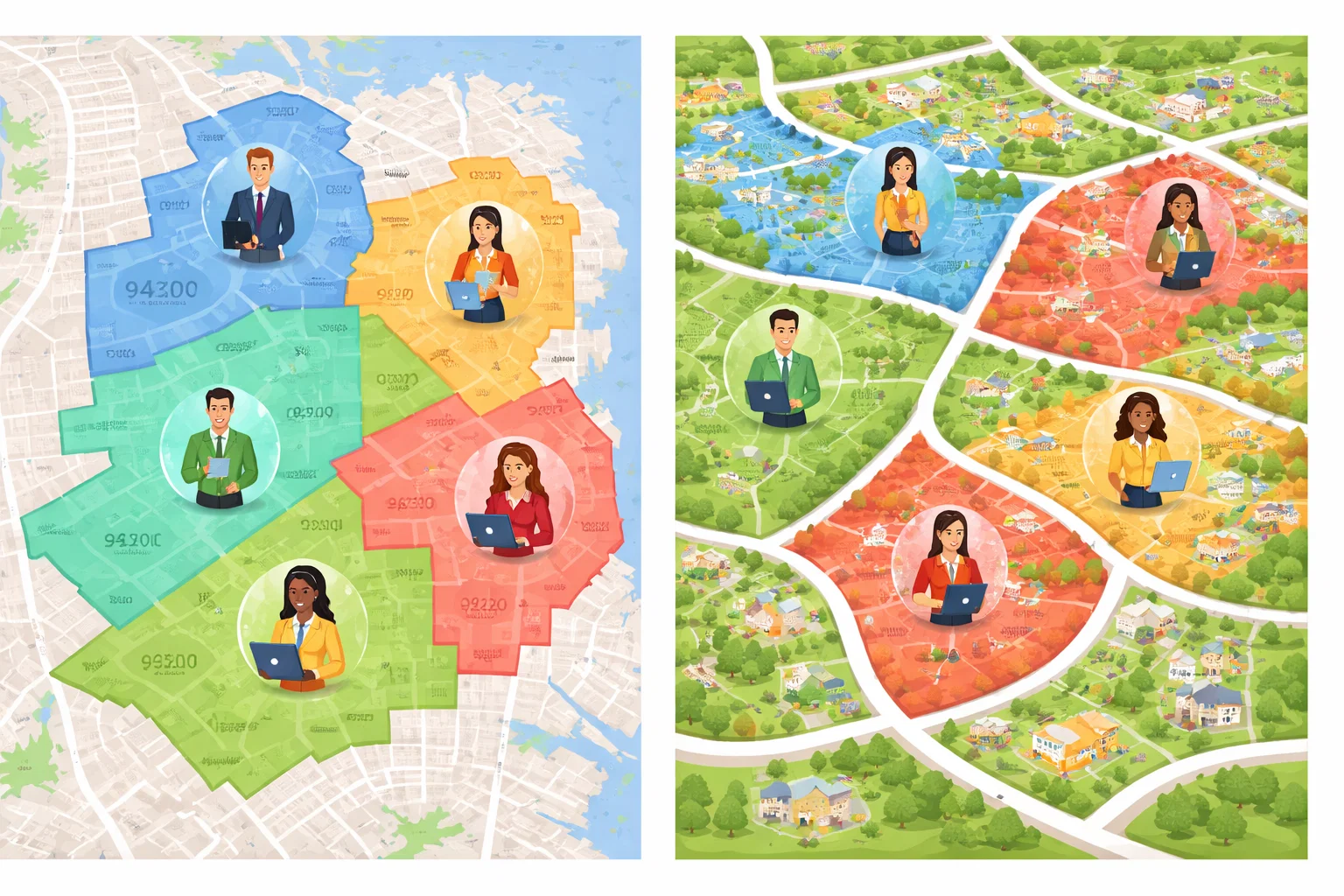
Geographic zones work well in dense cities or compact service areas. Clear boundaries simplify scheduling and make demand patterns predictable.
2) Cluster Territories (Density-Based)
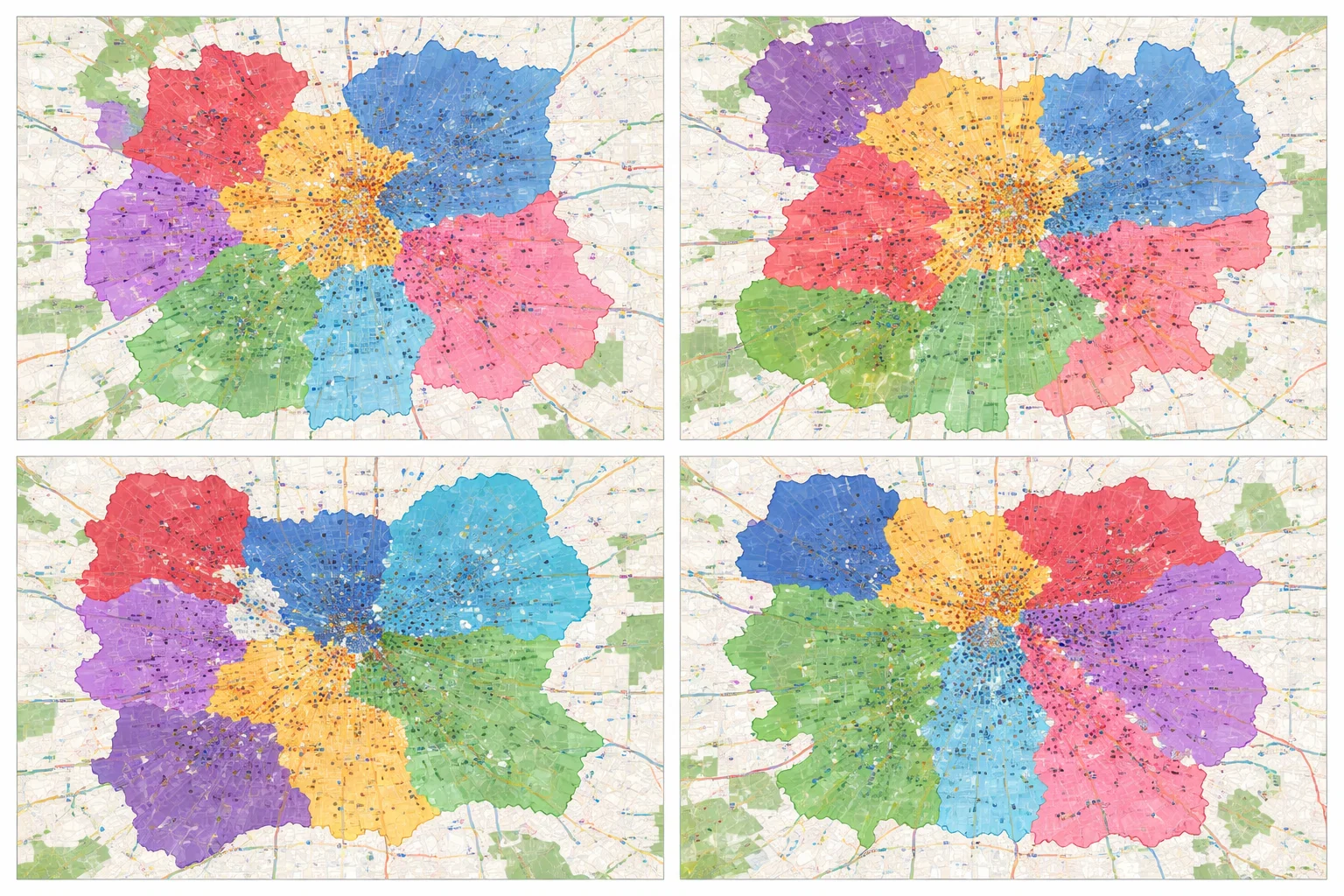
Cluster-based territories group customers by natural proximity rather than strict boundaries. This model maximizes density and minimizes travel time, especially in mixed urban and suburban areas.
3) Hub-and-Spoke Territories (Depot-Centered)
This approach designs territories around one or more depots. It is effective for fleets that start and end routes from fixed locations and need tight control over travel distance.

4) Account-Based Territories (Key Customers First)
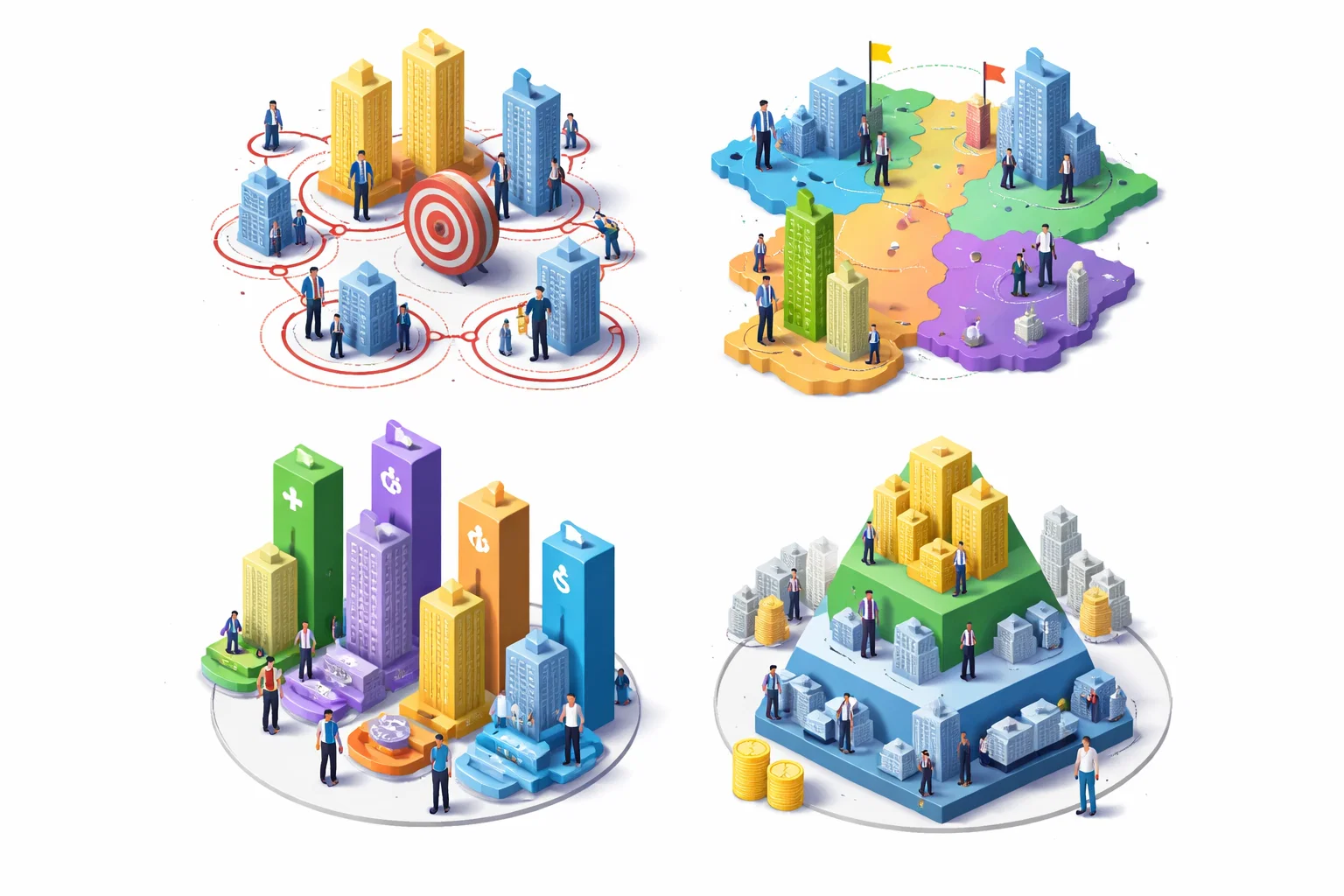
When a small number of customers generate most volume, territories can be designed around anchor accounts. Surrounding capacity is then filled with nearby demand.
How to Build Denser Routes (The Growth Playbook)
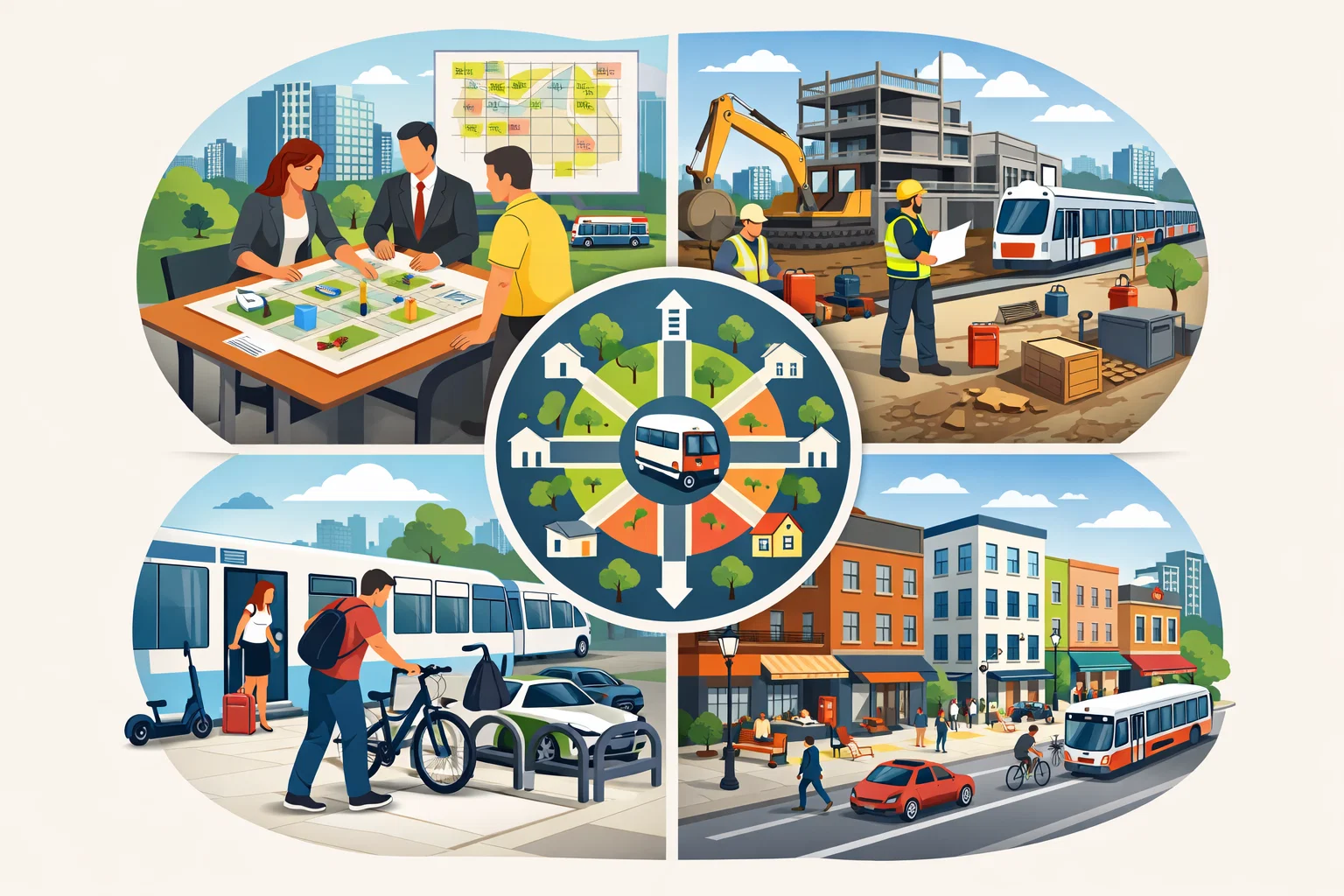
Align Sales and Ops with “Delivery Days”
Density increases when customers are guided into predictable patterns:
- Assign specific days to each zone (for example, Zone A on Monday and Wednesday)
- Encourage customers to align orders with scheduled routes
This alignment improves utilization without reducing service quality.
Create Density Through Incentives
Commercial incentives reinforce operational goals:
- Pricing incentives for scheduled delivery days
- Minimum order thresholds in low-density areas
- Subscription or bundle offers for recurring drops
Demand shifts toward efficient routes when incentives are aligned.
Reduce Variability (Variance Is a Hidden Cost)
High variance undermines even well-designed territories. Standardizing time windows by zone and limiting last-minute add-ons outside the territory plan reduces disruption and protects capacity.
Capacity Planning Inside Each Territory

Estimate Territory Capacity (Simple Method)
Capacity planning does not require complex modeling:
- Average stops per driver-day in the territory
- Typical route duration and variability
- A buffer for exceptions such as returns or peak demand
This establishes a realistic ceiling for daily volume.
When to Split a Territory
Territories should be divided when warning signs appear:
- Overtime becomes consistent
- On-time performance declines
- Stops per driver-day fall despite rising demand
Splitting early preserves service quality and margin.
Pricing and Service Levels by Territory (Business-First)

Zone-Based Pricing That Matches Cost Reality
Pricing should reflect territory economics:
- Higher prices for remote or low-density zones
- Lower prices in dense zones to attract more clustered demand
This approach builds density where it is most profitable.
Premium Tiers for Operationally Expensive Requests
Some requests deserve premium pricing:
- Tight delivery windows
- Same-day service
- Appointment or special-handling requirements
Clear tiers protect margins while preserving customer choice.
Where Optiway Route Planner Fits (Execution Layer)
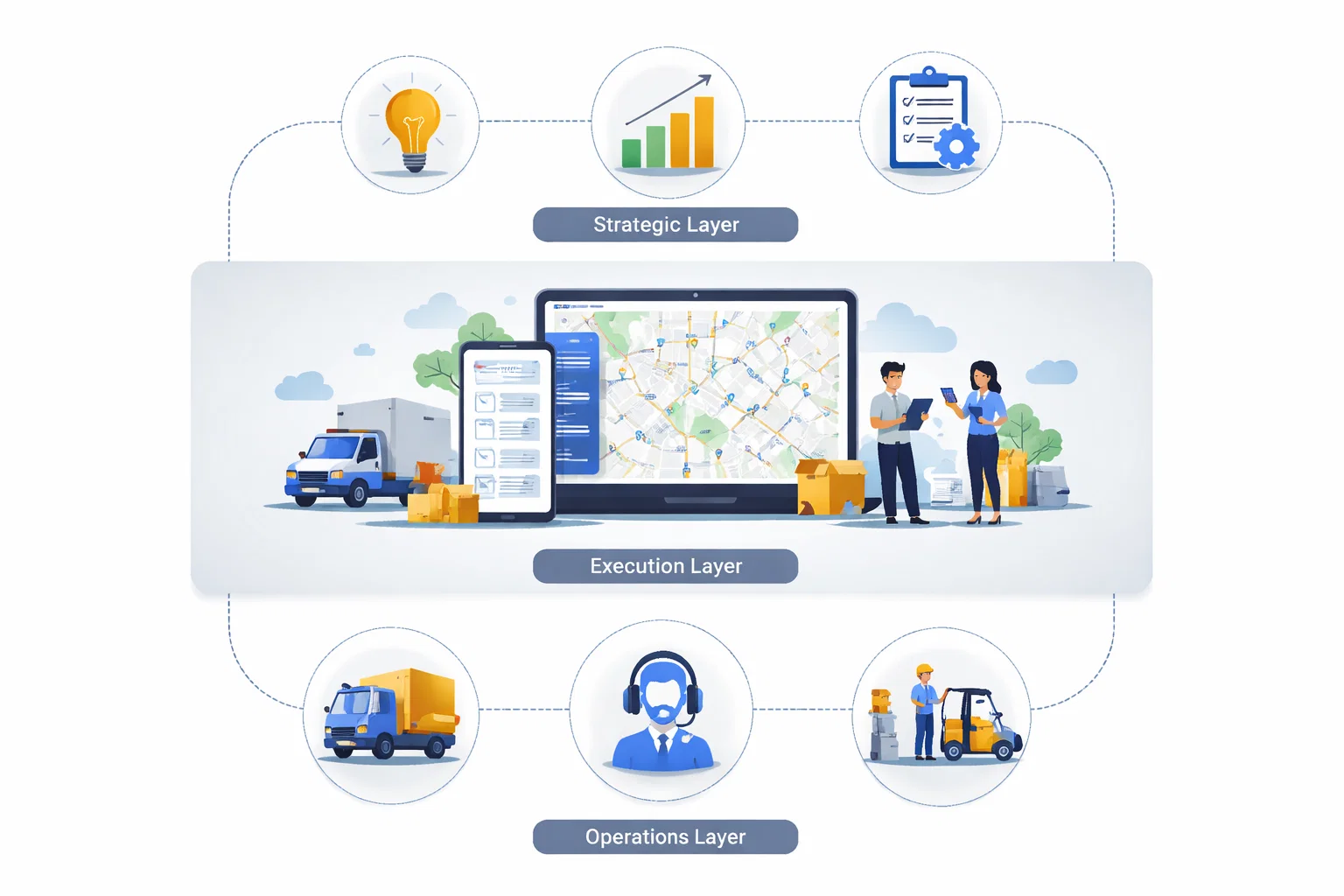
Turning Territory Design Into Daily Routes
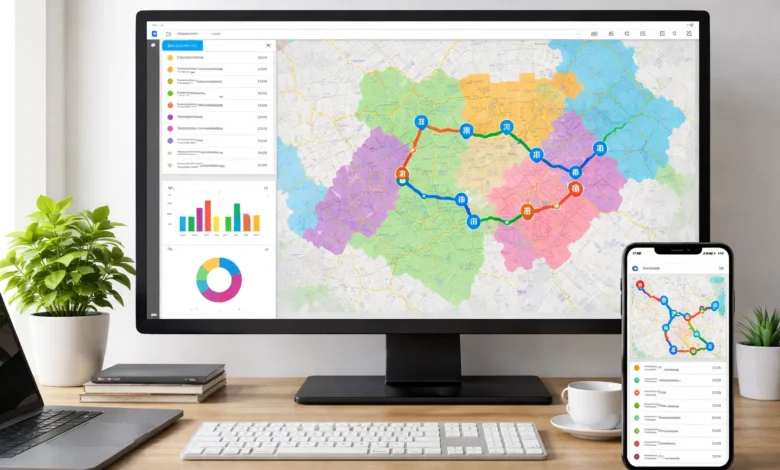
This is where Optiway Route Planner supports execution. It enables teams to quickly build and adjust routes using a clean interface, translating territory rules into daily operations.
Support for up to 200 driving directions allows planners to manage high-volume territory days without splitting work across multiple tools, keeping coverage consistent and predictable.
Business Outcomes You Should See
Effective execution produces clear results:
- Higher revenue per route from denser stop sequencing
- Lower cost per stop through reduced deadhead mileage
- Better on-time performance, supporting retention and referrals
Weekly Territory Performance Dashboard
A simple dashboard keeps territory health visible:
- Revenue per route by territory
- Stops per route as a density indicator
- Cost per stop (trend over time)
- On-time rate
- Overtime hours
- Reattempt rate
- Customer complaints or satisfaction indicators (optional)
Territories should be reviewed as performance units, not just maps.
Conclusion
Territory planning is a growth strategy. By building denser zones, businesses increase revenue per route while protecting margins and service quality. Density creates capacity without adding drivers or vehicles. Use https://optiway.io/ to operationalize territory plans and run consistent, high-density delivery days.