



Cybersecurity used to be a concern reserved for large enterprises with sprawling networks and dedicated security teams. Those days are gone. Today, a manufacturing company with 50 employees, a local government agency, and a regional healthcare provider all face many of the same threats as multinational corporations. Attackers do not care about company size. They care about opportunity.
That reality is driving organizations to adopt managed cybersecurity solutions that provide continuous protection without requiring a massive internal security department. Companies such as application whitelisting tool provider Blueshift Cyber help organizations strengthen their defenses through AI-powered security services, Managed Extended Detection and Response (XDR), and a 24/7 U.S.-based Security Operations Center (SOC).


Their approach helps small-to-medium-sized businesses, government agencies, and critical infrastructure organizations detect threats earlier, respond faster, and maintain stronger protection against increasingly sophisticated cyber risks.
The timing could not be more important.
According to IBM’s 2024 Cost of a Data Breach Report, the average global data breach now costs $4.88 million, the highest figure ever recorded.
At the same time, Verizon’s 2025 Data Breach Investigations Report found that ransomware is involved in 44% of breaches, showing just how common disruptive attacks have become.
For many organizations, the challenge is simple. Cyber threats operate around the clock. Most internal IT teams do not.
That gap is where managed cybersecurity services create value.
The Cybersecurity Landscape Has Changed Dramatically
A decade ago, cybersecurity often meant installing antivirus software, maintaining a firewall, and applying patches when time allowed. While those practices still matter, they are no longer enough.
Modern attackers move quickly. They automate reconnaissance, exploit vulnerabilities within hours of disclosure, and use artificial intelligence to improve phishing campaigns. Defenders face a far more complicated environment than they did even five years ago.
Consider a common scenario.

A small manufacturing company invests heavily in endpoint protection. Management feels confident because antivirus software reports everything is working properly. Then an employee receives a convincing email appearing to come from a trusted supplier. The message contains no malware attachment. Instead, it directs the employee to a fake login portal.
The credentials are stolen.
Within hours, attackers gain access to internal systems, move laterally across the network, and begin collecting sensitive information.
The antivirus never triggers.
The firewall never notices.
The organization discovers the breach weeks later.
Stories like this happen every day.
Why Traditional Security Approaches Are Struggling
Several factors have reshaped cybersecurity risk.
Remote and Hybrid Work
Employees connect from home offices, hotels, airports, and coffee shops. Every connection creates another potential entry point.
Cloud Adoption
Business applications now live across multiple cloud environments. Data often exists outside traditional network boundaries.
Third-Party Risk
Organizations increasingly depend on vendors, software providers, consultants, and contractors.
Verizon’s 2025 DBIR found that 30% of breaches involved a third party, approximately double the previous year’s level.
A company’s security posture is often influenced by organizations it does not directly control.
Faster Vulnerability Exploitation
Attackers are becoming more efficient at weaponizing newly discovered flaws.
Verizon reported a 34% increase in vulnerability exploitation activity year-over-year.
This means organizations have less time to identify, prioritize, and remediate security weaknesses.
The Cost Goes Beyond Financial Loss
When people hear about cybersecurity incidents, they often focus on breach costs.
Money matters.
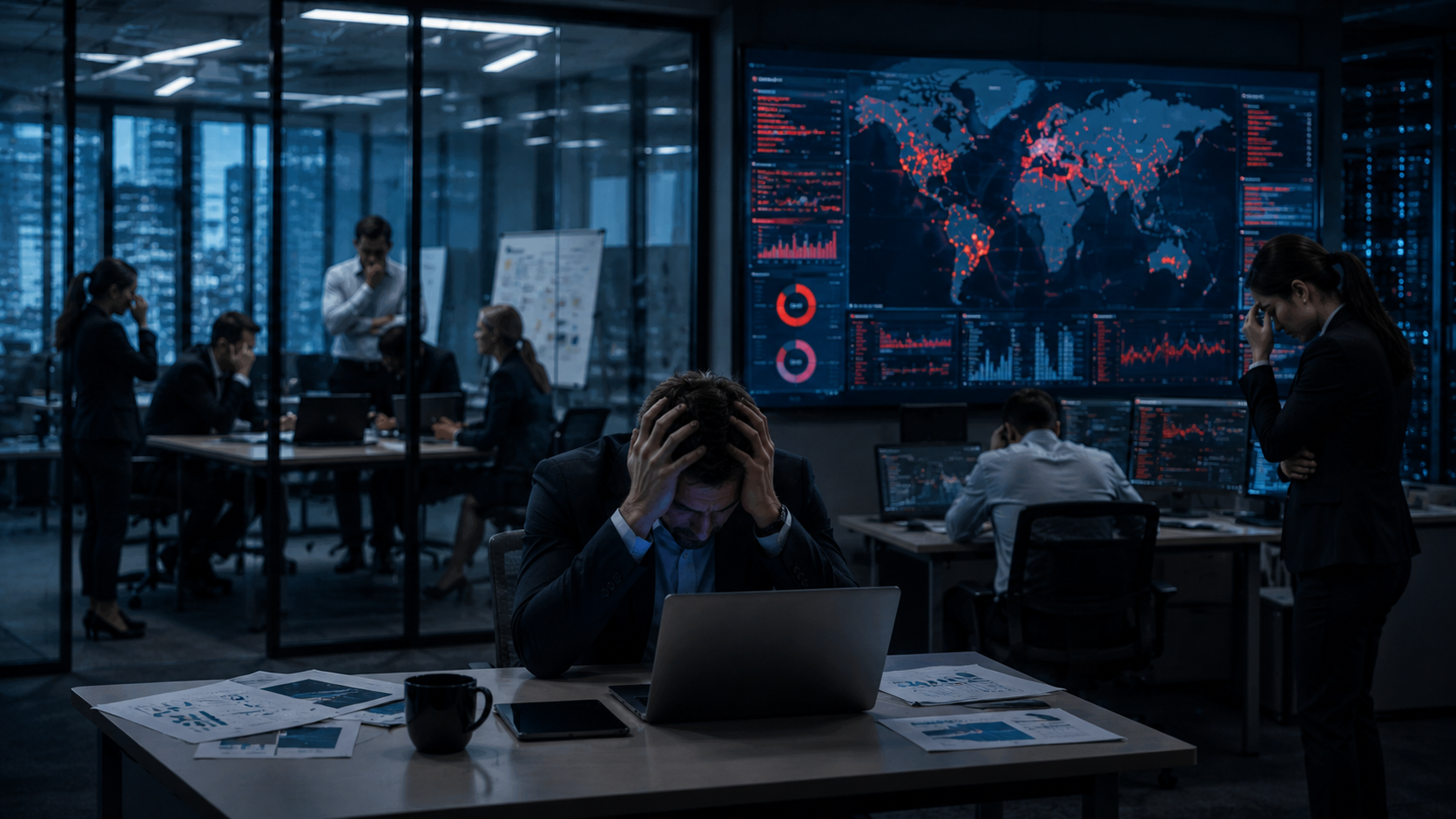
But operational disruption often hurts more.
Imagine a municipal utility unable to access critical systems for several days. Or a manufacturer forced to halt production because ransomware encrypted essential files.
Revenue losses accumulate quickly. Customer confidence erodes. Regulatory scrutiny follows.
IBM found that 70% of breached organizations experienced significant or moderate operational disruption following a cyber incident.
That statistic highlights an important shift.
Cybersecurity is no longer just an IT issue.
It is a business continuity issue.
It is a financial issue.
It is a reputation issue.
And increasingly, it is a leadership issue.
Why Organizations Need a Different Approach

Many organizations attempt to solve cybersecurity challenges by purchasing additional tools.
The result often resembles a garage filled with expensive equipment but no mechanic.
Tools matter. Expertise matters more.
Managed cybersecurity solutions combine technology, skilled analysts, threat intelligence, continuous monitoring, and incident response into a unified service.
Instead of reacting after something goes wrong, organizations gain access to security professionals who actively monitor, investigate, and respond to threats before they escalate.
That proactive mindset has become one of the most important advantages in modern cyber defense.
What Are Managed Cybersecurity Solutions?
The term “managed cybersecurity solutions” appears frequently in technology discussions, but many decision-makers are still unclear about what it actually means.

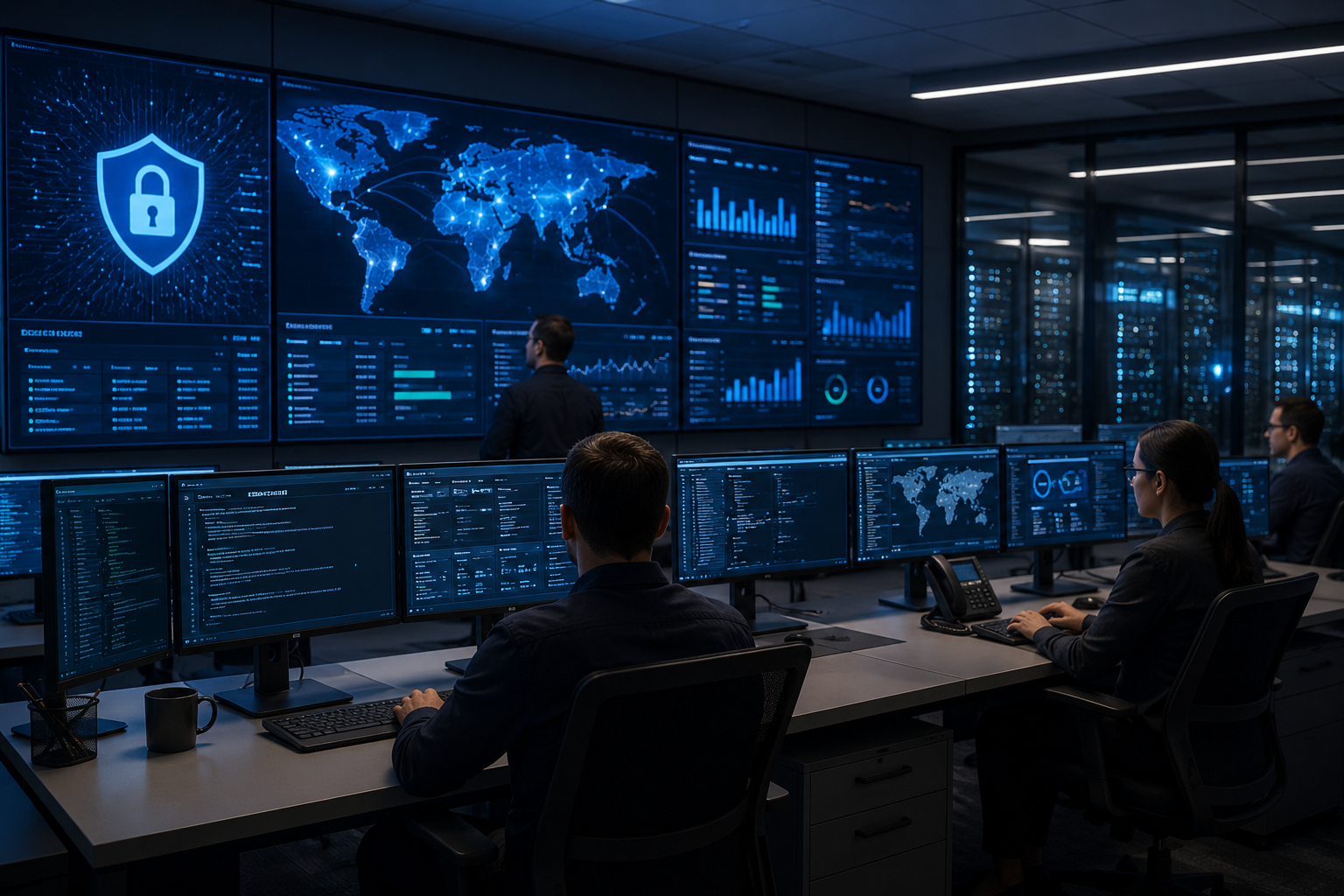
At its core, managed cybersecurity is a partnership.
An external security provider helps monitor, detect, investigate, and respond to cyber threats on behalf of an organization.
Think of it like hiring a specialized emergency response team.
Most businesses do not maintain their own fire department. They rely on trained professionals who can respond quickly when a crisis occurs.
Cybersecurity works in a similar way.
A Simple Definition
Managed cybersecurity services are outsourced security operations designed to help organizations protect systems, networks, users, and data against cyber threats.
These services often include:
- Security monitoring
- Threat detection
- Incident response
- Threat hunting
- Vulnerability management
- Security analytics
- Compliance support
- Managed XDR
- Security Operations Center services
The objective is straightforward.
Reduce risk while improving visibility and response capabilities.
Traditional IT Support vs Managed Security Services
Many organizations assume their IT department already handles cybersecurity.
Some overlap exists.
The responsibilities are quite different.
| Traditional IT Team | Managed Cybersecurity Team |
|---|---|
| User support | Threat detection |
| Device management | Threat hunting |
| Software deployment | Incident response |
| Network maintenance | Security monitoring |
| Infrastructure uptime | Security analytics |
| System upgrades | Vulnerability management |
IT professionals keep systems operational.
Security professionals focus on identifying and stopping threats.
Both functions are critical.
Why Internal Teams Often Struggle
Cybersecurity talent remains difficult to find and retain.
Many organizations simply cannot hire enough specialists to provide round-the-clock coverage.
Sophos found that 63% of organizations affected by ransomware reported a lack of cybersecurity expertise or personnel as a contributing factor.
This challenge is especially common among:
- Small and medium-sized businesses
- Local governments
- Educational institutions
- Healthcare organizations
- Critical infrastructure operators
These organizations face enterprise-level threats without enterprise-level security budgets.
Managed cybersecurity services help bridge that gap.
Key Benefits of Managed Cybersecurity Solutions
Organizations often experience several immediate advantages.
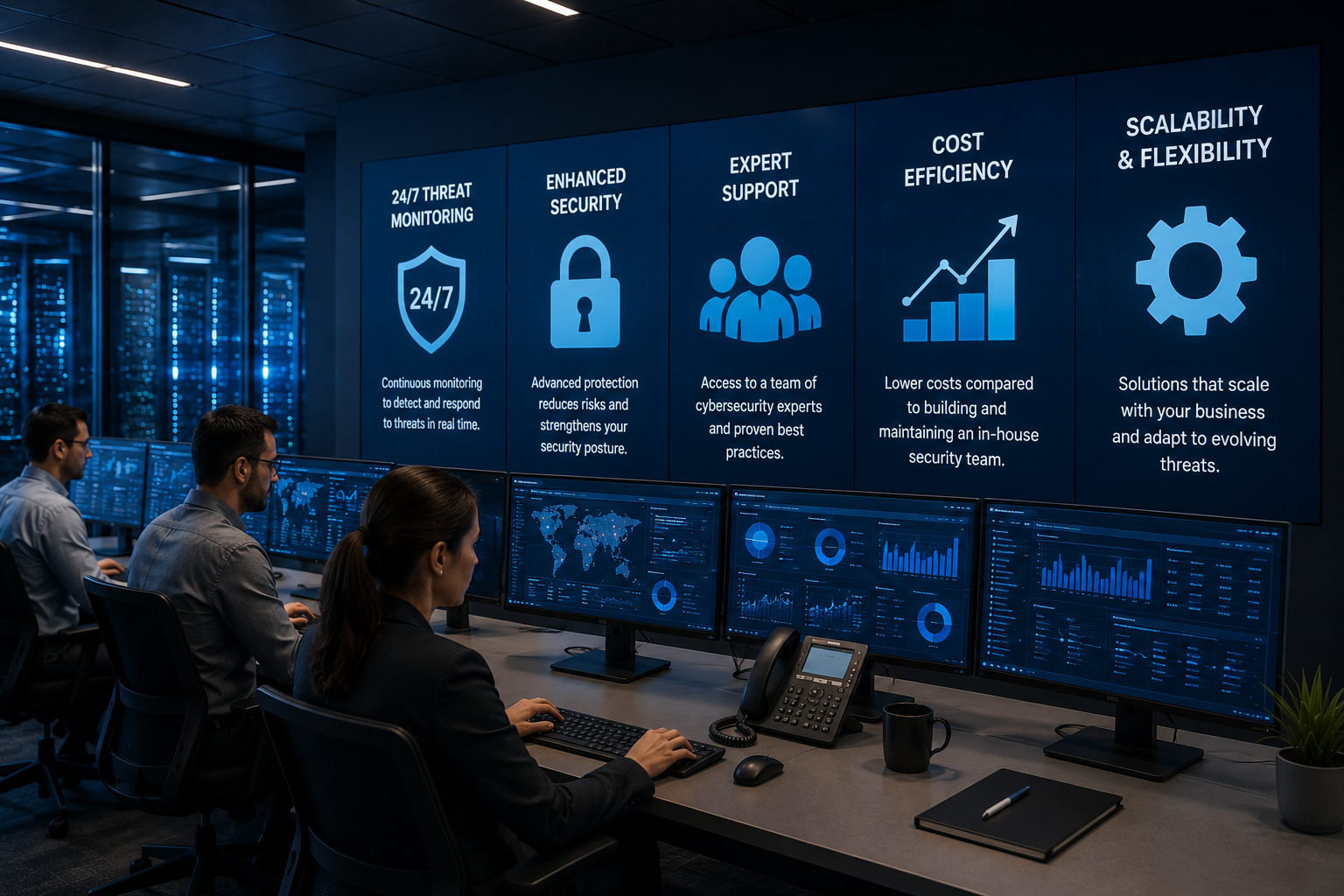
Continuous Monitoring
Cyber threats do not follow business hours.
Managed security teams provide 24/7 visibility.
Faster Detection
The earlier a threat is discovered, the less damage it can cause.
Access to Specialized Expertise
Organizations gain access to analysts, investigators, threat hunters, and incident responders.
Reduced Operational Burden
Internal teams can focus on strategic initiatives rather than chasing alerts.
Improved Security Maturity
Security processes become more structured and proactive over time.
In practical terms, managed cybersecurity solutions help organizations shift from constantly reacting to problems to actively reducing risk.
That shift can make the difference between a minor security event and a major business disruption.
The Core Components of Modern Managed Cybersecurity Services
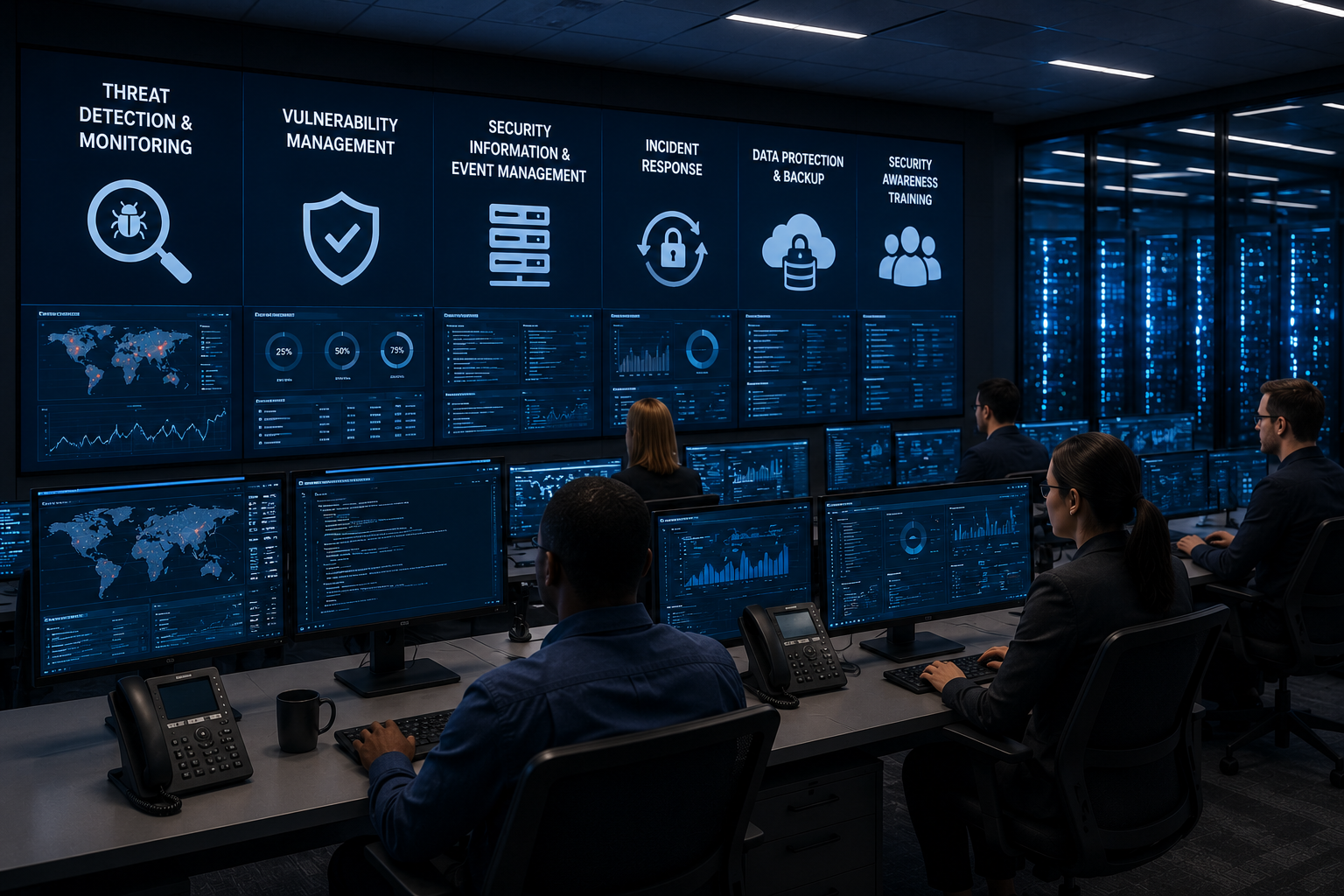
Not all managed security offerings are the same.
The strongest programs combine multiple layers of visibility, detection, and response.
Each layer addresses a different aspect of cyber risk.
Together, they create a stronger defensive posture.
24/7 Security Operations Center (SOC)
A Security Operations Center serves as the command center for cybersecurity activities.
SOC analysts monitor security alerts, investigate suspicious activity, assess potential threats, and coordinate incident response efforts.
Why is continuous monitoring so important?
Because attackers rarely work on a nine-to-five schedule.
Many organizations discover breaches during weekends, holidays, or overnight hours.
A dedicated SOC helps close that visibility gap.
Typical SOC activities include:
- Alert monitoring
- Threat investigation
- Security event correlation
- Incident escalation
- Threat intelligence analysis
- Response coordination
Without continuous monitoring, organizations may not discover an attack until significant damage has already occurred.
Managed Extended Detection and Response (XDR)
Traditional security tools often operate in isolation.
One platform monitors endpoints.
Another monitors email.
A third tracks network activity.
Important signals become scattered.
Managed XDR addresses this problem by bringing security data together.
Instead of viewing isolated alerts, analysts gain a broader picture of what is happening across the environment.
For example, XDR can correlate:
- Endpoint activity
- User behavior
- Network traffic
- Cloud activity
- Identity events
- Email security alerts
Patterns that appear harmless individually may reveal an active attack when viewed collectively.
This broader visibility helps organizations detect threats faster and investigate incidents more effectively.
Threat Hunting and Security Analytics
Some threats never trigger traditional alerts.
That reality has led many organizations to adopt proactive threat hunting practices.
Threat hunters actively search for suspicious behavior before attackers can achieve their objectives.
Rather than waiting for alarms, analysts investigate anomalies, unusual patterns, and subtle indicators of compromise.
This approach often uncovers hidden risks that automated tools miss.
At the same time, advanced security analytics help organizations identify behavioral deviations that may indicate account compromise, insider threats, or unauthorized activity.
Why AI-Powered Security Is Becoming a Business Necessity
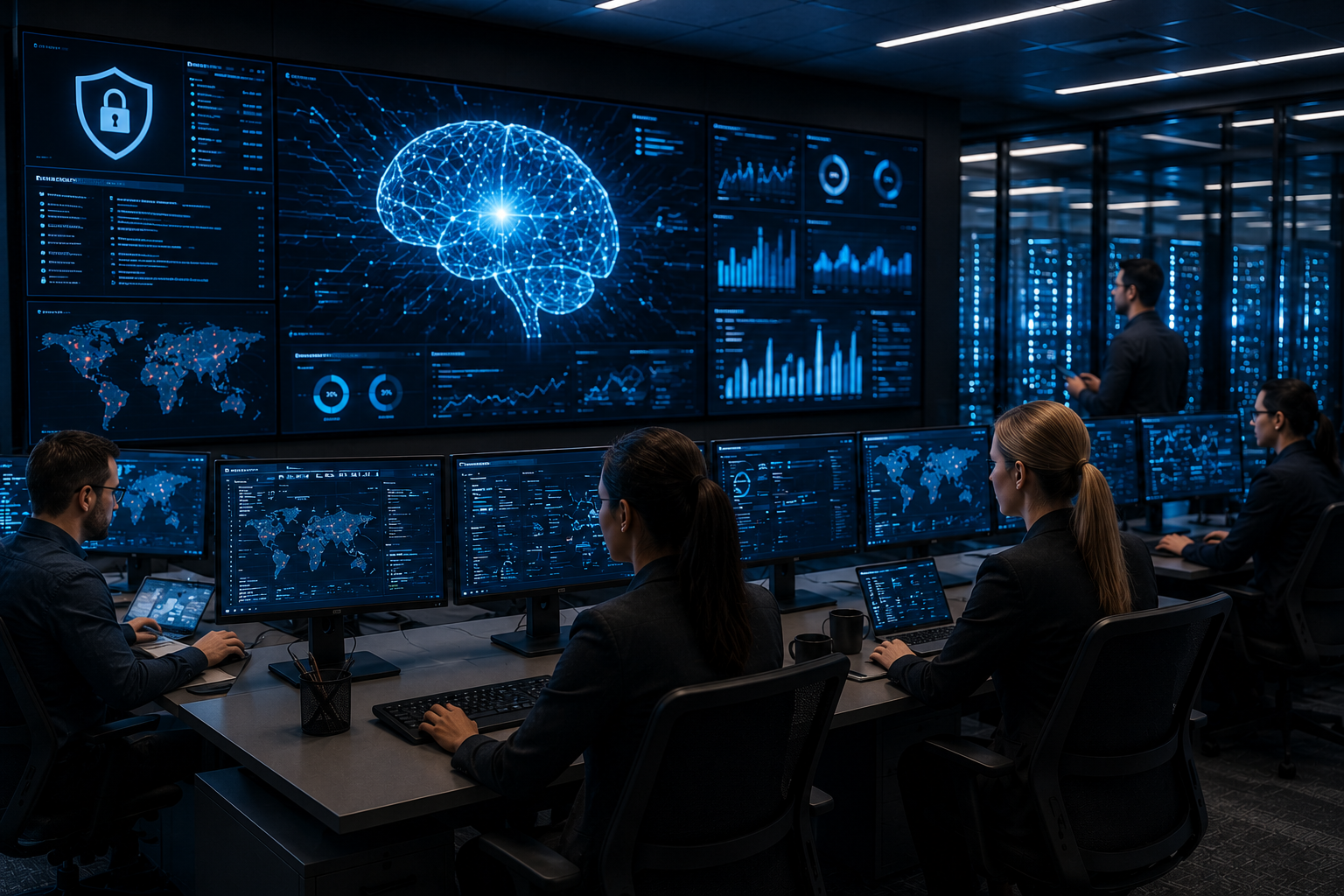
Cybercriminals have embraced automation.
They use artificial intelligence to write convincing phishing emails, identify vulnerable systems, and accelerate attack campaigns. Defenders must respond with the same level of speed.
That is one reason AI-powered cybersecurity has moved from a futuristic concept to a practical business requirement.
A useful way to think about modern security is to imagine an airport. Thousands of travelers move through checkpoints every day. Human security officers play an important role, but no airport relies solely on people watching every passenger. Advanced systems scan, analyze, and flag unusual behavior.
Cybersecurity follows a similar model.
Artificial intelligence helps process enormous volumes of data that would overwhelm even the most experienced security team.
The Rise of AI-Assisted Threats
Attackers are becoming more efficient.
Phishing emails that once contained obvious spelling mistakes now look remarkably convincing. Fraudulent messages can mimic writing styles, business terminology, and communication patterns.
Deepfake technology has introduced additional risks. Organizations have reported incidents involving fake executive voices and fabricated video calls used to manipulate employees into transferring funds or sharing sensitive information.
The challenge is no longer identifying crude attacks.
The challenge is identifying attacks that look legitimate.
How AI Improves Threat Detection
AI-powered security platforms help organizations identify suspicious activity across large environments.
Common use cases include:
- Behavioral analytics
- Anomaly detection
- User activity monitoring
- Threat prioritization
- Automated investigation workflows
- Security event correlation
For example, a system may recognize that an employee account suddenly attempts to access sensitive files at 3 a.m. from an unfamiliar location.
Individually, that activity might not trigger concern.
Combined with other indicators, it may suggest account compromise.
AI helps connect those dots quickly.
Faster Response Matters
Speed often determines the outcome of a cyber incident.
Attackers typically attempt to establish persistence, escalate privileges, and move laterally after gaining access.
The longer they remain undetected, the more damage they can cause.
AI-supported incident response helps security teams:
- Investigate alerts faster
- Prioritize high-risk threats
- Reduce alert fatigue
- Automate repetitive tasks
- Focus analyst attention where it matters most
Technology alone is not enough, however.
Organizations still need experienced analysts who can interpret findings, make informed decisions, and coordinate response efforts.
The strongest managed cybersecurity solutions combine intelligent automation with human expertise.
That combination creates a practical balance between speed and judgment.
Zero Trust Security Is No Longer Optional
For years, many organizations built security programs around a simple assumption.
If someone was inside the network, they could generally be trusted.
That assumption no longer holds.
Remote work, cloud applications, mobile devices, and third-party access have dissolved traditional network boundaries.
Today, attackers often gain entry using stolen credentials rather than technical exploits.
The result is a fundamental shift in security strategy.
Understanding Zero Trust
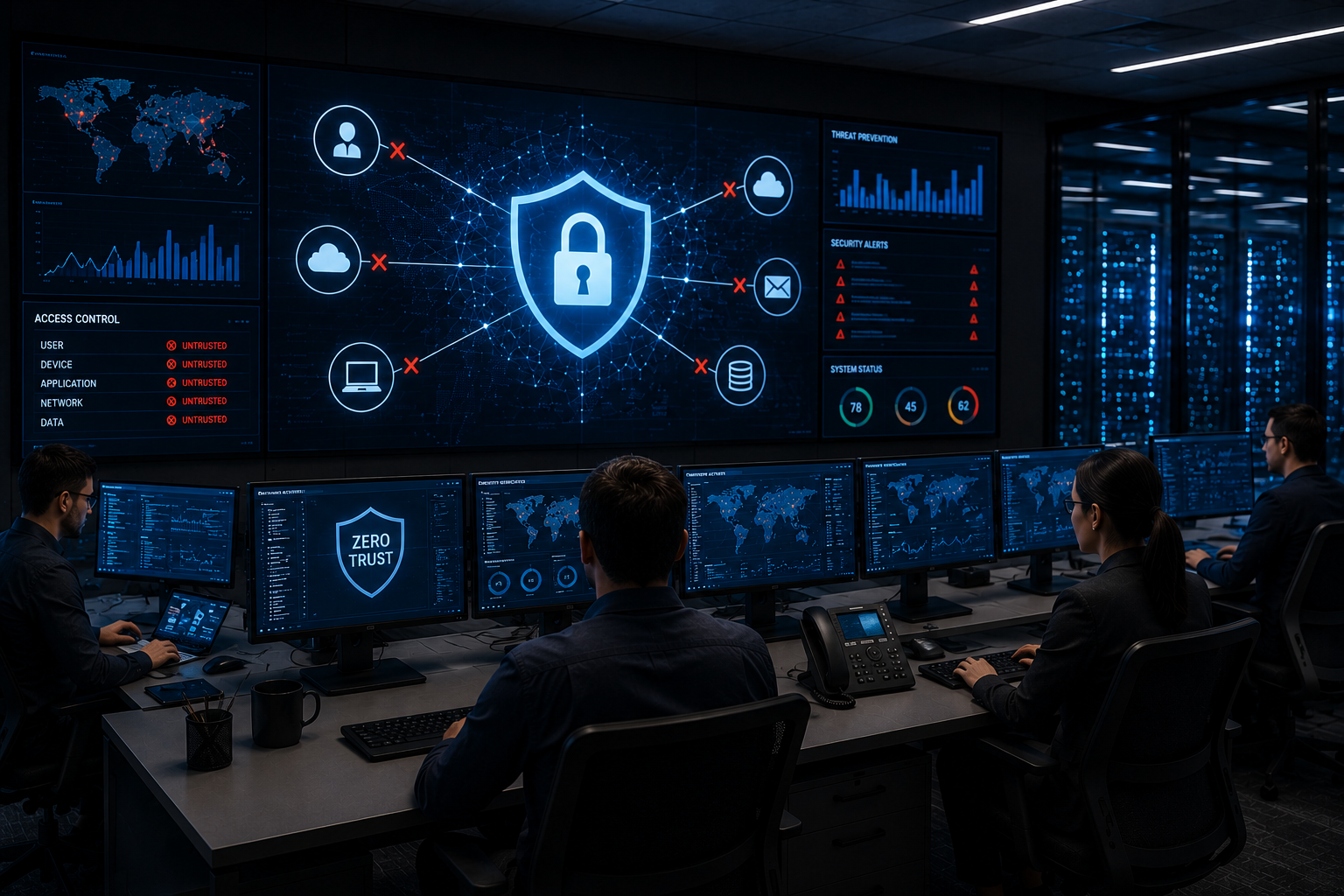
Zero Trust operates on a straightforward principle:
Never trust. Always verify.
Every user, device, application, and connection must be continuously validated before receiving access.
Rather than assuming legitimacy, organizations verify identity and authorization at every stage.
Key elements of Zero Trust include:
- Identity verification
- Least-privilege access
- Continuous monitoring
- Device validation
- Application control
- Network segmentation
This approach reduces opportunities for attackers to move freely after gaining initial access.
Why Traditional Perimeter Security Falls Short
Perimeter-focused security models were built for a different era.
Employees worked primarily inside corporate offices.
Applications resided in centralized data centers.
Sensitive information rarely left internal networks.
Modern business environments look very different.
Employees access cloud applications from multiple locations and devices. Vendors require access to systems. Data moves continuously between platforms.
The perimeter has effectively disappeared.
Organizations need security controls that follow users, devices, and applications wherever they operate.
The Critical Role of Application Allowlisting
One of the most practical Zero Trust controls is application allowlisting.
Many organizations are familiar with application blacklisting solutions, which work by blocking known malicious programs while allowing everything else to run. While this approach can stop recognized threats, it often struggles to keep pace with newly developed malware, fileless attacks, and unauthorized software that has not yet been identified as dangerous.
Application allowlisting takes a different path. Instead of attempting to block every harmful program, organizations create a list of approved applications that are permitted to run. Any software outside that approved list is automatically prevented from executing.
This proactive model significantly reduces the attack surface and aligns closely with Zero Trust principles. Solutions such as Blueshift Cyber’s application allowlisting service help organizations strengthen endpoint security by controlling which applications can operate within their environments. Combined with managed security monitoring, AI-powered threat detection, and Managed XDR services, application allowlisting provides another layer of protection against ransomware, malware, and unauthorized software execution.
Rather than constantly chasing the latest threat, organizations can focus on maintaining a trusted operating environment where only approved applications are allowed to run.
This approach offers several advantages.
Reduced Malware Risk
Unauthorized applications cannot execute.
Many malware variants depend on launching unapproved software.
Allowlisting disrupts that process.
Better Ransomware Protection
Ransomware frequently relies on executable files or scripts.
Application control reduces opportunities for those files to run.
Smaller Attack Surface
The fewer applications that can operate within an environment, the fewer opportunities attackers have to exploit weaknesses.
Improved Visibility
Security teams gain clearer insight into what software is actually running across the organization.
Application allowlisting is particularly valuable for:
- Government agencies
- Critical infrastructure
- Healthcare organizations
- Financial institutions
- Manufacturing environments
In these settings, operational continuity often carries as much importance as data protection.
Zero Trust strategies supported by application allowlisting help organizations limit risk without disrupting daily operations.
How Managed Cybersecurity Solutions Improve Business Resilience
Many cybersecurity discussions focus on prevention.
Prevention matters.
Yet experienced security leaders understand an important reality.
No organization can eliminate risk completely.
The goal is resilience.
Resilience means continuing operations, minimizing disruption, and recovering quickly when incidents occur.
Faster Detection Means Less Damage
Attackers often spend days or weeks inside compromised environments.
Every hour of undetected activity creates opportunities for:
- Data theft
- Credential abuse
- Lateral movement
- System disruption
- Operational damage
Managed security services reduce dwell time by identifying suspicious activity earlier.
The sooner threats are discovered, the fewer resources attackers can access.
Protecting Business Continuity
Cyber incidents rarely affect only technology systems.
They affect people, customers, suppliers, and operations.
Consider a manufacturer unable to access production systems.
Or a municipal utility experiencing disruptions to operational technology environments.
The consequences extend well beyond IT departments.
Managed cybersecurity programs help organizations maintain continuity through:
- Continuous monitoring
- Incident response planning
- Threat containment
- Recovery coordination
- Risk reduction initiatives
Supporting Compliance Requirements
Many industries operate under regulatory obligations.
Examples include:
- HIPAA
- NIST frameworks
- CMMC requirements
- PCI DSS
- CJIS standards
Managed cybersecurity services often assist organizations with:
- Security reporting
- Log management
- Monitoring requirements
- Audit preparation
- Control validation
This support helps organizations maintain compliance while improving overall security posture.
Building Long-Term Cyber Resilience
Cyber resilience is not a single project.
It is an ongoing process.
Strong security programs continually evolve based on:
- Emerging threats
- New vulnerabilities
- Business changes
- Lessons learned from incidents
Organizations that invest in continuous improvement often recover faster and experience less disruption during security events.
Industry-Specific Security Challenges
Cybersecurity risks vary across industries.
Yet a common theme emerges.
Attackers target organizations based on opportunity rather than size.

Small and Medium-Sized Businesses
Many SMB leaders assume attackers focus primarily on large enterprises.
Reality tells a different story.
Smaller organizations often present attractive targets because they typically have fewer security resources.
Common challenges include:
- Limited budgets
- Small IT teams
- Skills shortages
- Growing compliance demands
At the same time, they face many of the same threats confronting larger organizations.
Managed cybersecurity solutions provide access to advanced capabilities without requiring significant internal staffing.
Government Agencies
Government organizations manage sensitive information, public services, and critical operations.
Threat actors often view these environments as valuable targets.
Challenges commonly include:
- Legacy infrastructure
- Resource limitations
- Compliance obligations
- Sophisticated adversaries
Continuous monitoring and incident response capabilities help strengthen defensive readiness.
Critical Infrastructure Organizations
Critical infrastructure faces particularly high stakes.
Disruptions can affect public safety, economic activity, and essential services.
Examples include:
- Energy providers
- Water systems
- Transportation networks
- Manufacturing operations
- Utilities
According to reporting from the UK’s National Cyber Security Centre, critical infrastructure organizations continue to face significant activity from state-affiliated threat actors.
These organizations often require stronger visibility, rapid response capabilities, and layered security controls.
Managed cybersecurity services can help provide that support without dramatically increasing internal staffing requirements.
What to Look for in a Managed Cybersecurity Provider

Choosing a cybersecurity provider should involve more than comparing feature lists.
Organizations should evaluate whether a provider can support their operational goals, risk profile, and industry requirements.
The following areas deserve close attention.
24/7 Monitoring and Response
Threats do not stop after business hours.
Look for providers that offer genuine around-the-clock monitoring and response capabilities.
Managed XDR Capabilities
Effective Managed XDR solutions should provide visibility across:
- Endpoints
- Networks
- Cloud environments
- User activity
- Identity systems
Broader visibility often leads to faster detection and investigation.
Experienced Security Analysts
Technology is valuable.
People remain essential.
Organizations should understand:
- Who investigates alerts
- How incidents are escalated
- What expertise supports response efforts
Threat Hunting and Intelligence
Proactive threat hunting can identify risks before they escalate.
Threat intelligence helps security teams stay informed about emerging attacker techniques.
AI-Powered Security Operations
Automation can improve efficiency and reduce response times.
Look for providers that use AI to enhance security operations while maintaining human oversight.
Zero Trust Security Services
Strong providers often support:
- Identity security
- Application allowlisting
- Access management
- Endpoint hardening
- Continuous verification
Communication and Reporting
Security leaders need visibility.
Clear reporting helps organizations understand:
- Security performance
- Threat trends
- Incident activity
- Risk exposure
Transparency builds confidence and supports better decision-making.
A Practical Example of Modern Managed Cybersecurity Protection
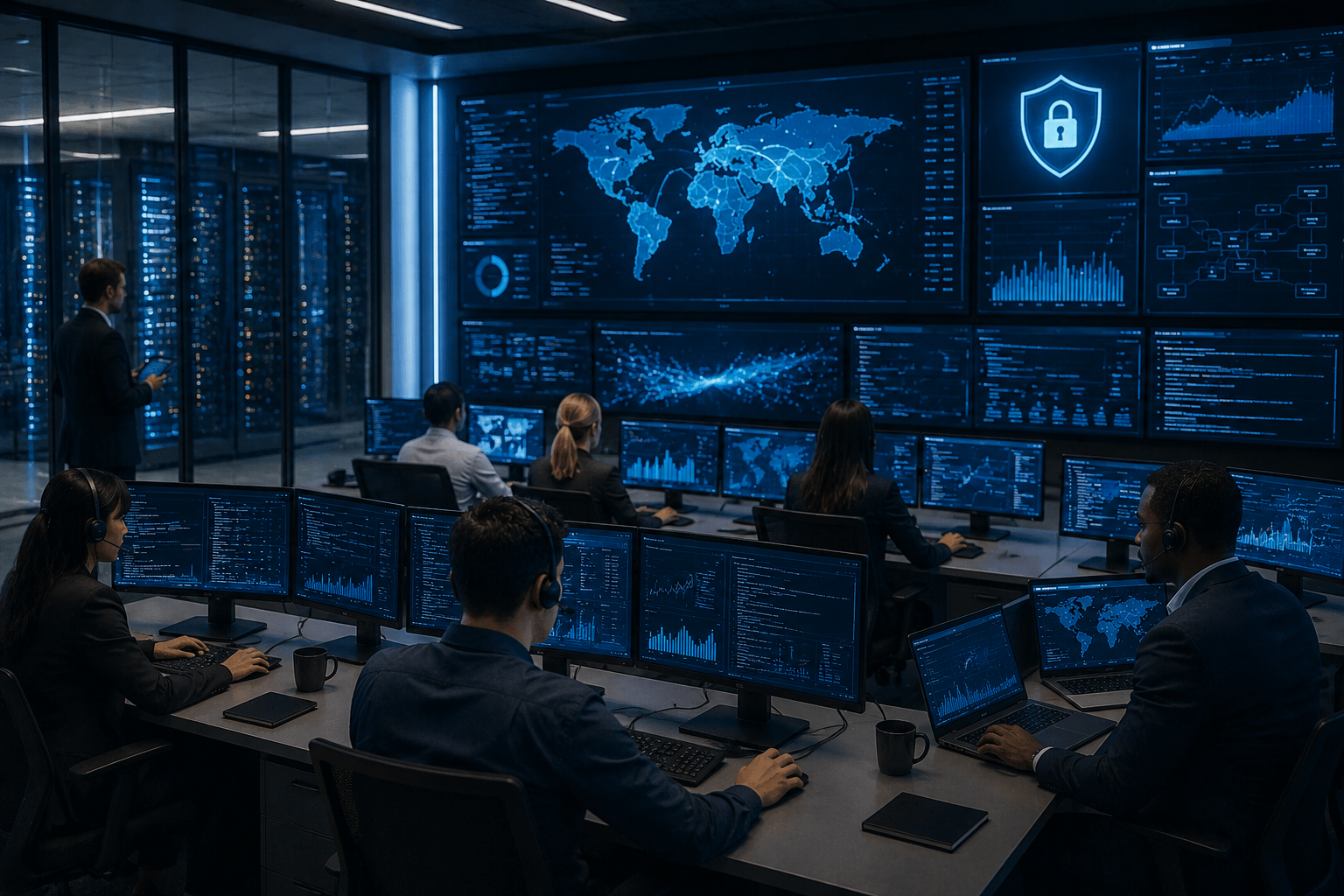
Organizations increasingly seek integrated security strategies rather than isolated tools.
That approach brings together multiple layers of defense.
Examples include:
- Managed XDR
- AI-powered threat detection
- Threat hunting
- Vulnerability management
- Continuous monitoring
- Incident response
- Security analytics
- Zero Trust controls
Blueshift Cyber provides an example of this layered approach.
Their services combine AI-powered security technologies with Managed Extended Detection and Response (XDR) and a 24/7 U.S.-based Security Operations Center. This combination helps organizations identify threats, investigate suspicious activity, and respond more effectively when incidents occur.
Their security offerings support a variety of organizations, including:
- Small-to-medium-sized businesses
- Government agencies
- Critical infrastructure operators
Blueshift Cyber also emphasizes Zero Trust security strategies, including application allowlisting. By limiting software execution to approved applications, organizations can reduce opportunities for malware, ransomware, and unauthorized programs to operate within their environments.
The value comes from combining prevention, detection, investigation, and response into a coordinated security strategy.
No single tool can stop every threat.
Multiple layers working together create stronger protection.
The Future of Managed Cybersecurity Solutions

Cybersecurity will continue to evolve.
Attackers are adapting rapidly.
Organizations must do the same.
Several trends are shaping the future of managed security services.
Greater Use of Automation
Security teams face increasing alert volumes.
Automation helps reduce repetitive work and accelerate investigations.
Expanded AI Integration
Artificial intelligence will continue supporting:
- Threat detection
- Behavioral analysis
- Incident investigation
- Response workflows
Human expertise will remain essential, but AI will help analysts work more efficiently.
Increased Focus on Cyber Resilience
Organizations are shifting attention from prevention alone to resilience.
Questions are changing.
Instead of asking:
“Can we stop every attack?”
Leaders increasingly ask:
“How quickly can we detect, contain, and recover?”
That shift reflects a more realistic view of cybersecurity risk.
Growing Demand for Security Partnerships
Skills shortages remain a challenge across industries.
As threats become more sophisticated, many organizations will continue partnering with managed cybersecurity providers to supplement internal capabilities.
Conclusion
Cybersecurity has become a business priority that affects operations, reputation, compliance, and long-term growth.
Organizations face a threat environment marked by ransomware, credential theft, vulnerability exploitation, supply chain attacks, and increasingly sophisticated adversaries. Traditional security approaches often struggle to keep pace.
Managed cybersecurity solutions offer a practical alternative.
By combining continuous monitoring, Managed XDR, threat hunting, AI-powered security technologies, incident response, and Zero Trust controls, organizations gain access to capabilities that would be difficult and expensive to build internally.
The benefits extend beyond threat detection.
Organizations improve visibility, reduce operational risk, strengthen resilience, and respond more effectively when incidents occur.
Whether protecting a growing business, supporting a government agency, or defending critical infrastructure, managed cybersecurity services provide a stronger foundation for modern cyber defense.
As cyber threats continue to evolve, organizations that invest in proactive security strategies today will be far better positioned to face tomorrow’s challenges.