



An insurance for bike pricing depends on the policy type you select, your bike’s insured value, your location, and your claim profile. Add-ons and deductibles also change the final premium. This article breaks down the main factors that affect cost and explains how to reduce premiums while keeping cover strong and relevant.

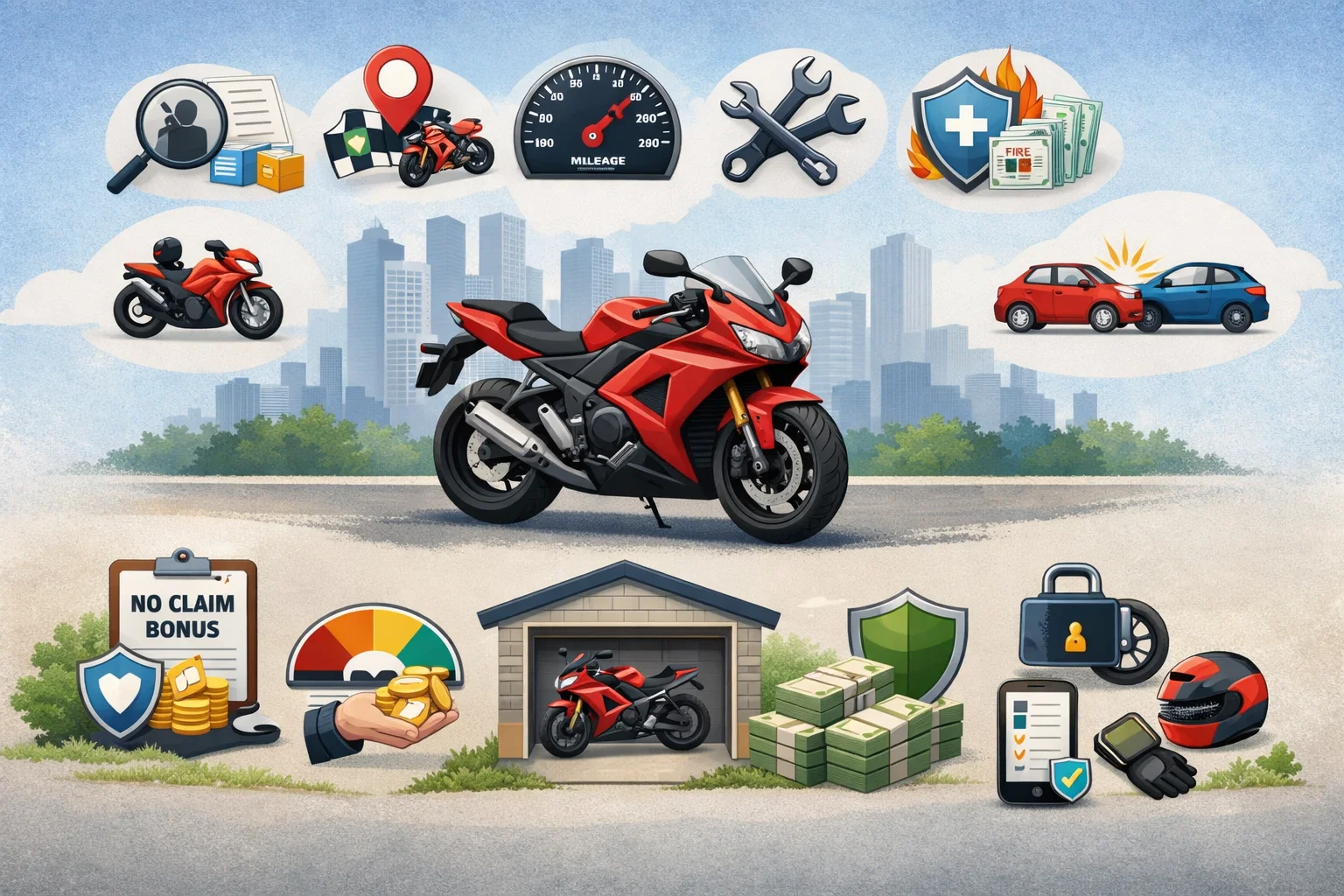
Premium Begins With the Policy Type
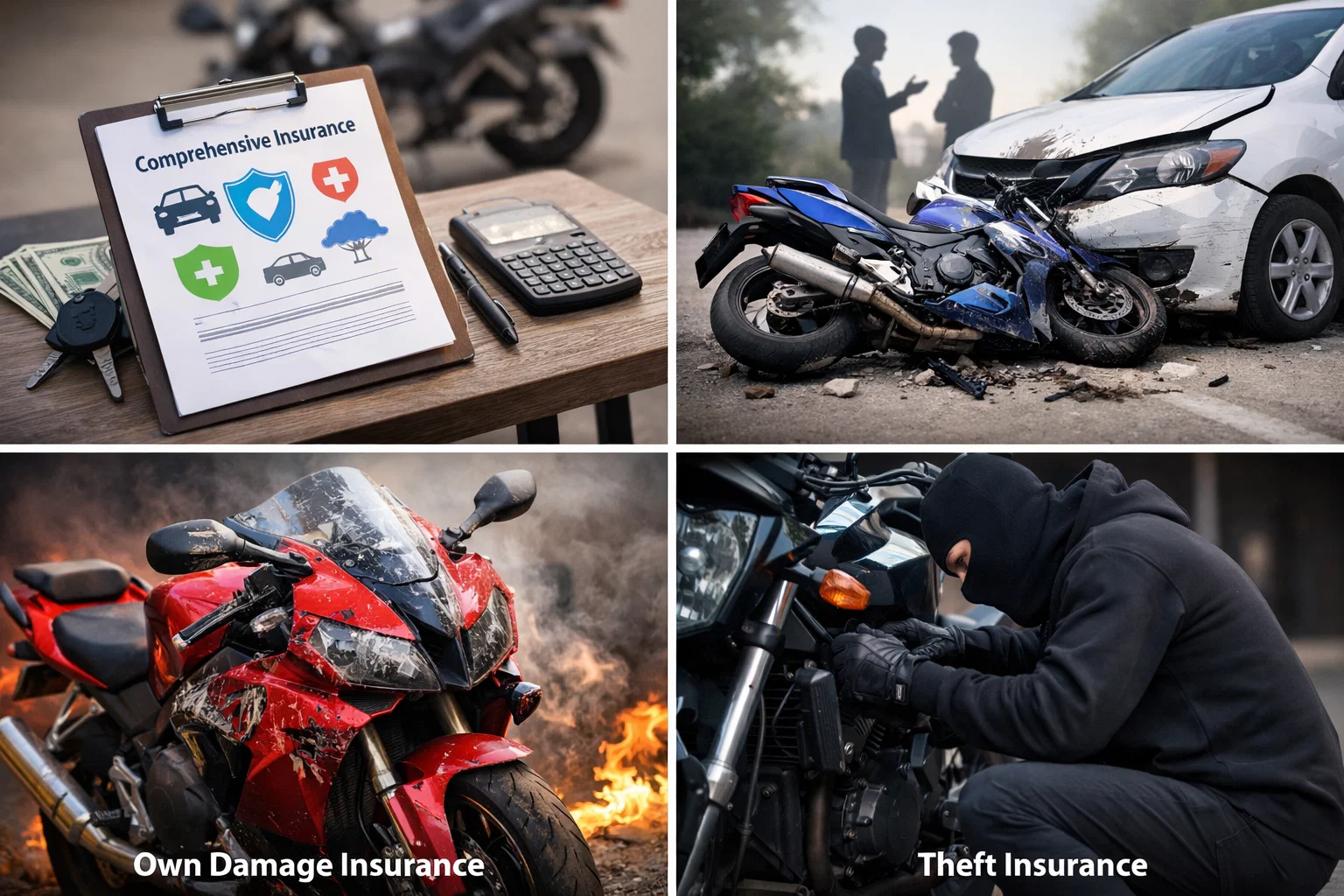
Your premium first depends on whether you choose third-party cover only, an own damage policy, or comprehensive bike insurance with broader protection.
Third-Party Only
Third party bike insurance meets the legal requirement to ride on public roads. It pays for your liability if you injure someone or damage their property, but it does not pay for repairs to your own bike.
Own-Damage Only
An own damage policy covers loss to your bike from insured events such as accidents, theft, fire, and certain natural incidents, subject to exclusions and deductibles. It does not handle third-party liability, so it must run alongside a third-party plan.
Comprehensive Cover
Comprehensive bike insurance combines third-party liability with own-damage protection in one plan. It may also allow optional add-ons, which can raise the premium depending on what you select and how the insurer defines the terms.
What Affects the Premium in Real Life
Premium calculation is detailed rather than mysterious. These are the drivers that usually matter most:
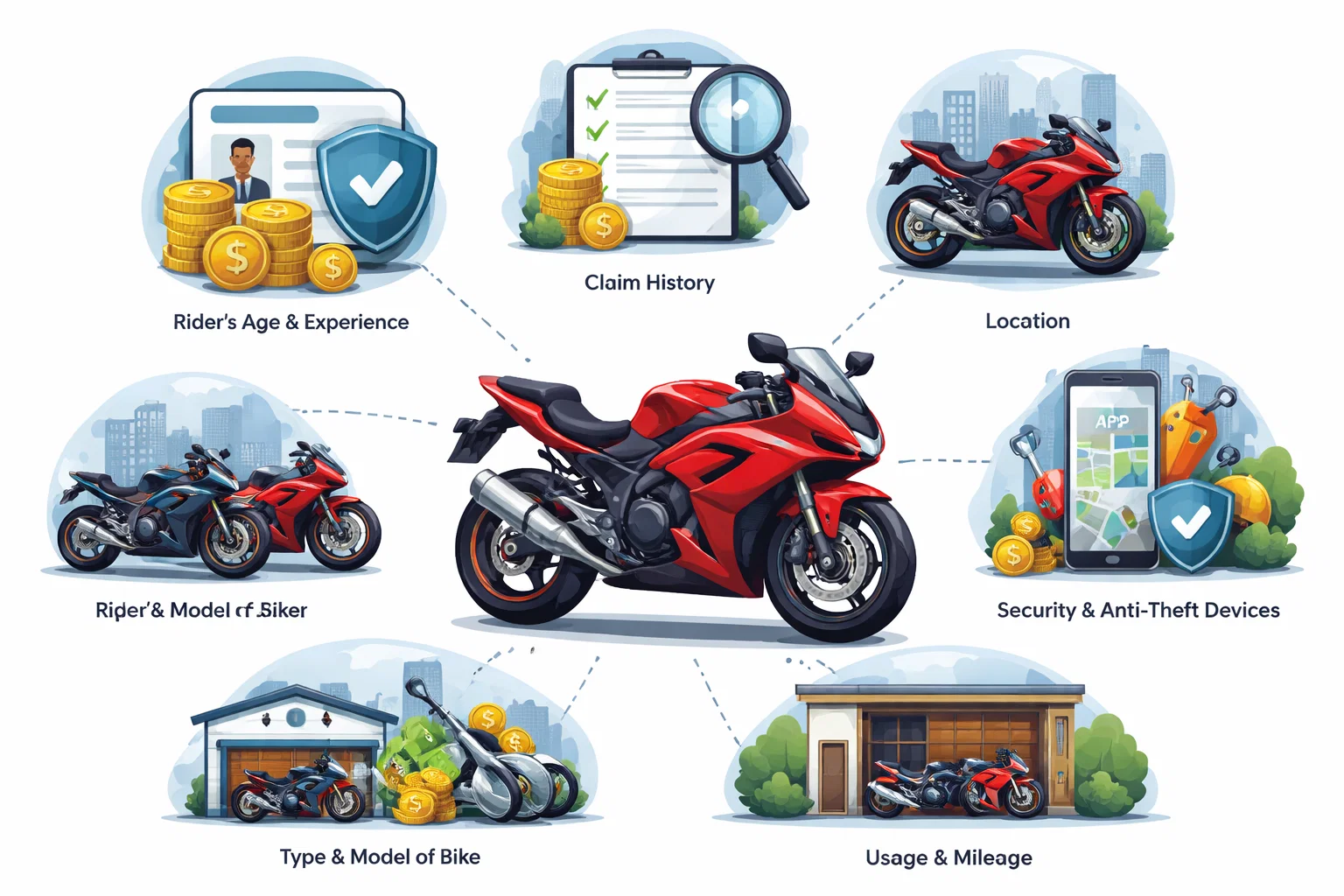
- Bike make and repair costs: Expensive spares and labour-intensive repairs can push pricing up.
- Insured value: The insured value influences how repair and total loss claims are assessed under own-damage cover.
- Where you ride and park: Traffic density, theft exposure, and workshop rates vary across Indian cities and neighbourhoods.
- Usage pattern: Frequent commuting and crowded routes increase exposure compared with occasional riding.
- Claim history and renewal benefits: A claim-free year can reduce your renewal price, while repeated claims often increase it.
- Deductibles: The share you agree to pay in a claim affects the premium. More voluntary sharing can lower the cost.
- Add-ons: Each add-on adds a promise by the insurer, so it adds cost. Choose only what you genuinely need.
How to Reduce Premiums Without Weakening the Cover
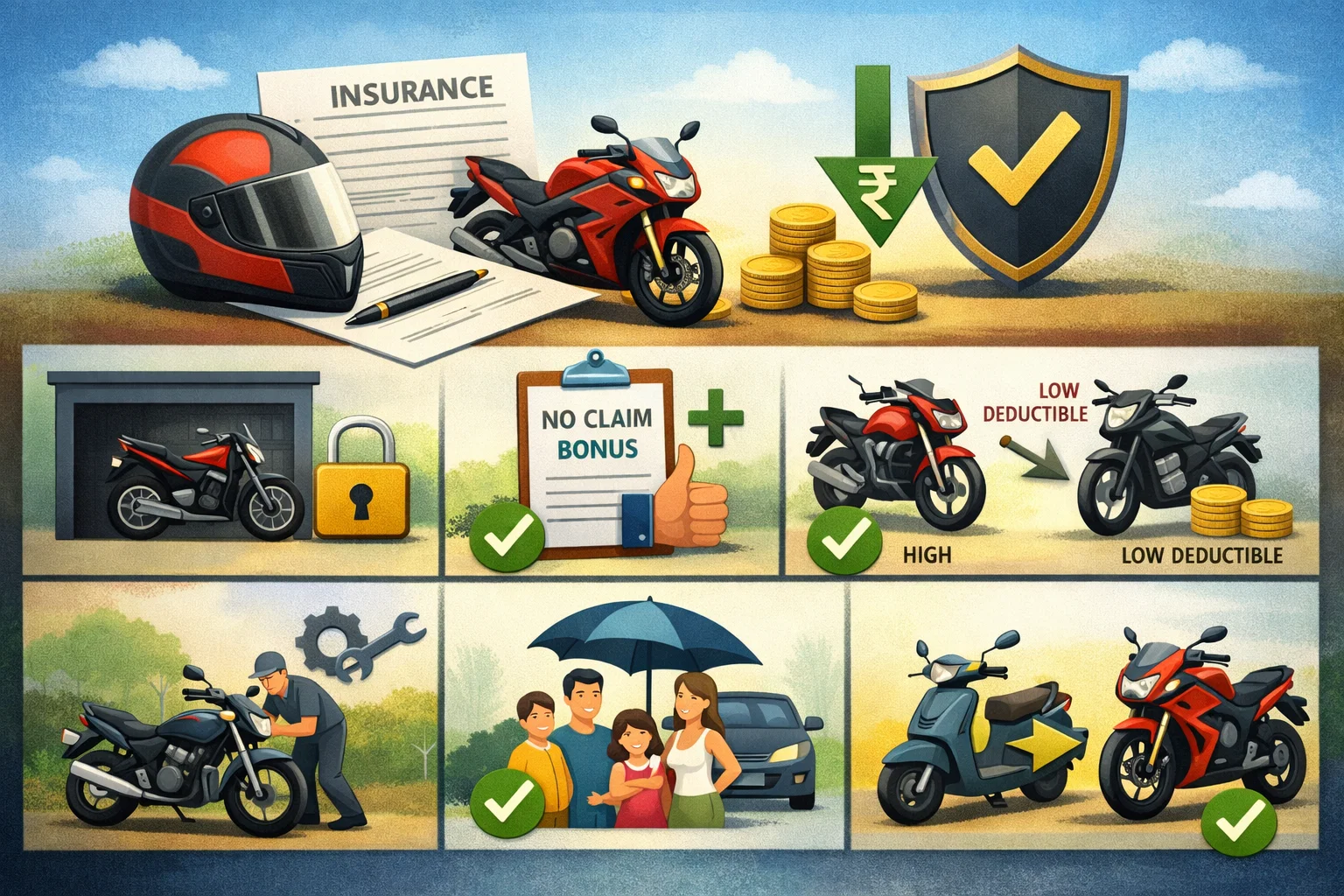
Reduce cost by choosing the right policy type, keeping the insured value realistic, and selecting only the add-ons that deliver clear coverage benefits for your riding needs.
Choose the Right Base, Then Trim Add-Ons
Start with the base plan that matches your risk. Many riders overpay by stacking extras. Keep add-ons only when the coverage benefits are clear, such as support during breakdowns, protection for key parts in harsh weather, or cover for fitted accessories.
Set an Insured Value That is Sensible
Do not unthinkingly copy last year’s insured value at renewal. If it is too high, you may pay more than necessary. If it is too low, the claim settlement can feel inadequate. Aim for a realistic value based on your bike’s market position.
Use Deductibles Intentionally
If you can absorb smaller repairs, consider a higher voluntary deductible to reduce premiums. If you prefer predictability, keep the deductible lower and accept a higher premium.
Protect Your Claim-Free Record
Do not claim for every minor scratch. If the cost is manageable, paying out of pocket can protect renewal benefits and keep future premiums steady.
Keep Details Accurate
Mismatched registration details or unclear ownership information can trigger extra checks. Clean data keeps your insurance for bike quote accurate and makes claims less stressful.
Where Savings are Most Realistic
For many riders, the biggest savings come from the own-damage portion, because insurers price repair risk differently based on location, usage, and add-ons.
With third-party bike insurance, pricing is largely guided by regulatory rules, so the smarter focus is choosing the right cover, not chasing price drops.
Mistakes That Quietly Increase the Premium
Here are some key pointers:
- Renewing late and losing continuity-linked benefits.
- Keeping unnecessary add-ons year after year.
- Selecting a very low deductible, then claiming often for minor damage.
- Under-declaring accessories, which can create disputes at claim time.
Final Thoughts
The best way to manage insurance for bike prices is to be deliberate. Pick the policy type that matches your risk, keep the insured value realistic, and treat add-ons as optional tools rather than default selections. Review your cover at renewal, keep documents clean, and avoid gaps so your protection and pricing stay stable.