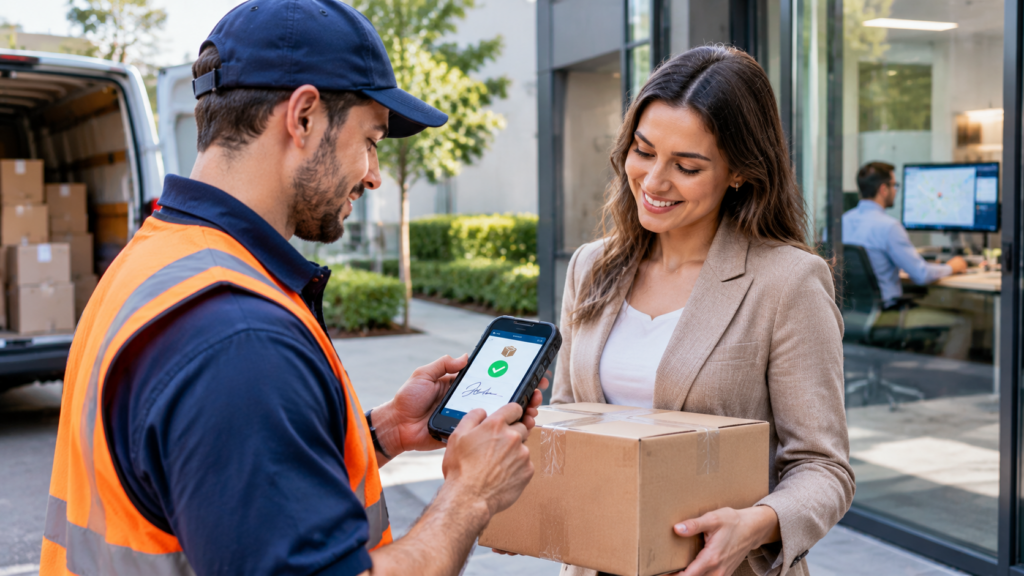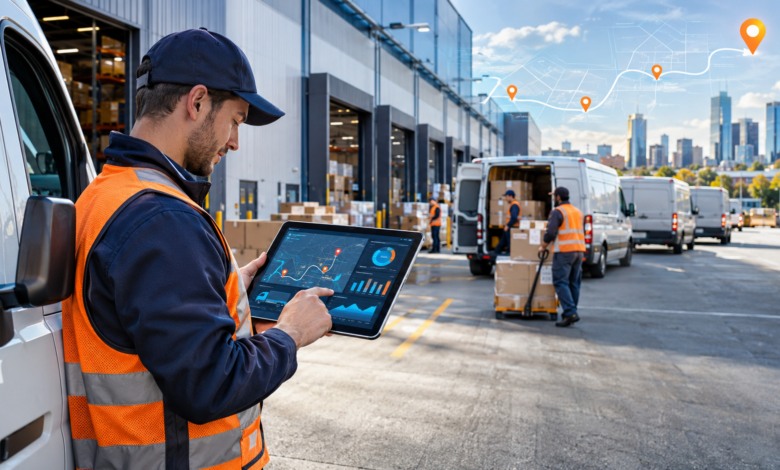
Fuel prices, labor shortages, and shrinking delivery windows are straining logistics budgets across every region. Last-mile delivery solutions have become central to how enterprises control these rising operational costs. These platforms combine route optimization, real-time tracking, and dynamic dispatch within a single operational layer.
Companies adopting last-mile delivery solutions report measurable reductions in cost per delivery and stronger on-time performance. The last mile alone accounts for a major part of the shipping costs across most supply chains today.
This makes efficiency gains in this segment disproportionately valuable to overall delivery margins. Let’s explore how last-mile delivery solutions are reshaping delivery economics for logistics leaders and 3PL operators everywhere.
Why Traditional Delivery Models Struggle With Modern Cost Pressures
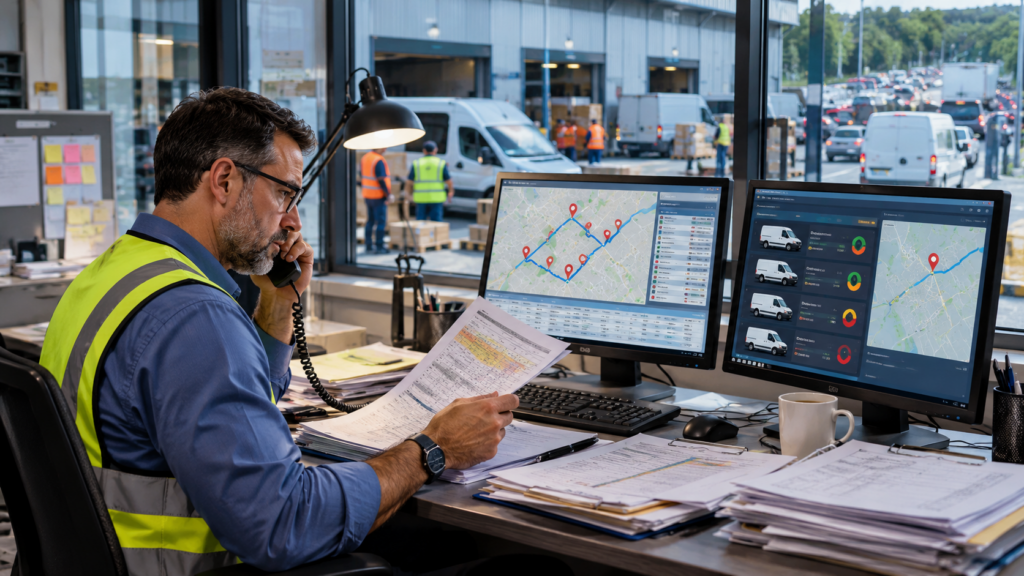
Traditional delivery models rely on fixed route plans and manual dispatch decisions made hours in advance. Last-mile delivery solutions replace this rigidity with adaptive, data-driven planning built for constant change.
● Fixed Routes Cannot Absorb Real-time Disruptions
Manual planning locks drivers into sequences built before execution begins each shift. Traffic incidents, weather delays, and failed attempts push actual costs well past forecasted budgets.
● Manual Dispatch Increases Administrative Overhead
Dispatchers spend hours reassigning orders instead of managing genuine exceptions strategically each day. This hidden labor cost rarely appears in per-delivery pricing models yet steadily erodes margins.
● Disconnected Systems Create Blind Spots Across the Network
Data silos between planning, execution, and customer service teams delay problem detection significantly. Unified platforms eliminate these gaps by connecting data across every operational touchpoint continuously.
A close look at these structural gaps shows why enterprises are moving toward integrated platforms now.
The Core Economic Drivers Behind Last-mile Delivery Solutions
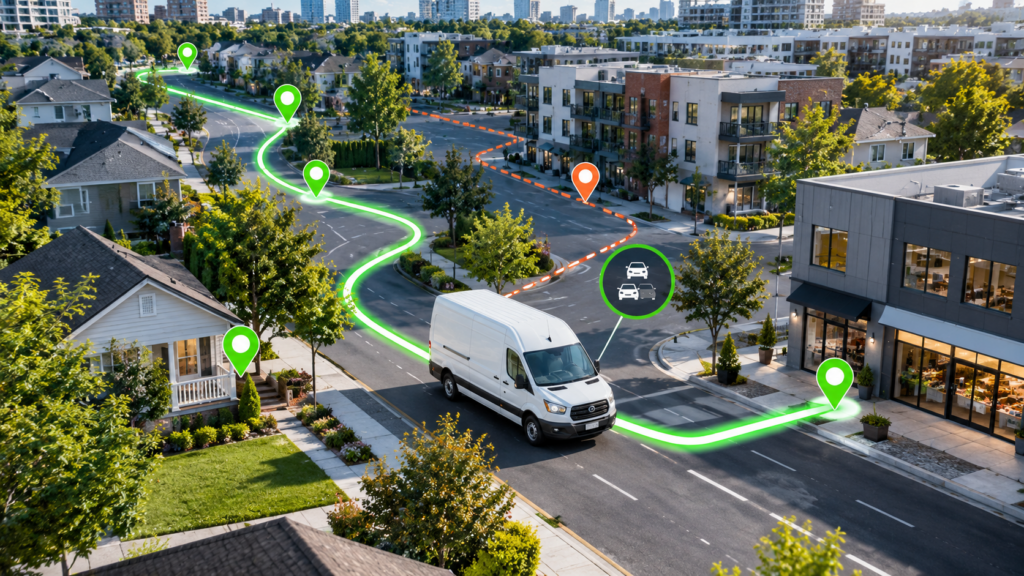
Enterprises adopt last-mile delivery solutions primarily to control three cost categories tied to daily operations. Each category responds directly to smarter planning, dispatch, and carrier management tools. This side-by-side comparison highlights where legacy processes lose ground to purpose-built platforms.
Cost Driver | Traditional Delivery Model | Last-mile Delivery Solutions |
Route Planning | Manual, fixed sequences built in advance | AI-based dynamic optimization updated continuously |
Fuel Consumption | Higher due to inefficient stop sequencing | Reduced through optimized routing and geofencing |
Dispatcher Workload | High, manual exception handling required | Lower, automated alerts and predictive re-routing |
Customer Communication | Reactive, call-based status updates | Proactive, real-time delivery notifications |
Network Visibility | Fragmented across carriers and regions | Unified control tower view across the fleet |
Key Capabilities That Make Last-mile Delivery Solutions Cost-effective
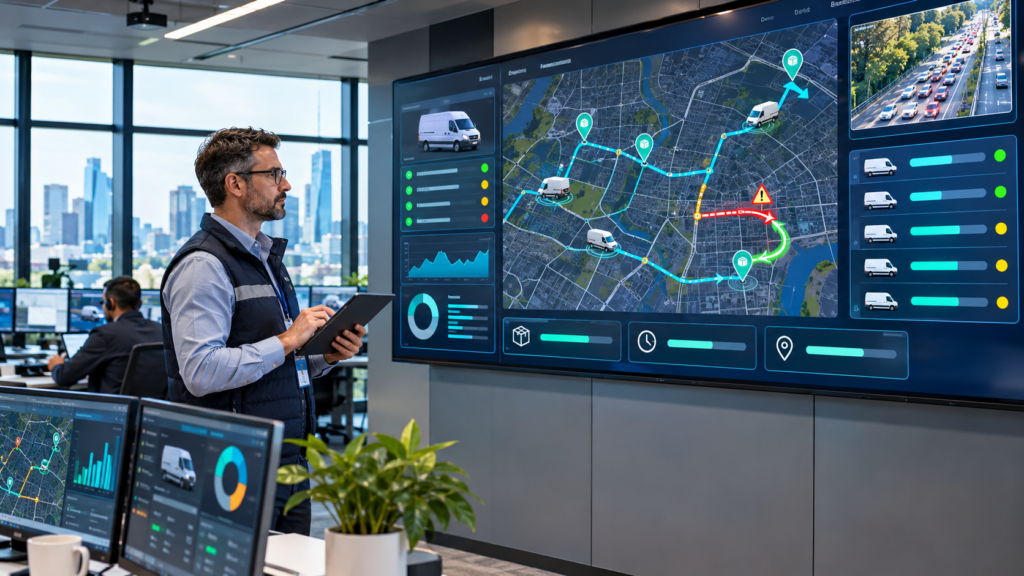
These platforms combine several technical capabilities that directly target inefficiencies in conventional delivery workflows. Each capability listed below reduces a specific cost driver identified across enterprise logistics networks.
- AI-based Route Optimization
Calculates efficient stop sequences using live traffic, vehicle capacity, and delivery window constraints.
- Dynamic Re-routing
Adjusts active routes mid-shift when new orders or disruptions occur without full replanning.
- Predictive ETA Engines
Forecast delivery windows using historical and live telematics data to build customer trust.
- Automated Exception Alert
Flag delays before they escalate, giving dispatchers time to act within minutes.
- Rate-based Carrier Allocation
Assigns shipments to the lowest-cost qualified carrier automatically across every network tier.
- Real-time Fleet Visibility
Tracks vehicle location and delivery status across every carrier and geographic zone.
- Proof of Delivery Automation
Reduces billing disputes and reconciliation time through digital verification at each stop.
- Skill-based Driver Assignment
Matches each stop to drivers based on certifications, vehicle type, and route complexity requirements.
- Control Tower Exception Management
Centralizes disruption visibility across carriers, cutting recovery time from hours to minutes.
- Business Analytics Dashboard
Converts route and carrier performance data into actionable insights for ongoing cost reduction.
Together, these capabilities convert last-mile delivery solutions from a tracking tool into a full economic lever.
Measurable Impact of Last-mile Delivery Solutions on Delivery Economics
Enterprises deploying last-mile delivery solutions report consistent gains across cost, speed, and service quality metrics. The table below summarizes typical performance improvements documented across enterprise-scale deployments today.
Metric | Typical Improvement Reported |
Miles Driven Per Route | Noticeably shorter routes through optimized stop sequencing and reduced backtracking |
Dispatch Time | Faster dispatch cycles from automated planning instead of manual assignment |
Cost Per Delivery | Lower per-delivery cost through better route efficiency and fuel savings |
WISMO Call Volume | Fewer calls due to proactive tracking updates |
OTIF Compliance | Stronger performance from real-time route adjustments |
Customer Support Tickets | Fewer support tickets as customers get self-serve visibility into delivery status |
These figures show why finance teams increasingly treat routing technology as a margin protection tool, not overhead.
Implementation Best Practices for Last-mile Delivery Solutions Deployment
Successful deployment depends heavily on preparation, not solely on the platform selected during procurement. Rushing rollout without proper groundwork limits early performance results and slows adoption across teams.
- Validate and clean address, stop, and carrier data before go-live begins.
- Configure SLA tiers, vehicle parameters, and driver rules during onboarding sessions.
- Run parallel planning cycles before executing a full network cutover.
- Retrain dispatchers on exception oversight rather than manual route construction tasks.
- Set performance baselines and track results at 30, 60, and 90 days.
- Integrate natively with existing TMS, OMS, and WMS systems early in rollout.
Following this sequence reduces disruption risk and accelerates time to measurable return on investment.
The Path Forward for Last-mile Delivery Economics
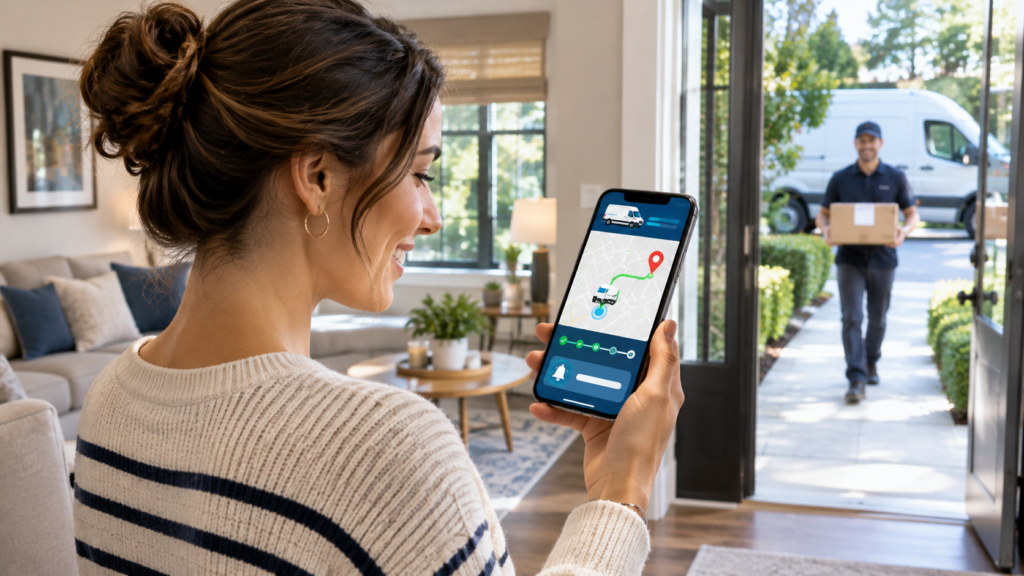
Delivery economics will keep tightening as fuel, labor, and customer expectations rise together steadily. Enterprises that delay modernization risk absorbing costs competitors have already eliminated through better tooling. Manual planning and disconnected systems cannot scale against these mounting operational pressures long-term.
With technology partners such as FarEye, logistics teams gain unified visibility, automated routing, and proactive exception management. This combination shifts last-mile delivery solutions from a cost center into a measurable margin driver.
Organizations that invest early build resilience against future volume spikes and network disruptions. The next phase of delivery competition will be won on execution precision, not fleet size alone. Last-mile delivery solutions are steadily becoming the operational standard across modern logistics networks.