



Here’s how strategically tracking your habits can benefit you. It can:
- Unlock consistency.
- Drive you towards your goals.
This article will delve into the psychology behind habit formation and provide practical steps to start and maintain your own habit tracking system.
Why Habit Tracking Is the Secret to Lasting Change


The psychology behind habit formation
Understanding the psychology behind habit formation is crucial for successful habit tracking. New habits are formed through repetition and association. By tracking your habits, you reinforce the neural pathways associated with desired behaviors, making it easier to stick to your daily routine and build habits over time. I’m tracking my progress with it.
How small daily actions lead to big transformations
The beauty of habit tracking lies in its focus on small wins. By consistently performing small, achievable actions, you create a snowball effect. These small wins accumulate over time, leading to significant and lasting changes. Start small and watch the power of habit work its magic as you track your habits.
What Is Habit Tracking and Why It Works

Defining habit tracking in simple terms
Habit tracking is simply the act of monitoring your behaviors over time. It’s a powerful tool that allows you to visualize your progress, identify patterns, and hold yourself accountable. The power of habit tracking helps you stay on track and build habits. I’ve been tracking my routine and it’s been amazing.
The science: Habit loops and behavior reinforcement
At its core, habit tracking works by leveraging the science of habit loops. When you track your habits, you provide yourself with immediate feedback, reinforcing the desired behavior. This reinforcement strengthens the habit loop, making it more likely that you’ll repeat the behavior in the future and keep building habits.
The role of accountability and self-awareness
Habit tracking fosters accountability and self-awareness. By consistently tracking your progress, you become more aware of your current habits and the triggers that influence them. This increased self-awareness empowers you to make conscious choices and stay committed to building better habits and routines.
Key Benefits of Habit Tracking

Building consistency and momentum
Consistency is key when it comes to forming new habits. Habit tracking helps you build consistency by providing a visual reminder of your goals and a clear record of your habits. As you consistently track your progress, you’ll build momentum, making it easier to stick to your new routine and build habits.
Identifying patterns and triggers
One of the most valuable benefits of habit tracking is the ability to identify patterns and triggers that influence your behavior. By tracking your habits, you can gain insights into what prompts you to engage in certain behaviors, allowing you to make adjustments and avoid triggers that derail your progress and get back on track.
Increasing motivation with visual progress
Visual progress is a powerful motivator. When you track your habits, you create a visual representation of your progress, whether it’s a checkmark on a to-do list or a streak in a habit tracker app. Seeing your progress can boost your motivation and inspire you to keep going and improve your life.
Reducing decision fatigue and mental clutter
Habit tracking can also help reduce decision fatigue and mental clutter. By establishing clear routines and tracking your habits, you eliminate the need to constantly make decisions about what to do. This frees up mental energy, allowing you to focus on other important tasks and whatever habits you want.
Choosing the Right Habit Tracking Method

Analog vs. digital: Journals, planners, and bullet journals
When choosing a method for habit tracking, consider both analog and digital options. Analog methods offer a tactile experience and can be customized to your liking. These options include:
- Journals
- Planners
- Bullet journals
For those who appreciate the pen-and-paper approach, these can be really positive habits. A simple notebook can become a powerful tool in your journey to build habits, allowing you to track your habits with checkmarks and notes.
Top habit tracking apps (Notion, Habitica, Streaks, Loop)
Digital habit tracker apps like Notion, Habitica, Streaks, and Loop offer automated tracking, data visualization, and reminders. Using a habit tracker can help you stay on track and improve your productivity. Some apps offer unique features, summarized below:
| App | Key Feature |
|---|---|
| Streaks | Gamifies habit tracking |
| Notion | Customizable workspace for managing various aspects of your life, including your routine |
How to customize your tracking system to fit your lifestyle
Customizing your habit tracking system is crucial for long-term success. Consider your daily routine, preferences, and realistic goals when designing your tracker.
Whether you opt for a simple to-do list, a detailed spreadsheet, or a habit tracker app, ensure it aligns with your lifestyle to make the process sustainable and enjoyable. You can even modify existing templates to better suit whatever habits you want to build.
Step-by-Step Guide to Starting Your Habit Tracking Journey
Step 1: Identify your goals and key habits

Begin your habit tracking journey by identifying your goals and the key habits that will help you achieve them. Are you aiming to improve your health, enhance your productivity, or cultivate better relationships? Once you’ve defined your goals, break them down into specific, measurable habits. Understanding what new habits you want to implement is the first step in changing your life.
Step 2: Start small and focus on one habit at a time

Avoid the common mistake of trying to track too many habits at once. Start small by focusing on one or two key habits. This approach increases your chances of success and prevents overwhelm. The power of habit lies in consistency, so concentrate on building momentum with a single habit before adding more. You can start small by aiming to meditate for just five minutes each day.
Step 3: Set clear metrics and timelines

To effectively track your habits, set clear metrics and timelines. Define what success looks like for each habit and establish a realistic timeline for achieving your goals. For example, if your habit is to exercise, specify the duration and frequency of your workouts. Clear metrics will allow you to measure your progress and stay motivated. Tracking your progress allows you to modify your plan, if necessary.
Step 4: Use visual cues and reminders

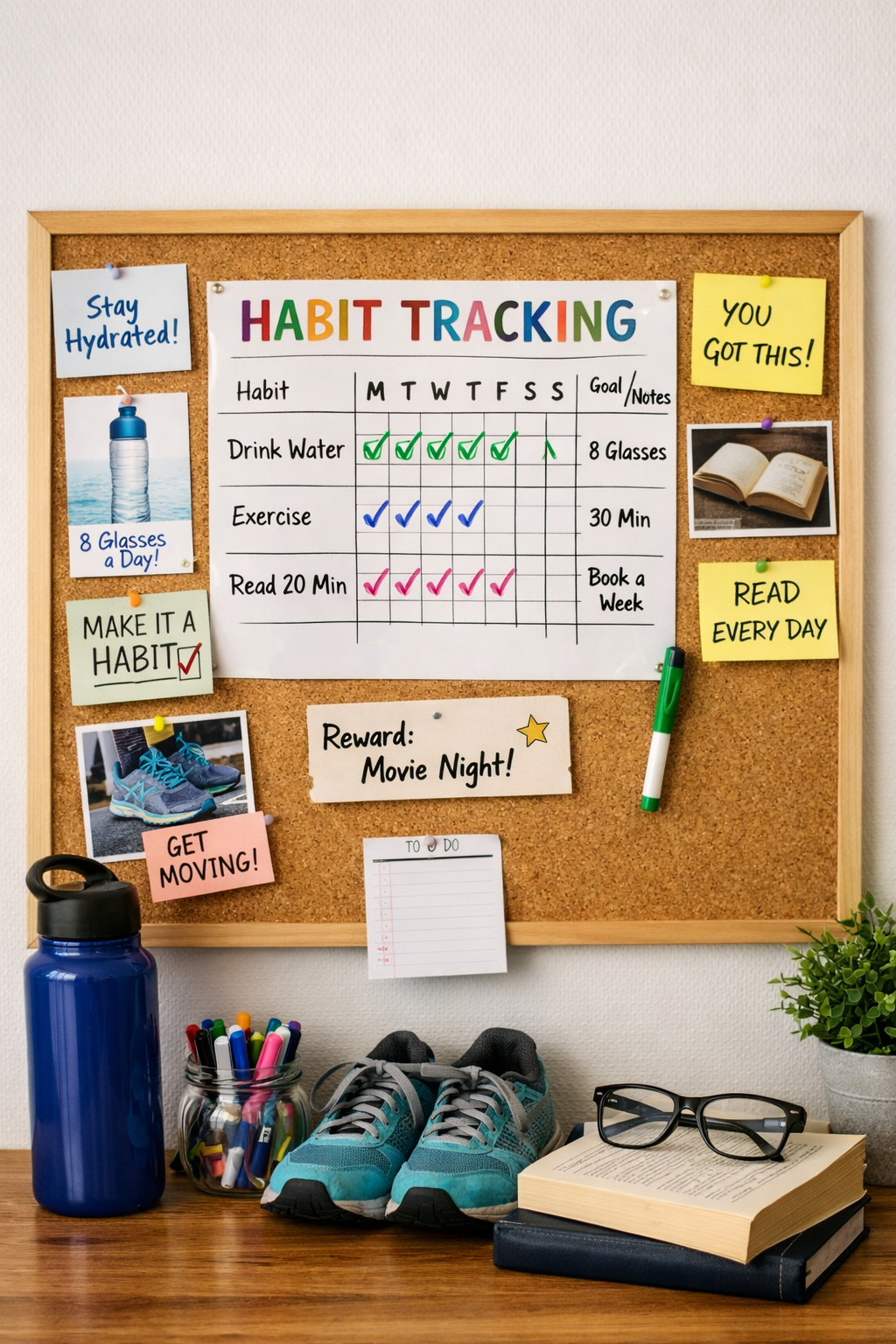
Visual cues and reminders can significantly boost your consistency. Place visual reminders in strategic locations, such as a note on your bathroom mirror or a reminder on your phone. These cues will prompt you to engage in your desired habits and reinforce your commitment to building better habits. I’m tracking my water intake with a water bottle that has time markers on it. It works for me.
Step 5: Review and adjust weekly
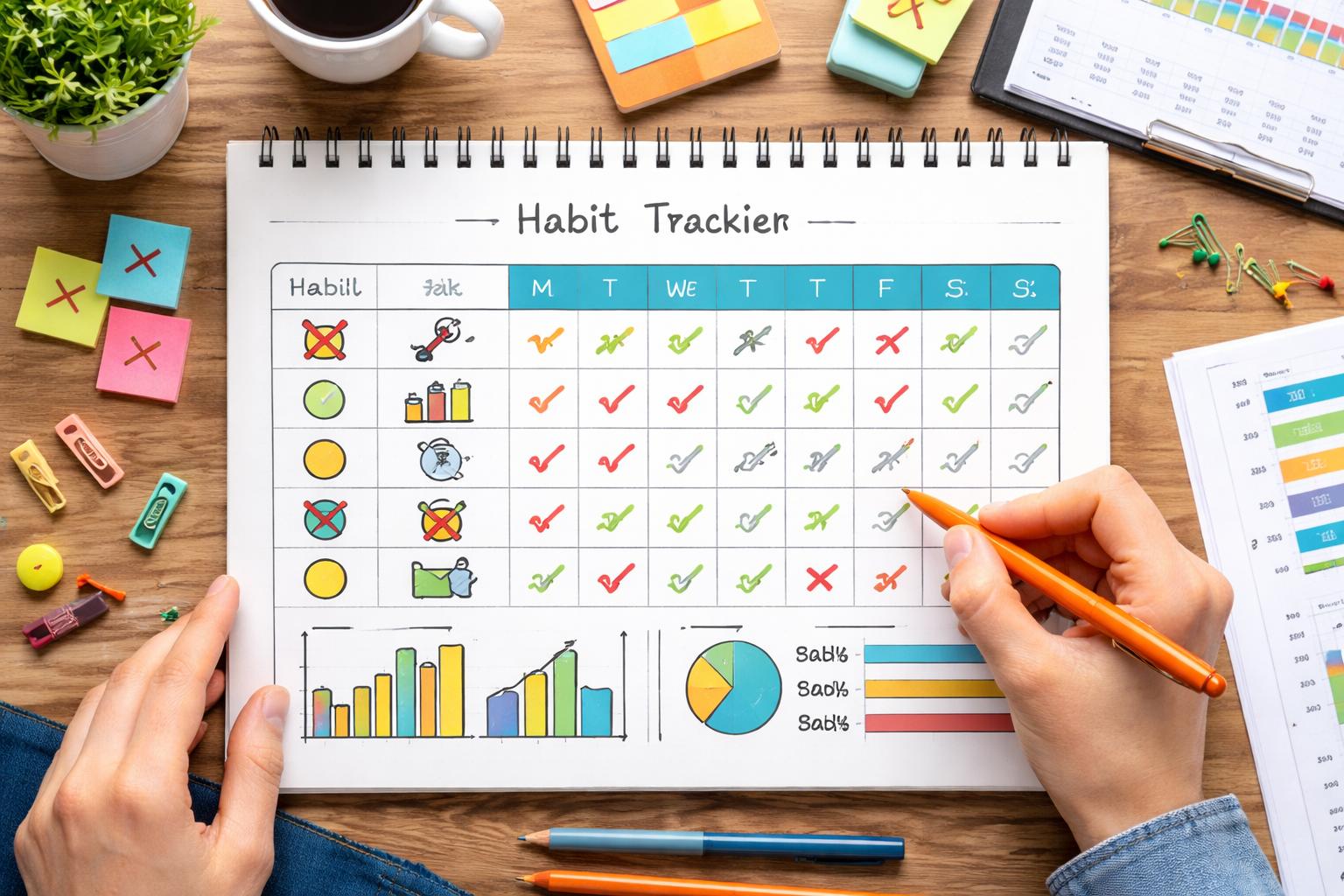
Regular review and adjustment are essential for long-term success with habit tracking. Dedicate time each week to review your progress, identify any challenges, and make necessary adjustments to your routine. This iterative process allows you to refine your habit tracking system and ensure it continues to support your goals. Without review, it is hard to see what is working and what is not. Also, what habits you want to reinforce.
Expert Tips for Staying Consistent and Avoiding Burnout
How to recover from missed days without guilt
Missing a day or two while tracking your habits is normal; don’t let it derail you. Acknowledge the slip-up without guilt and quickly get back on track. Remember, consistency is key, but perfection isn’t the goal. Focus on the long-term benefits of building habits rather than dwelling on occasional setbacks. Consider using a habit tracker to help you monitor your habits.
Using rewards to stay motivated
Incorporate rewards into your habit tracking routine to stay motivated. Celebrate milestones and acknowledge your progress with small, meaningful treats. These rewards can reinforce positive habits and make the habit formation process more enjoyable. Just make sure the reward aligns with your overall goals and doesn’t undermine your progress in building habits.
The power of habit stacking
Habit stacking is a powerful technique for integrating new habits into your daily routine. This involves linking a new habit with an existing one. For example, if you want to meditate daily, you could stack it after your morning coffee. This strategy leverages existing routines to make new habits more automatic and easier to maintain. Stacking habits is all about building habits.
Leveraging accountability partners or communities
Accountability partners or communities can provide valuable support and encouragement on your habit tracking journey. Share your goals and progress with others, and seek feedback and motivation. Knowing that someone else is tracking your progress can significantly boost your consistency and help you stay committed to building better habits. I’m tracking my weight with a friend.
Advanced Strategies to Level Up Your Habit Tracking
Tracking multiple habits without overwhelm
Once you’ve mastered the basics of habit tracking, you can explore tracking multiple habits simultaneously. To avoid overwhelm, prioritize key habits and stagger their introduction. Start with a few essential habits and gradually add more as you build momentum. Using a habit tracker can help you manage multiple habits effectively. It’s a great tool for improving your productivity.
Combining habit tracking with goal-setting frameworks (SMART, OKRs)
Enhance your habit tracking by integrating it with established goal-setting frameworks like SMART (Specific, Measurable, Achievable, Relevant, Time-bound) or OKRs (Objectives and Key Results). This integration provides a clear structure for setting and tracking goals, aligning your habits with your broader objectives. Goal setting is all about building new habits.
Analyzing your data to spot growth opportunities
Regularly analyze your habit tracking data to identify patterns, trends, and growth opportunities. Look for areas where you’re consistently succeeding and areas where you’re struggling. Use these insights to refine your routine, adjust your goals, and optimize your approach to habit formation. It’s time to review what habits you want to improve.
Common Mistakes to Avoid When Tracking Habits
Overloading with too many habits at once
One common pitfall in habit tracking is trying to track too many new habits simultaneously. Overloading yourself can lead to overwhelm and burnout, making it difficult to stay consistent. It’s more effective to start small, focusing on one or two keystone habits at a time. Once these habits are ingrained into your daily routine, you can gradually add more. Remember, the power of habit lies in simplicity and focus.
Relying solely on motivation instead of systems
While motivation can kickstart your habit tracking journey, it’s not a reliable long-term strategy. Relying solely on motivation often leads to inconsistent tracking and eventual abandonment.
Instead, focus on building systems and routines that support your desired habits. A well-designed habit tracker, clear visual cues, and scheduled reminders can help you stay on track even when motivation wanes. It’s also helpful to track your progress.
Ignoring progress reviews and reflection
Habit tracking is not just about logging your actions; it’s also about reviewing your progress and reflecting on your experiences. Ignoring this crucial step can prevent you from identifying patterns, adjusting your routine, and maximizing your results.
Regularly review your habit tracker, analyze your data, and reflect on what’s working and what’s not. This iterative process will help you optimize your approach and build better habits, so you can improve your life.
Conclusion: Turn Daily Habits Into Lifelong Success
In conclusion, habit tracking is a powerful tool that can transform your life by helping you build consistency, achieve your goals, and cultivate lasting positive changes. By understanding the psychology behind habit formation, choosing the right habit tracker, and implementing effective strategies, you can harness the power of habit and create a brighter future. It’s important to start small, build momentum, and celebrate your progress. The power of habit tracking can reinforce routines that will help you to achieve what you want in life, build new habits, and improve your life.