
Why Print Still Holds Its Ground in a Screen-Heavy World
A few months ago, a café owner I know decided to promote a weekend tasting event. She did everything “right” online. Instagram stories. Paid ads. A boosted post or two. On the day of the event, foot traffic was… underwhelming. What worked? A simple trifold brochure printing from Inkr handed out nearby the day before.
That moment says a lot about where print stands today. Screens are everywhere. Attention isn’t. And when people can hold information in their hands, something clicks.
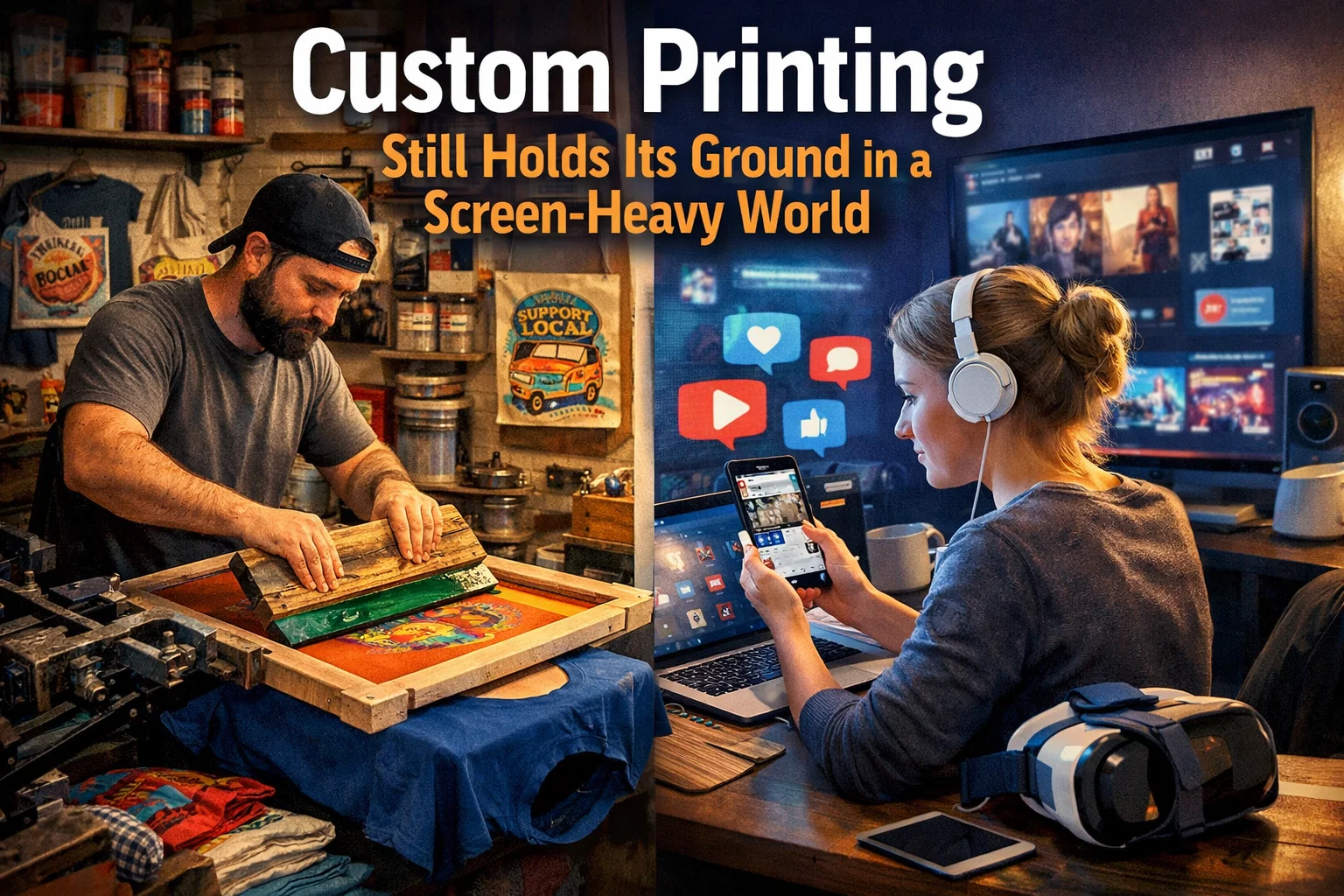
Custom printing solutions sit right at that intersection. They support brands, events, and personal projects in ways digital tools alone still struggle to match. This guide breaks down how professional printing works, where it fits best, and how businesses and individuals can use it without wasting money or time.
No jargon. No hype. Just practical insight.
What Are Custom Printing Solutions?
A Simple Definition That Actually Helps
Custom printing solutions refer to professionally produced printed materials made to match a specific purpose, audience, and message. That might sound broad. It is. And that’s the point.
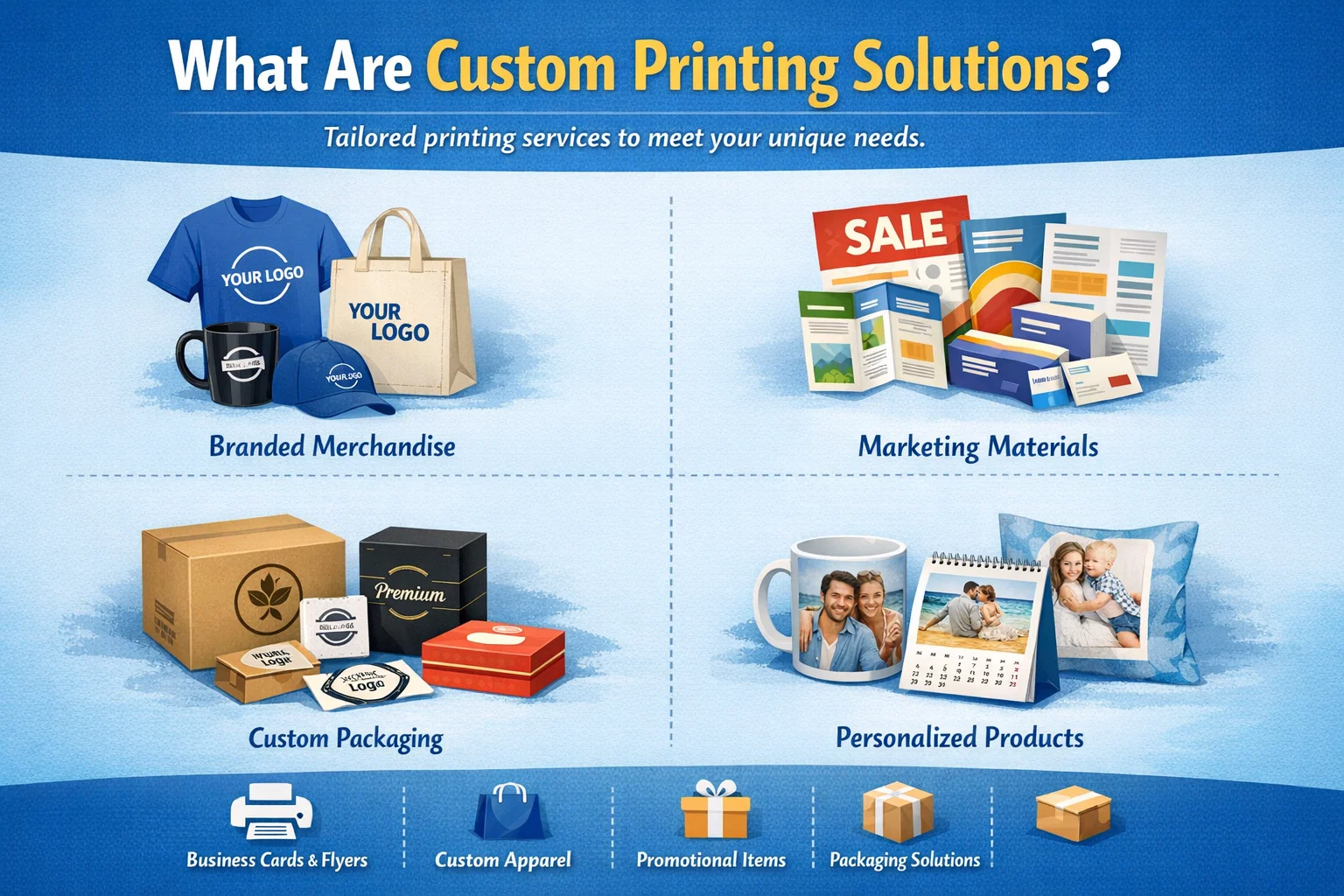
Unlike office printers or generic templates, professional printing focuses on:
- Visual clarity
- Consistent color reproduction
- Durable materials
- Formats chosen for real-world use
These solutions cover everything from large storefront banners to compact brochures designed to travel in someone’s bag for weeks.
Who Uses Professional Printing Today?
Printing is no longer limited to big brands with big budgets. It’s used by:
- Small business owners promoting services locally
- Marketing teams preparing campaigns and launches
- Event organizers planning conferences or community gatherings
- Individuals creating invitations, posters, or personal projects
The audience is broad because the applications are practical.
Large Format vs Small Format Printing: The Core Difference
Understanding this distinction saves money. It also saves frustration.
Large Format Printing Explained
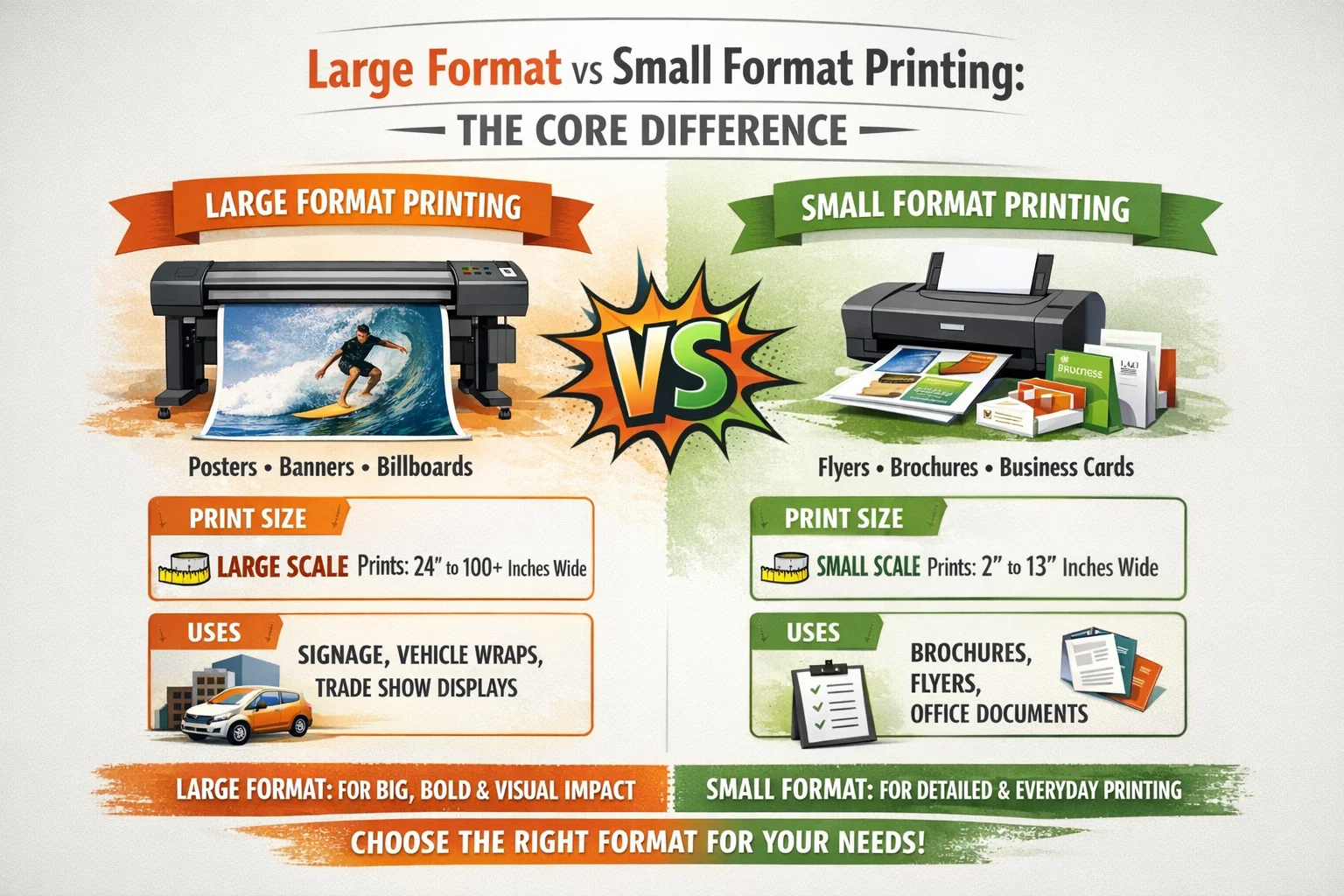
Large format printing covers materials too big for standard printers. These pieces are meant to be seen from a distance.
Common large format products include:
- Banners
- Posters
- Window graphics
- Trade show backdrops
- Wall signage
According to Mordor Intelligence, the global large format printing market is expected to grow from USD 12.68 billion in 2025 to about USD 16.02 billion by 2030, driven by retail and event demand.
When Large Format Makes Sense
Large format works best when visibility matters more than detail.
Think:
- Storefront promotions
- Trade shows
- Outdoor advertising
- Directional signage at events
If the message needs to stop people mid-step, large format delivers.
Small Format Printing Explained
Small format printing focuses on materials meant to be read up close and kept.
Typical small format items include:
- Brochures
- Flyers and pamphlets
- Business cards
- Booklets
- Postcards
These pieces explain. They guide. They stay behind when the conversation ends.
The global custom printing market overall is projected to grow from $30.93 billion in 2024 to $33.84 billion in 2025, reflecting steady demand across both large and small formats.
Why Brochures Still Work (Yes, Really)
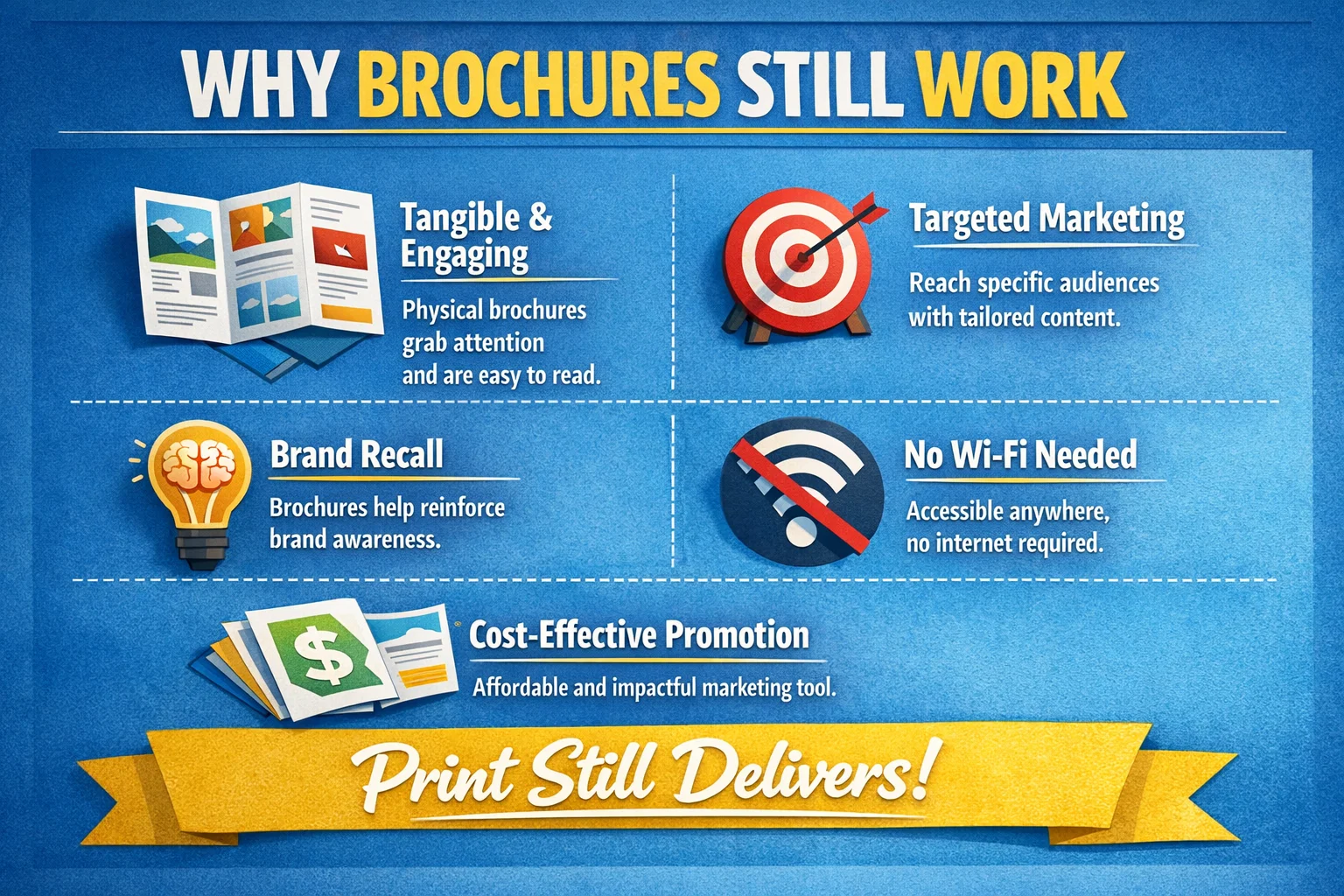
Digital ads disappear with a swipe. Brochures don’t.
Why Printed Marketing Still Gets Attention
Studies consistently show that people trust print more than digital ads. Around 80% of consumers say printed materials feel more trustworthy than online promotions.
That trust matters. Especially for local businesses, service providers, and events.
Trifold Brochures: A Practical Favorite
A trifold brochure folds into three clean panels. Each panel has a job.
- Panel one: grab attention
- Panel two: explain value
- Panel three: show next steps
This format works for:
- Service explanations
- Menus
- Product overviews
- Event schedules
- Brand introductions
Because they’re compact, trifold brochures travel well. People keep them. And that’s half the battle.
Professional trifold brochure printing also offers control over paper stock, folding accuracy, and color balance—details that separate “home printed” from “kept and read.”
How Print Strengthens Brand Marketing
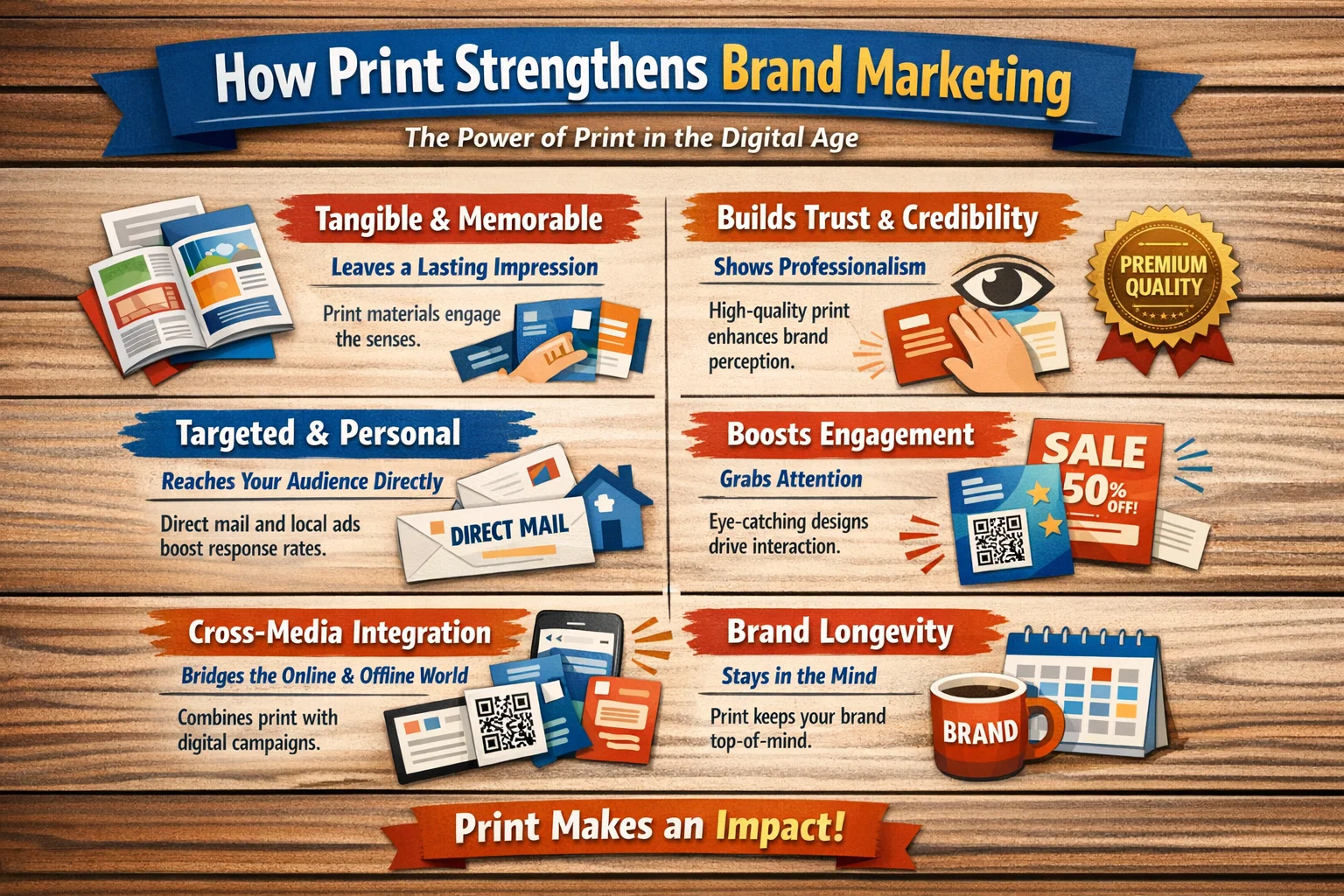
Print Builds Trust Faster Than Screens
Digital content competes with notifications, ads, and noise. Print doesn’t.
About 65% of consumers say they prefer receiving promotional content in printed form rather than digitally.
That preference isn’t nostalgia. It’s focus.
Print and Digital Work Better Together
Print doesn’t replace digital. It supports it.
Smart campaigns combine both:
- QR codes on brochures linking to landing pages
- Printed event materials driving email signups
- Physical mail paired with online follow-ups
Some studies show that integrated print-and-digital campaigns can be up to 400% more effective than digital-only approaches.
That’s not magic. It’s memory reinforcement.
Custom Printing Beyond Business Use

Personal Printing Projects That Benefit from Professional Quality
Not everything printed is meant to sell something.
Professional printing supports:
- Wedding invitations
- Community event flyers
- Art posters
- Personal branding materials
The difference shows. Especially in paper weight, color consistency, and finishing.
Event-Driven Printing
Events live or die by clarity.
Printed materials help with:
- Schedules
- Directions
- Branding consistency
- Takeaway information
When done right, they reduce confusion and improve experience.
Choosing the Right Printing Solution (Without Guesswork)
This is where many people get stuck.

Ask These Questions First
Before printing anything, ask:
- Who will read this?
- How long should it last?
- Will it be held, displayed, or handed out?
- How far away will it be viewed?
The answers guide format, size, and material.
Quick Decision Guide
| Goal | Best Option |
|---|---|
| High visibility | Large format |
| Detailed explanation | Small format |
| Short-term promotion | Flyers |
| Ongoing reference | Brochures |
| Brand presence | Mixed formats |
This step alone prevents costly reprints.
What Actually Determines Print Quality
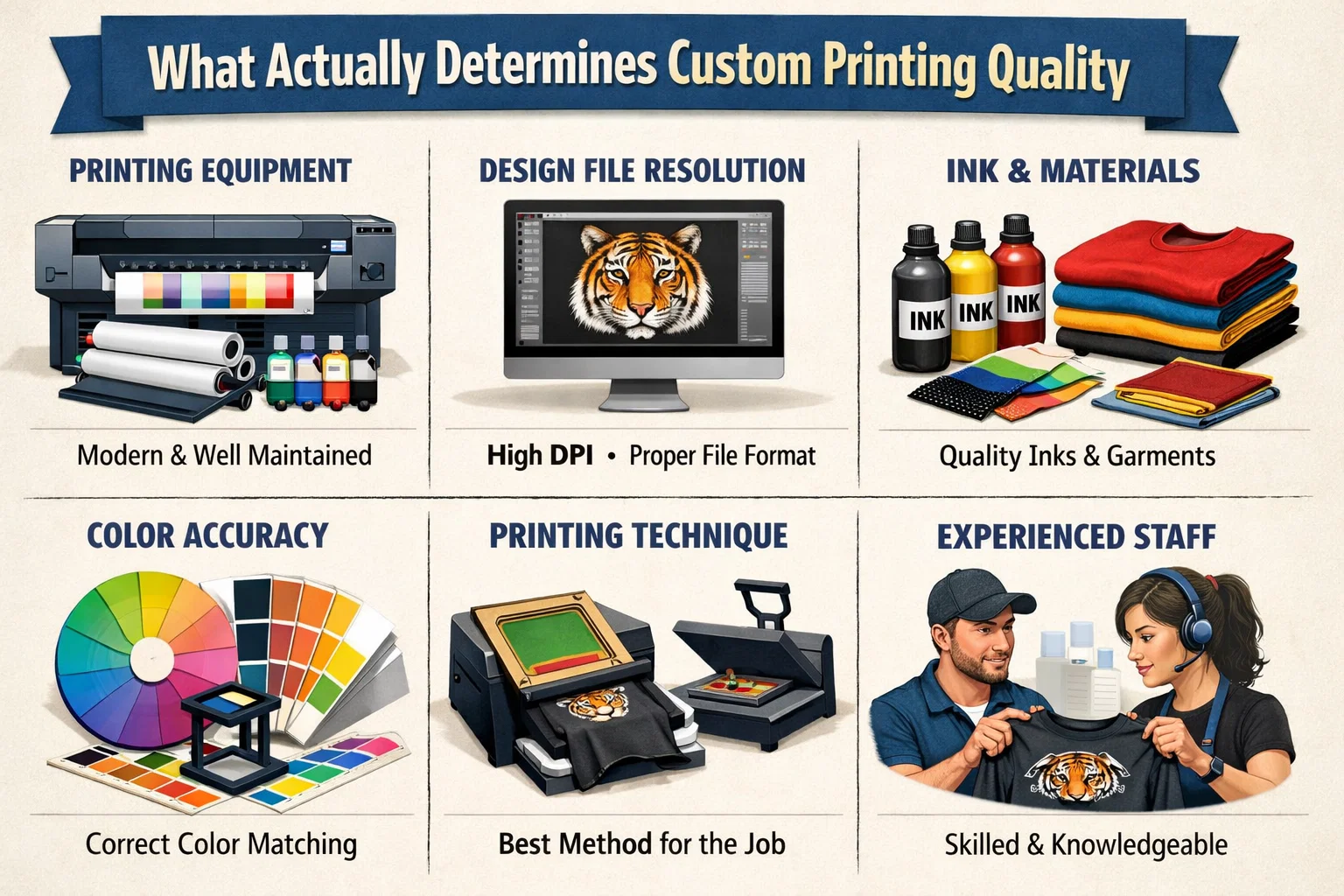
Paper Stock Matters More Than Most Think
Thin paper feels disposable. Thicker stock signals care.
Choices include:
- Coated vs uncoated
- Matte vs gloss
- Recycled options
Each sends a different message.
Color Accuracy and Resolution
Professional printers manage color profiles carefully. That keeps logos consistent across formats. It also avoids surprises when files go to print.
Finishing Touches That Make a Difference
Small details elevate the final result:
- Clean folds
- Precise trimming
- Smooth binding
These details are where professional printing earns its value.
Preparing Files for Professional Printing
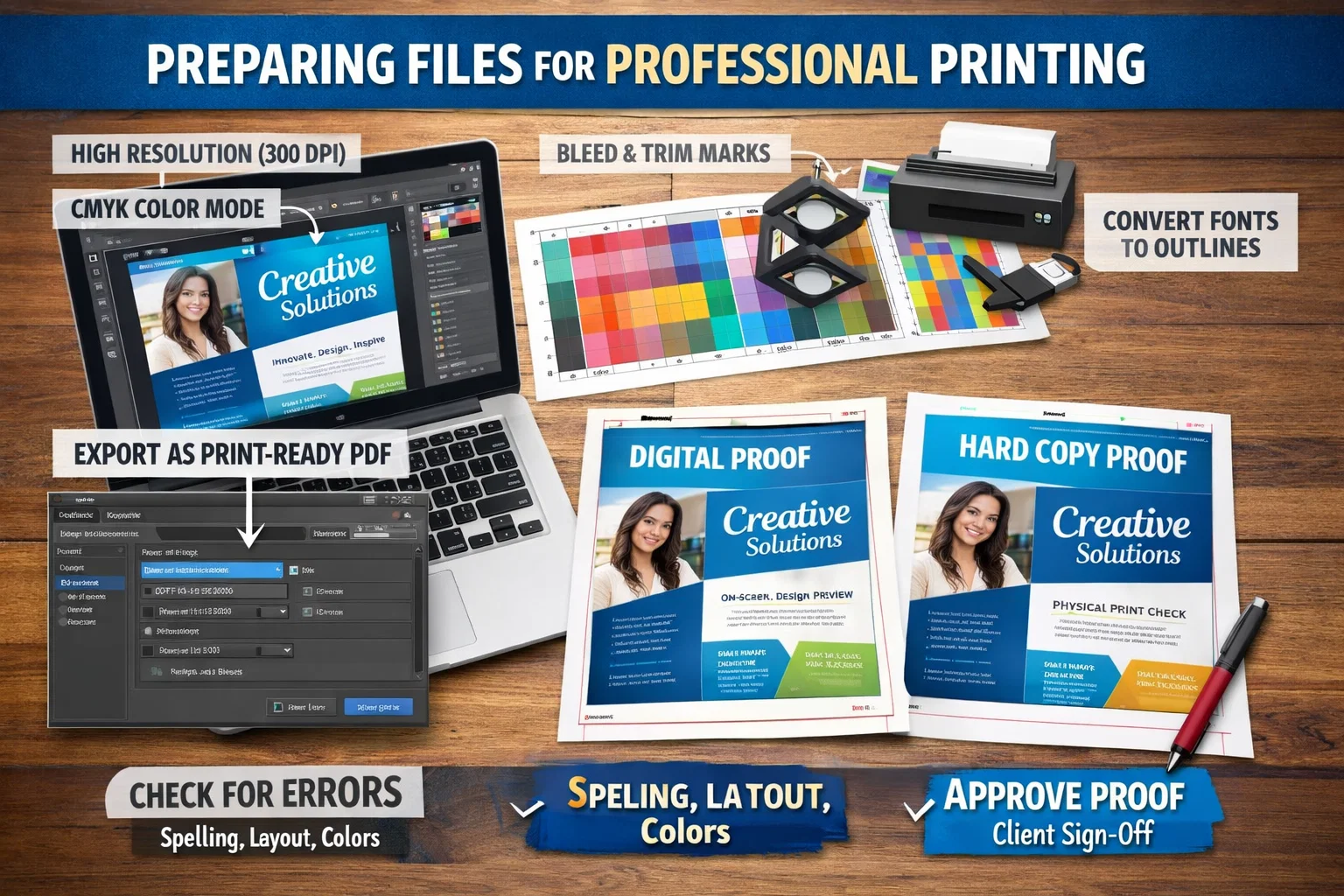
File Basics That Save Time
Most printers prefer:
- PDF files
- High-resolution images (300 DPI)
- Embedded fonts
Skipping this step often leads to delays.
Bleed, Margins, and Layout
Bleed allows designs to extend to the edge. Margins protect content. Both matter.
Mistakes here show up immediately on paper.
Proofs Are Worth the Wait
Proofs catch errors before they multiply. One correction early saves hundreds later.
The Business Value of Professional Printing
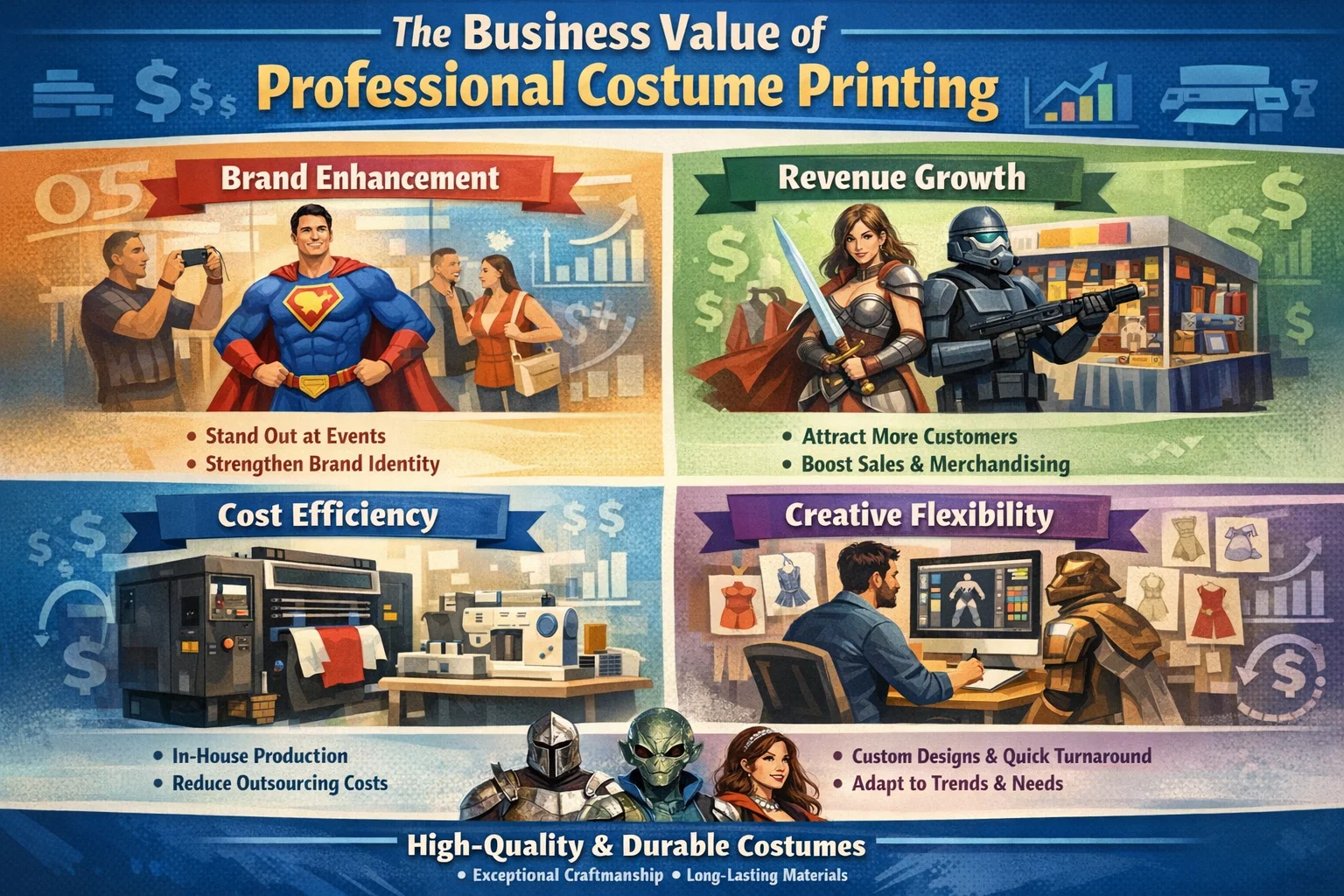
Print Still Drives Action
Printed materials don’t just sit there.
About 90% of printed direct mail is opened and read within a week, far higher than most email campaigns.
Nearly 50% of consumers say a printed coupon or flyer influenced a purchase.
That’s measurable impact.
Cheap Printing Often Costs More
Lower-quality prints fade faster. They tear. They misrepresent brands.
Professional printing lasts longer and reflects better.
Sustainability and Modern Printing

Eco-Friendly Options Are More Common Now
Many printers offer:
- Recycled paper stocks
- Water-based inks
- Smarter batch printing
Sustainable choices no longer require sacrificing quality.
Responsible Printing Practices
Printing less—but better—reduces waste. Planning formats carefully helps too.
Common Questions About Custom Printing
Is professional printing worth it for small businesses? Yes, especially when clarity and trust matter.
How many copies should I print? Enough to match distribution plans. Not guesses.
Can printing work for short runs? Digital printing makes small batches practical.
How long does printing usually take? Turnaround depends on format, volume, and finishing.
Conclusion: Print with Purpose
Custom printing solutions work best when they’re intentional.
Large format captures attention. Small format explains value. Together, they support brands, events, and personal projects in ways screens still struggle to replicate.
The key isn’t printing more. It’s printing smarter.
When done well, print doesn’t compete with digital. It complements it. And sometimes, it quietly does the job better.