


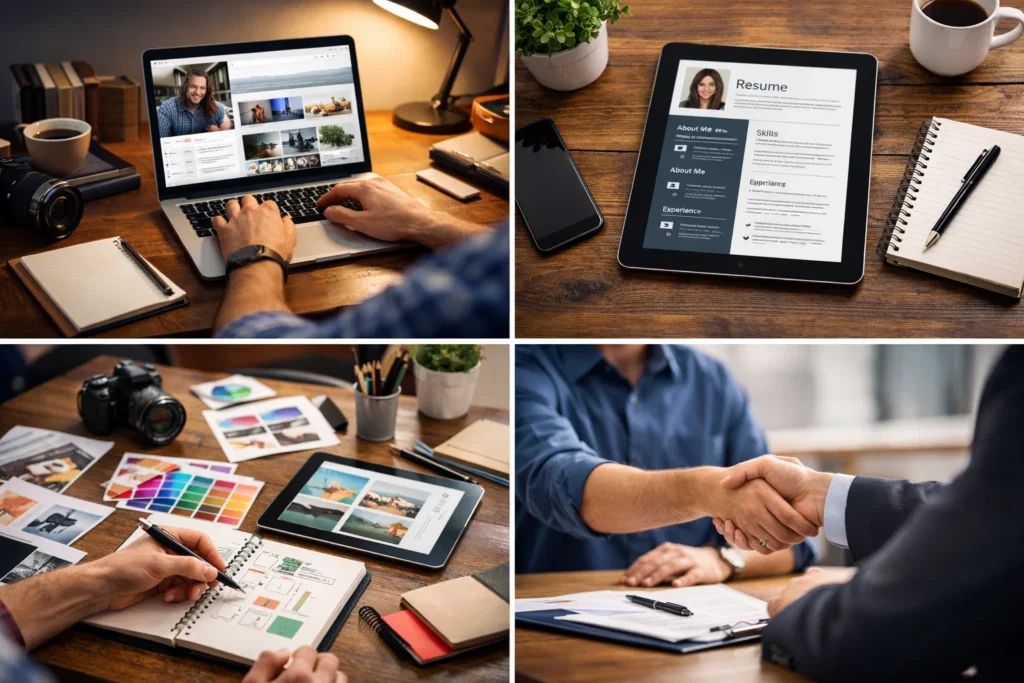
In today’s competitive job market, a well-crafted digital portfolio is more crucial than ever. This guide provides a step-by-step approach to creating a great digital portfolio that will impress potential employers and showcase your work effectively, helping you stand out from the crowd.
Why a Digital Portfolio Is More Powerful Than a Traditional CV in 2026
In 2026, the importance of a digital portfolio far surpasses that of a traditional CV. A digital portfolio allows you to showcase your skills and experience in a dynamic and engaging way, something a static CV simply cannot achieve.


How Hiring Trends Have Changed in the Digital Era
Hiring trends have shifted dramatically in the digital era, with potential employers increasingly relying on online presence to evaluate candidates. Creating a portfolio is now essential to demonstrate skills practically.
What Recruiters Really Look for in a Portfolio
Recruiters seek evidence of practical skills and problem-solving abilities in a portfolio. They want to see how you apply your knowledge to real-world projects and achieve tangible results through your best work.
Common Mistakes in Traditional CVs vs Portfolios
Traditional CVs often list skills without providing concrete evidence, while portfolios showcase skills in action. Common mistakes include not quantifying achievements and lacking visual appeal, which a well-designed digital portfolio avoids.
Understanding What Makes a High-Converting Digital Portfolio
A high-converting digital portfolio is one that not only displays your work but also persuades potential clients or employers to take action. It requires understanding the psychology behind first impressions and building trust quickly.
The Psychology Behind First Impressions Online
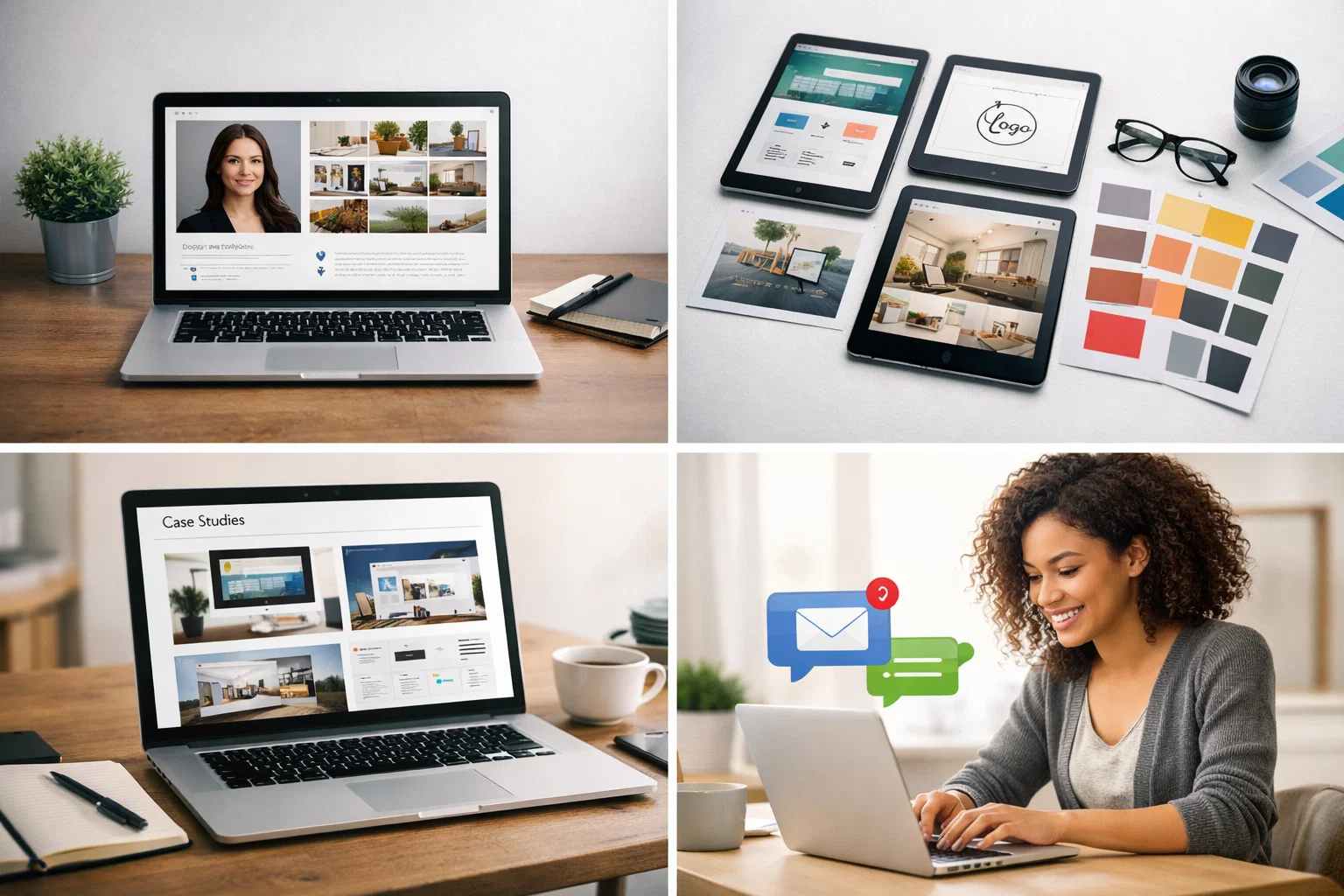
First impressions are crucial online. Your digital portfolio needs to grab attention immediately and clearly communicate your value proposition. A visually appealing and easy-to-navigate portfolio is key.
Key Elements That Make Recruiters Trust You Instantly
To build trust instantly, include testimonials, case studies, and quantifiable results in your portfolio. Highlighting certifications, awards, and social proof will further enhance your credibility.
Portfolio vs Resume vs LinkedIn: What’s the Difference?
A resume summarizes your experience, LinkedIn provides a professional network, but a portfolio is where you showcase your work. Your digital portfolio demonstrates your skills in a tangible and compelling manner unlike the other two.
Step 1: Define Your Career Goal and Target Audience
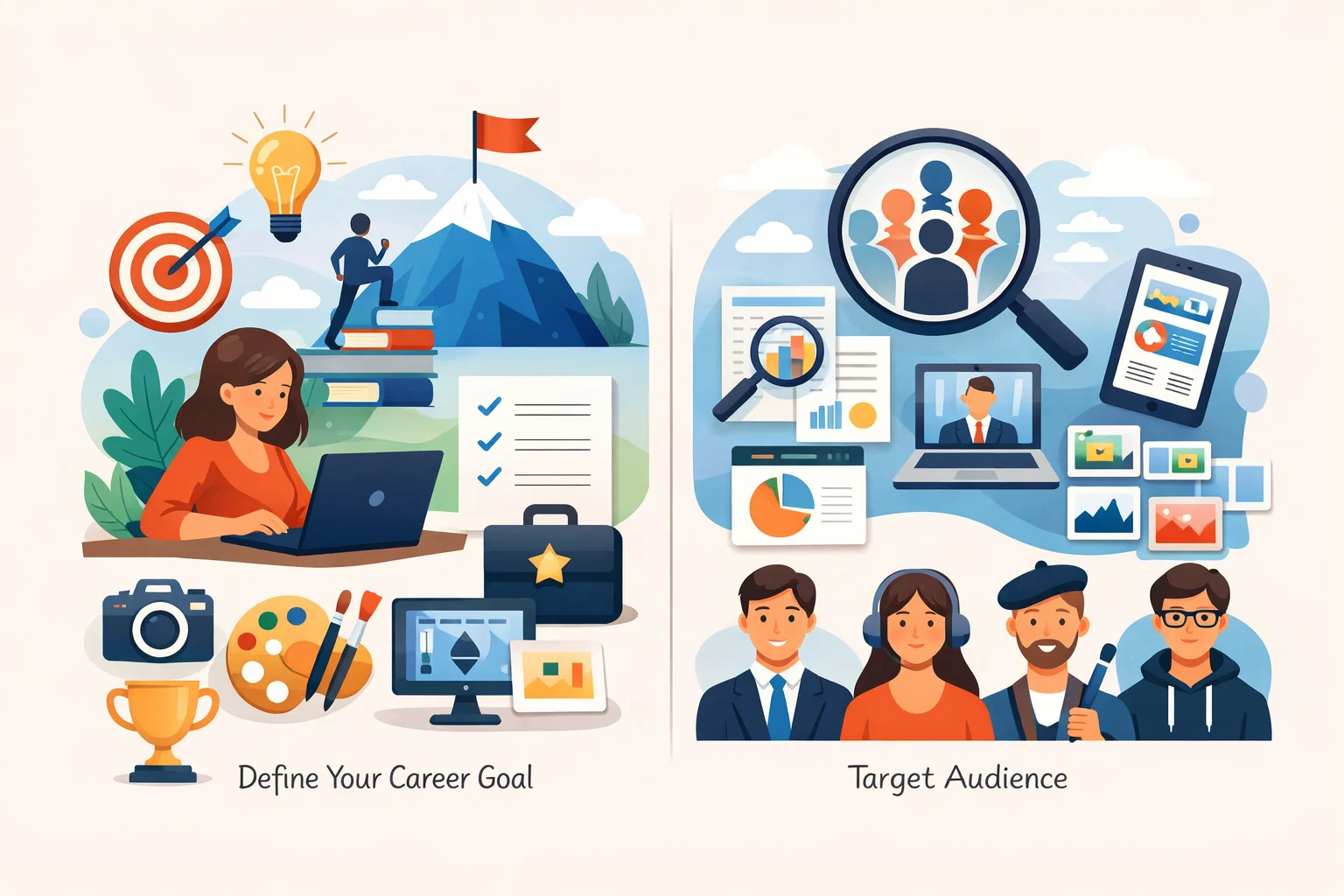
Before you even begin to create a digital portfolio, it’s essential to define your career goals and identify your target audience. Knowing what you want to achieve and who you’re trying to reach will shape your portfolio’s content and design.
Choosing Your Niche (Design, Writing, Marketing, Tech, etc.)
Selecting a niche such as graphic design, writing, marketing, or tech helps you tailor your portfolio to specific industries and roles. This targeted approach makes you more attractive to potential clients or employers.
Identifying Your Ideal Employers or Clients
Identifying your ideal employers or potential clients allows you to customize your portfolio to meet their specific needs and preferences. Research their company culture, values, and the types of projects they typically undertake.
Aligning Portfolio Content with Job Market Demand
Aligning your portfolio content with current job market demand increases your chances of getting hired. Showcase projects that demonstrate skills highly sought after by employers in your target industry.
Step 2: Choose the Best Platform for Your Portfolio
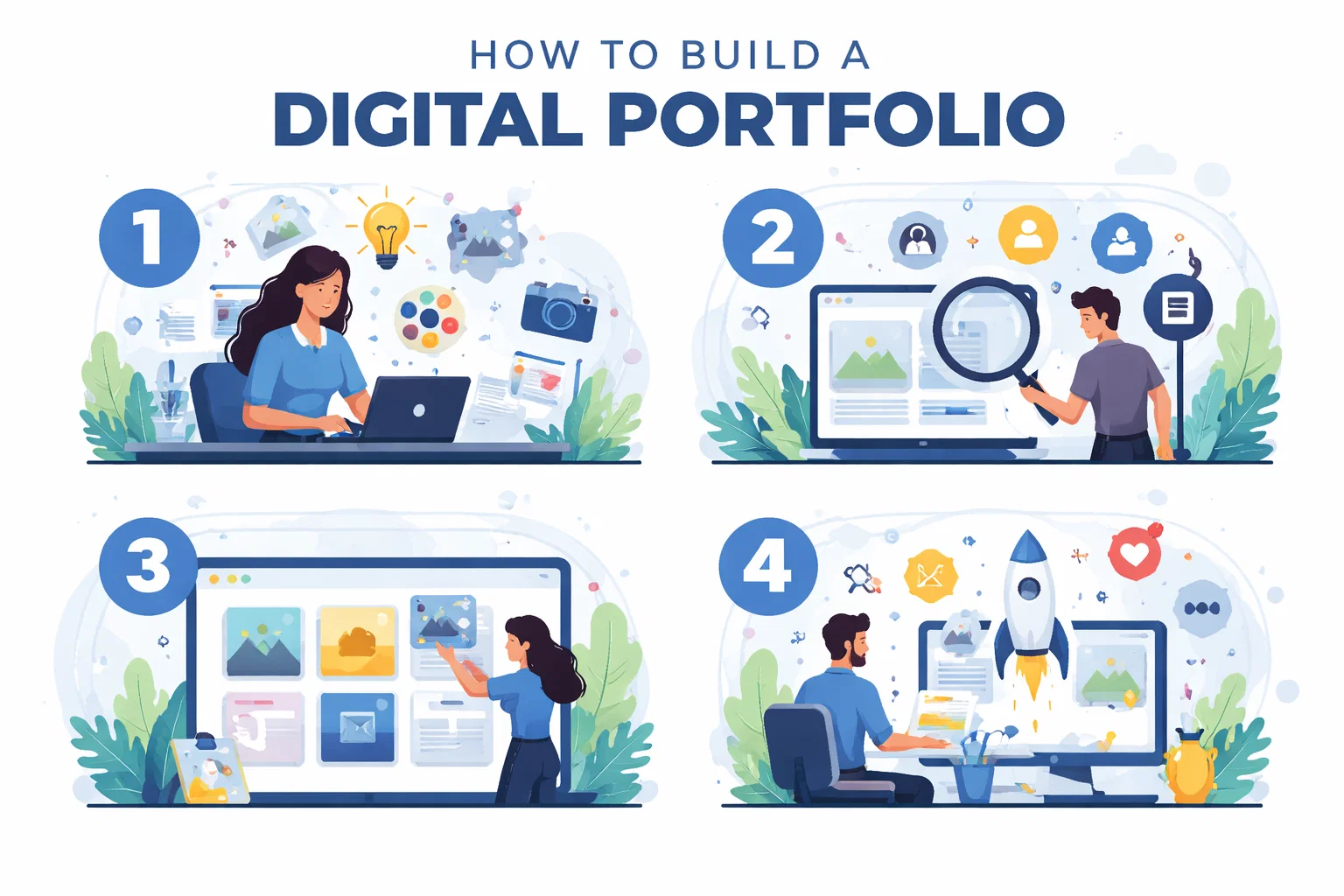
Selecting the right platform to make a digital portfolio is crucial. The platform should be user-friendly, offer customization options, and allow you to showcase your work effectively. Various options cater to different needs and skill levels.
Website Builders (Wix, Squarespace, WordPress) Explained
Here are some website builders that can help you create a portfolio website. Each platform offers unique strengths and caters to different levels of technical expertise. Some popular options include:
- Wix, known for its website templates and drag-and-drop interface.
- Squarespace, which offers similar features to Wix.
- WordPress, a versatile option that can also be used to build a portfolio.
Free vs Paid Portfolio Platforms: What You Should Know
Free portfolio platforms and paid options differ significantly. Free platforms typically offer basic features, while paid options often provide enhanced capabilities such as:
- More customization options
- Increased storage capacity
- A professional domain name
Consider your budget and long-term goals to determine the best choice for your needs.
Best Platforms for Designers, Developers, and Freelancers
Here are some platforms that cater to specific professions. For instance:
- Designers might prefer Behance or Dribbble.
- Developers often use GitHub Pages.
- Freelancers may opt for specialized portfolio maker solutions that integrate project management tools.
Step 3: Structure Your Portfolio Like a Professional Website
Structuring your digital portfolio like a professional portfolio website ensures it’s easy to navigate and presents your best work effectively. This involves strategic layout and content organization to impress potential employers and potential clients. Make sure to create a portfolio website that is optimized for user experience and visually appealing.
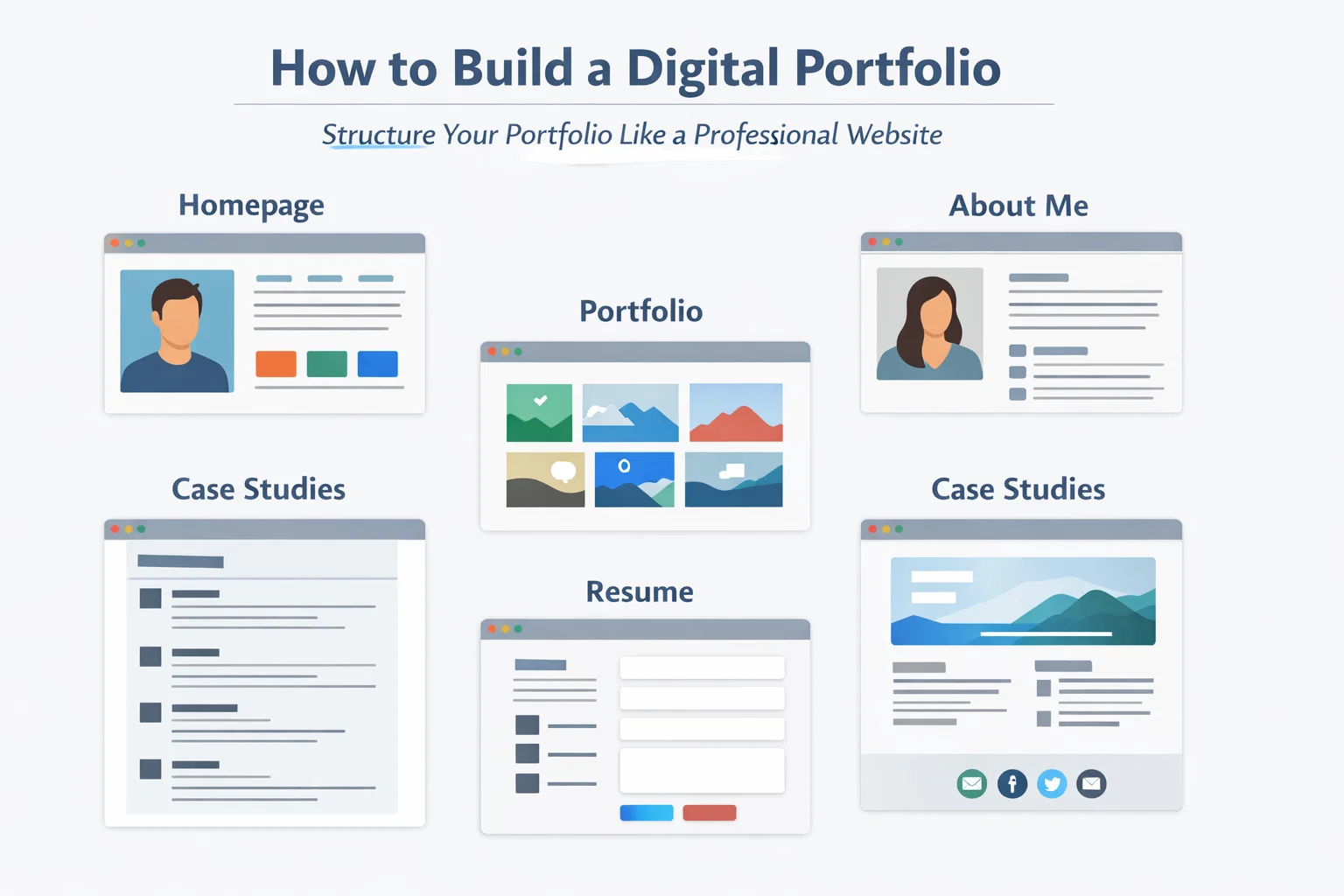
Home Page: Creating a Strong First Impression
Your home page is the first thing potential clients and potential employers will see; make it count. Use a clean, modern template, highlight your most impressive projects, and clearly communicate your value proposition to make your portfolio stand out. A great digital portfolio starts with a compelling home page that captures attention and encourages further exploration of your skills and experience.
About Page: How to Tell Your Story Effectively
The about page should tell your story in a compelling way, showcasing your passion, skills and experience, and what sets you apart. Include a professional photo, a concise bio, and personal touches that help potential employers connect with you on a personal level, showing them why you are the right person to hire. Your goal is to create a digital portfolio that feels both professional and personal.
Portfolio / Projects Page: Showcasing Your Best Work
Your projects page is where you showcase your work. Organize projects logically, provide detailed descriptions, and use high-quality images or videos. Highlight the challenges you faced, the solutions you implemented, and the results you achieved. This is your opportunity to demonstrate your expertise and impress potential employers with your capabilities. With a portfolio maker, it can be easy to navigate and make changes.
Contact Page: Making It Easy for Employers to Reach You
Make it easy for potential employers and potential clients to reach you by including a clear and accessible contact form on your portfolio website. Provide multiple contact methods, such as email and phone number, and consider adding links to your social media profiles. Make sure your portfolio is easily accessible by everyone.
Step 4: How to Showcase Your Work to Impress Recruiters
Effectively showcasing your work is crucial to impress recruiters and potential employers. Use frameworks like “Problem → Solution → Result” to present your projects in a compelling and results-oriented manner, helping your digital portfolio stand out. If you build a digital portfolio in the right way, then you are golden.
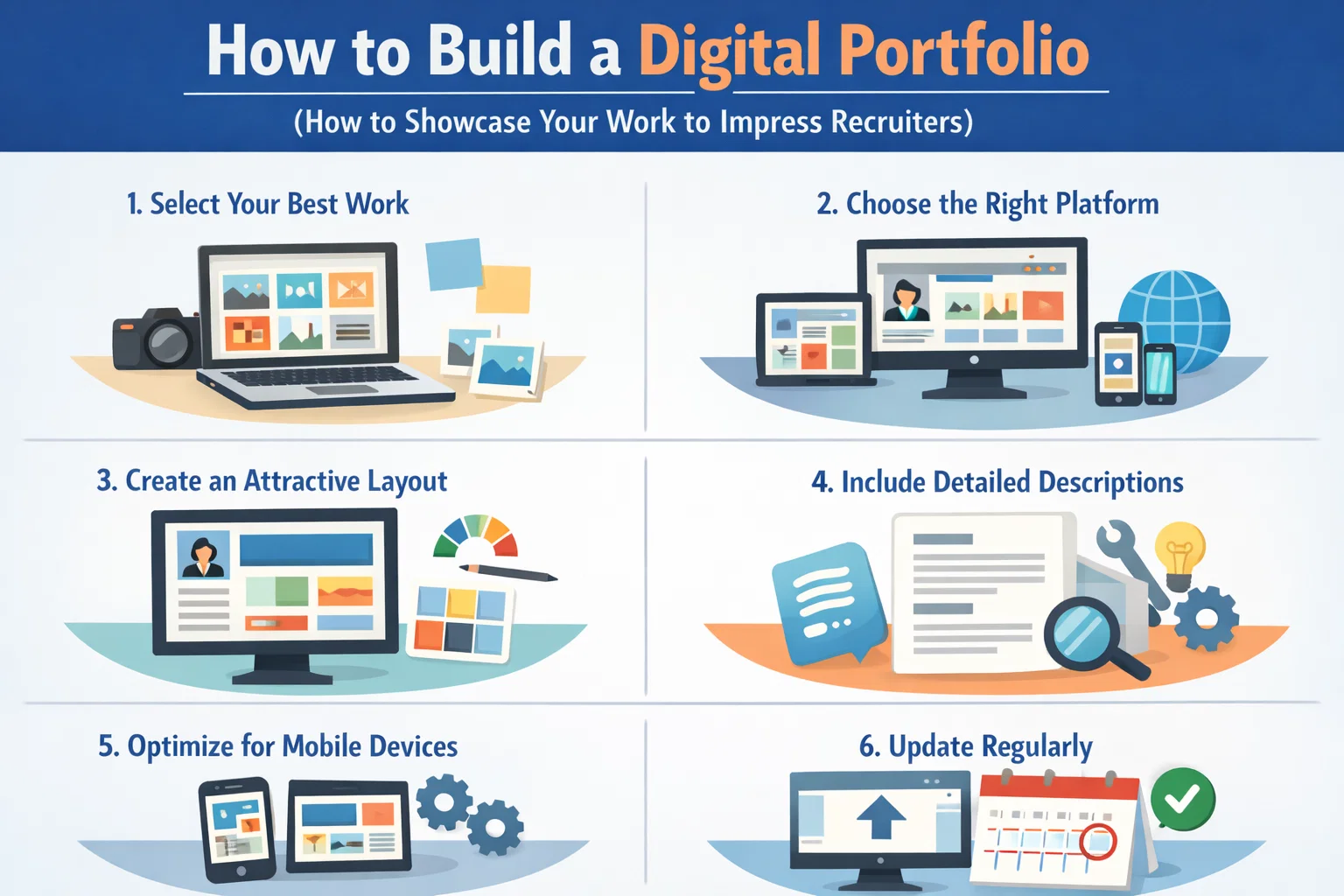
The “Problem → Solution → Result” Framework
The “Problem → Solution → Result” framework helps you present your projects in a structured and impactful way. Describe the problem you were trying to solve, explain the solution you implemented, and highlight the results you achieved. This approach demonstrates your problem-solving skills and the value you bring to potential employers.
Adding Visuals, Screenshots, and Case Studies
Enhance your portfolio by adding visuals, screenshots, and case studies. Visual elements make your portfolio more engaging and help recruiters quickly understand your work. Case studies provide in-depth insights into your projects, showcasing your skills and experience in detail. Create an online portfolio that’s visually appealing to gain the upper hand.
How to Present Projects Without Experience
If you’re creating a digital portfolio without extensive professional experience, focus on personal projects, volunteer work, and academic assignments. Highlight the skills you’ve gained and the results you’ve achieved, even if the projects weren’t for paying clients. Every project is experience, and this is how you can build a portfolio even without experience.
Using Metrics and Results to Build Credibility
Whenever possible, use metrics and results to quantify your achievements and build credibility. Include data on increased traffic, improved conversion rates, or cost savings to demonstrate the impact of your work. Quantifiable results make your portfolio more compelling.
Step 5: Design Principles for a High-Impact Portfolio
Applying solid design principles to your digital portfolio will significantly enhance its impact and effectiveness. A well-designed portfolio website will not only showcase your work effectively but also create a positive user experience, making it more likely to impress potential clients and recruiters.
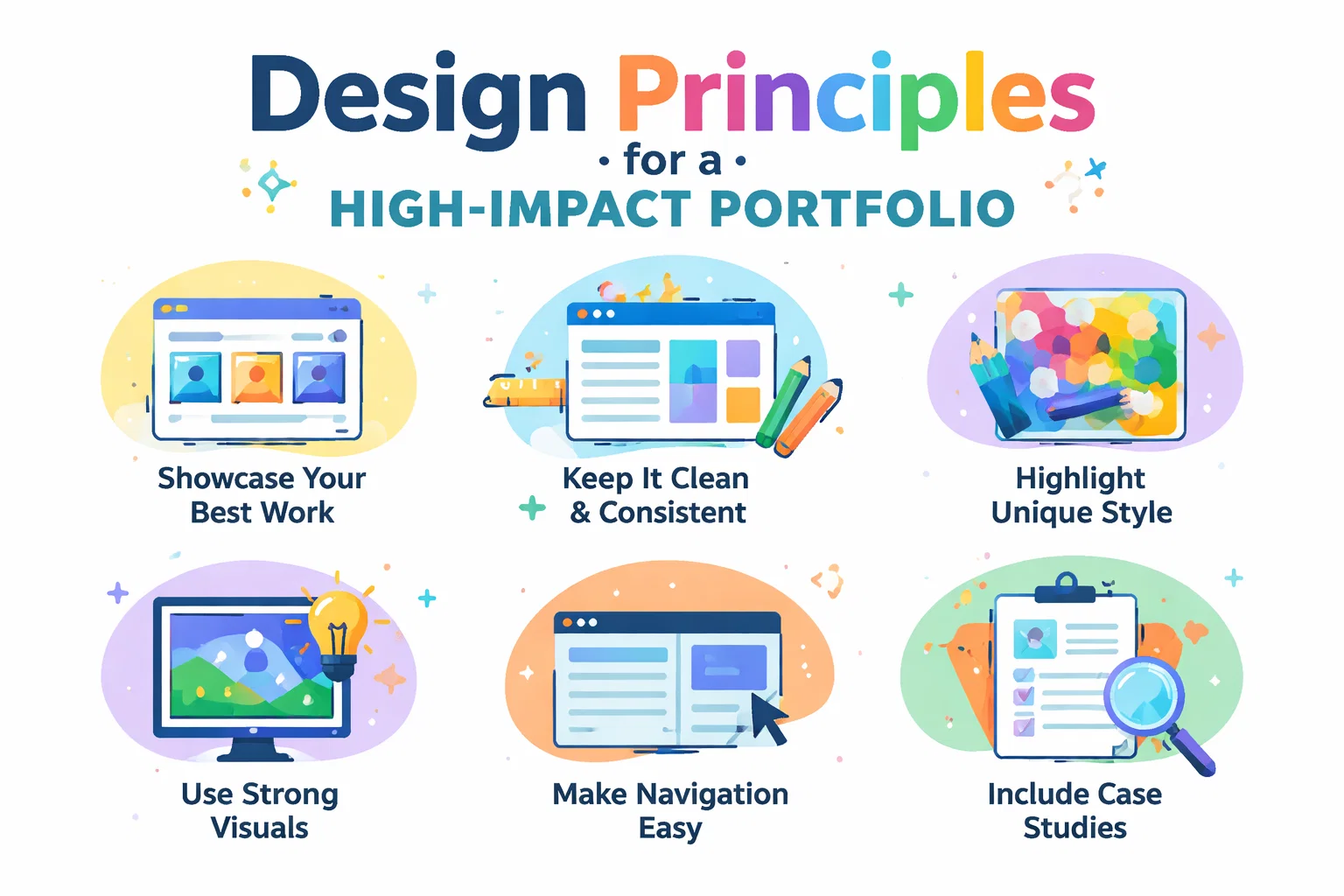
Clean Layout vs Cluttered Design: What Works Best
A clean layout is almost always more effective than a cluttered design. A clean design helps recruiters focus on your work and find the information they need quickly. Use white space effectively, limit the number of fonts and colors, and prioritize readability to create a digital portfolio that is visually appealing and easy to navigate.
Mobile Optimization and User Experience Basics
Ensure your portfolio website is fully optimized for mobile devices. Many recruiters will view your portfolio on their smartphones or tablets. A mobile-friendly portfolio provides a seamless user experience, regardless of the device used. If you make your portfolio responsive, you build a portfolio that can be used on any device, so this is crucial.
Choosing Colors, Fonts, and Branding Consistency
Maintain consistency throughout your portfolio to create a cohesive and professional look. Consistent branding helps potential employers recognize and remember you, making you more memorable. Many different website templates will help you do this.
Step 6: Add Proof That Builds Trust and Authority
Adding proof elements like testimonials, certifications, and social proof can significantly enhance your portfolio‘s credibility and build trust with potential employers. These elements provide third-party validation of your skills and experience, making your claims more believable and compelling.
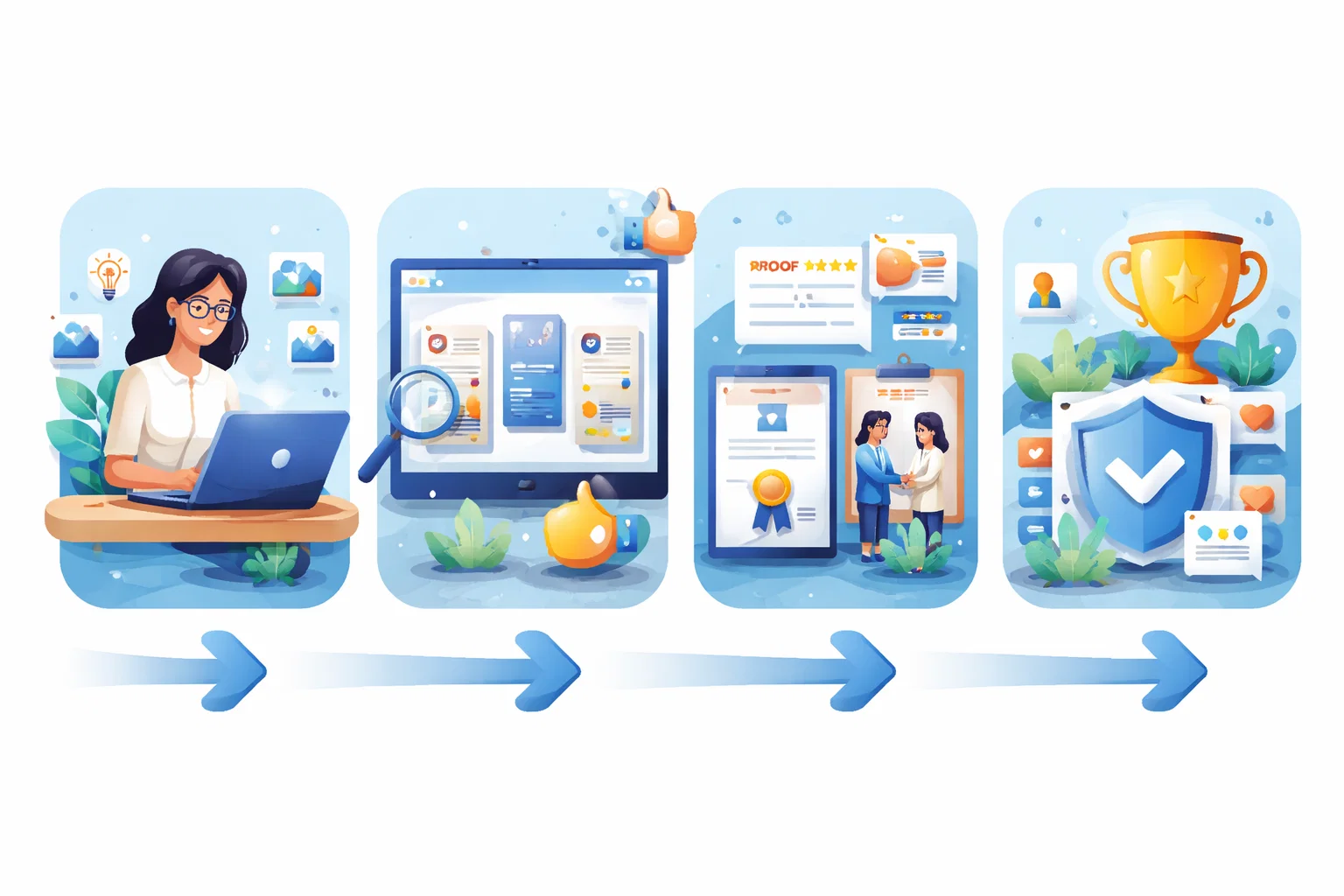
Testimonials and Client Reviews
Include testimonials and client reviews to showcase the positive feedback you’ve received from previous clients or employers. Positive testimonials act as social proof, demonstrating that others have been satisfied with your work and would recommend you. A testimonial adds legitimacy to your portfolio and enhances your credibility to potential clients.
Certifications, Awards, and Achievements
Highlight any certifications, awards, and achievements you’ve earned to demonstrate your expertise and commitment to excellence. These credentials validate your skills and show potential employers that you’re a qualified and accomplished professional, making your portfolio more impressive. They will create a portfolio website that shows that you are a qualified candidate.
Social Proof (GitHub, Behance, LinkedIn Activity)
Leverage social proof by showcasing your activity on platforms like GitHub, Behance, and LinkedIn. A strong online presence demonstrates your engagement with the professional community and validates your skills to potential employers. Social media is your friend in helping to build a digital portfolio. Showcase your best work on these platforms.
Step 7: Optimize Your Portfolio for SEO and Visibility
To ensure your digital portfolio reaches a wider audience, it’s crucial to optimize it for SEO and visibility. By implementing effective SEO strategies, you can increase the chances of potential employers and potential clients finding your portfolio website when they search for professionals in your field. Optimizing your portfolio site is an easy process. You can create a portfolio website that comes on top.
Keyword Optimization for Personal Branding
Effective keyword optimization is essential for personal branding. Identify the keywords that potential employers and potential clients are likely to use when searching for someone with your skills and experience. Incorporate these keywords naturally throughout your digital portfolio, including in your page titles, headings, and project descriptions. Use SEO to your advantage to build a digital portfolio that can be found.
Writing SEO-Friendly Project Descriptions
When writing project descriptions, focus on creating SEO-friendly content that accurately reflects your work and targets relevant keywords.
Use descriptive language, highlight your accomplishments, and incorporate keywords naturally throughout the text to improve your portfolio’s search engine ranking. Do not miss the opportunity to use SEO to create a digital portfolio. You can make your portfolio be seen by potential clients.
How Google Indexes Portfolio Websites
Understand how Google indexes portfolio websites to improve your site’s visibility in search results. Ensure your site is mobile-friendly, has a clear structure, and uses descriptive URLs and alt tags for images.
Regularly update your content and submit your sitemap to Google Search Console to help Google crawl and index your site effectively so you can build a portfolio that gets discovered.
Step 8: Make Your Portfolio Stand Out from Competitors
In a crowded online landscape, it’s essential to make your digital portfolio stand out from the competition. Implementing unique strategies, such as adding a blog section and using personal branding techniques, can help you differentiate yourself and attract the attention of potential employers and potential clients.

Adding a Blog Section for Authority Building
Adding a blog section to your portfolio website is a great way to establish yourself as an authority in your field. Share insights, tips, and tutorials related to your industry to demonstrate your expertise and engage with your audience.
A blog section can also improve your SEO by providing fresh, relevant content for search engines to index. A blog can also show that you are more than just a graphic designer. You can create an online portfolio that shows you as a thought leader.
Personal Branding Strategies That Attract Employers
Develop a strong personal brand that showcases your unique value proposition and attracts potential employers. Define your brand identity, including your values, personality, and visual style, and consistently communicate it across your portfolio and social media channels.
A well-defined personal brand can help you stand out and attract the right opportunities. Personal branding can help you make your portfolio shine.
Using Storytelling to Differentiate Yourself
Use storytelling techniques to differentiate yourself and create a memorable impression on potential employers. Share your personal journey, highlight the challenges you’ve overcome, and showcase the impact of your work through compelling narratives.
Storytelling can help you connect with your audience on an emotional level and make your portfolio more engaging. Tell a story about how you build a digital portfolio to stand out from others.
Step 9: Common Mistakes That Ruin Digital Portfolios
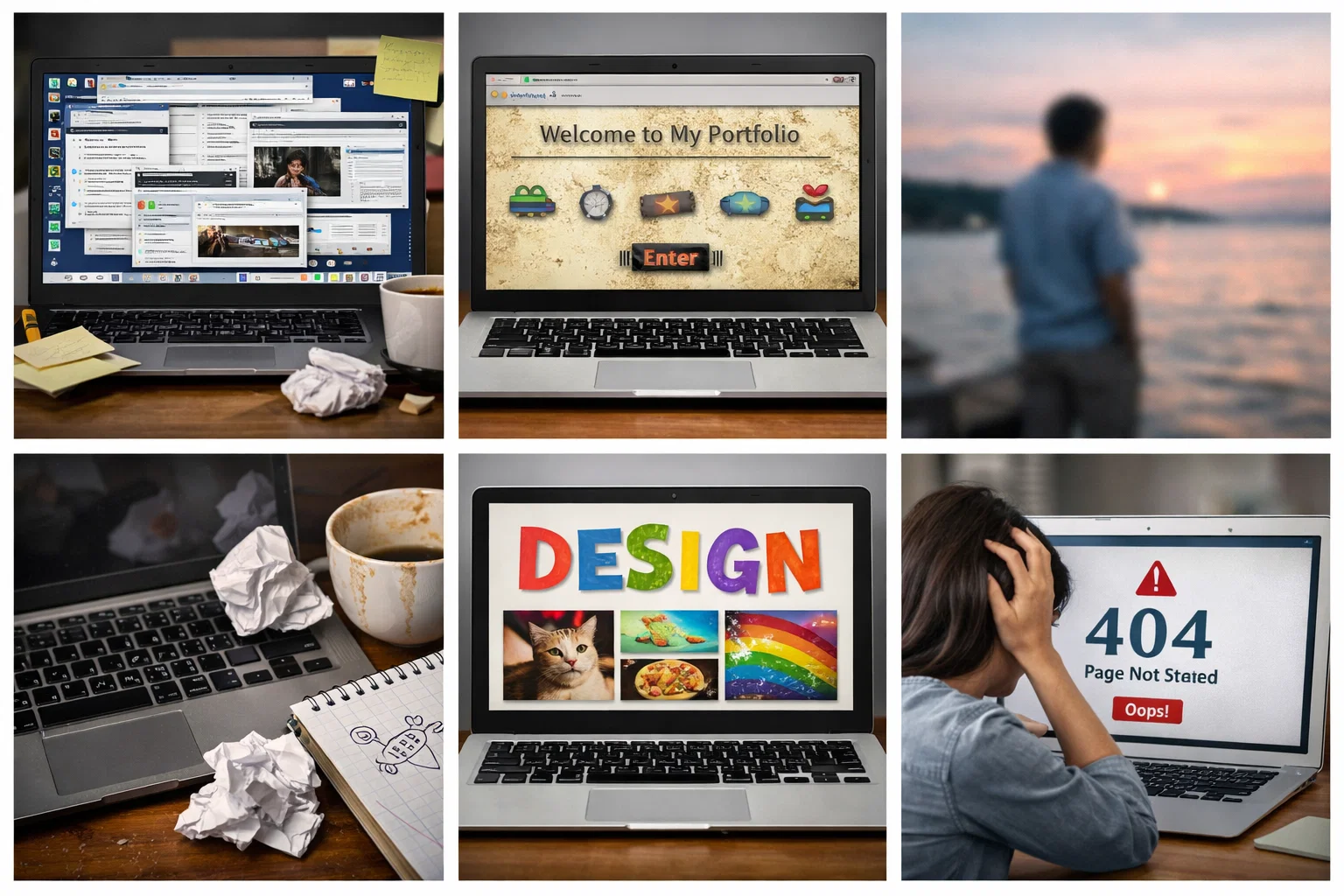
Even with the best intentions, it’s easy to make mistakes that can undermine the effectiveness of your digital portfolio. Avoiding common pitfalls, such as including too many projects without focus and neglecting visual design, is crucial for creating a portfolio that impresses potential employers. Don’t let a mistake ruin your digital portfolio.
Too Many Projects Without Focus
Be selective and only showcase your best work that aligns with your career goals and target audience. Focus on quality over quantity to demonstrate your expertise and make a strong impression on potential employers and potential clients. You want to create a great digital portfolio by only showing your best work.
Weak or Missing Project Descriptions
Weak or missing project descriptions can leave potential employers wondering about the context and impact of your work. Provide detailed descriptions that highlight the problem you were trying to solve, the solution you implemented, and the results you achieved.
Use metrics and data to quantify your accomplishments and demonstrate the value you bring. Showcase your skills and experience properly to make your portfolio great.
Poor Visual Design and Navigation Issues
Ensure your portfolio has a clean, modern layout, is easy to navigate, and is fully optimized for mobile devices. Pay attention to typography, color schemes, and image quality to create a visually appealing and professional portfolio. You can find many portfolio templates to help with visual design.
Not Updating Portfolio Regularly
Failing to update your portfolio regularly can make it appear outdated and irrelevant to potential employers. Keep your portfolio fresh by adding new projects, updating your skills and experience, and refreshing the design as needed.
Regularly updating your portfolio demonstrates your commitment to continuous learning and professional growth. Use the latest website templates to create a digital portfolio that is up to date.
Step 10: How to Promote Your Digital Portfolio for Job Opportunities
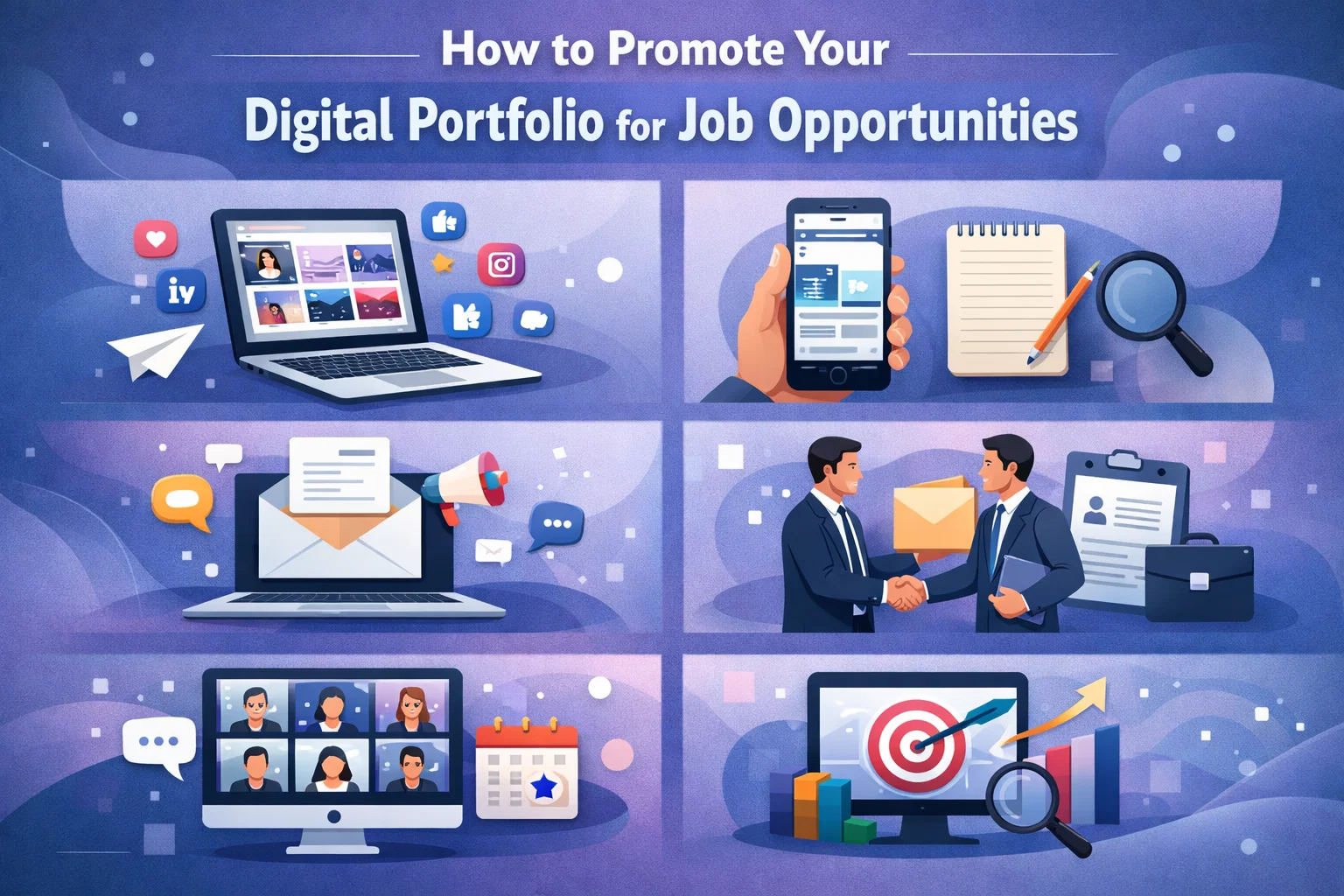
Creating a great digital portfolio is only half the battle. To maximize its impact, you need to actively promote it to potential employers and potential clients. Leveraging social media, applying to jobs with portfolio links, and using freelance platforms can help you get your work seen by the right people. Take the steps needed to build a portfolio that is seen.
Sharing on LinkedIn and Professional Networks
Share your portfolio on LinkedIn and other professional networks to increase its visibility among recruiters and industry professionals.
Write a compelling post that highlights your best work and explains why potential employers should check out your portfolio. Engage with your network and participate in relevant discussions to expand your reach and attract new opportunities. Use LinkedIn to show your skills and experience.
Applying to Jobs with Portfolio Links
When applying for jobs, always include a link to your digital portfolio in your resume and cover letter. Customize your portfolio to align with the specific requirements of each job and highlight the projects that are most relevant to the role.
A well-crafted portfolio can significantly increase your chances of landing an interview. Let potential employers know that you can build a digital portfolio that is both professional and effective.
Using Freelance Platforms to Get First Clients
Freelance platforms like Upwork and Fiverr can be a great way to gain experience and build your portfolio, especially if you’re just starting out. Offer your services at competitive rates, deliver high-quality work, and ask for testimonials from satisfied clients.
Building a strong reputation on freelance platforms can lead to more opportunities and help you establish yourself in your field. Leverage freelance platforms to help you build a digital portfolio and gain experience.
Final Thoughts: Building a Portfolio That Gets You Hired Faster
Building a digital portfolio that gets you hired faster is an investment in your future. By following these steps and continuously refining your portfolio, you can effectively showcase your work, attract potential employers, and achieve your career goals. Always remember to keep learning and creating a portfolio to stay competitive in today’s job market.