


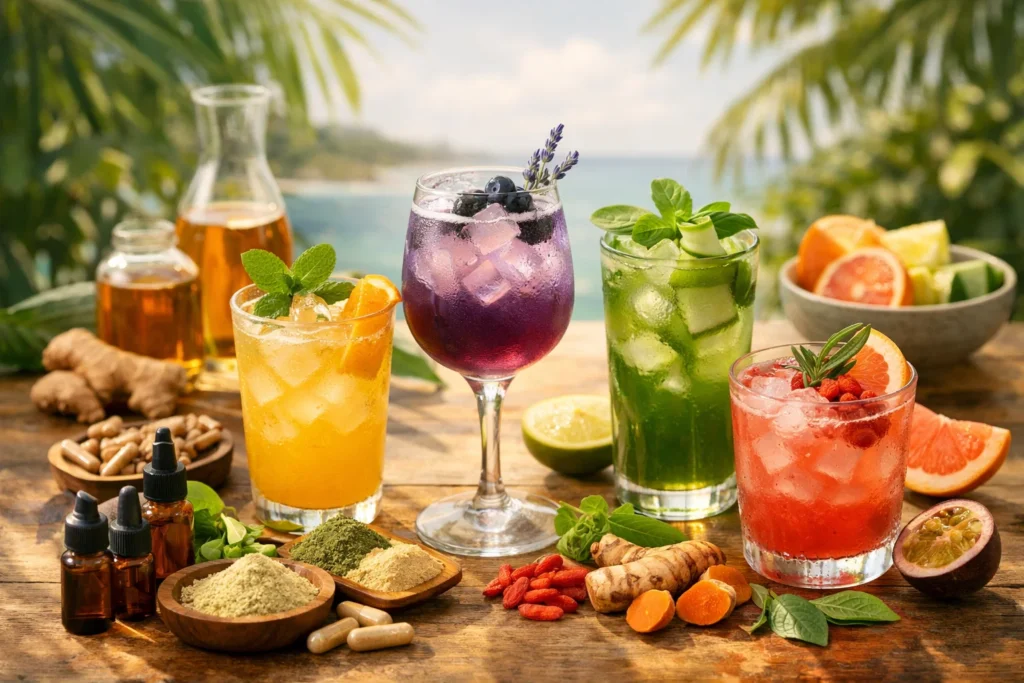
The landscape of social drinking is undergoing a transformative shift. As consumers become increasingly health-conscious, the demand for alcohol-free options is surging, paving the way for innovative beverages that cater to a more mindful and wellness-oriented lifestyle.
The New Era of Social Drinking


Why alcohol-free drinks are gaining popularity in 2026
In 2026, alcohol-free drinks are gaining popularity as individuals seek ways to socialize without the negative side effects of alcohol consumption. This surge is propelled by a desire for beverages that align with health and wellness goals, offering a way to enjoy social gatherings while remaining sober and mindful.
The convergence of health, wellness, and social culture
The rise of functional mocktails represents the convergence of health, wellness, and social culture. Consumers are seeking beverages that not only taste great but also provide health benefits, incorporating ingredients like adaptogens and nootropics. This trend supports a lifestyle where socializing and well-being are seamlessly integrated.
How functional mocktails are redefining social experiences
Functional mocktails are redefining social experiences by offering a sophisticated and health-conscious alternative to traditional alcoholic drinks. These innovative beverages allow individuals to unwind and socialize without compromising their wellness goals, providing a way to enjoy the drinking experience with added health benefits.
What Are Alcohol-Free Social Drinks and Functional Mocktails?

Definition and key characteristics
Alcohol-free social drinks are non-alcoholic beverages designed for social settings, offering a flavorful and enjoyable experience without the effects of alcohol. A specific type of these drinks are functional mocktails. The difference between them can be summarized as follows:
| Drink Type | Key Features |
|---|---|
| Alcohol-free Social Drinks | Non-alcoholic, designed for social enjoyment. |
| Functional Mocktails | Alcohol-free, with functional ingredients like adaptogens and probiotics. |
Functional mocktails, a subset of alcohol-free drinks, incorporate functional ingredients like adaptogens and probiotics, providing additional health benefits alongside a delicious flavor profile.
Difference between mocktails, low-ABV drinks, and functional beverages
The beverage market includes diverse options, each with unique features. These include mocktails, low-ABV drinks, and functional beverages. The characteristics of some of these drinks are summarized below:
| Beverage Type | Description |
|---|---|
| Mocktails | Non-alcoholic versions of traditional cocktails. |
| Low-ABV Drinks | Contain minimal alcohol. |
| Functional Beverages | Crafted to provide health benefits beyond basic hydration. |
Role of flavor, aesthetics, and experience in alcohol-free options
Flavor, aesthetics, and the overall drinking experience play a crucial role in the popularity of alcohol-free options. Consumers seek alcohol-free social drinks that not only taste great but also offer a visually appealing and satisfying experience, mirroring the sophistication of traditional alcoholic beverages without the effects of alcohol.
Why Alcohol-Free Social Drinks Are Trending in 2026
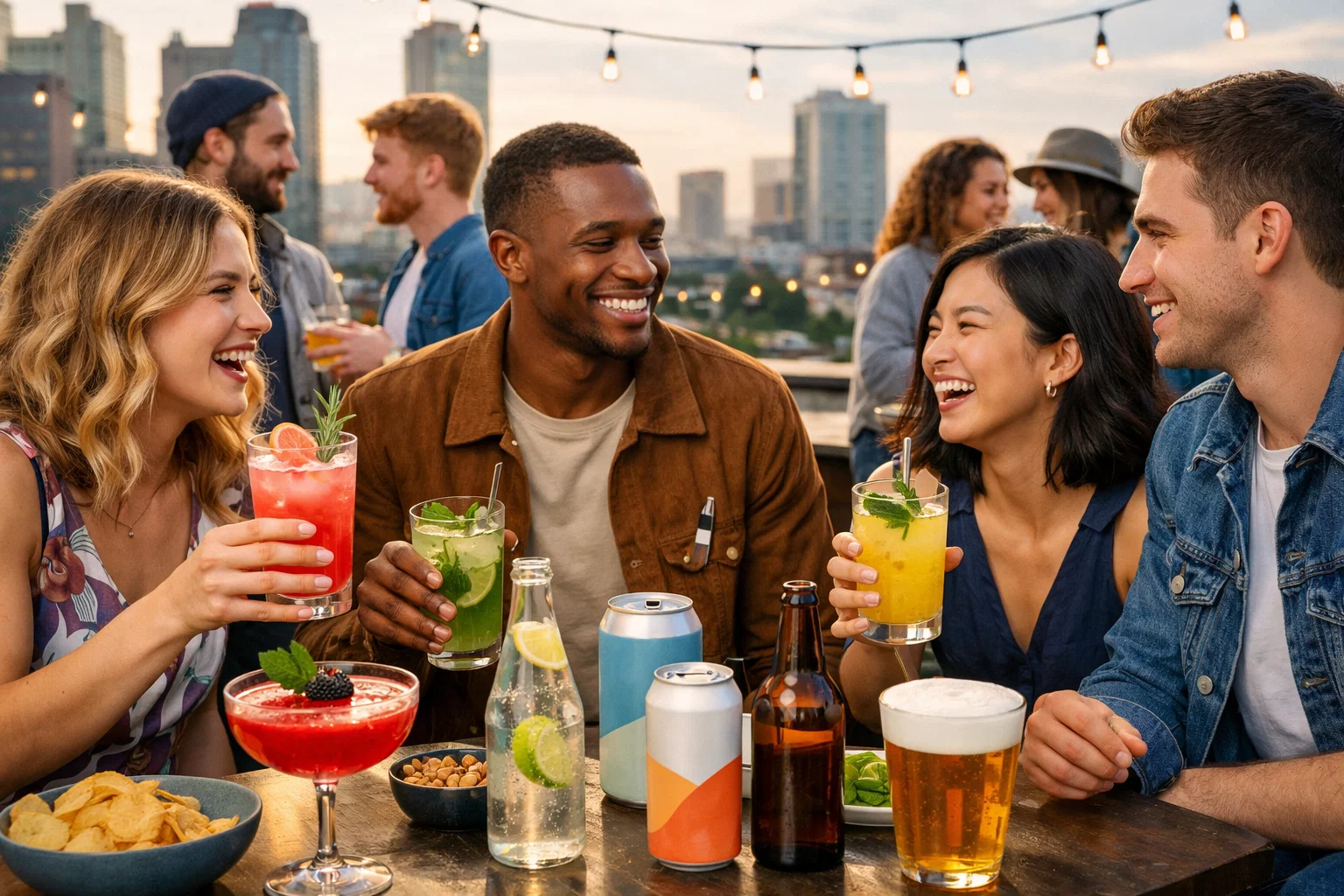
Health and wellness consciousness driving reduced alcohol intake
Health and wellness consciousness is a primary driver behind the reduced alcohol consumption and the increasing demand for alcohol-free social drinks. Consumers are more aware of the health benefits associated with drinking less and are actively seeking alcohol-free options to support their wellness goals.
Social and lifestyle factors: inclusivity, mindful drinking, and Instagram-worthy beverages
Social and lifestyle factors, such as inclusivity and mindful drinking, contribute to the rise of functional mocktails. Alcohol-free drinks ensure that everyone can participate in social gatherings, while visually appealing, “Instagram-worthy” beverages cater to a generation that values aesthetics and shared experiences.

Functional and mood-enhancing benefits: adaptogens, probiotics, herbal infusions
Functional mocktails offer functional and mood-enhancing benefits through adaptogens, probiotics, and herbal infusions. Some key ingredients and their effects are summarized below:
| Ingredient | Benefits |
|---|---|
| Ashwagandha and Lion’s Mane | Offer calm and focus |
| Probiotics and Herbal Infusions | Support gut health |
This makes functional mocktails a health-conscious way to unwind and enhance well-being.
Sustainability and quality focus: premium ingredients and eco-conscious production
Sustainability and a focus on quality are vital aspects of the alcohol-free beverage industry. Consumers are increasingly drawn to brands that use premium ingredients and eco-conscious production methods, reflecting a broader trend towards mindful consumption and environmental responsibility in their beverage choices.
Regulatory and cultural shifts supporting mindful drinking
Regulatory and cultural shifts are further supporting mindful drinking and the adoption of alcohol-free social drinks. Increased awareness of the negative side effects of alcohol, coupled with a cultural embrace of wellness, is fostering an environment where non-alcoholic options are not just accepted but celebrated.
Popular Types of Alcohol-Free and Functional Mocktails
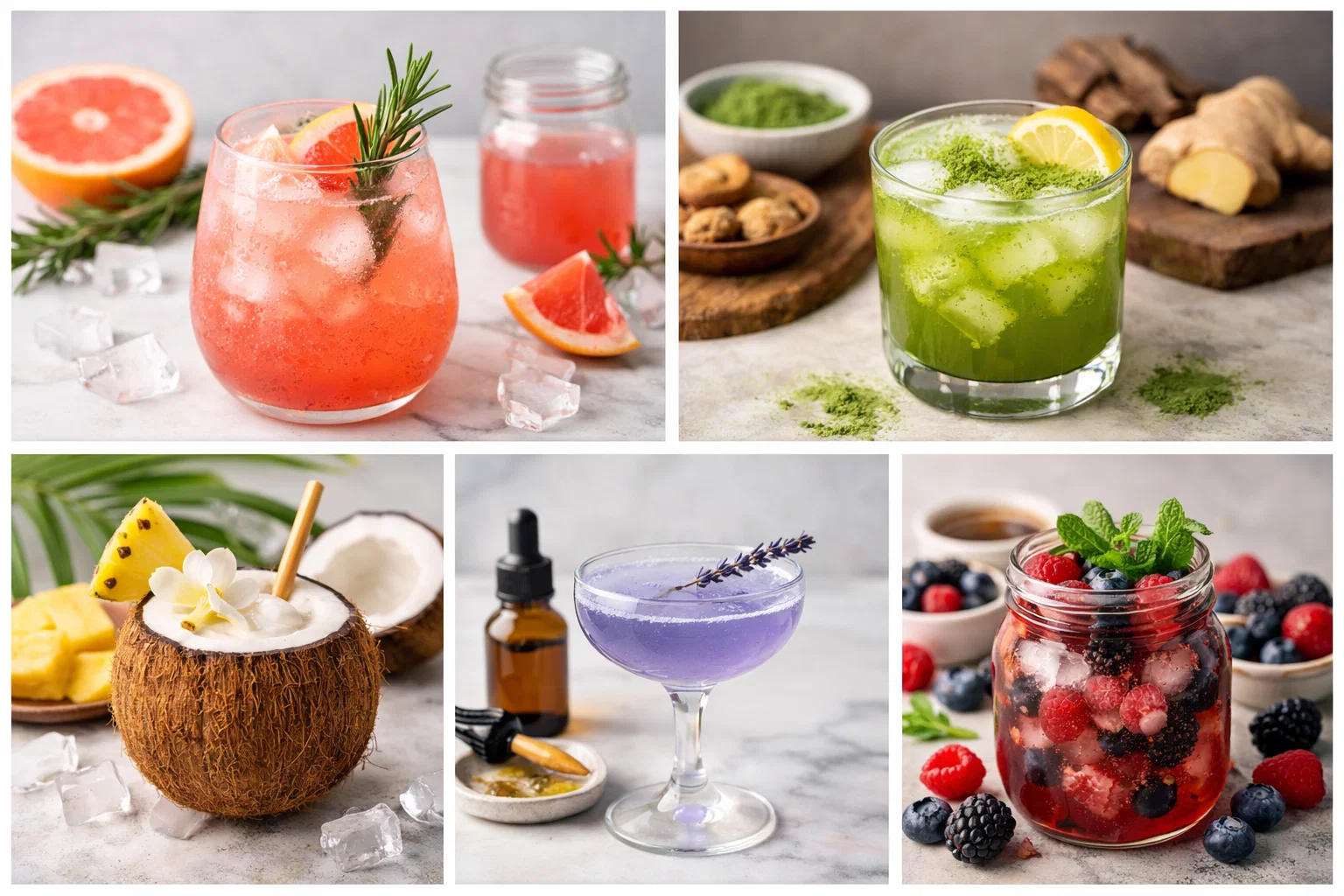
Classic mocktails: virgin mojitos, piña coladas, non-alcoholic sangrias
Classic mocktails, like virgin mojitos and non-alcoholic sangrias, are foundational in the alcohol-free scene. These non-alcoholic drinks mimic alcoholic drinks, providing familiar flavor profiles for those who prefer to socialize sober. They’re a way to enjoy social gatherings without the effects of alcohol.
Functional beverages: adaptogen, herbal, tonic-based drinks
Functional mocktails expand beyond basic mocktails, incorporating functional ingredients like adaptogens and herbal extracts. These non-alcoholic beverages offer added health benefits, such as stress reduction from ashwagandha or improved focus from lion’s mane, enhancing the drinking experience while promoting wellness.
Fermented and probiotic drinks: kombucha, kefir, shrub tonics
Fermented and probiotic drinks are gaining popularity as alcohol-free options due to their potential health benefits. Kombucha, kefir, and shrub tonics not only provide a tangy and refreshing beverage but also support gut health. This makes them a health-conscious choice for social drinking.
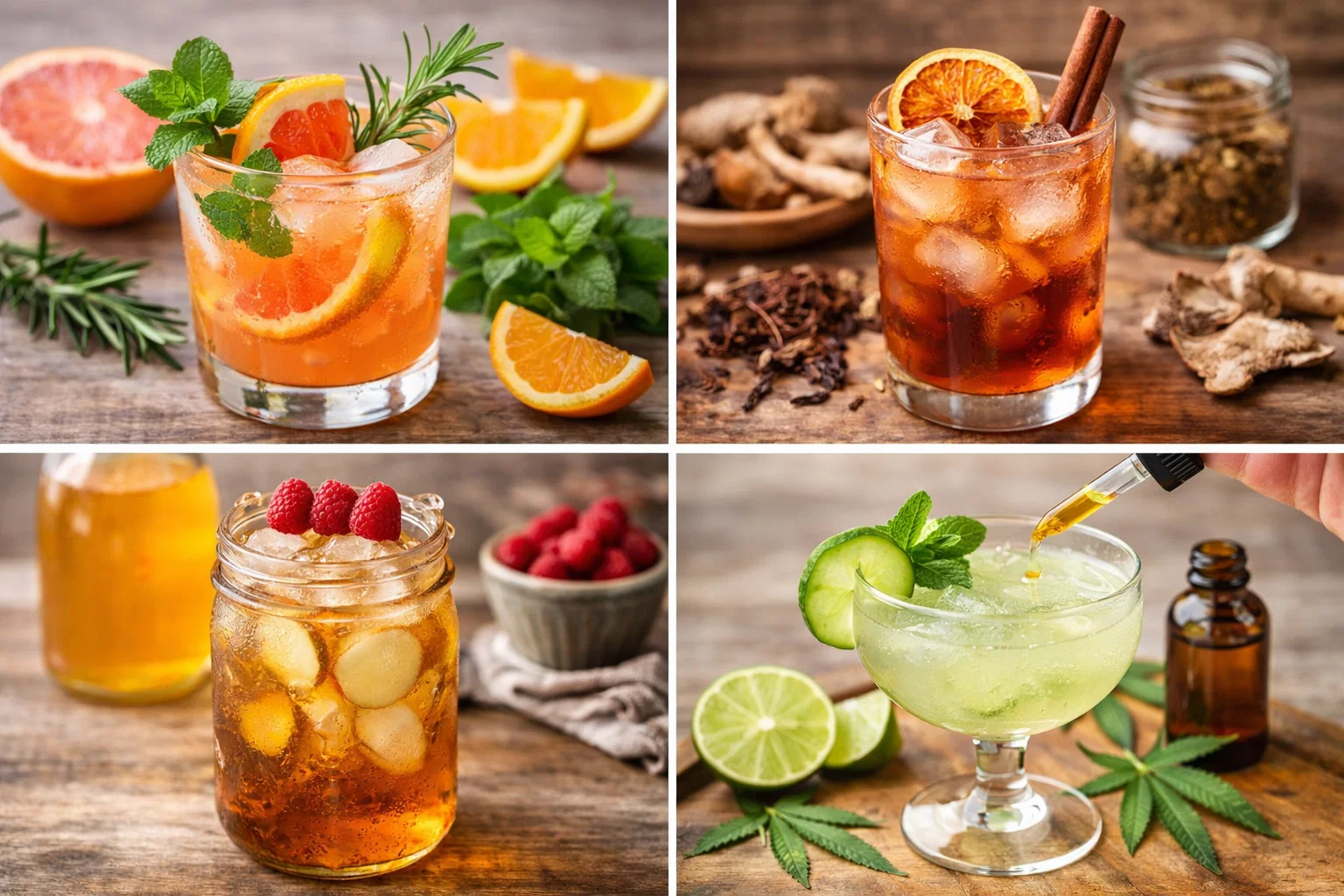
Sparkling waters and low-ABV alternatives
Sparkling waters offer a simple, hydrating alcohol-free choice, while low-ABV alternatives provide a middle ground for those not wanting to cut out alcoholic drinks completely. These options cater to different preferences within the beverage market, supporting mindful alcohol consumption.
Botanical elixirs: herb- and flower-infused drinks
Botanical elixirs infuse herbs and flowers into alcohol-free beverages, creating complex and aromatic non-alcoholic cocktails. Ingredients like lavender and rose offer calm and aromatic dimensions. These drinks provide a sophisticated drinking experience without the effects of alcohol, aligning with the rise of functional mocktails.
Health and Lifestyle Benefits
Physical health: no hangovers, lower sugar, immunity support
Choosing alcohol-free social drinks offers numerous physical health benefits, including avoiding hangovers and reducing sugar intake. Many functional mocktails also incorporate ingredients that support immunity, making them a health-conscious choice for those who want to socialize without compromising their wellness.
Mental clarity: energy, focus, and reduced stress
Many functional mocktails include adaptogens and other functional ingredients that can enhance mental clarity, providing sustained energy and improved focus. Ingredients like lion’s mane and lemon balm reduce stress. This makes alcohol-free drinks appealing to those seeking wellness and cognitive support while social drinking.
Social inclusion and enjoyment for all consumers
Alcohol-free options promote social inclusion. Non-alcoholic drinks ensure everyone can partake in social gatherings, regardless of their choice to abstain from alcohol. This inclusivity is especially valued by Gen Z, fostering a more welcoming drinking experience for all consumers. Mocktails offer the way to enjoy socializing.
Wellness-oriented lifestyle alignment and mindful drinking
Choosing alcohol-free social drinks aligns with a wellness-oriented lifestyle and promotes mindful alcohol consumption. By opting for non-alcoholic alternatives, individuals can maintain their health and wellness goals while still enjoying the social aspects of drinking, reflecting a broader trend towards health-conscious living.
Challenges and Considerations
Overcoming the perception of alcohol-free drinks as “less fun”
One challenge is overcoming the perception that alcohol-free drinks are “less fun” than alcoholic options. Alcohol-free innovation and creative cocktail design are essential in proving that mocktails and functional mocktails can be just as exciting and flavorful, enhancing the overall drinking experience.
Maintaining complexity, depth, and social appeal of cocktails
Maintaining the complexity, depth, and social appeal of traditional cocktails in alcohol-free versions requires skill and creativity. Mixologists are using innovative techniques to ensure mocktails and functional mocktails offer a sophisticated flavor profile that rivals their alcoholic counterparts, driving demand for alcohol-free options.
Marketing and consumer education for functional benefits
Effective marketing and consumer education are crucial for highlighting the functional benefits of non-alcoholic drinks. Brands need to communicate the health benefits of adaptogens and other functional ingredients, helping consumers understand the added wellness value of choosing functional mocktails over traditional beverages.
Expanding availability in bars, restaurants, and retail
Expanding the availability of alcohol-free social drinks in bars, restaurants, and retail outlets is essential to meet the demand for alcohol-free options. Greater accessibility ensures that consumers can easily find and enjoy functional mocktails and other non-alcoholic beverages in various social settings, promoting mindful social drinking.
Innovation and Market Trends in 2026
Craft mixology techniques for alcohol-free beverages
Craft mixology techniques are revolutionizing alcohol-free beverages, bringing innovative approaches to mocktail creation. Bartenders experiment with infusions, syrups, and complex flavor combinations to replicate the depth of traditional cocktails. These techniques ensure non-alcoholic drinks offer a sophisticated drinking experience that appeals to health-conscious consumers.
Integration of functional ingredients and adaptogens
The integration of functional ingredients and adaptogens is transforming the beverage market, with functional mocktails leading the way. Ingredients like ashwagandha and lion’s mane are incorporated into non-alcoholic cocktails, offering health benefits such as stress reduction and cognitive enhancement. The rise of functional mocktails demonstrates how wellness and socializing are merging.
Emerging brands and startups leading the functional mocktail movement
Emerging brands and startups are at the forefront of the functional mocktail movement, driving alcohol-free innovation. These companies focus on crafting non-alcoholic beverages with functional ingredients and appealing flavor profiles, catering to a growing demand for alcohol-free options. These innovative companies lead the way to social drinking.
At-home kits, subscription boxes, and experiential drinking trends
At-home kits and subscription boxes are popularizing the mocktail culture, offering consumers convenient access to non-alcoholic ingredients and recipes. These trends enhance the drinking experience, encouraging experimentation and creativity in mocktail creation. Mocktails offer a way to enjoy the sober way.
Future Outlook for Alcohol-Free Social Drinks
Predicted market growth and adoption in urban and global markets
The alcohol-free beverage industry is poised for significant market growth, with increasing adoption in urban and global markets. The demand for alcohol-free alternatives is being driven by health-conscious consumers and a broader cultural shift towards mindful alcohol consumption, signaling a promising future for functional mocktails and other non-alcoholic drinks.
Expansion into bars, restaurants, events, and social occasions
Expect to see increased availability of alcohol-free options in bars, restaurants, events, and social occasions. As alcohol-free drinks become more mainstream, establishments are expanding their mocktail menus and non-alcoholic beverage offerings to cater to a wider audience. The way to enjoy is expanded to everyone in social settings.
Role of AI, personalization, and wellness apps in consumer choices
Artificial intelligence, personalization, and wellness apps will play a growing role in consumer choices regarding alcohol-free social drinks. These technologies can provide personalized recommendations, track health benefits, and offer insights into functional ingredients. This will assist consumers in making informed decisions about their non-alcoholic beverage selections.
How alcohol-free functional drinks will influence lifestyle and culture
Alcohol-free functional drinks will profoundly influence lifestyle and culture. They are becoming a staple in social gatherings, promoting inclusivity and mindful social drinking. As Gen Z embraces wellness, functional mocktails are becoming synonymous with a health-conscious and balanced approach to socializing.
Conclusion: The Social, Healthy, and Functional Drink Revolution
The rise of alcohol-free social drinks represents a revolution in how we socialize and approach wellness. With functional mocktails leading the charge, consumers can now enjoy delicious, health-conscious beverages that support their lifestyle goals. This trend will continue to reshape the beverage market and social drinking culture.