
An arrest for driving while intoxicated can turn an ordinary evening into a very stressful situation. You may be worried about your driver’s license, your job, your family, and what could happen in court. You may also have questions about the evidence and whether the police followed the proper procedures. Speaking with a qualified dui lawyer early can help you understand the process and the choices available to you. Ried Pecina Trial Lawyers represents people facing DUI and DWI charges in Texas and provides direct access to the attorney handling their case.
The first thing to understand is that an arrest is not a conviction. The state still has to prove the charge in court. That means the details matter: why the officer stopped you, what happened during the investigation, how any tests were conducted, and whether the evidence can be used in court.
There may also be a separate issue involving your driver’s license. Texas handles certain license suspensions through an administrative process that runs independently of the criminal case. Missing a deadline in that process can create problems even while the criminal charge is still pending.
This guide explains seven important steps after a Texas DWI arrest, including what to expect, which deadlines deserve attention, and how a defense attorney may help.
1. Understand what happens immediately after a DWI arrest
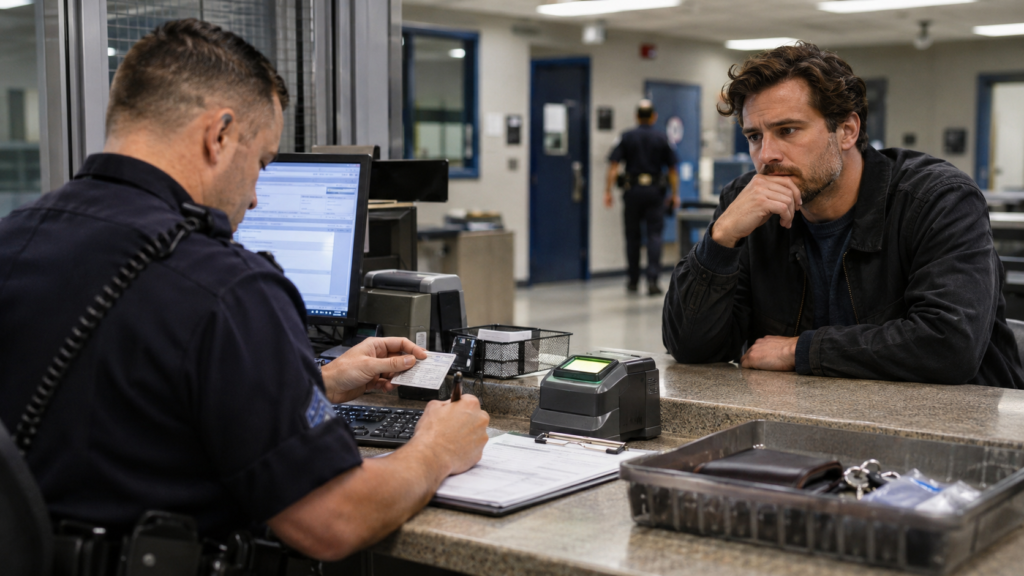
The first few hours after an arrest can feel like a blur. An officer may take you to a police station or detention facility, where the booking process begins. You may be photographed, fingerprinted, asked to provide basic identifying information, and held while the next steps are arranged.
The exact process depends on the arresting agency, the county, the circumstances of the arrest, and whether anyone was injured. Some people are released after posting bond or receiving a personal bond. Others remain in custody until a judge or magistrate makes a decision about release.
Under Texas law, a magistrate generally must make a bail decision without unnecessary delay and no later than 48 hours after an arrest. The decision may involve a personal bond, cash or surety bond, conditions of release, or, in certain circumstances, denial of bail.
What happens during booking?
Booking is an administrative process. It does not mean you have been found guilty. Depending on the situation, officers may:
- Record your personal information.
- Take fingerprints and booking photographs.
- Record the alleged offense.
- Inventory personal property.
- Check for outstanding warrants.
- Arrange for a bond decision or continued detention.
You may also receive paperwork explaining the charge, bond conditions, and future court obligations. Keep these documents. They can contain details that become important later.
What should you do after release?
Once you are released, resist the urge to treat the matter as finished. The arrest is often the beginning of a longer process.
Start with these practical steps:
- Keep every document. Save citations, release papers, bond conditions, test notices, and court information.
- Write down what happened. Record your recollection of the stop, the officer’s questions, any tests, and the arrest. Do this while the details are still fresh.
- Identify important dates. Court appearances and driver’s license deadlines are separate matters, so record both.
- Follow your release conditions. Missing a court date or violating a bond condition can create additional legal trouble.
- Avoid discussing the case publicly. Social media posts, messages, and casual conversations can become relevant to an investigation.
One point deserves special attention: do not assume that a quiet period after release means the case has disappeared. A prosecutor may still review the evidence, and the court process can take time.
Does an arrest mean you will be convicted?
No. A DWI arrest is an allegation. The prosecution must prove the charge under the applicable legal standard. The evidence may include an officer’s observations, witness accounts, field sobriety tests, breath or blood test results, and other information.
The facts behind the arrest matter. A traffic stop, for example, may raise different legal questions from a case involving a crash or a reported driving incident. The way evidence was collected can also affect whether it is admissible.
That is why early legal advice can be useful. A Texas DWI defense attorney can explain the paperwork, identify upcoming deadlines, and begin reviewing the circumstances of the arrest.
2. Understand the evidence in your DWI case
A DWI case is built around evidence. The police report may describe what an officer saw, what you said, how you performed during roadside tests, and what happened after the arrest. The prosecution may rely on several pieces of evidence rather than one test result.
Understanding the evidence is important because an arrest report is not the same thing as a complete or final account of what happened.

The reason for the traffic stop
The first question may be why the officer stopped the vehicle.
Police generally need a lawful basis for a traffic stop. That could involve an observed traffic violation, a reasonable suspicion of criminal activity, or another legally recognized reason. If the stop was unlawful, an attorney may examine whether evidence obtained afterward can be challenged.
For example, imagine a driver is stopped late at night. The report says the vehicle crossed a lane marking, but the driver remembers staying within the lane. The officer then conducts a DWI investigation. The question is not simply which account sounds more convincing. The available evidence, such as dash-camera footage, body-camera footage, and witness statements, may help clarify what happened.
Field sobriety tests
Officers may ask drivers to perform field sobriety tests during a DWI investigation. These can include the horizontal gaze nystagmus test, the walk-and-turn test, and the one-leg stand test.
These exercises are intended to help officers assess possible impairment. However, performance can be affected by factors unrelated to alcohol or drug use, including:
- Uneven or slippery ground.
- Poor lighting or weather conditions.
- Footwear or physical limitations.
- Injuries, balance issues, or certain medical conditions.
- Stress, confusion, or difficulty understanding instructions.
An attorney may review whether the tests were administered and interpreted appropriately. Video footage can be particularly useful because it may show the instructions, the environment, and the driver’s actual performance.
Breathalyzer and blood test results
Chemical tests may also play a central role. A breath test estimates alcohol concentration from a breath sample. A blood test measures alcohol or other substances in a collected specimen.
Texas defines intoxication in two ways: a person may lack the normal use of mental or physical faculties because of alcohol, drugs, or another substance, or have an alcohol concentration of 0.08 or more.
This distinction matters. A BAC below 0.08 does not automatically end a DWI investigation if the state alleges impairment under the other definition. Likewise, a test result at or above 0.08 does not remove the need to examine how the test was obtained and whether the evidence is reliable.
An attorney may look at issues such as:
- Whether the testing equipment was properly maintained and operated.
- Whether the required procedures were followed.
- Whether the sample was collected and stored correctly.
- Whether laboratory records support the reported result.
- Whether the timing of the test raises questions about what the result shows about the time of driving.
Why the complete evidence matters
A single detail rarely tells the whole story. A useful DWI defense review considers the timeline, the officer’s observations, the test procedures, and any available recordings or witness accounts.
This is one reason to avoid making assumptions based on what appears in a police report. The report is important, but it is one part of the evidence. A defense lawyer can assess whether further records, video, or expert review may be appropriate.
3. Find out whether your driver’s license is at risk
For many people, the driver’s license issue is just as stressful as the criminal charge. You may need to drive to work, take children to school, attend medical appointments, or care for family members. Losing that ability can disrupt daily life very quickly.
Texas has an administrative process called Administrative License Revocation (ALR). It is separate from the criminal DWI case. That means you may face a license suspension proceeding even before the criminal charge is resolved.

What triggers an ALR case?
The Texas Department of Public Safety (DPS) may seek an administrative suspension when a driver arrested for DWI refuses to provide a requested breath or blood specimen, or provides a specimen showing a BAC of 0.08 or higher in a non-commercial vehicle case.
Commercial drivers can face different thresholds and rules.
The ALR process is handled separately from the criminal court proceedings. You can confirm the process and current requirements on the Texas DPS Administrative License Revocation Program page.
Pay close attention to the hearing deadline
This is one of the most time-sensitive parts of a Texas DWI arrest.
In general, a person served with an ALR notice following a refusal has 15 days from the date the notice is served to request a hearing. In certain blood-test failure cases, DPS issues a notice later, and the deadline is generally 20 days from the date the notice is mailed.
The notice you receive and the circumstances of your case determine which deadline applies. Do not assume that every DWI arrest follows the same timeline.
| Situation | General ALR hearing request deadline |
|---|---|
| Refusal of a requested breath or blood test | 15 days after service of notice |
| Blood-test failure notice mailed later | Generally 20 days after the notice is mailed |
If you miss the applicable deadline, your opportunity to challenge the administrative suspension may be lost. The suspension can then take effect according to the applicable rules.
What happens at an ALR hearing?
An ALR hearing is an administrative proceeding before the State Office of Administrative Hearings. It focuses on whether DPS has established the legal grounds for suspending your driving privilege.
The hearing may involve evidence about the arrest, the officer’s actions, and the test request or result. A timely hearing request generally puts the ALR suspension on hold until the hearing process and decision are completed, subject to the applicable rules.
Importantly, an ALR hearing does not decide whether you are guilty of DWI. That question belongs to the criminal case.
Can you keep driving after a DWI arrest?
Possibly, but do not guess. Your ability to drive depends on the notice, the type of case, whether a hearing was requested on time, and whether another suspension or restriction applies.
Read the documents you received and get advice promptly. A DWI defense attorney can help identify which deadline applies and explain how the administrative matter relates to the criminal charge.
4. Prepare for your first court appearance
After release, you will need to deal with the criminal court case. The first appearance is an important stage, but it is not a trial. It is part of the process through which the court addresses the charge and moves the case forward.
The exact sequence can vary by county and court. Some cases involve an initial appearance, arraignment, or other preliminary settings. The paperwork you receive should identify where and when you must appear.

What happens at an initial court appearance?
Depending on the stage of the case, the court may address matters such as:
- Confirming the defendant’s identity.
- Advising the defendant of the charge and certain rights.
- Addressing legal representation.
- Reviewing bond conditions.
- Setting future court dates.
- Handling a plea or other preliminary matters where appropriate.
Do not assume that every first appearance involves all these steps. The court’s procedures and the status of the case determine what happens.
What should you bring?
Keep your documents organized. It can help to prepare a folder containing:
- Your arrest and booking paperwork.
- Bond and release documents.
- Any ALR or driver’s license suspension notices.
- Your court notice and case number.
- Contact details for witnesses, if relevant.
- Notes about the traffic stop and arrest.
Arrive on time and follow any instructions from the court. If you have a lawyer, discuss the hearing beforehand so you know what to expect and what decisions may arise.
Why missing a court date can make matters worse
A court date is not an optional appointment. Failing to appear can lead to additional consequences, potentially including a warrant or problems with your bond.
If an emergency prevents you from attending, contact your attorney immediately. Do not simply skip the hearing and hope the court will understand later.
How long does a Texas DWI case take?
There is no single timeline. Some cases resolve relatively quickly, while others take months or longer. Factors may include:
- Whether the case involves a breath or blood test.
- How quickly laboratory results become available.
- Whether the defense needs additional records or expert review.
- The number of witnesses.
- The court’s schedule.
- Whether pretrial motions or a trial are necessary.
A case involving disputed testing procedures or a contested traffic stop may require more investigation than one with fewer evidentiary issues.
The important point is to attend every required hearing and understand the status of the case. Your attorney should be able to explain what has happened, what comes next, and whether any decisions need to be made.
Why trial experience matters
Courtroom experience can be important when a case is contested. An attorney who understands how evidence is presented and challenged can prepare for hearings, question witnesses, and assess the strengths and weaknesses of the prosecution’s case. This is one reason to consider the experience of Texas trial attorneys at Ried Pecina Trial Lawyers, where the firm emphasizes trial-tested representation and direct communication with the attorney handling each case.
This is one of the qualities highlighted by Ried Pecina Trial Lawyers. The firm emphasizes trial-tested representation and direct communication with the lawyer handling the case. Its DWI/DUI defense practice focuses on examining the state’s evidence, identifying potential weaknesses, and protecting clients facing DWI or DUI allegations.
The firm also highlights its availability and service across South Texas, including San Antonio, Brownsville, and Harlingen. For someone facing a charge, being able to speak directly with the attorney responsible for the case can make it easier to understand the next steps.
5. Understand the potential DWI penalties in Texas
A DWI conviction can affect far more than a person’s driving record. Depending on the charge and circumstances, the consequences may include fines, confinement, license suspension, court costs, education requirements, and other restrictions.
The penalties depend on factors such as prior convictions, the driver’s BAC, whether a child was in the vehicle, and whether the incident involved an injury or death.

First-time DWI penalties
A basic first DWI offense is generally a Class B misdemeanor. According to the Texas Department of Transportation’s DWI penalty guidance, a first offense can carry:
- A fine of up to $2,000.
- Up to 180 days in jail, with a minimum of three days upon conviction.
- Driver’s license loss for up to one year.
A first offense can become more serious if certain aggravating circumstances apply. For example, a BAC of 0.15 or higher can elevate the offense to a Class A misdemeanor under Texas law.
Second and third DWI offenses
Repeat offenses can carry substantially greater penalties.
| Offense | Potential fine | Potential confinement | Possible license loss |
|---|---|---|---|
| First DWI | Up to $2,000 | Up to 180 days | Up to 1 year |
| Second DWI | Up to $4,000 | 30 days to 1 year | Up to 2 years |
| Third DWI | Up to $10,000 | 2 to 10 years in prison | Up to 2 years |
These are general penalty ranges published by TxDOT. Additional state fines, fees, and requirements may apply. The precise charge and sentencing range should be checked against the current law and facts of the case.
DWI with a child passenger
Texas treats driving while intoxicated with a passenger younger than 15 as a separate felony offense. This can carry a state jail felony penalty, along with other consequences. The applicable statute is Texas Penal Code Section 49.045.
The consequences beyond court
A DWI conviction may also affect:
- Auto insurance costs and availability.
- Employment, especially where driving is part of the job.
- Professional licenses or security clearances.
- Travel and background checks.
- Family responsibilities and personal finances.
The effect varies by person and by case. A conviction can create complications long after the court matter ends.
Why the details of the charge matter
Not every DWI case has the same facts or legal exposure. A first-time allegation with no crash may differ substantially from a repeat charge, a high-BAC allegation, or a case involving a child passenger.
An attorney can explain the range of possible penalties and assess what legal issues may affect the case. No lawyer can responsibly promise a particular result before reviewing the evidence.
6. Understand how a DWI defense lawyer can help
After an arrest, it is easy to feel that the outcome has already been decided. You may have seen a test result, heard the officer’s allegations, or been told that the case is straightforward.
But a criminal charge must be evaluated through the evidence and the law. A defense attorney’s role is to examine the state’s case, protect the client’s rights, and identify the legal options available.

Reviewing police reports and evidence
A DWI defense lawyer can obtain and review available records, including police reports, video footage, witness statements, and chemical test documentation.
This review can help identify inconsistencies or unanswered questions. For example, does the report match what appears on the body-camera recording? Does the timeline make sense? Were the test procedures properly documented?
Examining the traffic stop and arrest
The circumstances leading to the stop may matter. An attorney can assess whether the officer had a lawful basis to stop the vehicle and whether the investigation and arrest complied with applicable law.
If a legal violation occurred, the defense may be able to challenge certain evidence through a motion to suppress. Whether such a motion is appropriate depends on the facts and legal standards.
Challenging questionable testing procedures
Breath and blood tests can involve technical requirements. A defense review may examine equipment records, operator procedures, sample collection, laboratory handling, and the interpretation of results.
This does not mean every test is unreliable. It means the evidence should be examined rather than accepted without question.
Preparing a defense strategy
A defense strategy depends on the individual case. Possible issues may include:
- Whether the traffic stop was lawful.
- Whether the officer had sufficient grounds for the arrest.
- Whether field sobriety tests were administered appropriately.
- Whether chemical test evidence is reliable and admissible.
- Whether the evidence supports the state’s allegation of intoxication.
The right approach may involve negotiation, pretrial motions, trial preparation, or other steps. A lawyer should explain the options and the risks rather than promise a guaranteed dismissal.
7. Choose the right Texas DWI defense attorney
Choosing a lawyer is an important decision. You are trusting someone to review evidence, explain the law, advise you about difficult choices, and represent your interests in a criminal case.
A polished website or a bold promise is not enough. Look for practical signs that the attorney understands DWI defense and can communicate clearly about your situation.

Look for relevant criminal defense experience
Ask whether the lawyer regularly handles DWI cases and understands the issues that can arise in Texas proceedings. Experience with traffic stops, field sobriety tests, chemical testing, ALR hearings, and criminal court procedure can be relevant.
You can also ask who will actually handle your case. Will you speak directly with the attorney, or will most communication go through other staff members?
Ask about trial and courtroom experience
Not every DWI case goes to trial. Some are resolved through negotiations or pretrial decisions. Still, it is sensible to ask about an attorney’s courtroom background and approach to contested cases.
Useful questions include:
- How often do you handle DWI cases?
- Who will be my main point of contact?
- Will you personally review the evidence?
- How do you evaluate breath and blood test results?
- Can you explain the ALR process and its deadlines?
- What are the possible next steps in my case?
- What fees and additional costs should I expect?
Pay attention to how the lawyer answers. Clear explanations are a good sign. Be cautious of anyone who guarantees a result before reviewing the facts.
Consider communication and availability
A DWI arrest can create urgent questions, especially when a driver’s license deadline is approaching. You should know how to reach your legal team and how quickly you can expect a response.
Ried Pecina Trial Lawyers states that its attorneys are available 24/7 and that clients work directly with the lawyer representing them. The firm also serves clients in English and Spanish, an important consideration for people who want to discuss a legal matter in the language they are most comfortable using.
Learn more about the firm at Ried Pecina Trial Lawyers.
Be prepared for the first conversation
Before speaking with a lawyer, gather the paperwork you have and make a short list of questions. You do not need to know every legal detail. The purpose of the first conversation is to explain what happened, identify urgent deadlines, and understand what information the attorney needs.
Be honest about the facts, including details you may find uncomfortable. Your lawyer needs accurate information to give useful advice. A surprise discovered later can make it harder to prepare.
Why Texas DWI cases deserve prompt attention
A DWI arrest can affect several parts of your life at once. There is the criminal case, the possible license suspension, the financial strain, and the uncertainty about what happens next.
The broader public-safety picture also shows why Texas takes impaired driving seriously. According to TxDOT’s 2024 Motor Vehicle Traffic Crash Facts, 1,053 people were killed in Texas crashes involving a driver under the influence of alcohol in 2024. That represented 25.37% of all traffic-crash deaths in the state that year.
This statistic is a reminder of the serious consequences of impaired driving. It does not, however, establish whether a particular person is guilty of a DWI offense. Each criminal case must be decided on its own evidence.
For someone who has been arrested, the practical priorities are clear: understand the charge, pay attention to the driver’s license notice, attend court, preserve relevant information, and get legal advice before making important decisions.

Frequently asked questions about DWI arrests in Texas
1. Does a DWI arrest mean I will lose my driver’s license?
Not automatically. A license suspension may arise through the separate ALR process or as a result of a criminal case. The outcome depends on the circumstances, the notices issued, and whether you take the required steps to challenge a suspension.
2. How long do I have to request an ALR hearing in Texas?
The deadline depends on the type of notice. In general, it is 15 days after service of notice in refusal cases. For certain blood-test failure cases, the deadline is generally 20 days after the notice is mailed. Read the notice carefully and get legal advice promptly.
3. Can I be charged with DWI if my BAC is below 0.08%?
Yes, potentially. Texas law also defines intoxication as lacking the normal use of mental or physical faculties because of alcohol, drugs, or another substance. A BAC below 0.08% does not automatically prevent a DWI charge.
4. Can a Texas DWI charge be dismissed?
Some DWI cases may be dismissed when legal or evidentiary problems affect the prosecution’s ability to prove the charge. The outcome depends on the facts, the available evidence, and the applicable law. No attorney can guarantee dismissal.
5. How long does a DWI case take in Texas?
There is no fixed timeline. Some cases resolve in a few months, while others take longer because of testing, evidence review, motions, negotiations, or trial preparation. Your attorney can provide a more realistic estimate after reviewing the case.
6. Should I hire a lawyer for a first-time DWI?
A first-time DWI can still carry jail time, fines, and license consequences. A defense attorney can explain the charge, review the evidence, address deadlines, and advise you about the available options.
7. What should I bring when meeting a DWI defense lawyer?
Bring your arrest paperwork, bond documents, court notices, ALR or license suspension notices, and any other documents you received. Write down your recollection of the stop and arrest, including names of potential witnesses and relevant dates.
Final thoughts: Take the next step carefully
A DWI arrest in Texas can leave you with more questions than answers. You may be unsure about your license, the court process, the evidence, or the possible penalties. The best response is to take the situation seriously without assuming that an arrest determines the final outcome.
Keep your paperwork, pay attention to deadlines, follow court instructions, and avoid discussing the details of your case publicly. Most importantly, get advice from a qualified Texas criminal defense attorney who can review the facts and explain your options.
If you or someone close to you is facing a DWI or DUI charge, Ried Pecina Trial Lawyers can discuss the case and the legal process. Visit the firm’s DWI/DUI defense page to arrange a conversation with its legal team.