Motivation is the hidden engine that propels us forward, influencing every decision and action we take. The psychology of motivation delves into the intricate mechanisms that drive human behavior.
This article explores the depths of human motivation, offering insights into why we do what we do and how we can enhance motivation for ourselves and others.
Why Understanding Motivation Is the Key to Success
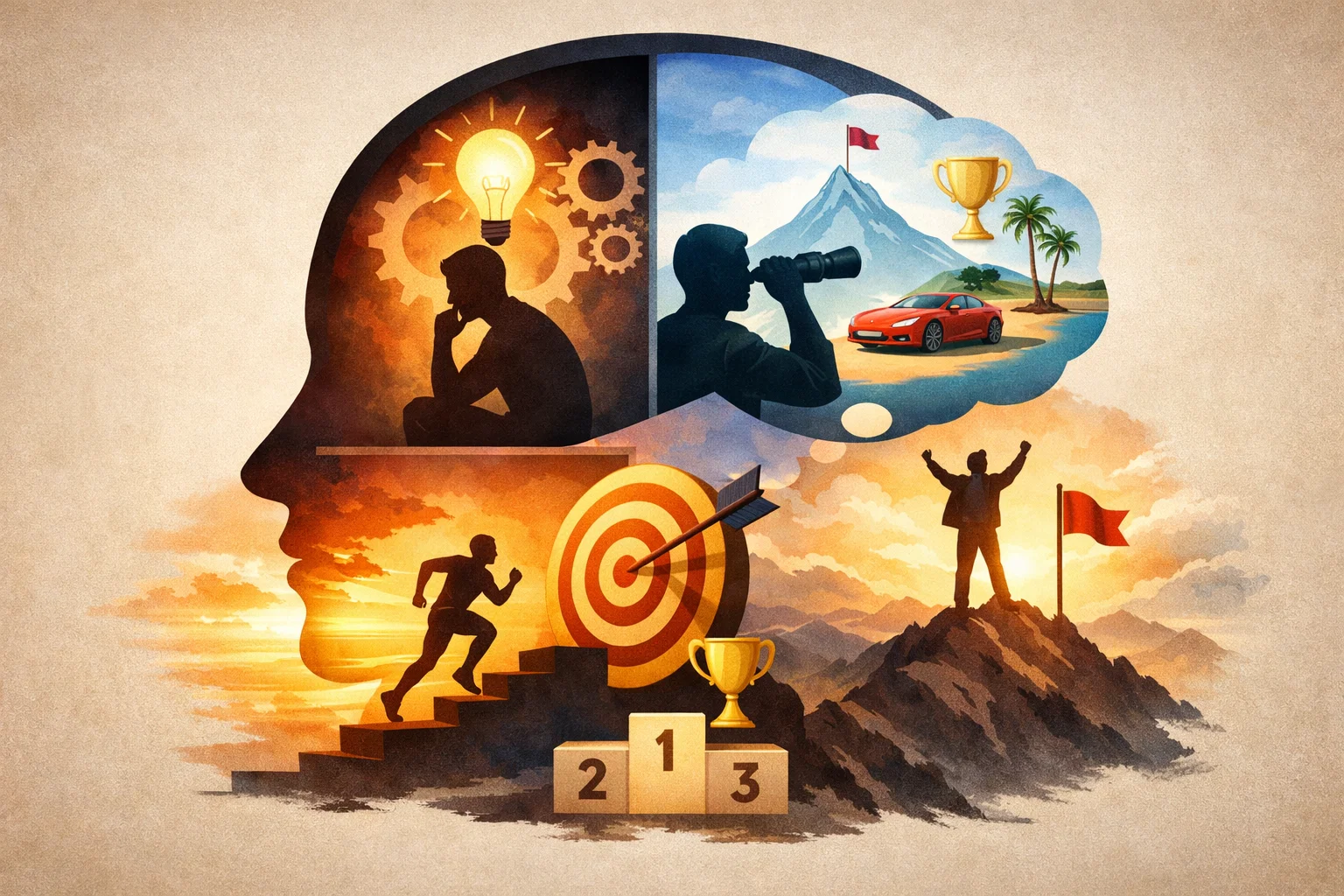
The Hidden Force Behind Every Action You Take
The force behind every action is motivation, an internal drive that propels us. Motivation drives human behavior, shaping our choices and determining our level of engagement. Understanding the psychology of motivation reveals how to tap into this powerful force, enabling us to achieve our goals and live a more fulfilling life.
Why Most People Struggle With Motivation Today
Many people struggle with deficits in motivation today because of various factors, including stress, lack of clear goals, and the overwhelming demands of modern life.
Understanding the psychology of motivation is a necessity for navigating these challenges and sustaining motivation even in the face of adversity, and achieving success.
What Is Motivation? A Psychological Definition
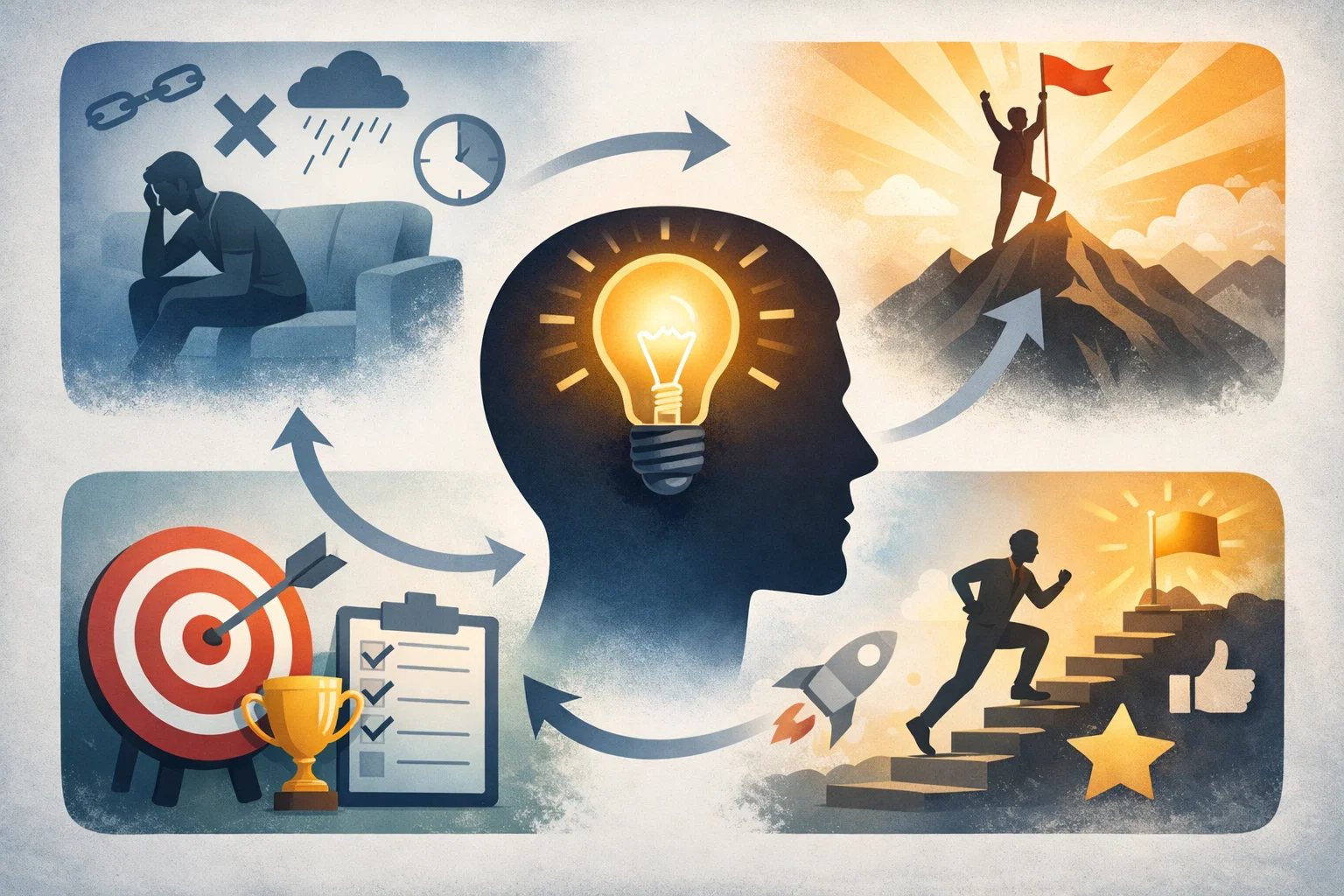
Motivation as a Mental and Emotional Driver
Motivation psychology defines motivation as a mental and emotional driver that directs and energizes our behavior. This internal motivator is composed of various factors, including desires, needs, and goals.
Motivation can either be a powerful ally or a significant obstacle depending on how well we understand and manage its components.
How Motivation Differs From Discipline and Willpower
Motivation differs from discipline and willpower. While all are valuable, understanding how they interplay is key.
| Concept | Description |
|---|---|
| Motivation | Provides the initial spark and desire to act. |
| Discipline | Involves sustained effort and commitment. |
| Willpower | The mental strength to resist distractions and temptations. |
The Role of Conscious vs Subconscious Motivation
Motivation operates on both conscious and subconscious levels. While conscious motivation involves deliberate and intentional goals, subconscious motivation stems from deep-seated beliefs and values.
Tapping into both aspects is essential for a well-rounded approach to understanding the psychology of motivation and achieving long-term success.
The Brain Science Behind Motivation
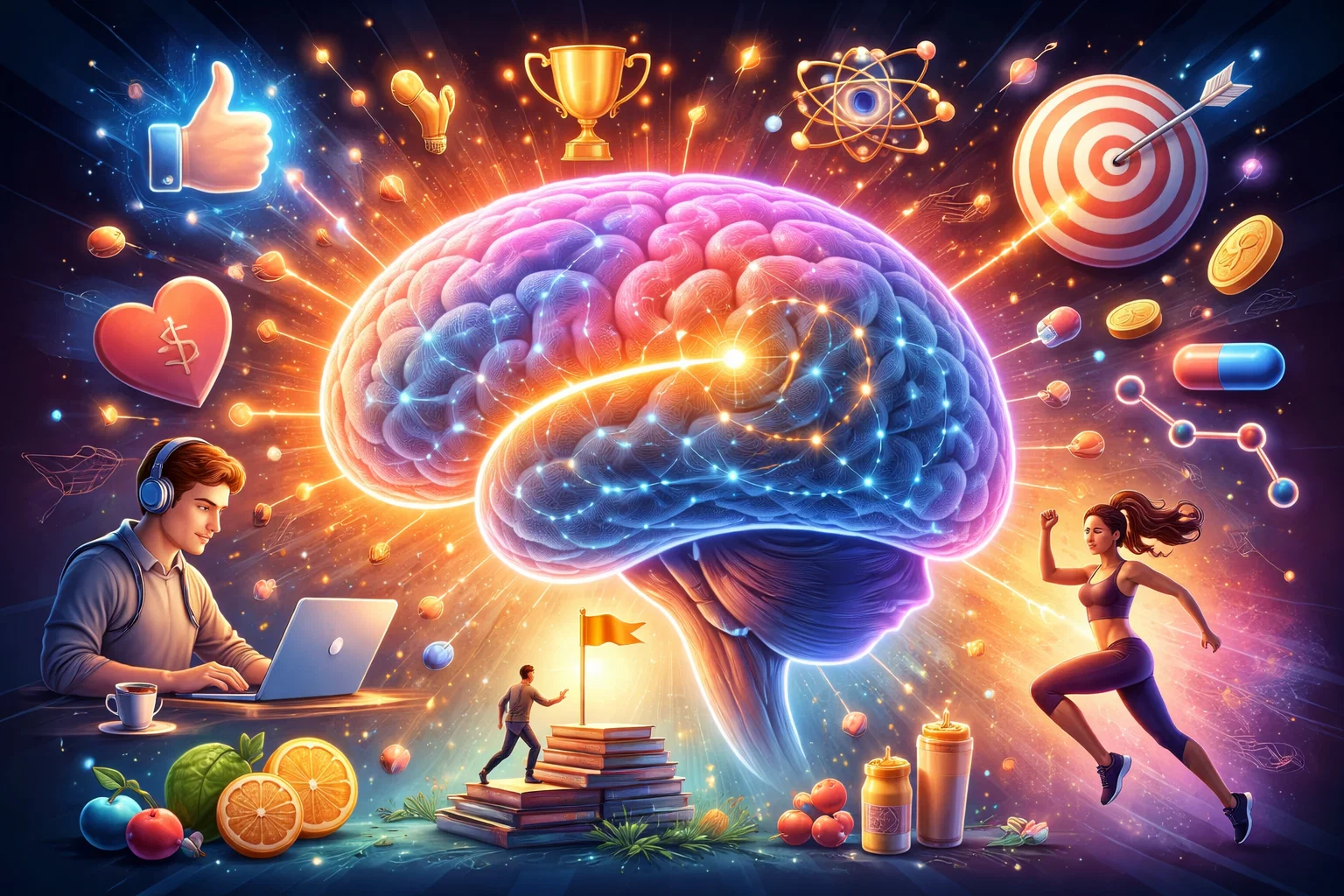
How Dopamine Controls Desire and Reward
Dopamine plays a pivotal role in controlling desire and reward within the brain. This neurotransmitter is released when we anticipate or experience something pleasurable, which drives motivation. Understanding how dopamine influences motivation can help us create reward systems that reinforce positive behaviors.
The Brain’s Reward System Explained Simply
The brain’s reward system functions by releasing dopamine in response to rewarding stimuli, which reinforces the behavior that led to the reward. This loop creates a positive feedback cycle that strengthens motivation and encourages us to seek out similar experiences again. The reward system is crucial for survival and learning.
Why Anticipation Feels More Powerful Than Achievement
Anticipation often feels more powerful than achievement because the brain releases more dopamine when we anticipate a reward than when we actually receive it. This anticipatory rush drives motivation and encourages us to pursue our goals with enthusiasm. Understanding this phenomenon can help us sustain motivation during the pursuit.
Prefrontal Cortex vs Limbic System in Decision-Making
The prefrontal cortex and the limbic system play different roles in decision-making regarding motivation. While the prefrontal cortex is responsible for rational thought and long-term planning, the limbic system governs emotions and immediate rewards. The balance between these two systems influences our motivation and behavior.
Intrinsic vs Extrinsic Motivation: What Really Works Long-Term
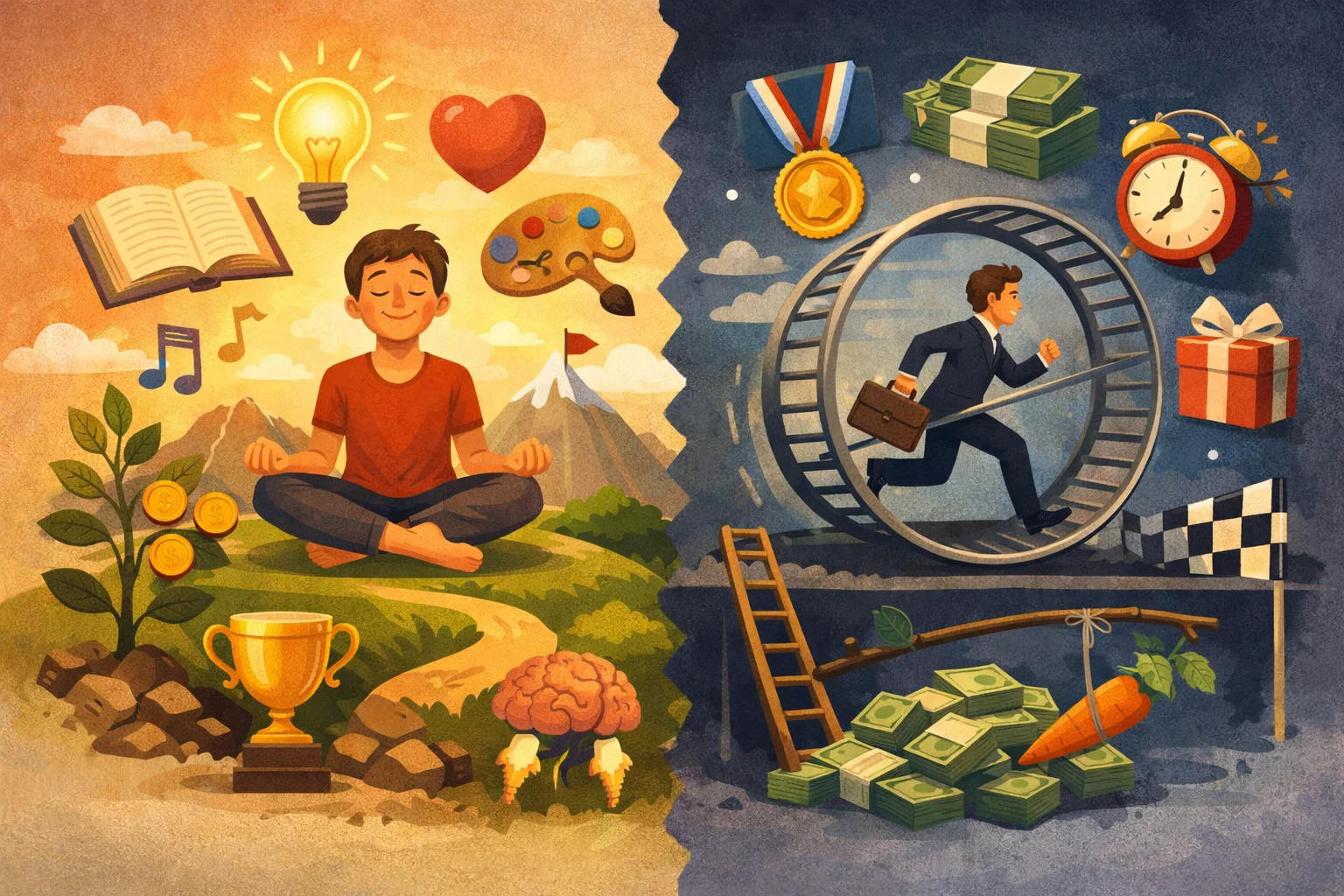
Intrinsic Motivation: Internal Drive and Purpose
Intrinsic motivation stems from an internal drive and purpose, propelling individuals to engage in behaviors that are inherently satisfying. This type of motivation taps into personal values and interests, making the activity itself a reward.
Understanding the psychology of motivation reveals that intrinsic motivation is a powerful motivator for sustained engagement. It truly drives human behavior.
Extrinsic Motivation: Rewards, Pressure, and Incentives
Extrinsic motivation involves rewards, pressure, and incentives from external sources. This form of motivation relies on external factors to drive behavior, such as money, praise, or recognition. While extrinsic motivation can be effective in the short term, the psychology of motivation suggests that it is less sustainable compared to intrinsic motivation.
Why Intrinsic Motivation Is More Sustainable
Intrinsic motivation proves more sustainable because it aligns with personal values and interests, fostering a deeper sense of satisfaction. This sustains motivation, as the activity itself becomes inherently rewarding. According to the psychology of motivation, intrinsic and extrinsic motivation each play a role, but intrinsic drives human behavior and commitment for the long haul.
The Psychological Theories of Motivation
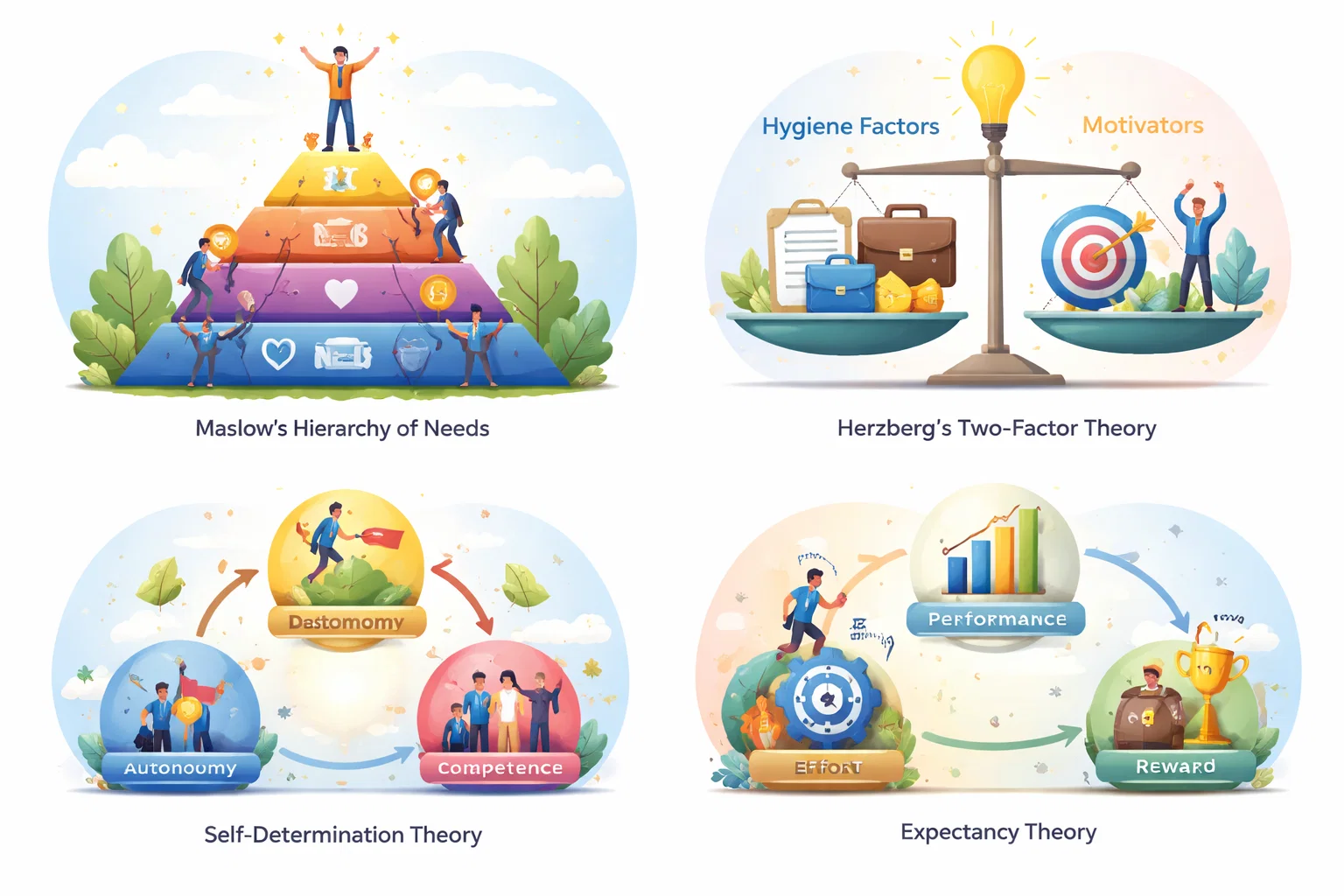
Maslow’s Hierarchy of Needs and Human Behavior
Maslow’s hierarchy of needs, a cornerstone of motivation theories, explains human behavior as driven by a series of needs ranging from basic physiological needs to self-actualization.
Understanding the psychology of motivation through Maslow’s lens helps explain why individuals are motivated to fulfill certain needs before others, providing insights into human motivation. It provides a framework for understanding the psychology of motivation.
Expectancy Theory: Belief, Effort, and Outcome
Expectancy theory posits that motivation stems from an individual’s belief that their effort will lead to a desired outcome. The psychology of motivation highlights the importance of this belief in driving human behavior. When individuals expect their efforts to be successful, they are more likely to be motivated to invest time and energy.
Self-Determination Theory: Autonomy, Competence, Relatedness
Self-determination theory emphasizes the importance of autonomy, competence, and relatedness in fostering intrinsic motivation. The psychology of motivation suggests that individuals are more likely to be motivated when they have a sense of control (autonomy). These key factors can be summarized as:
| Factor | Description |
|---|---|
| Autonomy | Sense of control |
| Competence | Not specified in the original text. |
| Relatedness | Not specified in the original text. |
The psychologist stresses that these factors drive human behavior and understanding the psychology of motivation improves effectiveness.
How Goals Shape Motivation and Behavior

Why Clear Goals Increase Brain Engagement
Clear goals increase brain engagement by providing a specific target for our efforts. The psychology of motivation shows that the brain responds positively to well-defined goals, leading to heightened focus and motivation. When goals are clear, the brain can effectively allocate resources and drive human behavior towards achievement.
The Psychology of Short-Term vs Long-Term Goals
The psychology of motivation explains that short-term goals can provide immediate feedback and a sense of accomplishment, boosting motivation and encouraging you to engage in behaviors. Long-term goals offer a broader sense of purpose and direction, driving sustained effort. Balancing both short-term and long-term goals optimizes motivation and ensures consistent progress.
How Goal Progress Triggers Dopamine Loops
Goal progress triggers dopamine loops, reinforcing positive behavior and sustaining motivation. As we make progress towards our goals, the brain releases dopamine, creating a feedback loop that encourages continued effort. The psychology of motivation utilizes these dopamine loops to increase motivation and enhance overall performance, ensuring that motivation drives human behavior.
Why Motivation Fails (And What Your Brain Is Really Doing)

Overwhelm and Cognitive Fatigue
Overwhelm and cognitive fatigue can cause motivation to fail, as the brain becomes overloaded and unable to function optimally. The psychology of motivation suggests that breaking tasks into smaller, manageable steps can reduce overwhelm and sustain motivation. Overwhelm significantly impacts how motivation drives human behavior.
Lack of Immediate Reward Feedback
Lack of immediate reward feedback diminishes motivation because the brain thrives on positive reinforcement. The psychology of motivation emphasizes the importance of creating systems that provide regular feedback and rewards to sustain motivation. Without immediate feedback, the brain struggles to maintain focus and effort and can hinder the driving force behind human behavior.
Fear of Failure and Avoidance Behavior
Fear of failure and avoidance behavior can sabotage motivation, leading individuals to procrastinate or avoid challenging tasks. The psychology of motivation advises that reframing failure as a learning opportunity can reduce fear and increase motivation. Understanding the psychology of motivation is crucial to overcoming obstacles and sustaining motivation for the long term.
Decision Paralysis and Mental Overload
Decision paralysis and mental overload lead to motivation failure by draining mental resources and creating a sense of helplessness. The psychology of motivation recommends simplifying choices and prioritizing tasks to reduce mental overload. This way you enhance motivation and enable clearer focus and action.
The Role of Habits in Sustaining Motivation

How Habits Reduce Mental Effort
Habits significantly reduce mental effort by automating routine behaviors. This automation frees up cognitive resources, making it easier to sustain motivation for more complex tasks. The psychology of motivation recognizes the value of habits in conserving mental energy, enabling individuals to engage in behaviors that require more focus and effort. Harnessing habits is crucial to understanding the psychology of motivation.
Cue–Routine–Reward Loop Explained
The cue–routine–reward loop is a fundamental concept in habit formation. The cue triggers the routine, which is the behavior itself, and the reward reinforces the behavior, making it more likely to occur again. The psychology of motivation shows that understanding and manipulating this loop can help in forming positive habits that drive human behavior.
Why Discipline Beats Motivation in the Long Run
Discipline beats motivation in the long run because it provides a consistent structure for behavior, even when motivation wanes. The psychology of motivation suggests that discipline acts as a reliable foundation, ensuring that tasks are completed regardless of fluctuating motivation levels. Discipline is essential for sustained success and achieving long-term goals. It is a requirement to understanding the psychology of motivation.
Emotional and Environmental Triggers of Motivation

How Environment Shapes Behavior Without You Noticing
The environment shapes behavior without you noticing by providing subtle cues and influences that affect your choices and actions. The psychology of motivation recognizes the power of environmental design in fostering positive behaviors. By optimizing your surroundings, you can create an environment that naturally encourages motivation and productivity, thereby improving the driving force behind human behavior.
Emotional States That Increase or Kill Motivation
Emotional states can significantly influence motivation, with positive emotions like joy and excitement enhancing motivation, while negative emotions like fear and anxiety diminishing it. The psychology of motivation emphasizes the importance of managing emotional states to sustain motivation. Cultivating positive emotions and addressing negative ones are essential for maintaining a motivated mindset.
Social Influence and Peer Motivation Effects
Social influence and peer motivation effects demonstrate how others can impact your motivation through encouragement, support, and modeling behavior. The psychology of motivation acknowledges the power of social connections in fostering motivation. Surrounding yourself with motivated individuals can create a supportive environment that inspires you to pursue your goals. Social influence really helps with understanding the psychology of motivation.
How to Increase Motivation Using Psychology-Based Strategies

Breaking Tasks Into Dopamine-Friendly Steps
Breaking tasks into dopamine-friendly steps can significantly increase motivation by providing frequent, small rewards that trigger dopamine release. The psychology of motivation suggests that these dopamine hits reinforce positive behavior and encourage continued effort. By designing tasks that offer regular feedback and incentives, you can sustain motivation and enhance productivity.
Using Reward Systems to Train Your Brain
Using reward systems to train your brain is an effective strategy for enhancing motivation. By associating tasks with tangible rewards, you create a positive feedback loop that reinforces desired behaviors. The psychology of motivation emphasizes the importance of tailoring reward systems to individual preferences, maximizing their impact on motivation and performance.
Building Identity-Based Motivation (“I am the type of person who…”)
Building identity-based motivation involves aligning your goals with your sense of self. By identifying as a person who values certain behaviors, you increase your intrinsic motivation to act in accordance with that identity. The psychology of motivation highlights the power of self-perception in driving human behavior and achieving long-term success.
Designing Environments That Encourage Action
Designing environments that encourage action involves creating surroundings that naturally promote desired behaviors. The psychology of motivation recognizes that environmental cues can significantly influence motivation and productivity. By optimizing your workspace and living areas, you can minimize distractions, enhance focus, and sustain motivation over time.
Motivation and Success: The Real Connection

Why Motivation Alone Is Not Enough for Success
While motivation is essential, it’s not the sole determinant of success. The psychology of motivation shows that without discipline, systems, and other factors, even the highest levels of motivation can falter. Understanding the psychology of motivation reveals that a balanced approach is needed for long-term achievement. It truly understands motivation and how it drives human behavior.
The Balance Between Motivation, Discipline, and Systems
A balance between motivation, discipline, and systems creates a robust framework for success. Motivation provides the initial impetus, discipline ensures consistent effort, and systems streamline processes. The psychology of motivation emphasizes that integrating these elements is essential for sustainable achievement. If done correctly, it will enhance motivation and help reach goals.
| Element | Function |
|---|---|
| Motivation | Provides initial impetus |
| Discipline | Ensures consistent effort |
Case Patterns of Highly Successful Individuals
Highly successful individuals often exhibit specific case patterns, including a clear sense of purpose, consistent habits, and effective strategies for managing motivation. The psychology of motivation shows that successful people are adept at sustaining motivation even in the face of challenges. Their achievements serve as a source of motivation for others and proves that motivation drives human behavior.
Common Myths About Motivation
“Motivation Comes Before Action”
The myth that “motivation comes before action” is misleading. The psychology of motivation reveals that action often precedes motivation. Starting a task can generate momentum and increase motivation, even if you initially feel unmotivated. This drives human behavior, highlighting the dynamic between action and the psychology of motivation.
“Successful People Are Always Motivated”
The belief that “successful people are always motivated” is not accurate. The psychology of motivation demonstrates that everyone experiences fluctuations in motivation. Successful individuals develop strategies for maintaining discipline and focus, even when motivation wanes. Understanding these strategies is key to sustained achievement and influence motivation.
“Motivation Is Permanent”
The idea that “motivation is permanent” is a misconception. The psychology of motivation recognizes that motivation is a dynamic state that can fluctuate based on various factors. Sustaining motivation requires ongoing effort, adaptation, and strategies for managing challenges. Motivation theories revolve around understanding the temporary nature of motivation and its effects.
Future Insights: How Neuroscience Is Changing Our Understanding of Motivation
Advances in Brain Research and Behavioral Science
Advances in brain research and behavioral science are revolutionizing our understanding of motivation. Neuroscience is uncovering the neural mechanisms behind motivation, providing insights into how we can optimize our brains for greater drive and achievement. Understanding the psychology of motivation is essential for harnessing these advancements.
AI, Productivity Tools, and Behavioral Design
AI, productivity tools, and behavioral design are shaping the future of motivation. These technologies offer new ways to personalize and enhance motivation by leveraging data-driven insights and tailored interventions. The psychology of motivation emphasizes that these tools can help individuals tap into their intrinsic and extrinsic motivation.
The Future of Human Motivation in a Digital World
The future of human motivation in a digital world presents both challenges and opportunities. As technology becomes increasingly integrated into our lives, understanding how it influences motivation is crucial. The psychology of motivation suggests that we must proactively design digital environments that support and enhance human drive and purpose.
Conclusion: Mastering Your Brain to Master Your Life
Mastering your brain is essential for mastering your life. By understanding the psychology of motivation, you can unlock your full potential and achieve your goals. This knowledge provides the keys to sustained motivation, enabling you to navigate challenges and live a fulfilling life. The driving force behind your actions lies within your grasp, waiting to be harnessed.