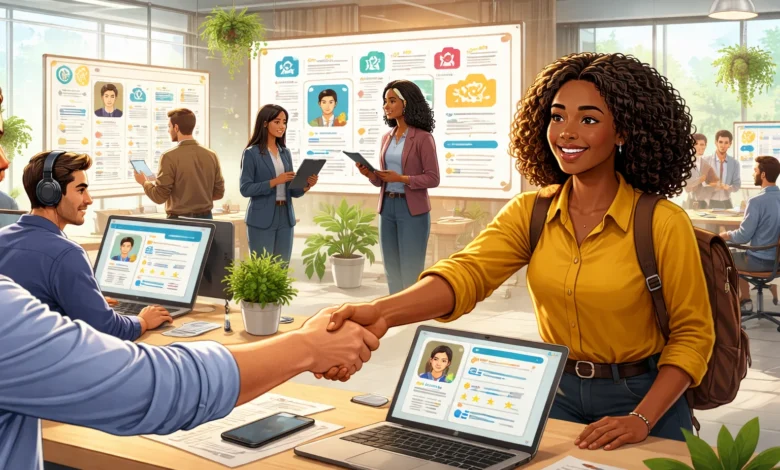
In 2026, the future of work is undergoing a monumental change, with skills-based hiring taking center stage. This article explores the rise of skills-based hiring and how employers are prioritizing skills over degrees, effectively challenging traditional credentials.
The shift to skills-based hiring is not just a trend but a necessary adaptation to the rapidly evolving demands of the modern workforce.
The Shift from Degrees to Skills

How traditional degree requirements are changing
Degree requirements are becoming less relevant in job postings as many employers realize that a bachelor’s degree doesn’t guarantee job performance. Companies are removing degree requirements, signaling a significant departure from hiring based on education. This evolution is opening doors for individuals, such as:
- Career changers
- Those without degrees
This allows them to enter the talent pool, fostering a more inclusive hiring approach.
The impact of AI, automation, and digital transformation on hiring
The rapid advancements in AI, automation, and digital transformation are reshaping the job market, making skills assessment more critical than traditional credentials.
Employers are now looking for specific competency and problem-solving abilities that can be evaluated through practical tests rather than relying solely on a “bachelor’s degree required”. This shift ensures that hiring decisions are based on demonstrable skills rather than assumptions tied based on education.
Why skill-based hiring is the future of work
Skills-based hiring is the future of work because it directly addresses the growing skills gap. This approach focuses on a candidate’s abilities, offering several advantages:
- It’s more effective at identifying qualified individuals.
- It reduces hiring costs and improves job placements.
As employers embrace skills-based hiring, they tap into a wider range of job seekers and find the talent they need.
What is Skill-Based Hiring?
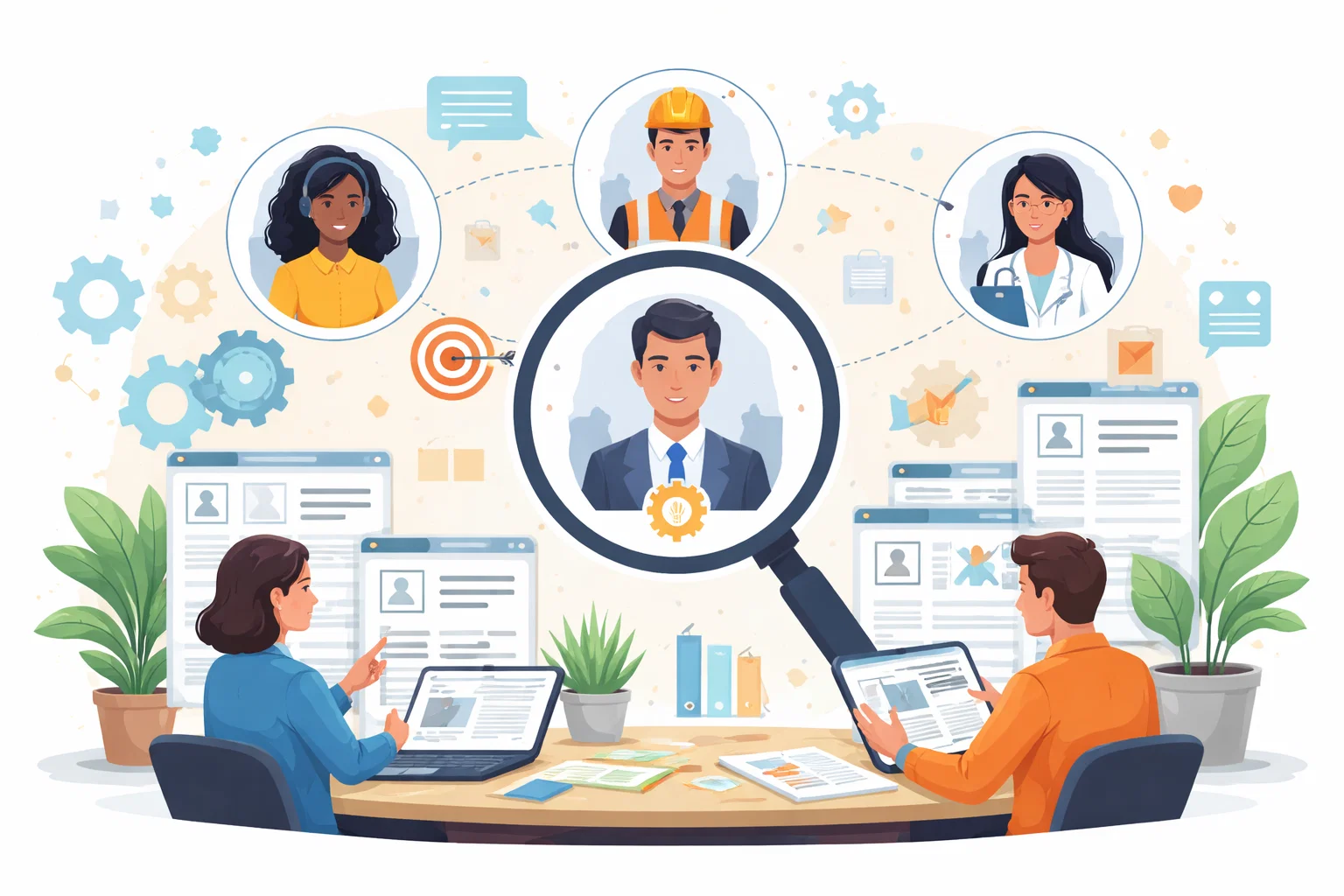
Definition and core principles
Skills-based hiring is a hiring approach that focuses on a candidate’s abilities and competency to perform specific tasks, instead of degrees. Its core principle is to evaluate candidates based on their demonstrated skills assessment and practical experience, prioritizing skills over degrees. This hiring based on actual skills ensures a better fit between the candidate’s abilities and the job requirements.
Differences between degree-based and skill-based hiring
The primary difference lies in what recruiters and hiring managers value. Hiring based on education relies heavily on academic qualifications, often requiring a bachelor’s degree, while skills-based hiring focuses on skills-based approaches, demonstrated competency, and practical experience. Skills-based job assessment also tends to exclude career changers and those without degrees.
Examples of companies adopting skill-first recruitment
Leading companies like IBM and Boston Consulting Group are at the forefront of this trend, removing degree requirements from many job postings and prioritizing skills over degrees. These organizations have recognized that valuable skills can be acquired through alternative credentials like bootcamps, certifications, and on-the-job training. By adopting skills-based hiring, they aim to find the talent and increase their talent pool.
Why Degrees Matter Less in 2026
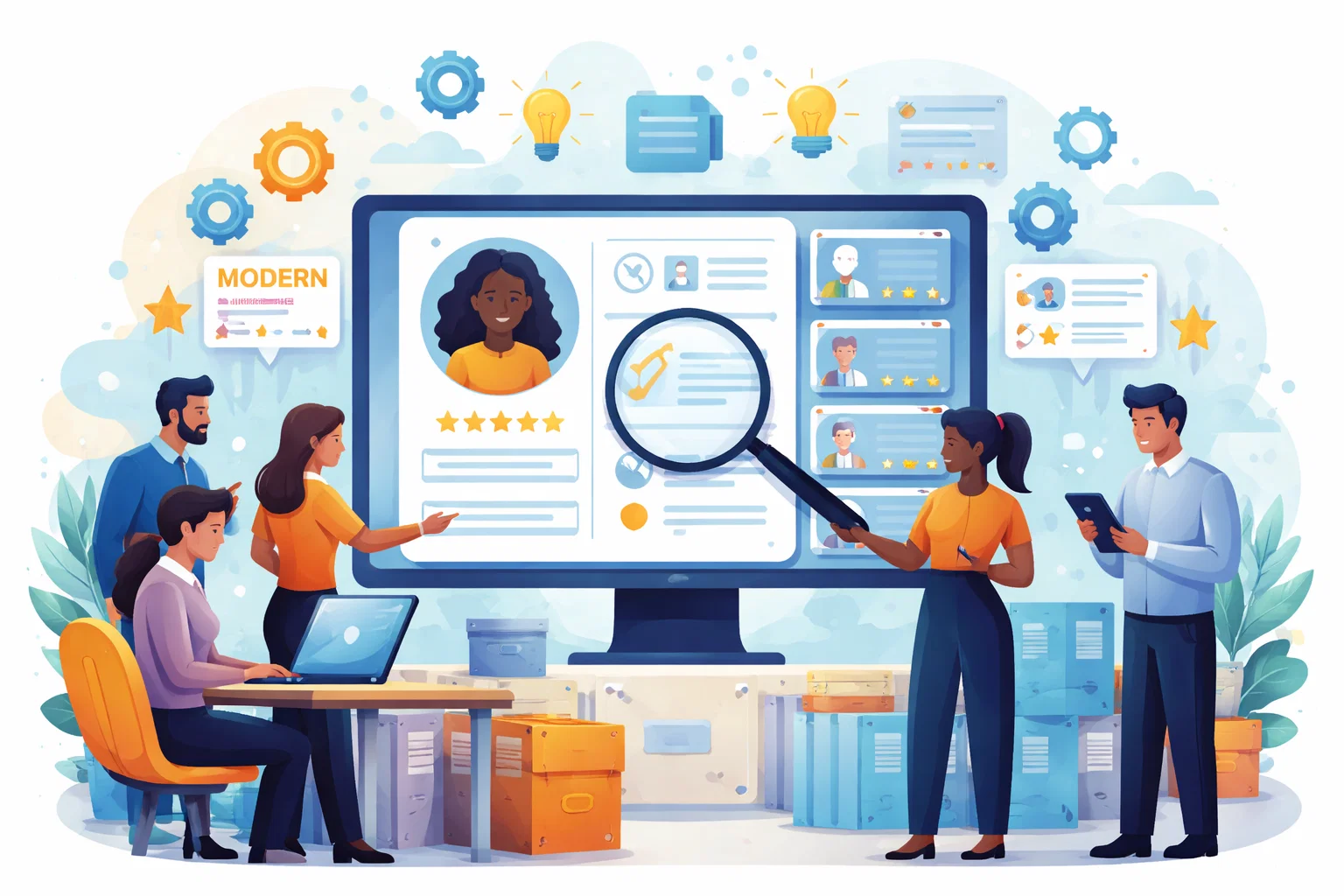
Rapidly changing job requirements and obsolete curricula
In 2026, traditional degree requirements are increasingly seen as less relevant due to rapidly evolving job demands. University curricula often struggle to keep pace with technological advancements, leaving graduates with skills that are not immediately applicable in the future of work. Many employers now recognize that a bachelor’s degree does not always guarantee job performance, leading to a shift to skills-based hiring.
Rise of alternative learning: bootcamps, certifications, online courses
The rise of alternative learning platforms such as bootcamps, online courses, and certifications provide a more agile and focused approach to skills assessment.
These alternative credentials offer specialized training in areas like coding and data analysis, allowing job seekers to quickly acquire in-demand skills. These skills-based approaches provide career changers a pathway to enter new industries.
Portfolio and demonstrable experience vs. academic credentials
Employers are prioritizing skills over degrees and are placing greater emphasis on demonstrable experience and portfolios that showcase practical abilities.
A strong portfolio provides tangible evidence of a candidate’s competency and problem-solving skills, making academic credentials less relevant in the eyes of hiring managers. This focus on real-world application makes skills-based hiring a more effective hiring model.
Key Skills Employers Are Prioritizing in 2026

Technical skills: AI, data analysis, cloud computing, coding
In 2025, technical skills such as AI, data analysis, cloud computing, and coding are highly valued by employers looking to hire individuals who can drive innovation.
These skills are essential for companies undergoing digital transformation, and skills-based hiring ensures that recruiters find the talent with the right technical expertise. Removing degree requirements helps broaden the talent pool to those with demonstrated competency.
Soft skills: communication, critical thinking, adaptability, creativity
Here’s how employers are shifting their focus when evaluating candidates:
- Communication, critical thinking skills
- Adaptability, and creativity
These skills are often better assessed through practical exercises and behavioral interviews rather than solely based on education.
How skills are evaluated: assessments, simulations, projects
Skills assessment methods are evolving to include simulations, practical projects, and standardized tests that evaluate a candidate’s competency. These methods offer a more accurate prediction of job performance compared to traditional resumes and interviews.
Companies like IBM and Boston Consulting Group are investing in these advanced hiring processes to refine their skills-based job and find the talent effectively.
Benefits of Skill-Based Hiring
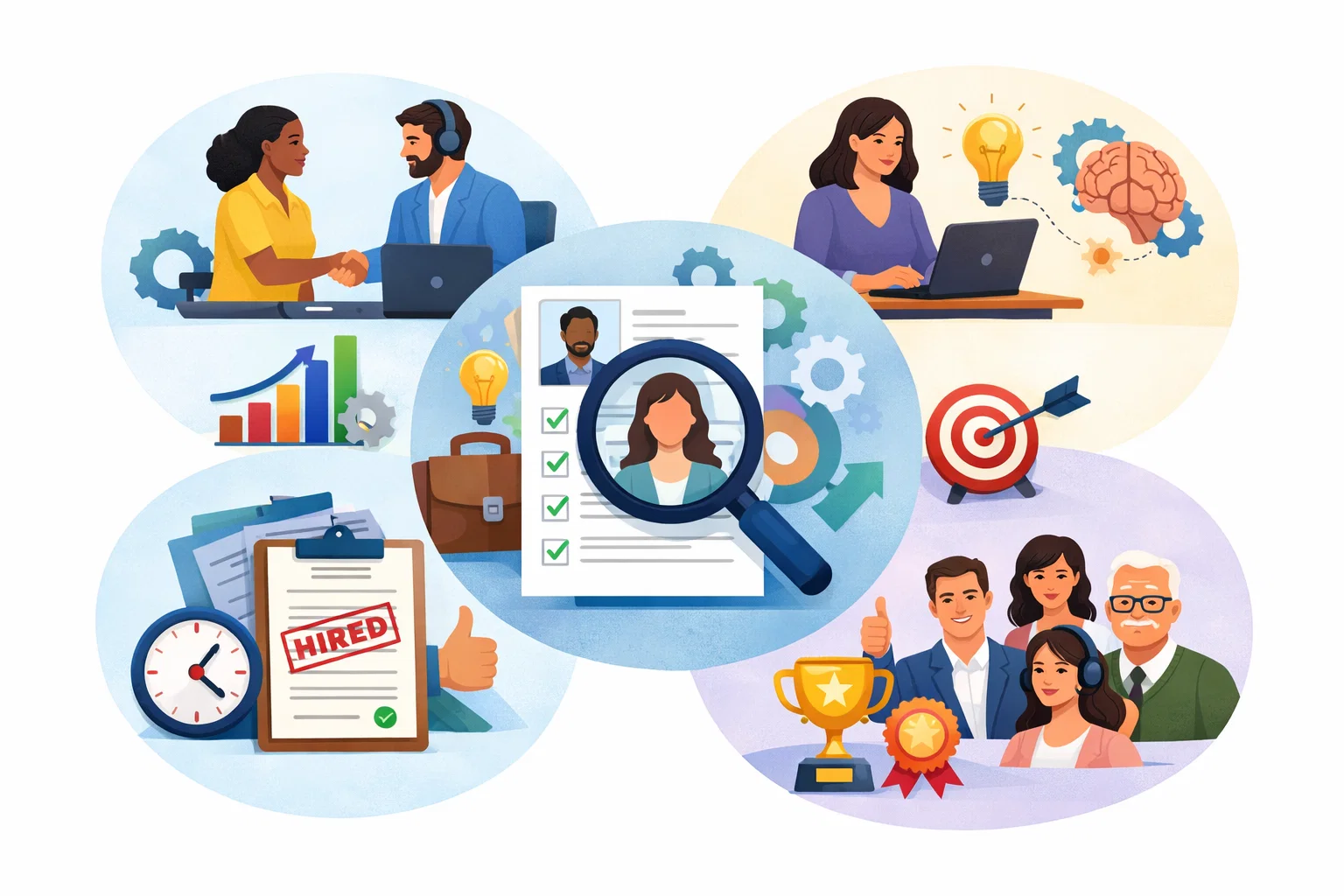
For employers: faster recruitment, diverse talent pool, better role fit
Skills-based hiring offers employers a streamlined recruitment process, leading to faster hires and reduced hiring costs. By focusing on skills assessment rather than traditional credentials, companies can tap into a more diverse talent pool, including career changers and those without degrees.
This approach ensures a better role fit, as candidates are evaluated based on their actual competency and problem-solving abilities, improving job performance.
For candidates: career mobility, recognition of self-taught skills, less reliance on formal education
For job seekers, skills-based hiring opens doors to greater career mobility, especially for those who have acquired skills through alternative credentials or self-teaching.
This approach recognizes the value of practical experience and competency, making degrees less relevant. Candidates can showcase their abilities through portfolios and projects, rather than credentials from formal education, emphasizing their skills-based expertise.
Societal impact: inclusion, democratization of opportunity
The societal impact of skills-based hiring is profound, promoting inclusion and democratizing opportunities for individuals from diverse backgrounds.
By removing degree requirements, employers can find the talent, exclude bias in hiring decisions, and create a more equitable workforce. This shift allows individuals with practical skills, regardless of their educational background, to contribute to the future of work and address the skills gap.
How to Prepare for Skill-Based Hiring
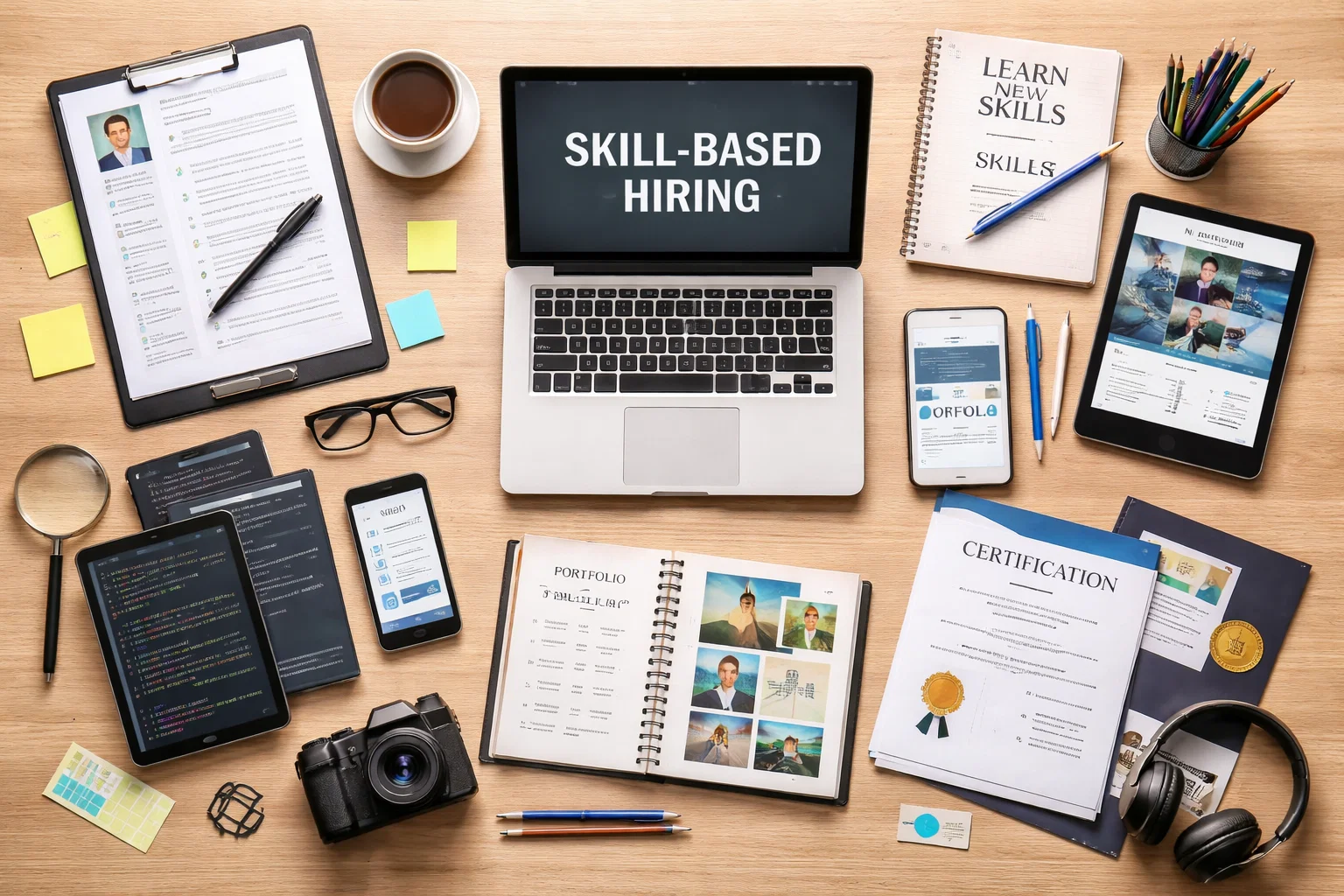
Identify in-demand skills in your industry
To prepare for skills-based hiring, it’s crucial to identify the in-demand skills within your target industry. Research job postings, industry reports, and consult with professionals to understand which technical and soft skills are most valued by employers. Focus on acquiring skills based on these needs, whether through formal education, bootcamps, or self-study, to improve your skills assessment.
Build portfolios and practical projects to showcase abilities
Building a strong portfolio is essential to showcase your abilities and demonstrate your competency to potential employers. Include practical projects, case studies, and examples of your work that highlight your problem-solving skills and technical expertise.
A well-crafted portfolio provides tangible evidence of your capabilities, making academic credentials less relevant and enhancing your chances of getting hired based on your skills-based approaches.
Upskill continuously through online platforms and micro-certifications
Continuous upskilling is vital in the rapidly evolving future of work, and skills-based hiring emphasizes the importance of lifelong learning. Utilize online platforms, micro-certifications, and specialized courses to acquire new skills and stay current with industry trends.
This proactive approach demonstrates your commitment to professional development and enhances your competency, making you a more attractive candidate in 2025 for skills-based hiring.
Challenges and Considerations
Potential biases in skill assessments and simulations
While skills assessment and simulations offer a more objective hiring approach, it is important to address potential biases. Unintentional biases in design or evaluation criteria can unfairly advantage or disadvantage certain groups of job seekers. Employers must critically evaluate these tools to ensure fair and equitable hiring decisions that truly reflect competency, and not hidden biases, while hiring for skills.
Balancing formal education and skill recognition in hiring decisions
Skills-based hiring does not mean completely disregarding formal education, but rather than credentials, it is important to balance formal education with skill recognition.
A bachelor’s degree can provide a foundation of knowledge, but practical skills and experience are equally valuable. Hiring managers should consider both academic achievements and demonstrated abilities to make well-rounded hiring decisions in 2025 and beyond.
Ensuring consistent evaluation standards across candidates
Maintaining consistent evaluation standards is crucial to ensure fairness and reliability in skills-based hiring. Employers should establish clear criteria and standardized assessment methods to evaluate all candidates equally. This ensures that hiring decisions are not based on education and consistent competency, minimizing subjectivity and promoting a fair hiring process, especially given the skills gap in the workforce.
Future Outlook: The Evolution of Careers Without Degrees
Emerging roles that prioritize skills over degrees
As the future of work evolves, emerging roles are increasingly prioritizing skills over degrees. These positions, often in tech-driven industries, demand specialized expertise that can be acquired through alternative credentials and practical experience.
Employers who embrace skills-based hiring are better positioned to find the talent needed for these innovative roles. Removing degree requirements further broadens the talent pool to include career changers.
Predictions for global hiring trends by 2030
By 2030, global hiring trends will likely see a significant shift to skills-based hiring, with more employers removing degree requirements from job postings. This trend will be driven by the need for agility, innovation, and a more diverse workforce.
Skills assessment tools will become more sophisticated, enabling companies to accurately evaluate candidates’ competency and potential, regardless of their educational background while hiring based on merit.
How organizations can thrive by embracing skill-first culture
Organizations can thrive by embracing skills-based hiring and foster a skill-first culture that values continuous learning and development.
By prioritizing skills over degrees, companies can create a more agile and innovative workforce equipped to meet the demands of the future of work. This culture also promotes inclusivity, providing opportunities for individuals from diverse backgrounds to contribute their talents and address the persistent skills gap.
Conclusion: Embracing a Skills-First Future
In conclusion, skills-based hiring represents a significant evolution in how companies find the talent and build their workforce. By prioritizing skills over degrees, employers can tap into a broader talent pool, foster greater diversity, and improve job performance. Embracing this approach is essential for organizations looking to thrive in the rapidly changing future of work and embrace skills-based hiring as part of company culture.