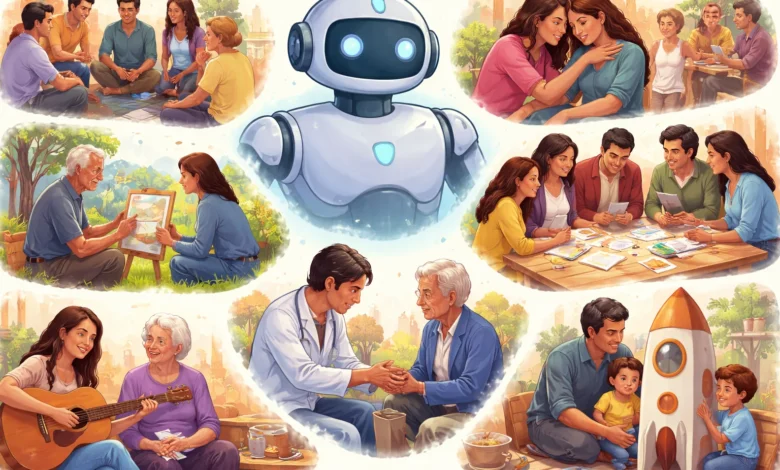
As we rapidly advance into an era increasingly shaped by artificial intelligence, it’s crucial to recognize the enduring value of uniquely human skills. While AI and automation transform industries, certain human qualities remain irreplaceable. This article explores the 7 human skills AI can’t replace, providing a roadmap to future-proof your career in the age of AI.
Why Human Skills Matter in the Age of AI
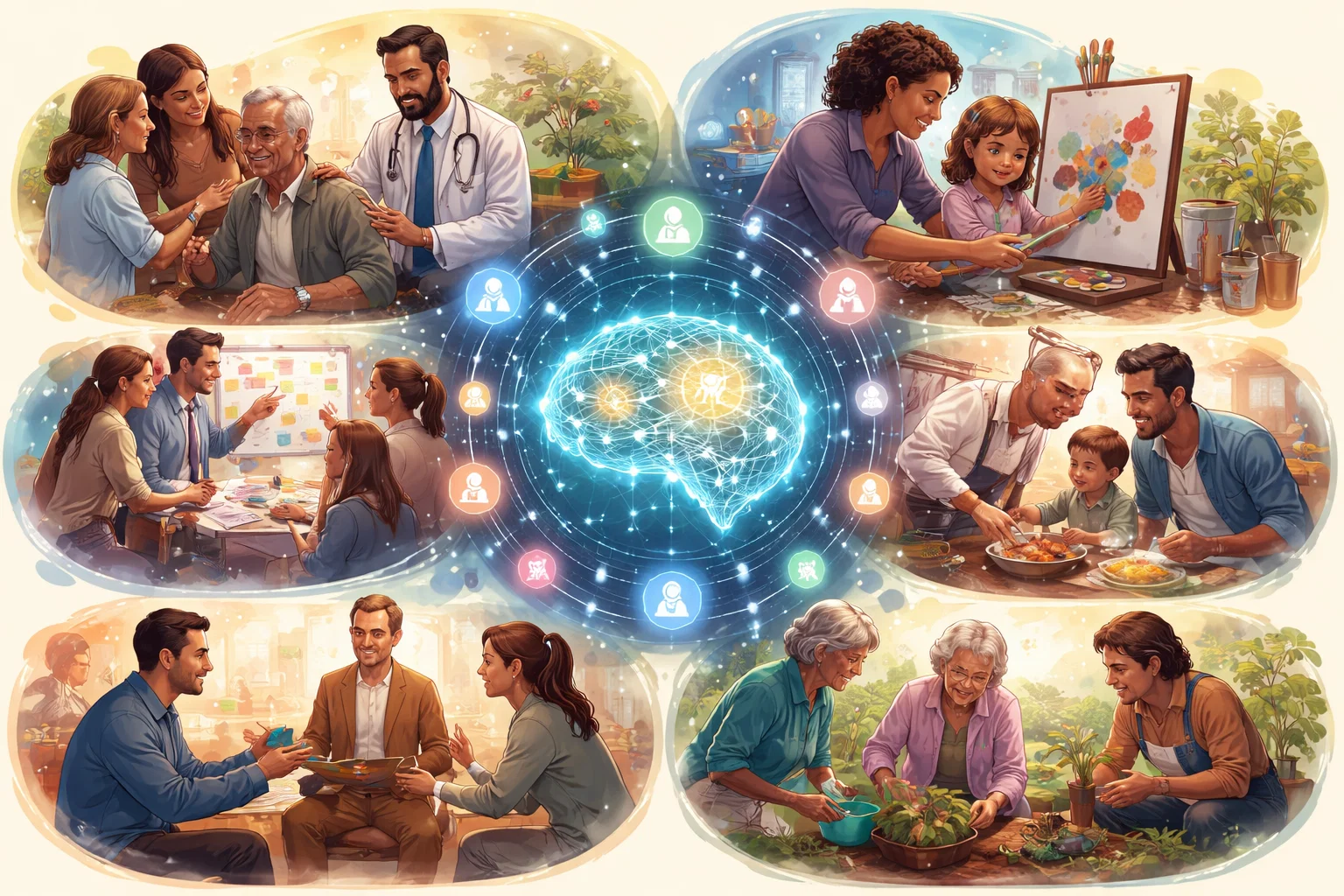
The rise of AI and automation in the workplace
The rise of AI and automation is undeniable, with AI automating routine tasks across various industries. Businesses are increasingly leveraging artificial intelligence for efficiency, speed, and cost reduction. This shift is reshaping the job market, making it essential to understand what AI can and cannot do, AI is a powerful tool.
Why human skills are still irreplaceable
Despite AI’s advancements, human skills remain irreplaceable due to their nuanced nature. AI lacks the ability to replicate human qualities such as empathy, creativity, and ethical judgment. These human-centric skills are essential for navigating complex situations and fostering meaningful human connection, making them vital in an AI world.
How mastering these skills can future-proof your career
Mastering the 7 human skills ensures you remain relevant and valuable in the face of AI. Focusing on these areas will help you develop expertise in ai-proof jobs that AI can’t replace. By honing your human capabilities, you position yourself for success in roles that require human judgment, problem-solving, and human understanding.
1. Emotional Intelligence: Understanding Beyond Data

What is emotional intelligence and why it matters
Emotional intelligence (EQ) involves understanding and managing your emotions, as well as recognizing and influencing the emotions of others. It’s a critical skill that AI can’t replicate, as it relies on emotional intelligence and active listening. High EQ leads to better communication, collaboration, and overall job performance, and human interactions.
Examples of EQ in leadership, teamwork, and customer relations
In leadership, EQ enables effective motivation and conflict resolution. In teamwork, it fosters a supportive and collaborative environment. In customer relations, it allows for building trust and providing empathetic service, leading to stronger relationships. It is difficult for AI to understand the needs and feelings.
How to develop and strengthen your EQ in 2026
Developing EQ involves self-awareness, self-regulation, motivation, empathy, and social skills. Practice active listening, seek feedback, and engage in activities that promote empathy. Continuous learning and self-reflection are key to strengthening your emotional intelligence.
2. Critical Thinking & Complex Decision-Making

Why AI struggles with ambiguity and moral dilemmas
AI, while excellent at processing data, struggles with ambiguity and moral dilemmas because AI doesn’t possess ethical reasoning or the ability to understand nuanced contexts. Human judgment is essential in situations requiring ethical considerations and adaptability. It is unlikely to be replaced.
Real-world scenarios where human judgment outperforms AI
Consider situations like medical diagnoses with incomplete information or legal cases involving conflicting evidence; these scenarios need human judgment. Human expertise and critical thinking are essential for evaluating nuances and making informed decisions where AI cannot easily replicate this.
Strategies to improve your analytical and critical thinking skills
To enhance your analytical and critical thinking skills, practice questioning assumptions, seeking diverse perspectives, and engaging in problem-solving exercises. Develop your ability to analyze information, evaluate evidence, and form well-reasoned conclusions.
3. Creativity & Innovation: Thinking Outside the Algorithm
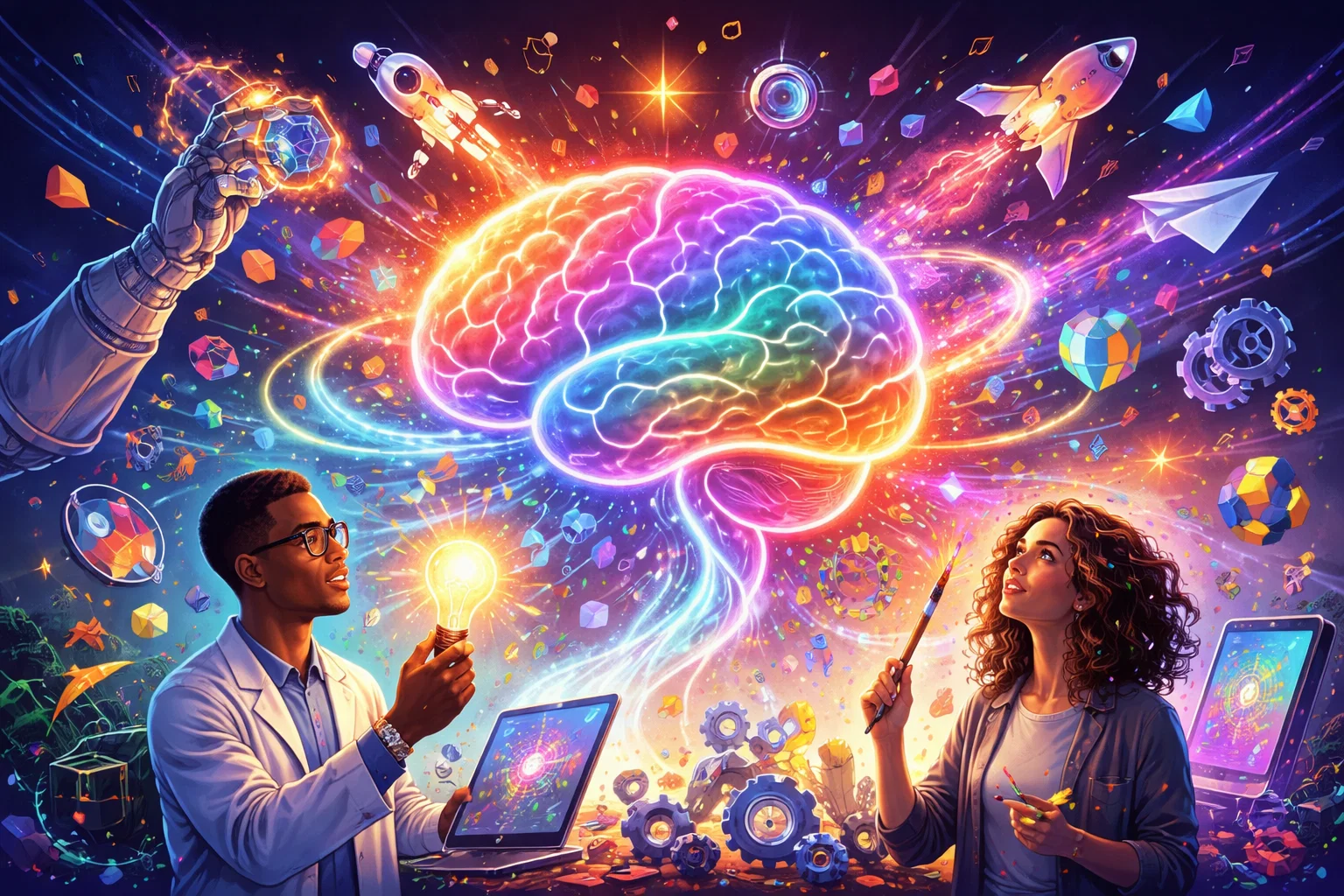
How humans generate original ideas AI cannot replicate
Humans possess the unique ability to generate original ideas that AI cannot replicate. This is due to our capacity for imagination, intuition, and emotional depth. Unlike AI, which relies on patterns and data, humans can conceive novel solutions, artistic expressions, and innovative concepts, using human imagination. This is because humans possess human connection and originality.
Creativity in business, art, and technology
Creativity drives innovation in business through new products and marketing strategies. In art, it leads to unique expressions that resonate emotionally. In technology, it fosters groundbreaking inventions and solutions. Human creativity is essential for progress and differentiation.
Tips for boosting your creative thinking and innovation skills
To boost your creative thinking, engage in brainstorming, embrace experimentation, and expose yourself to diverse experiences. Cultivate curiosity, challenge assumptions, and seek inspiration from different sources. Practice active listening, thinking outside the box to foster originality.
4. Empathy & Human Connection

The science of empathy and why AI cannot emulate it fully
Empathy, the ability to understand and share the feelings of others, is deeply rooted in human biology and social cognition. AI, while it can recognize emotional cues, cannot genuinely experience or replicate the nuanced understanding and compassion that comes with human empathy. This is a critical distinction that makes empathy a uniquely human quality.
Roles and industries where empathy drives success
Empathy is crucial in roles such as healthcare, counseling, and education, where understanding and responding to others’ emotions is paramount. In industries like customer service and human resources, empathetic interactions build trust and foster stronger relationships, leading to better outcomes. Difficult for AI to relate.
Exercises to enhance interpersonal understanding and compassion
To enhance empathy, practice active listening, put yourself in others’ shoes, and engage in acts of kindness and compassion. Seek out diverse perspectives and challenge your own biases. Spend time with people from different backgrounds to broaden your understanding of the human experience.
5. Ethical & Moral Judgment

Navigating complex ethical dilemmas that AI cannot solve
Ethical dilemmas often involve conflicting values and complex considerations that AI, relying solely on algorithms, cannot navigate effectively. Human judgment is essential for weighing moral principles, considering contextual factors, and making decisions that align with societal values and ethical standards in this AI world. The AI can’t replace ethical reasoning.
Examples in leadership, healthcare, and social policy
In leadership, ethical decision-making ensures fairness and integrity. In healthcare, it guides choices related to patient care and resource allocation. In social policy, it shapes laws and regulations that promote justice and equity. These are areas where the AI can’t replace and human skills are paramount, rather than using AI.
How to cultivate strong ethical reasoning skills
To cultivate ethical reasoning, study ethical frameworks, engage in moral discussions, and reflect on your values. Develop your ability to analyze ethical dilemmas, consider different perspectives, and make principled decisions that prioritize fairness, compassion, and the well-being of others using human imagination, unlike relying on routine tasks to be automated, as using AI may. These are qualities the AI doesn’t possess.
6. Adaptability & Improvisation

Why flexibility and on-the-spot problem-solving are uniquely human
Flexibility and on-the-spot problem-solving are hallmarks of human intelligence, reflecting our capacity to adapt to unforeseen challenges. Unlike AI, which operates within pre-defined parameters, humans can improvise and find creative solutions in novel situations. This adaptability is a uniquely human skill that artificial intelligence struggles to replicate.
Case studies of adaptability in business, emergencies, and innovation
In business, adaptability is evident in companies that pivot quickly to meet changing market demands. During emergencies, human resilience shines through as individuals improvise to save lives. In innovation, adaptability fuels the exploration of uncharted territories, showcasing human skills that are least likely to be automated.
Techniques to enhance your resilience and improvisation abilities
To enhance resilience and improvisation, embrace uncertainty, practice thinking on your feet, and develop a growth mindset. Cultivate a willingness to experiment, learn from failures, and adapt your approach as needed. These skills are crucial for navigating the complexities of the AI world and remaining relevant.
7. Relationship Building & Networking

The irreplaceable value of trust, rapport, and influence
Trust, rapport, and influence are foundational elements of human relationships. While AI can analyze data and provide recommendations, it cannot replicate the nuanced understanding and human connection that builds trust. The ability to establish genuine rapport and exert positive influence remains a uniquely human skill.
How top professionals leverage human connections for success
Top professionals leverage their human connections to gain insights, access opportunities, and build collaborative partnerships. Networking provides access to diverse perspectives, mentorship, and support, fostering professional growth that goes beyond what AI-driven tools can offer. Maintaining these human skills AI can’t replace is beneficial.
Practical ways to strengthen your networking and relationship skills
To strengthen networking skills, attend industry events, engage in meaningful conversations, and offer value to others. Cultivate genuine curiosity, practice active listening, and follow up with contacts to build lasting relationships. Remember, the human touch is essential for creating meaningful connections that AI can’t replicate.
How to Integrate These Skills Into Your Career Plan
Combining multiple skills for maximum career impact
Combining multiple human skills amplifies your career impact. For example, pairing emotional intelligence with critical thinking allows for effective decision-making that considers both logic and empathy. Integrating creativity with adaptability enables you to innovate and respond effectively to change in this age of AI, requiring human judgment. This includes building human connection.
Examples of career paths where these skills are in high demand
Career paths that highly value these skills include leadership roles, human resources, consulting, healthcare, and creative industries. These fields require nuanced human understanding, ethical judgment, and the ability to build strong relationships, qualities that AI cannot replace and human skills AI can’t replace. The future may hold ai-proof jobs.
Learning resources, courses, and mentorship opportunities
Numerous resources are available to enhance these human skills. Online courses, workshops, and mentorship programs offer structured learning. Seek out opportunities to practice these skills in real-world settings and seek feedback from mentors and peers. These human capabilities, allow to require human interactions and insights, and are unlikely to be replaced by AI.
Conclusion: Staying Relevant and Irreplaceable in 2026
As AI continues to advance, the 7 human skills highlighted in this article will become increasingly valuable. By focusing on developing these uniquely human capabilities, you can future-proof your career and ensure that you remain relevant and irreplaceable in the evolving landscape of 2026 and beyond.