Embark on a journey to cultivate your very own oasis of flavor and fragrance with our comprehensive guide to growing herbs indoors in 2026. Whether you’re a seasoned gardener or a complete beginner, this guide will equip you with the knowledge and skills to thrive in the rewarding world of indoor herb gardening.
Why Indoor Herb Gardening Is the 2026 Home Trend You’ll Love
The rise of homegrown wellness and sustainable living
As we move further into 2026, there’s a noticeable surge in people seeking ways to embrace a more sustainable and wellness-focused lifestyle. This shift is directly fueling the rising popularity of growing herbs indoors.
People are seeking fresh, homegrown ingredients and herbs like basil, which contribute to a healthier, more eco-conscious way of living. This allows people to actively participate in the food chain, even from the comfort of their homes.
How indoor gardening boosts mood, flavor, and lifestyle
The advantages of an indoor herb garden extend far beyond just having fresh herbs at your fingertips. Nurturing indoor plants and tending to an indoor garden has been shown to significantly boost mood and reduce stress.
Enjoy fresh herbs and incorporate them into your cooking to enhance the flavor of your meals. Herb gardening also adds a touch of greenery and life to your living space, enriching your overall lifestyle.
What makes 2026 the perfect year to start your herb garden
Several factors converge to make 2026 the ideal year to embark on your indoor herb gardening journey. The increased availability of user-friendly technology, like smart grow lights and self-watering systems, simplifies the process.
A growing awareness of the benefits of fresh herbs and sustainable living creates a supportive community. Start from seed or use small plants and watch your herb garden flourish.
Chapter 1: Getting Started — Setting the Right Foundation
Choosing the perfect indoor spot: light, air, and temperature
Selecting the right location is crucial for the success of your indoor herb garden. Most herbs require adequate sunlight to thrive.
Position your herbs near a sunny window that provides hours of direct sunlight daily. Ensure good air circulation and maintain a consistent temperature, ideally between 60°F and 75°F, to create an optimal environment for your herb plant.
Understanding the difference between natural light and grow lights
While natural light is ideal, it may not always be sufficient, especially during the shorter days of winter. Grow lights provide an alternative or supplementary source of light for your indoor herbs.
They emit specific wavelengths of light that plants need for photosynthesis. Understanding the difference will help you decide if you need to use a grow light to give your herbs what they need.
How to create an herb-friendly microclimate at home
Creating a herb-friendly microclimate involves controlling factors like humidity, temperature, and airflow. Grouping plants together can help increase humidity.
A small fan can improve air circulation. You can also use a humidity tray or humidifier to maintain the ideal moisture levels. These simple adjustments will support a thriving indoor herb garden for various types of herbs.
Chapter 2: Best Herbs to Grow Indoors in 2026
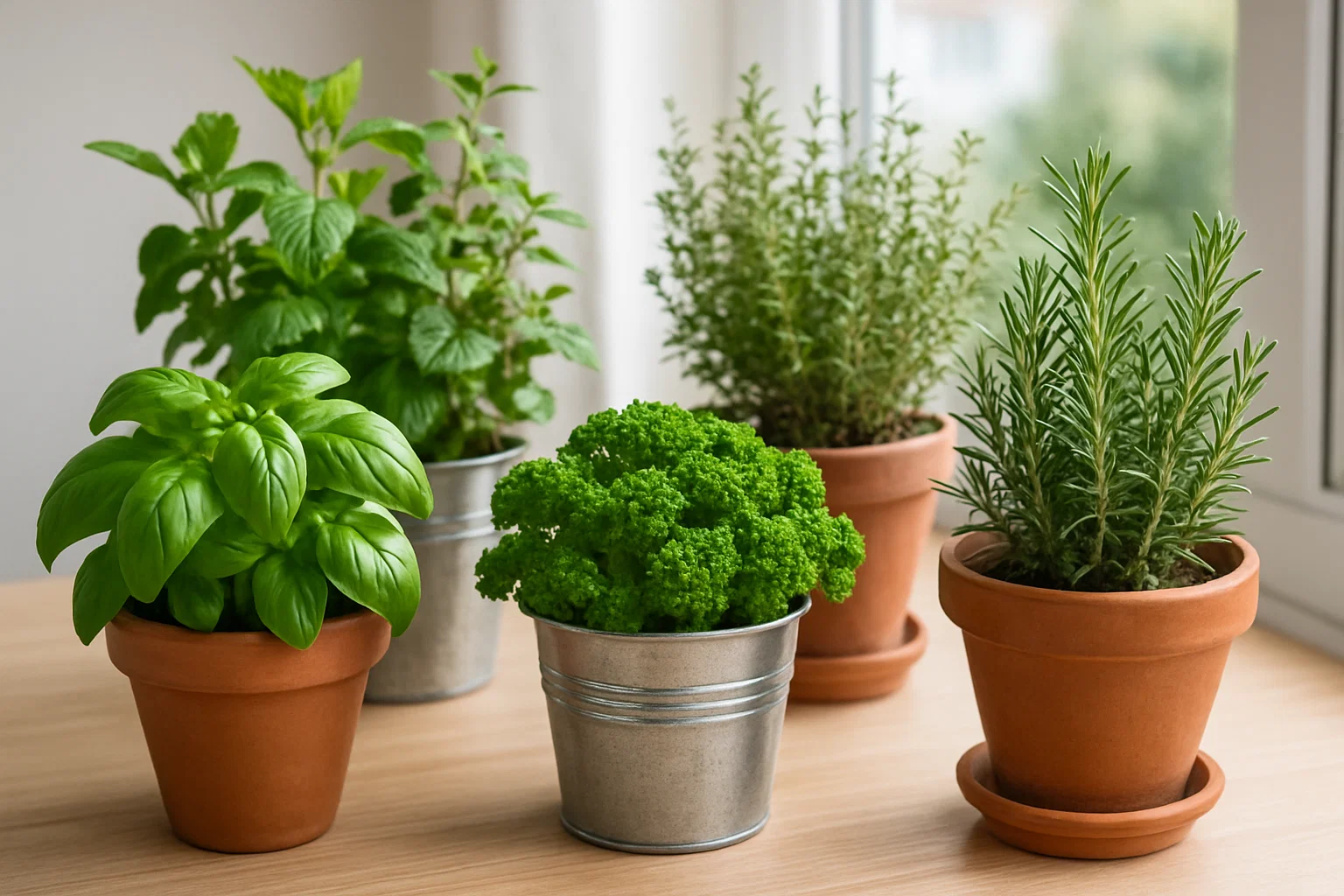
Top 10 easy-to-grow herbs for beginners (Basil, Mint, Parsley, etc.)
For beginners eager to grow herbs indoors, some varieties are particularly easy to grow. In fact, there are a number of great options to get started with, including:
- Herbs like basil, mint, and parsley, which are staples and thrive with minimal effort.
- Other herbs to grow that do well indoors like chives, oregano, thyme, rosemary, cilantro, dill, and sage.
These herbs require minimal care and provide a satisfying introduction to herb gardening. Starting with these herbs from seed can be a rewarding experience.
Trendy herbs gaining popularity in 2026 (Lemon Balm, Thai Basil, and Purple Sage)
Beyond the classics, several trendy herbs are gaining popularity in 2026. Lemon balm offers a refreshing citrusy scent and flavor, while Thai basil adds a unique anise-like note to culinary creations.
Purple sage not only provides a distinctive earthy taste but also adds a vibrant visual appeal to your indoor herb garden. These different herbs provide an interesting twist to the usual indoor assortment.
How to mix culinary and medicinal herbs for a balanced garden
To maximize the benefits of your indoor herb garden, consider mixing culinary and medicinal herbs. For example, chamomile and lavender can be planted alongside basil and mint.
This combination creates a balanced garden that caters to both your culinary and wellness needs. Remember to research the specific needs of each herb plant to ensure they grow well indoors and create a thriving indoor herb garden.
Chapter 3: Tools and Supplies You’ll Need
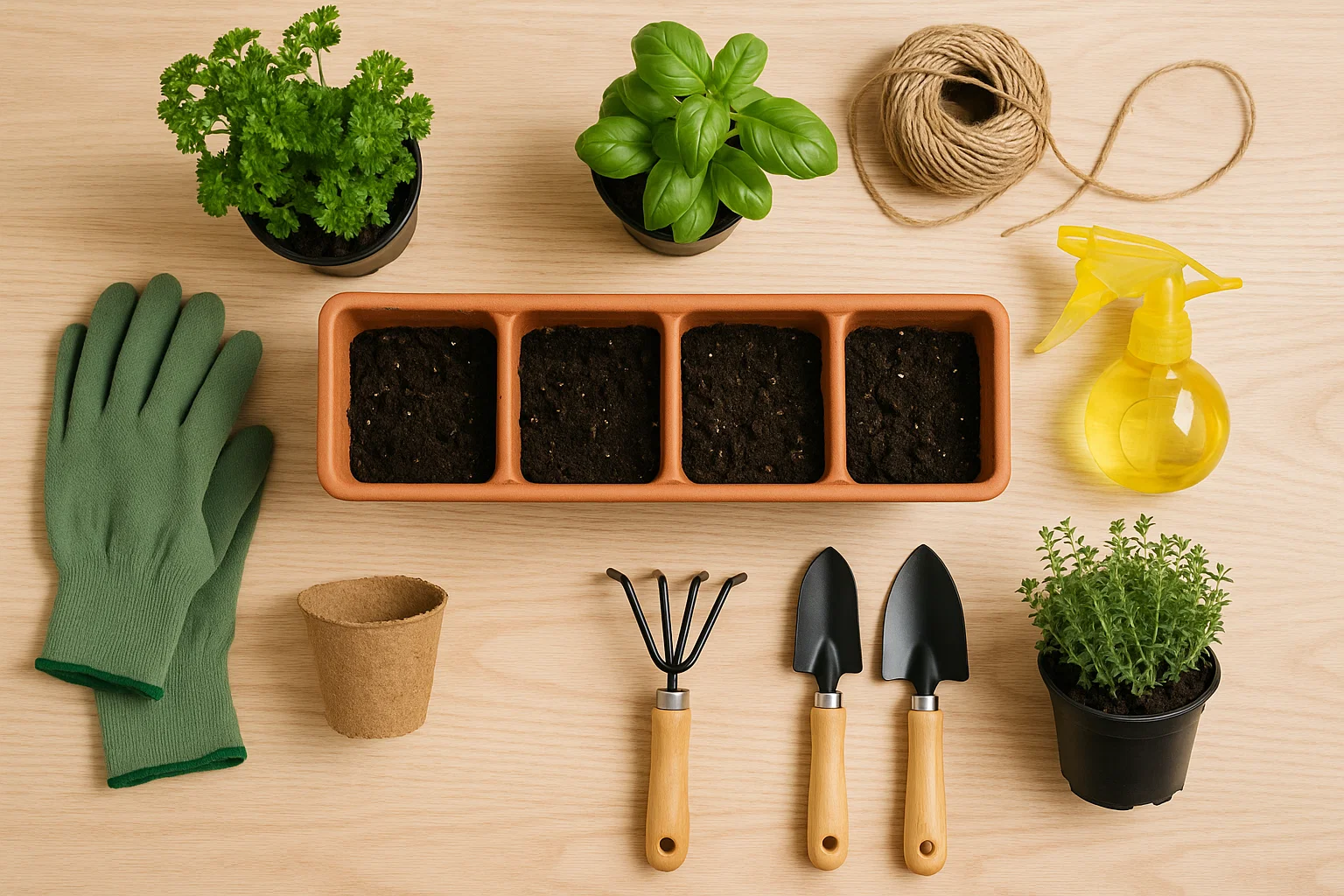
Must-have essentials: pots, trays, soil, and fertilizer
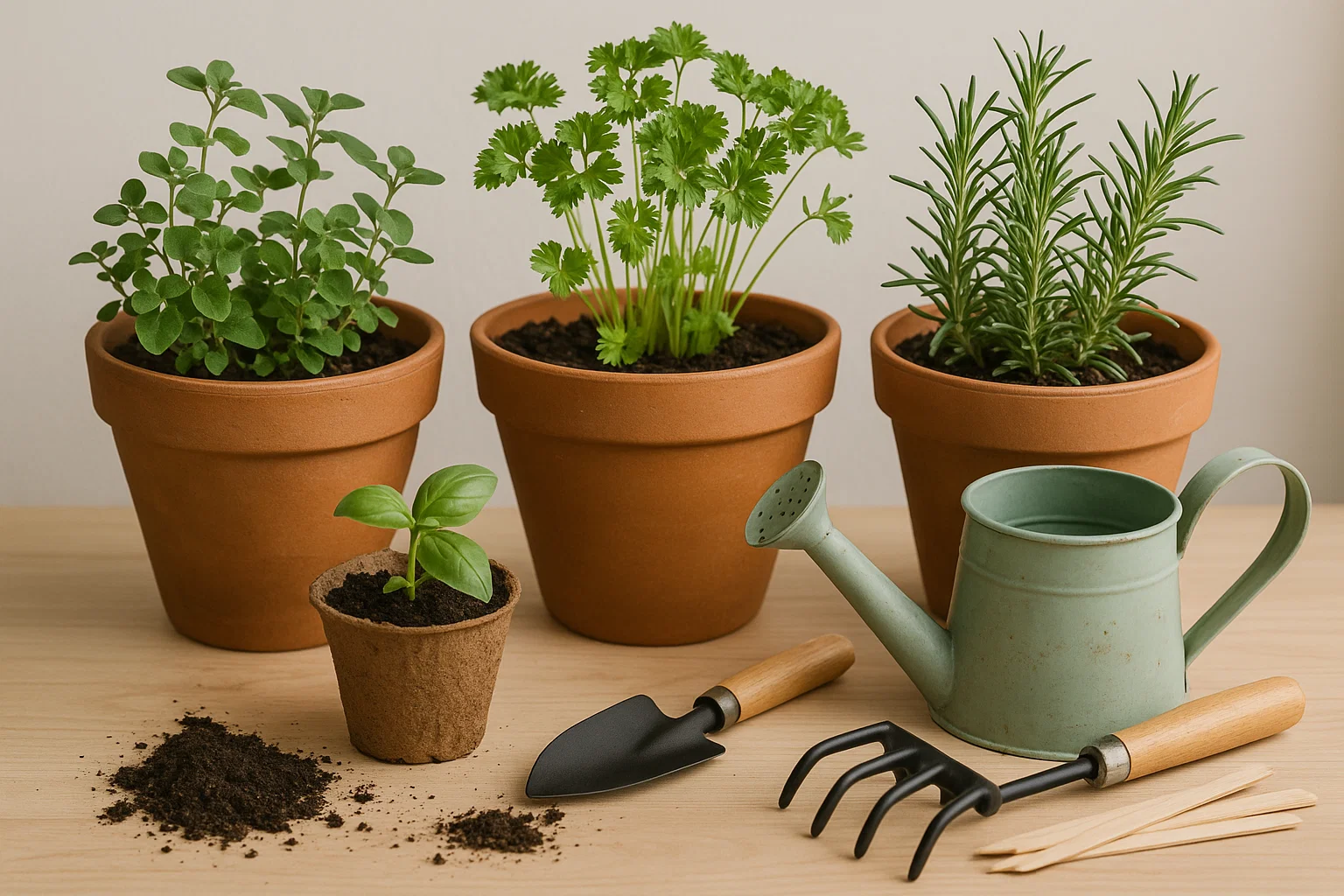
To successfully grow herbs indoors, you’ll need a few essential tools and supplies. Start with appropriate-sized pots with a drainage hole to prevent waterlogging.
Use trays to catch excess water. Opt for high-quality garden soil formulated for indoor plants. Supplement with a balanced fertilizer to provide the necessary nutrients for healthy growth of your herbs. Consider the best way to plant your herbs and how to make them thrive.
Smart gardening tools of 2026 — hydroponic kits, self-watering planters, and LED systems
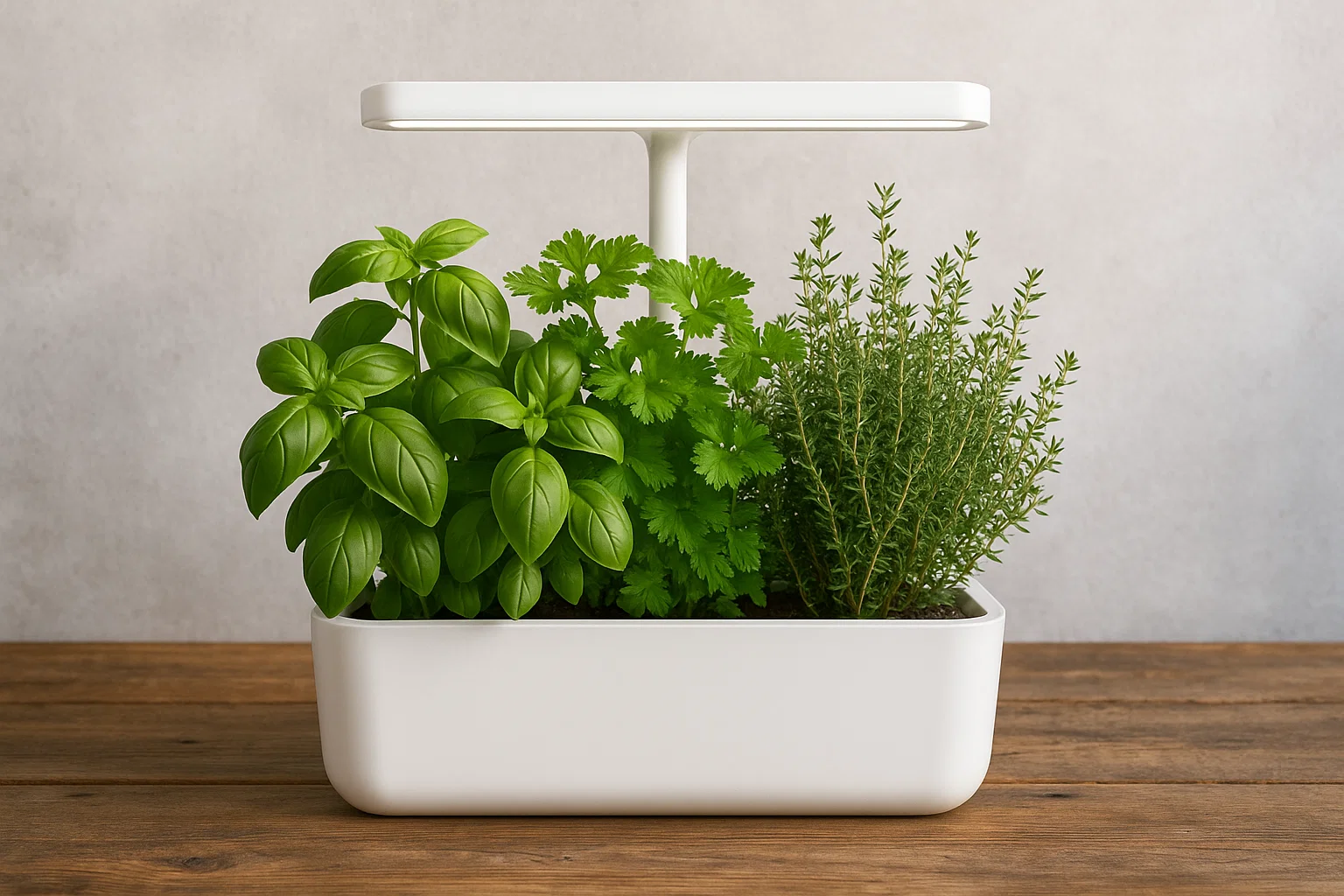
In 2026, smart gardening tools are making herb gardening more accessible and efficient. Hydroponic kits eliminate the need for soil, delivering nutrients directly to the roots. Self-watering planters regulate moisture levels, preventing overwatering or underwatering. LED systems provide consistent grow light, ensuring your herbs receive adequate illumination, even without hours of direct sunlight.
Eco-friendly and budget-friendly alternatives for beginners
Herb gardening doesn’t have to break the bank. For eco-friendly and budget-conscious options, repurpose containers like yogurt cups or tin cans as pots, ensuring you add a drainage hole.
Use compost or worm castings to enrich your soil naturally. Collect rainwater for watering your indoor plants. These simple swaps can significantly reduce costs and minimize your environmental impact while ensuring your herbs grow.
Chapter 4: Planting Your Herbs Step-by-Step
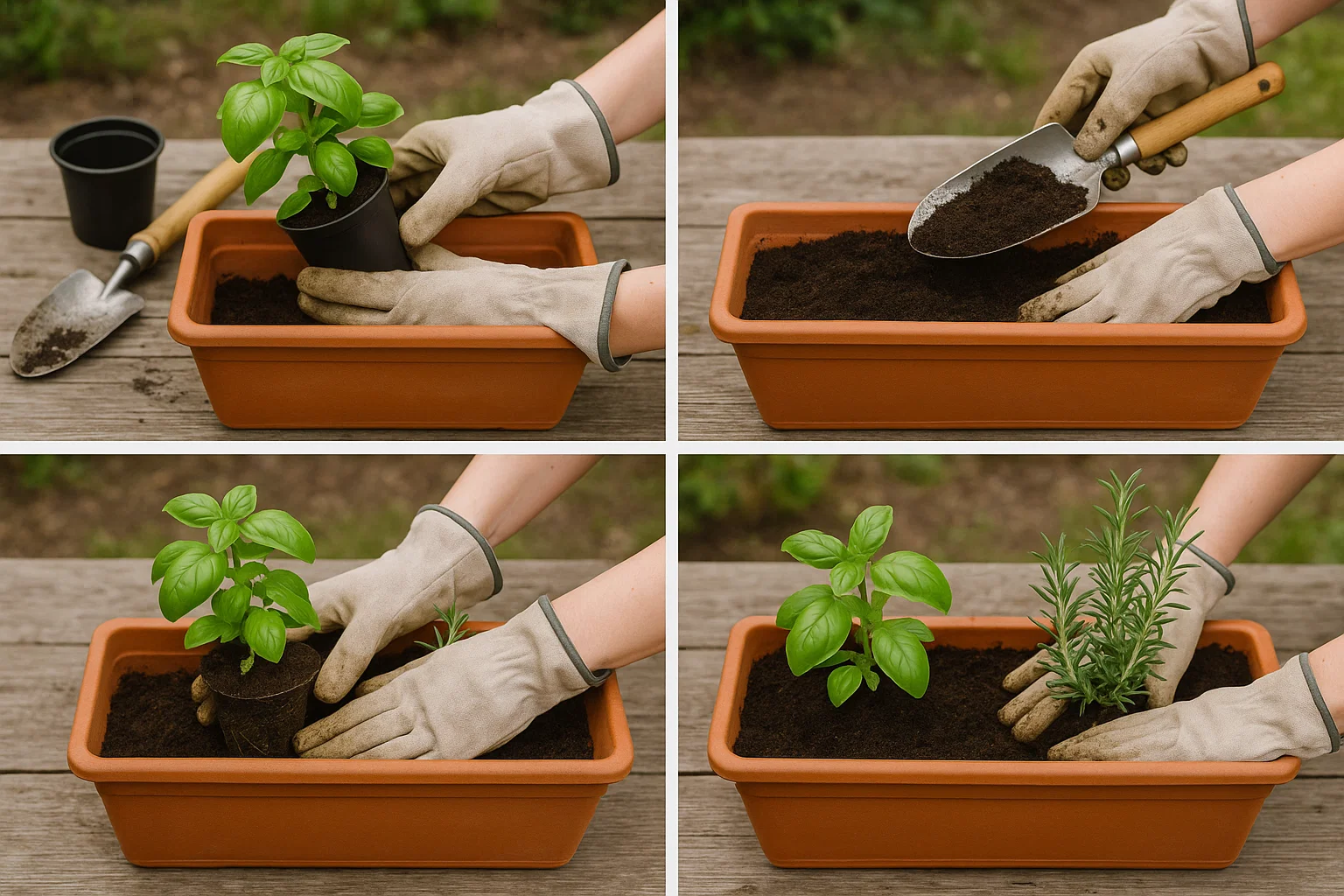
How to plant from seeds vs. seedlings
When starting herbs, you have the option of planting herbs from seed or using seedlings. Planting herbs from seed offers a wider selection of varieties and can be more cost-effective.
However, it requires more patience and attention to detail. Seedlings provide a head start, allowing you to enjoy fresh herbs sooner. Consider if you want to start from seed or just use small herb plants.
The perfect soil mix for indoor herbs (pH, drainage, and nutrients)
The right soil mix is crucial for healthy herb growth. Aim for a well-draining mix with a slightly acidic to neutral pH (around 6.0 to 7.0). A blend of potting soil, perlite, and vermiculite can provide the ideal balance of moisture retention, drainage, and aeration.
Ensure the soil is rich in essential nutrients herbs need, either naturally or through the addition of compost or fertilizer to help herbs grow. The proper garden soil is very important.
Watering schedule secrets: how to avoid overwatering
Overwatering is a common mistake that can lead to root rot and other problems. Allow the top inch of soil to dry out before watering thoroughly.
Ensure excess water drains freely from the drainage hole. Adjust your watering schedule based on the types of herbs, the climate, and the time of year. Some herbs are more drought-tolerant and require less frequent watering. It is important to learn how to water your herbs properly.
Chapter 5: Caring for Your Indoor Herb Garden
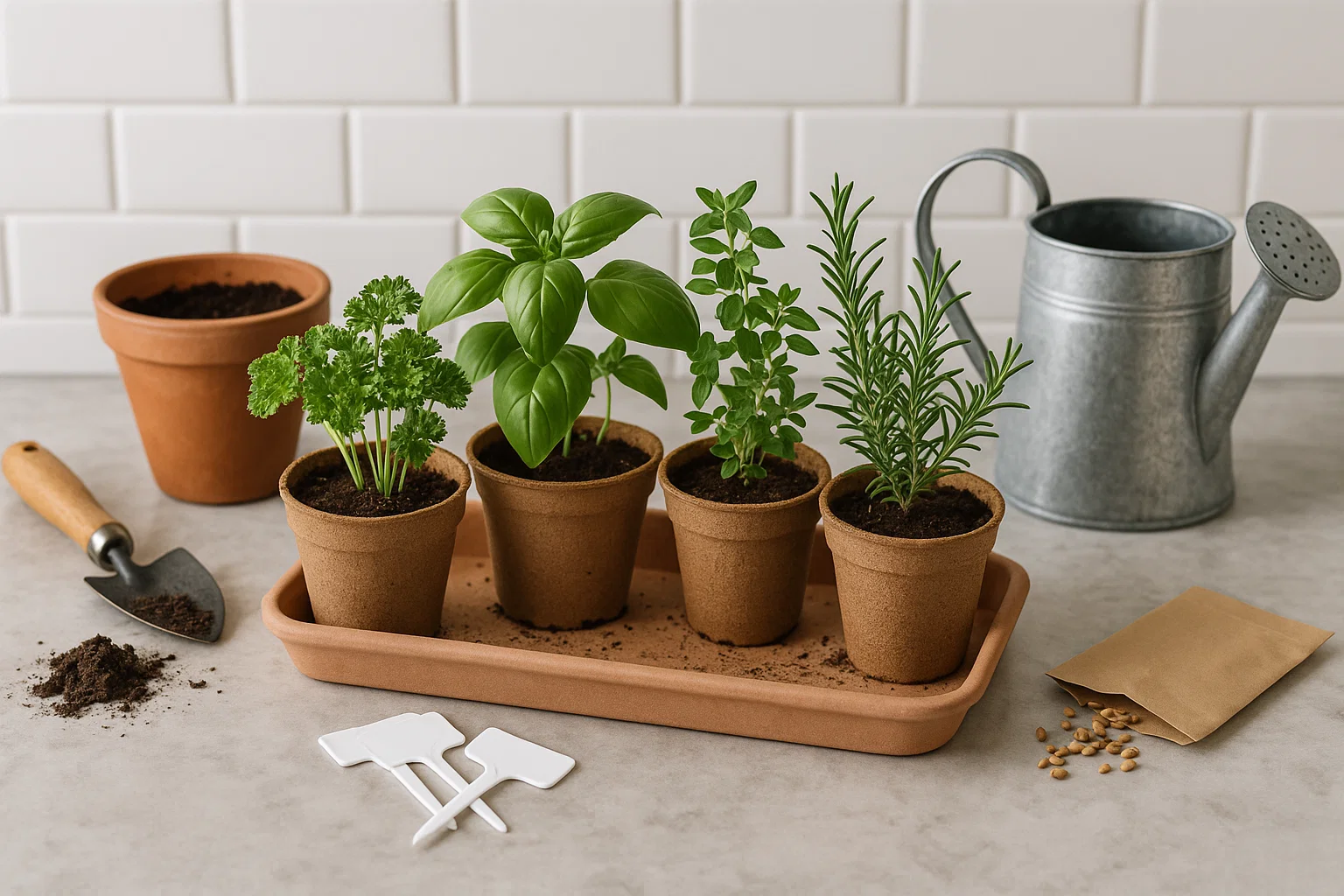
Daily and weekly maintenance routines
Maintaining a thriving indoor herb garden involves consistent daily and weekly routines. Here’s a breakdown of some tasks:
| Frequency | Task |
|---|---|
| Daily | Checking moisture levels in the pots, ensuring adequate sunlight daily or supplementing with a grow light, and removing any yellowing or dead leaves. |
| Weekly | Fertilize your herbs, inspect for pests, and rotate the pots to ensure even exposure to direct sunlight. |
How to prune herbs to encourage faster growth
Pruning is essential for encouraging faster growth and maintaining the shape of your herbs. Regularly trim the tips of stems just above a leaf node to promote branching.
Remove any flowers that appear, as flowering can redirect energy away from leaf production. Proper pruning encourages your herbs to grow to be bushier and more productive, allowing you to enjoy fresh and abundant indoor herbs.
Common problems (yellow leaves, mold, pests) and easy fixes
Even with the best care, common problems can arise in your indoor herb garden. Yellow leaves can indicate overwatering or nutrient deficiencies.
Mold often results from poor air circulation, so improve ventilation. Pests like aphids can be treated with insecticidal soap. Addressing these issues promptly will ensure your indoor plants continue to thrive, allowing you to successfully grow herbs.
Chapter 6: Harvesting and Using Your Herbs
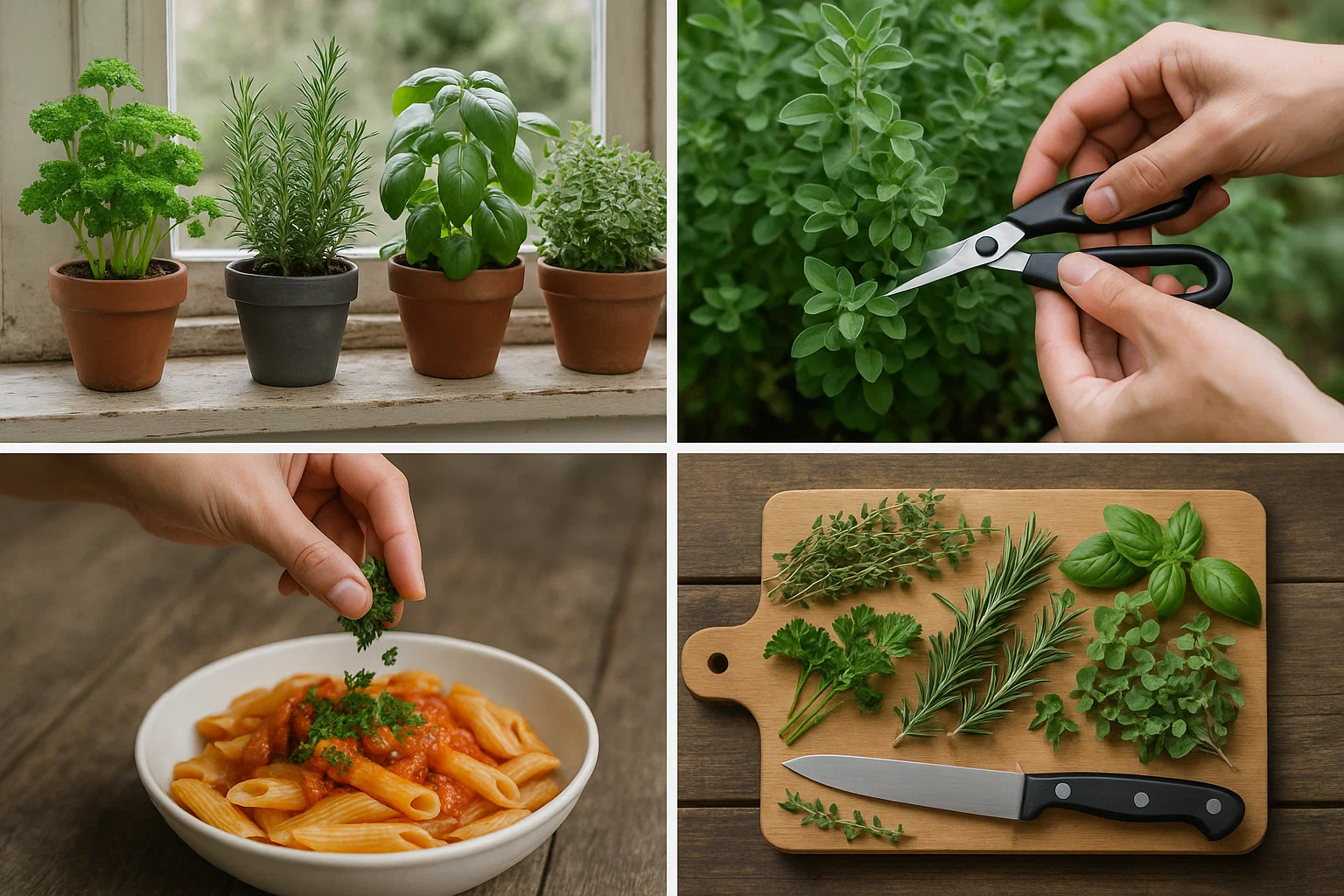
When and how to harvest without harming the plant
Knowing when and how to harvest is crucial for maintaining a healthy and productive indoor herb garden. Harvest herbs when they have reached a desirable size and maturity.
Use sharp scissors or pruning shears to cut stems just above a leaf node. Avoid removing more than one-third of the plant at a time to prevent stressing it. Harvesting properly ensures continuous growth and a steady supply of fresh herbs.
Creative ways to use fresh herbs in cooking, skincare, and home decor
The possibilities for using fresh herbs are endless. In cooking, they can enhance the flavor of soups, salads, sauces, and main dishes. In skincare, they can be infused into oils and lotions for their therapeutic benefits.
For home decor, they can be used in potpourris, floral arrangements, and even as natural air fresheners. Learning creative ways to incorporate your herbs will add value to your indoor herb garden.
Storing and drying herbs to keep their flavor longer
To preserve the flavor of your herbs for longer periods, proper storage and drying techniques are essential. Here’s a summary of storage and drying methods:
| Method | Description |
|---|---|
| Fresh Herbs Storage | Wrap in a damp paper towel and store in the refrigerator. |
| Drying Herbs | Hang upside down in a cool, dry place or use a dehydrator. Store dried herbs in airtight containers away from direct sunlight. |
Chapter 7: Indoor Gardening Trends to Watch in 2026
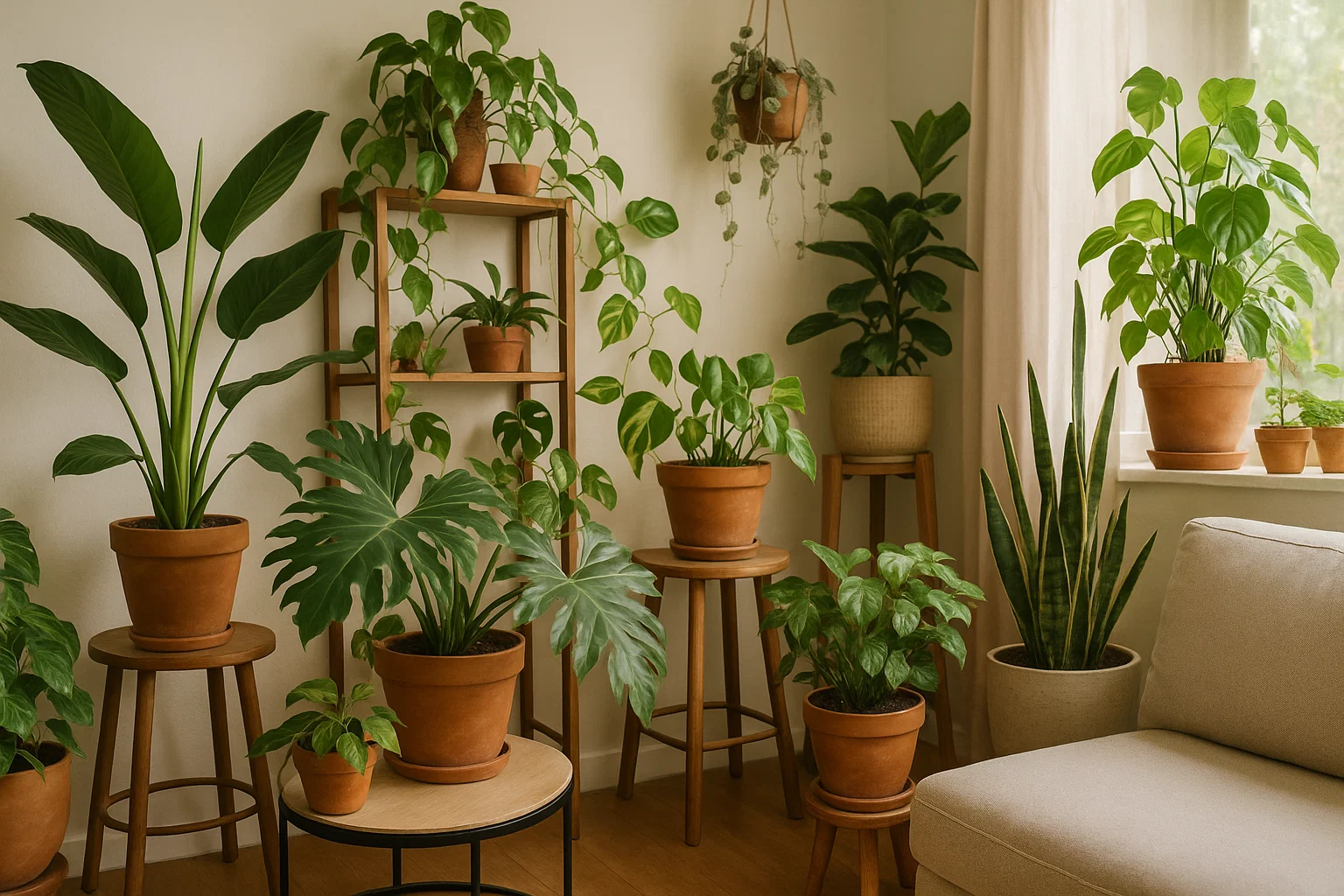
Smart gardens and app-connected systems
In 2026, smart gardens and app-connected systems are revolutionizing the way to grow indoor plants. These systems automate watering, lighting, and nutrient delivery, optimizing conditions for herb growth.
App connectivity allows you to monitor and control your indoor garden remotely, ensuring your herbs receive the care they need, even when you’re away. With the correct hours of sunlight and care, your herbs grow.
Sustainable soil alternatives and zero-waste gardening
As sustainability becomes increasingly important, innovative soil alternatives are gaining traction in herb gardening. Options like coconut coir, rice hulls, and composted kitchen waste offer eco-friendly alternatives to traditional potting soil.
Embracing zero-waste practices, such as composting and repurposing containers, reduces your environmental impact and promotes a more sustainable approach to herb gardening and allows you to successfully grow herbs.
The rise of aesthetic herb displays in home design
Indoor herb gardens are no longer just functional; they’re becoming integral elements of home design. Vertical gardens, wall-mounted planters, and stylish pots are transforming herbs into living art.
Integrating herb displays into your home adds a touch of greenery, fragrance, and visual interest, creating a more inviting and aesthetically pleasing living space. Learning how to plant your herbs in an appealing manner is a great way to add value.
Chapter 8: Quick Troubleshooting Guide for Beginners
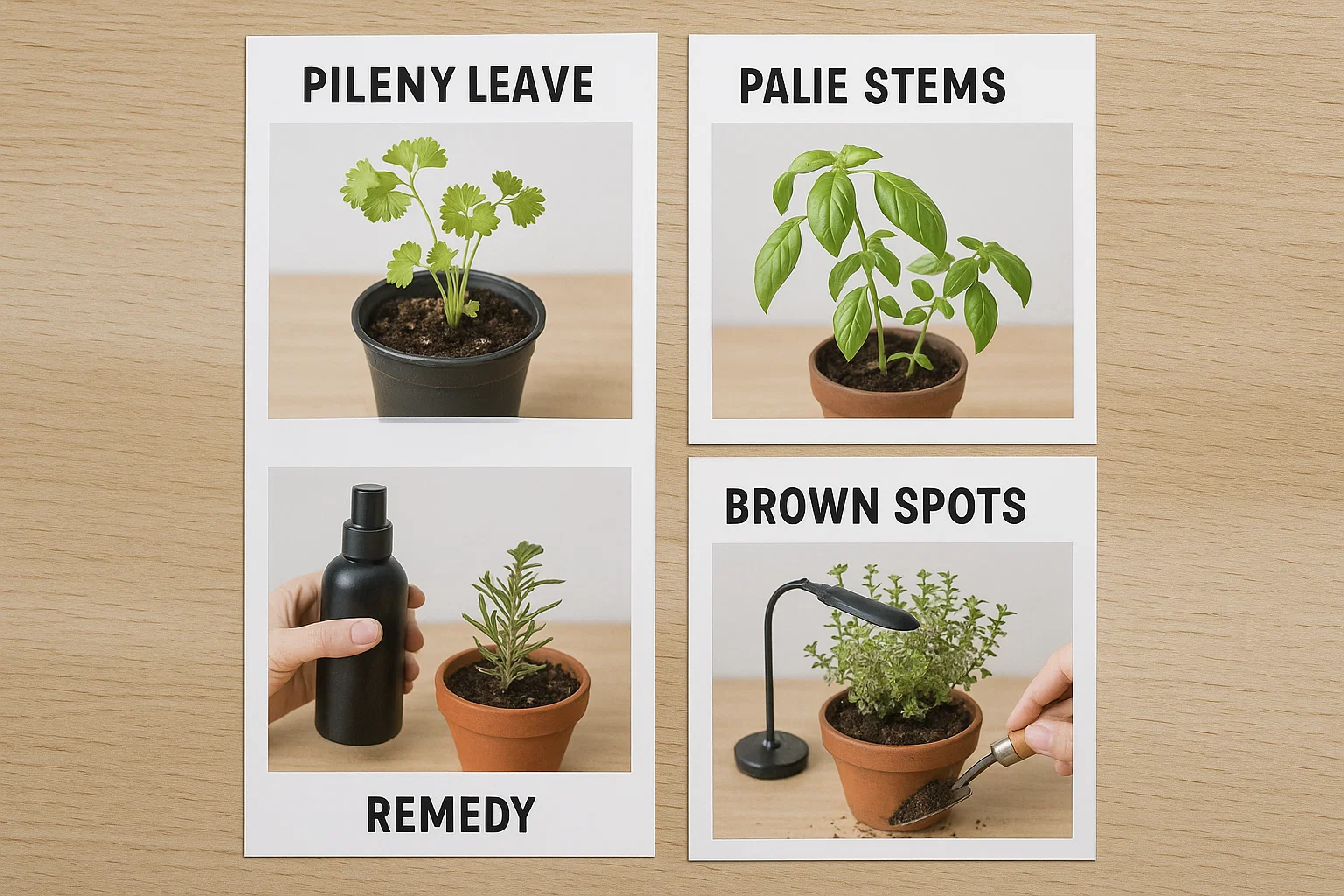
Why your herbs aren’t growing — and what to do about it
If your herbs aren’t thriving, several factors could be at play. Insufficient sunlight daily is a common culprit; ensure your herbs receive adequate hours of direct sunlight or supplement with a grow light.
Overwatering or underwatering can also hinder growth, so check the soil moisture regularly. Nutrient deficiencies might be present, so consider using a balanced fertilizer to help your herbs grow. Pests could cause issues as well. Identifying and addressing these issues can help your indoor herb garden flourish.
Light issues vs. water issues: how to diagnose properly
Distinguishing between light and water issues is crucial for effective troubleshooting. If leaves are pale or leggy, insufficient light is likely the problem.
Yellowing, wilting leaves often indicate overwatering, especially if the soil feels soggy. Dry, crispy leaves suggest underwatering. Adjust your watering schedule and consider moving your herb plant to a brighter location or adding a grow light to help your indoor plants. This will help your herbs grow.
Quick recovery hacks to revive wilting herbs
To quickly revive wilting herbs, start by assessing the soil moisture. If it’s dry, water thoroughly, ensuring the drainage hole allows excess water to escape.
If the soil is waterlogged, allow it to dry out before watering again. Increase humidity by misting the leaves or placing a tray of water nearby. Provide adequate direct sunlight or use a grow light. These simple hacks can often bring your herbs back to life and help them thrive in your indoor herb garden.
Chapter 9: Creative Indoor Herb Garden Ideas
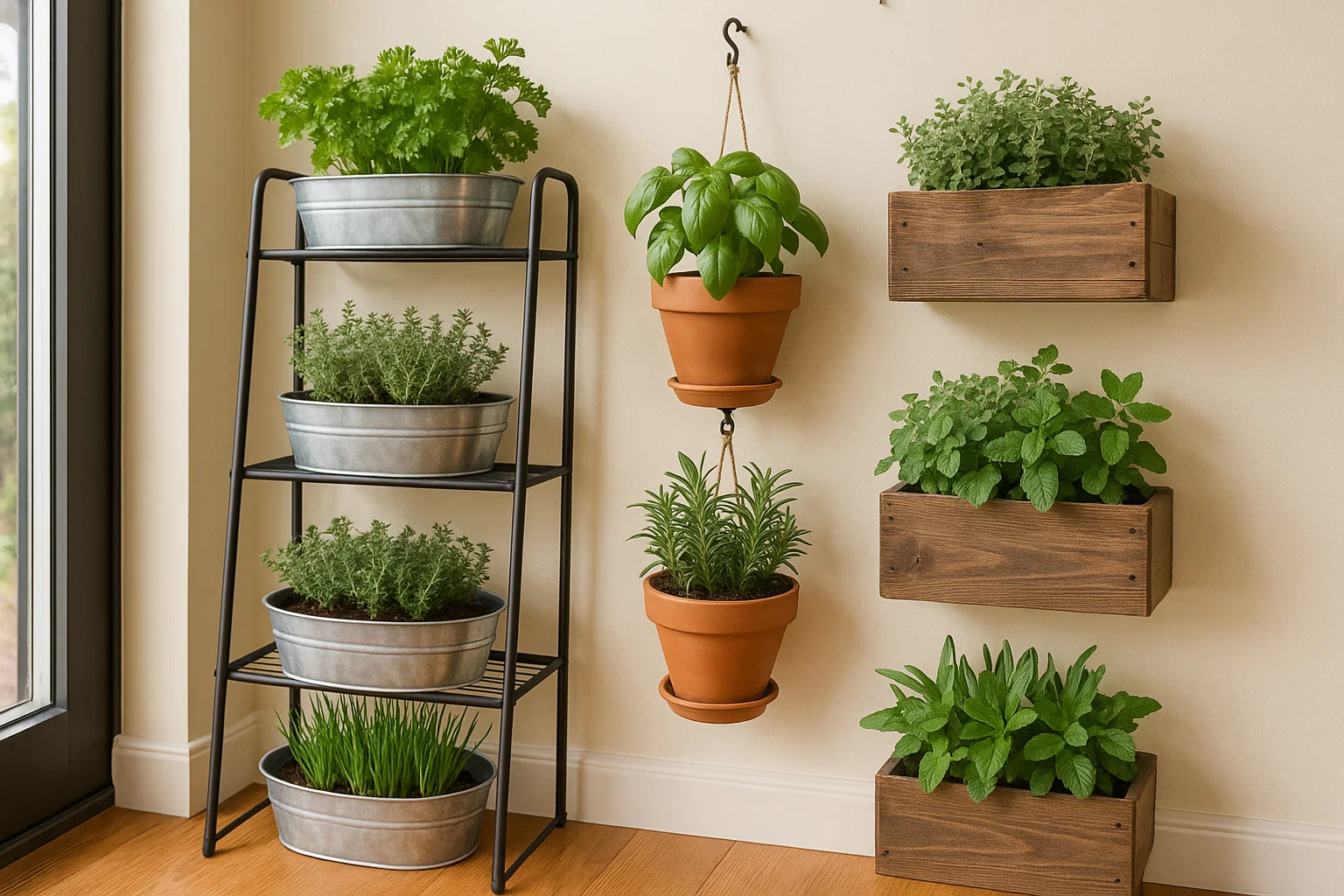
Vertical gardens for small apartments
Vertical gardens are an excellent solution for small apartments where space is limited. Utilize wall-mounted planters, hanging baskets, or tiered shelves to create a stunning display of indoor herbs.
This not only maximizes space but also adds a touch of greenery and visual interest to your living area. Vertical gardens make herb gardening accessible, even in the smallest indoor spaces, allowing you to grow herbs indoors.
Kitchen window herb displays that double as décor
Turn your kitchen window into a functional and decorative focal point by creating an herb garden indoors display. Arrange pots of your favorite herbs, such as basil, mint, and parsley, along the windowsill.
This provides easy access to fresh herbs while adding a touch of natural beauty to your kitchen. Consider using decorative pots that complement your kitchen’s aesthetic to enhance the overall appeal and help you plant your herbs.
DIY recycled herb planters: jars, cans, and pallets
Get creative and eco-friendly by repurposing everyday items into unique herb planters. Old jars, tin cans, and wooden pallets can be transformed into charming containers for your indoor herbs.
Ensure a proper drainage hole in each container and get creative with painting or decorating them. This not only adds a personal touch to your herb garden but also reduces waste and promotes sustainable herb gardening practices when you grow herbs.
Conclusion: Bring Nature Home — Start Growing Fresh Magic Indoors
With the knowledge and inspiration from this guide to growing herbs, you’re now ready to bring nature home and grow herbs indoors. Whether you start from seed or use seedlings, plant your herbs, water them properly, and enjoy the beauty and flavor they bring. Embrace the joy of herb gardening and transform your living space into a thriving indoor herb garden. Experience the magic of fresh herbs and cultivate a greener, healthier lifestyle indoors.